
Home > Opinion > Disability Bitch > Disability Bitch: it's either walking or broccoli
Disability Bitch

Ouch's fearsome Bitch eats famous disabled people for breakfast. And then spits them out again. She tackles other controversial disability topics with all the subtlety of a hammer cracking a nut. Don't say we didn't warn you!
Disability Bitch: it's either walking or broccoli
3rd February 2011
• Disability Bitch is published every Thursday.
Oh, readers, I'm doomed. Again. I'd like to live a long and healthy life, I really would, but every day a new piece of scientific advice is published which indicates that I'm going to live a short and sickly one because of who I am. It cuts to the core.
Oh, readers, I'm doomed. Again. I'd like to live a long and healthy life, I really would, but every day a new piece of scientific advice is published which indicates that I'm going to live a short and sickly one because of who I am. It cuts to the core.
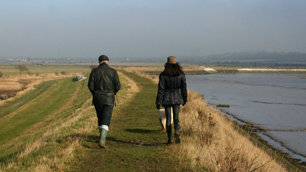
I read today, for example, that scientists have newly discovered that walking for 40 minutes a few times a week preserves memory and "keeps ageing brains on top form".
Well, I had a panic attack just looking at a footpath the other day. It's no surprise I can hardly remember my own name; I consider myself to have done well if I've walked forty minutes in a month, never mind a single 24 hour period.
If I were physically capable of walking that far, I'd cease to be 'Disability' Bitch, I'd be some perverse and boring strain of super being, I imagine.
In my experience, very few mobility-impaired people can walk 40 minutes a day - at least without moaning about it and claiming to be in extreme pain. If the scientists are correct, the logical conclusion is that all physically disabled people will end up with rubbish memories.
Well, listen up, I HATE ABLE-CENTRIC HEALTH ADVICE and I won't resign myself to such a fate. Instead, I've found some alternative memory-boosting advice which doesn't rely on physical prowess. Let me share it with you ...
After intensive research, I discovered that - far from recommending lengthy strolls - a few years ago, the scientific community were endorsing fish oil as a way of fending off age-related forgetfulness.
So, instead of walking 40 minutes a day, I'm going to be old school and eat fish. Eating, that's more my style!
Well, I had a panic attack just looking at a footpath the other day. It's no surprise I can hardly remember my own name; I consider myself to have done well if I've walked forty minutes in a month, never mind a single 24 hour period.
If I were physically capable of walking that far, I'd cease to be 'Disability' Bitch, I'd be some perverse and boring strain of super being, I imagine.
In my experience, very few mobility-impaired people can walk 40 minutes a day - at least without moaning about it and claiming to be in extreme pain. If the scientists are correct, the logical conclusion is that all physically disabled people will end up with rubbish memories.
Well, listen up, I HATE ABLE-CENTRIC HEALTH ADVICE and I won't resign myself to such a fate. Instead, I've found some alternative memory-boosting advice which doesn't rely on physical prowess. Let me share it with you ...
After intensive research, I discovered that - far from recommending lengthy strolls - a few years ago, the scientific community were endorsing fish oil as a way of fending off age-related forgetfulness.
So, instead of walking 40 minutes a day, I'm going to be old school and eat fish. Eating, that's more my style!
Memory isn't the only function which scientists claim can be preserved by a stint of showy able-bodiedness; exercise seems to be able to save us from all manner of things.
In 2003, the big news was that 'brisk' walking can strengthen your heart, and medics have barely stopped singing its praises since. Not just any old walking, readers, 'brisk' walking.
Last time I travelled anywhere briskly, it was to hurry away from the neurologist who wanted to inject things into my feet, and I had to lie down for a week afterwards.
I don't want to die of heart disease, so, naturally I was thrilled when I found a more suitable piece of advice on the internet which taught me that drinking more than six cups of tea a day has protective benefits.
If I've interpreted this correctly, it means I can avoid 'brisk walking' and sit on the sofa all day. But I can only do this if I chain drink hot caffeinated beverages. I think I do this already, what a stroke of luck.
In 2003, the big news was that 'brisk' walking can strengthen your heart, and medics have barely stopped singing its praises since. Not just any old walking, readers, 'brisk' walking.
Last time I travelled anywhere briskly, it was to hurry away from the neurologist who wanted to inject things into my feet, and I had to lie down for a week afterwards.
I don't want to die of heart disease, so, naturally I was thrilled when I found a more suitable piece of advice on the internet which taught me that drinking more than six cups of tea a day has protective benefits.
If I've interpreted this correctly, it means I can avoid 'brisk walking' and sit on the sofa all day. But I can only do this if I chain drink hot caffeinated beverages. I think I do this already, what a stroke of luck.
Incidentally, other substances which are a little bit good for your heart include red wine and dark chocolate. My cardiac health must be seriously top notch, in fact.
Finally, this elusive 'brisk walking' - not just ordinary walking - is also supposed to prevent cancer. Crumbs, I've already given up smoking, isn't that enough?
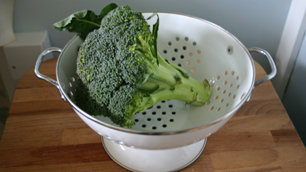
It's all OK though because, if you want to reduce your chances of the Big C and can't worship the god of painful health at the gym, I'm here to remind you that there's a chemical in broccoli which might be helpful. Same goes for soy sauce, apparently. Have I ever told you how much I love Chinese vegetable stir fry? Get cooking, my immobile friends.
In conclusion, if you can't walk: fish, tea and broccoli seem your best bet for now.
Finally, this elusive 'brisk walking' - not just ordinary walking - is also supposed to prevent cancer. Crumbs, I've already given up smoking, isn't that enough?
It's all OK though because, if you want to reduce your chances of the Big C and can't worship the god of painful health at the gym, I'm here to remind you that there's a chemical in broccoli which might be helpful. Same goes for soy sauce, apparently. Have I ever told you how much I love Chinese vegetable stir fry? Get cooking, my immobile friends.
In conclusion, if you can't walk: fish, tea and broccoli seem your best bet for now.
Facebook / Twitter
Did you know that social networking prevents 4 out of 5 of the Western world's deadliest diseases? Actually, it doesn't, but why don't you come and chat with me in my social media form anyway.
You will find me here @DisabilityBitch on Twitter. And you can 'like' me on Facebook.
You will find me here @DisabilityBitch on Twitter. And you can 'like' me on Facebook.
Bookmark with...
Live community panel
Our blog is the main place to go for all things Ouch! Find info, comment, articles and great disability content on the web via us.
Listen to our regular razor sharp talk show online, or subscribe to it as a podcast. Spread the word: it's where disability and reality almost collide.
More from the BBC

All the latest news from the paralympics.

News and views for people who are blind or partially sighted.

Weekdays 12.40pm. Radio 4's consumer affairs programme.

~RS~q~RS~_bbc_=0&__ip__=54.77.26.26&dnainitialtitle=Disability%20Bitch%3A%20it%27s%20either%20walking%20or%20broccoli&dnahostpageurl=http://www.bbc.co.uk/ouch/opinion/b1tch/db_walking_broccoli.shtml&dnauid=ouch:article:2383&s_baseHeadingLevel=1&dnashow=10&dnafrom=0&dnato=9&dna_encoding=utf-8&s_sssicomponent=1&s_sssiCommentCount=&dnacommentforumlistprefix=%5B_%5D&dnarecentcommentsprefix=%5B_%5D&s_commentprofileurl=/dna/mbouch/CommentProfile?&s_contact=0~RS~z~RS~01~RS~)

Comments
I remember the year before I got sick. Every weekday morning, I would briskly (yes, briskly!) walk for thirty minutes, usually along the seafront, to go to work. Every weekday afternoon, I'd do the same walk home, although perhaps not at such a powerful pace.
It was wonderful. I'd recommend it to anyone. Fresh air really woke me up and helped me feel ready for the day. Didn't stop me getting sick, though, and my memory isn't what it was either.
So much for walking. I'll get the kettle on, and if you swing by the chippy, mine's a large cod.
Complain about this comment
Well, at least it gives me something to blame my memory on! lol
Complain about this comment
'I'd cease to be 'Disability' Bitch, I'd be some perverse and boring strain of super being, I imagine. '
I've got the handcuffs if you've got them time.....
Complain about this comment
I'm doomed!
Complain about this comment
You may be surprised to know that what the antioxidants that are in wine broccoli and many other naturals foods, are in fact Noble Metals. Scientists in Japan published a report that concluded that the core of antioxidants are in fact: Gold, Iridium, Rhodium, Ruthenium and platinum metals. The root causing of aging and cancer and other maladies are the lack of these wonderful noble metals.
For the first time in history they are available in atomic size particles, made with zero chemicals before or during or after the production process. Because it is just the noble metal in atomic size particles and distilled water, the product renders Trace Gold Minerals, or whatever noble metal is used, and assimilates the trace gold in an easy to digest fashion with no heavy metal build up in the human body. Colloidals Silver atoms, Colloidal Gold rated at 3000 to 15000 is the highest quality Noble Metal Trace Mineral products in the world.
Complain about this comment
Been seriously mobility-and exercise-restricted for years. With you all the way (given that it's not exactly a long way). Already had to give up coffee and alcohol. Spices and high fibre carry their own revenges. Told last year I have diabetes and way too high cholesterol numbers.
Diabetes nurse said, "Mediterranean diet - bar ice cream, sauces, white pasta, rice, ready-made sauces, cheese and olive oil." I think she must have been thinking of the Mediterranean to be found on Mars (planet, not the choccie bar).
And now bottled water is an environmental crime (carbon footprint in the travelling and landfill with the empties).
So it's tap water and steamed broccoli for me. When I feel indulgent I'll have the tap water filtered.
Complain about this comment
View these comments in RSS