Home Home | Explore the BBC |
 | ||
 | 16 June |  |
| ||
| | | | | | | |
| |||||||
| Search ON THIS DAY by date | | |   | |||
| |||||||
| |||||||
|
|
| | | | | | | | ||||||||||||||||||||||||
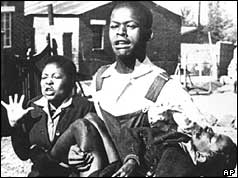
| 1976: Soweto protest turns violent At least 12 people are reported to have been killed in a series of violent clashes between black demonstrators and police in several South African townships. Angry youths threw stones and beer bottles at police, as a protest against the compulsory use of Afrikaans as the main teaching language in black schools turned violent. The violence spread from one end of the city to the other, with fires in Soweto reaching Alexandra, a township in the northern outskirts close to some of the rich white suburbs. The Times newspaper called it the worst outbreak of racial violence seen in South Africa since the Sharpeville massacre 16 years ago. There are known to be at least two black children among the dead and two white men. The final number of dead may be much higher. Ambulance drivers say they were unable to get through the crowds to reach the injured. Police squads patrolled the streets in an attempt to prevent shops and public buildings from being damaged. As the situation worsened more police were drafted in. Two men were reportedly shot dead after a car sped down a street and tried to run down police at an intersection.
Armed police tried to surround the pupils as they reached Phefeni School, on a small hill surrounded by the homes of more than a million black South Africans. Police say the students began throwing stones and other missiles. They responded by firing live rounds into the crowd. Another reporter said she saw police throw a tear gas grenade into the crowd without warning. When demonstrators responded with stones, the officers opened fire. A senior officer in charge of the operation, Brigadier R Le Roux, described the situation as "very bad" and later refused to give any comment to journalists and ordered them to leave the area. In Natalspruit, a township East of Johannesburg, buses were used as battering rams to destroy official buildings, while others were set on fire. Six other African townships around the nation's biggest city were affected by the violence, but police roadblocks prevented journalists from entering the townships to find out what was happening for themselves. Prime Minister Vorster demanded an immediate end to the disturbances. He said: "We are dealing here not with a spontaneous outburst but with a deliberate attempt to bring about polarisation between whites and blacks. "This government will not be intimidated and instructions have been given to maintain law and order at all costs." The schools boycott began in mid-May with pupils refusing to attend school in protest at what they saw as a discriminatory ruling which meant they had to learn lessons in English and Afrikaans, whereas white pupils could choose which language to learn.
| |
| | | Stories From 16 Jun | | ||||||||||||||||||||||||
| | ||||||||||||||||||||||||||||||
| | | | | | | |
| |||||||
| Search ON THIS DAY by date | | | | |||
| |||||||
| |||||||
 | ^^ back to top |
| Front Page | Years | Themes | Witness | |
| ©MMVIII | News Sources | Privacy & Cookies Policy |