 | 13 November 2014 |

| |
| BBC Homepage | | |
| |||
| Contact Us | | |
Local historyYou are in: Nottingham > History > Local history > Notts treasures: The plane that found Chichester Notts treasures: The plane that found ChichesterIn 1967 a plane now found at Newark air museum helped locate the round the world yachtsman Sir Francis Chichester at the end of his epic voyage. 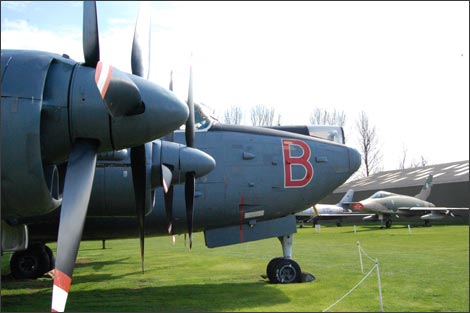 The Avro Shackleton at the Newark air museum is steeped in history. It was in service from 1957 until 1971 making it the longest serving Mark III aircraft. OriginsHoward Heeley, the museum's secretary, is one person who has overseen the plane's renovation and delved into its history. "It's a maritime patrol aircraft originally built near Manchester but on two occasions in its service career it underwent major modifications in the Avro manufacturing facility at Langar airfield. "Out of a service career spanning 16 years it spent two and a half to three years at Langar being modified with the latest equipment and avionics." During its life span millions of pounds was spent on the Shackleton. Help playing audio/video 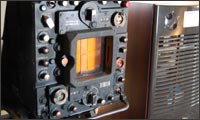 Instruments inside the Avro Shackleton The Cold WarThose modifications helped in the defence of Britain during the Cold War. The Shackleton's role was to hunt and destroy submarines. Later in its career it was enhanced so it could carry nuclear depth charges. All the changes meant the aeroplane became heavier. Howard Heeley says that meant more developments. "The last modification at Avro, Langar, saw two extra jet engines (added) to give it some extra boost to allow it to take off."
The BBC is not responsible for the content of external websites Finding ChichesterThe plane was also utilised for non-combat operations. In 1967 it was one of a pair that located the round the world yachtsman Sir Francis Chichester at the end of his epic solo voyage. The aircraft were used to ferry journalists, one took members of the broad sheets while the Newark plane carried those from the tabloid papers. But Howard says the adventurer Chichester wasn't too keen to see them. "He actually fired his Very pistol at them to tell them to go away. He didn't want to be found and wasn't grateful. "A crew member said it was the first time he'd come under friendly fire from a British yachtsman." The BBC is not responsible for the content of external websites 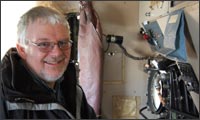 Howard Heeley in the Avro Shackleton The interiorStep on board the Shackleton and the first thing that strikes you is the size of the plane. As well as the cockpit and instrument desk there's a galley and sleeping quarters. The workers even get to sit on beautiful leather seats. But first impressions can be deceptive. "If you imagine you've probably got up to 15 people operating in here for up to 20 hours at a time, it becomes very friendly." And then there's the noise. "You talk to a lot of Shackleton people and they do have hearing impediments even now," says Howard. "That's because weight became such a critical issue that (inner linings of the fuselage) were removed (making it even noisier). It was hard work and sometimes not a very pleasant environment to be operating in." Honkers stewOne tradition for Shackleton crew members was the cuisine. A special stew was prepared on board but you needed a strong stomach to eat it. "All the crew would take up various bits and pieces and they were all put into a common pot. Polo mints and desiccated coconut, apricots, peaches, you name it, they put it in there." More about the museumThe Newark Air Museum is open 361 days of the year and is located on part of the former World War Two airfield of Winthorpe in eastern Nottinghamshire close to the border with Lincolnshire. The BBC is not responsible for the content of external websites last updated: 13/05/2009 at 17:57 SEE ALSOYou are in: Nottingham > History > Local history > Notts treasures: The plane that found Chichester Treasure huntThis feature is part of our Nottinghamshire treasure hunt. Every link above takes you to 'treasure' as chosen by the county's local 'experts'.    |
| | About the BBC | Help | Terms of Use | Privacy & Cookies Policy |
