 |  | Programme 1 - Belfast Blitz
Wednesday, 3 May 2000
ARCHIVE - SELB programme code :TG 0866 This episode is now part of our archive. This programme is still available to schools to borrow or purchase from the Audio Visual Recording service at the SELB. Please quote the SELB programme code in your correspondence. See our ordering page for more information.
| The programme examines the events which led to the bombing of Belfast during the Second World War and the effects of the bombing on the city and its inhabitants. It looks at the four raids on the city between April and May 1941 but focuses on the two main raids on the nights of 15/16th April and 4/5th May.
Background Information By 1933 Adolf Hitler had taken complete control in Germany and had begun the job of building one of the biggest armies in Europe. His intention was to use this army to create an expanded Germany and to establish what he called the Third Reich (Empire) which he told the German people would last for at least a thousand years. After he had taken over Austria and the German-speaking areas of Czechoslovakia, Hitler moved against Poland. The timeline below gives an indication of the speed with which he took over countries in Europe before turning his attention to the Soviet Union (Russia) in the east. 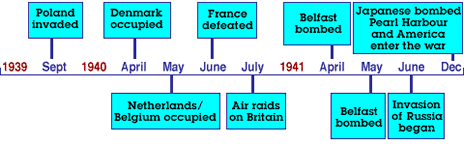 The Fall of France and "Operation Sealion" 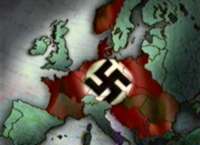 After the German invasion of France, British troops were forced to retreat from mainland Europe. Between 27th May and 4th June 1940 the British Expeditionary Force, which at that time consisted of almost a third of a million men, was evacuated from the small northern French port of Dunkirk. Before Hitler’s troops made any attempt to defeat Russia, the commanders of the German army wanted to silence any threat from Britain. The Germans knew that they would have to establish control over the skies of Britain before they could commence their invasion which they code-named “Operation Sea Lion.” In July 1940 the first German air attacks took place in the south of England. A month later the first bombs fell on the capital, London. In the autumn and winter the air-raids continued on London but grew to take in the major industrial cities of both England and Scotland. By then Belfast had taken on increasing importance in the war effort against Hitler with the city’s inhabitants building ships and aircraft which would be used to help defeat the German war machine. It was only a matter of time before the capital city of Northern Ireland would feel the might of the German airforce or Luftwaffe. First Raid - 7th/8th April 1941 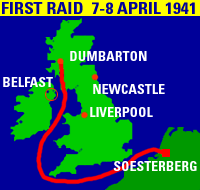 Fifteen German planes set out from the Dutch town of Soesterberg on the night of 7th April to attack the town of Dumbarton in Scotland. If the weather was bad over Dumbarton, the German pilots had orders to attack Liverpool instead. If that proved impossible then they were to attack Newcastle. Although Belfast was not on the official target list for that night, the weather conditions over the official target areas were so bad that a number of these aircraft diverted to Belfast and dropped their bombs on the docks area. Among the targets hit were Rank’s Flour Mill at the Pollock Dock and the aircraft construction shed at Harland and Wolff. Thirteen people lost their lives in this attack. It is not clear how many aircraft took part in the raid but best estimates put the figure at less than ten planes and not all of them were from the squadron that left Soesterberg. Second Raid - 15th/16th April 1941 On 15th April, under the code name “Etappe”, Belfast was named for the first time as an official target for a German bombing mission. In the early morning of the 16th around 150 German bombers dropped 200 tonnes of high explosive on the city, killing 900 people. In the early part of the raid cloud cover over the city was almost complete and the German pilots flying above the Belfast waterworks in the north of the city may have thought they were over the docks area. 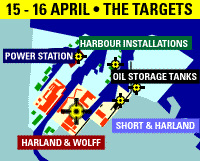 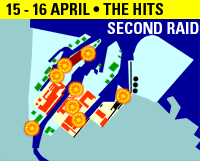 When they dropped their bombs they mistakenly wiped out whole streets from the Whitewell Road up to the Woodvale area. The skies cleared later and most of the bombs dropped then found their targets within the harbour complex. The hospitals could not cope with the numbers of dead and injured brought to them. Many of the dead were taken to the Falls Road Baths or St. George’s Market to be laid out for identification. Emma Duffin, a nurse on duty at St. George’s Market, has left this memory of the day: "On my way to the place I had told myself I was bound to see horrible sights but only when seen could the full horror be realised. I had seen death in many forms, young men dying of ghastly wounds, but nothing I had ever seen was as terrible as this…..[World War 1 casualties] had died in hospital beds, their eyes had been reverently closed, their hands crossed to their breasts. Death had to a certain extent been ….made decent. It was solemn, tragic, dignified, but here it was grotesque, repulsive, horrible. No attendant nurse had soothed the last moments of these victims, no gentle reverent hand had closed their eyes or crossed their hands. With tangled hair, staring eyes, clutching hands, contorted limbs, their grey-green faces covered with dust, they lay, bundled into coffins, half-shrouded in rugs or blankets, or an occasional sheet, still wearing their dirty, torn twisted garments. Death should be dignified, peaceful; Hitler had made even death grotesque. I felt outraged. I should have felt sympathy, grief, but instead feelings of revulsion and disgust assailed me." - © Duty Keeper of the Records, Public Record Office of Northern Ireland Third Raid - 4th/5th May 1941 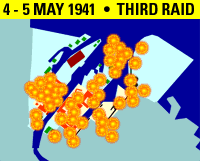 Three weeks after the Easter Tuesday attack air-raid sirens went off again in Belfast. The skies were clear that night as around 200 German bombers approached the city in the early hours of the 5th May.Most of the bombs dropped on the harbour estate and Queen's Island found their target as, in a three hour period, wave after wave of German planes flew overhead. However, many bombs did miss their target and destroyed streets in the city centre. The raid ended around four o’clock in the morning and was regarded as a success by the Germans. They had hit most of their intended targets. A total of 191 people lost their lives in this attack. Fourth Raid - 6th May 1941
A German spotter plane flew over Belfast on the 6th May to confirm the damage inflicted on the city the night before. That same evening two planes, which had been diverted from Glasgow because of bad weather over the Scottish coast, dropped mines near the shipyard in east Belfast. Fourteen people were killed. This was the last attack from the air on the people of Belfast.
Between April and May German planes had attacked the city for a total of ten hours. Over a thousand people lost their lives and half of the housing in the city had been destroyed or seriously damaged. Belfast and its people had paid a heavy price in their battle against Hitler.
Perosnal Memories of the Raid Selected from the BBC Northern Ireland documentary "No Survivors in Burke Street" - Jimmy Doherty - "We went right down into the heart of the area, Annadale Street, Burke Street, Berlin Street. In that area we met death everywhere. Very few casualties - this was a terrible thing. That night, the dead in some areas outnumbered casualties. A terrible thing to see. We moved down into Annadale Street. There the devastation was great. One street was completely wiped out. No survivors in Burke Street."
- Brian Moore - "I was walking up Tenant Street towards Carlisle Circus. I suddenly looked to the left and I saw what looked like a hundred rats which had come up from the sewers and were going in a kind of procession along the edge of the gutters, not on the pavement, going up towards Carlisle Circus, not fast, just moving slowly. That was the most frightening thing to me that I'd seen."
- Donald Fleck - "It was sheer pandemonium because nobody wanted to move anywhere. People got into air-raid shelters which I may say were badly constructed because they had a very heavy roof on them and only four-and-a-half-inch side walls with the result that when the wall blew out this big concrete block came down on top of the people and killed quite a few. But generally speaking…..under the stairs was a favourite place to get some protection from the thing [bomb] coming down because if you looked at old houses that had been bombed, the stairs were still standing and people [who] had been sitting under the stairs got away with it [survived the attack]."
- Jimmy Doherty - "Most of these [mill] houses had five, six, seven and eight people living in them. Right alongside them was the massive mill - six, seven stories high above them [the mill houses] and a bomb sliced about 60 yards of this tall building which just came cascading down like a waterfall on top of these little houses. It was just devastation. Thirty five people died in that small street…..In an area like that everybody was a friend, [relatives] they all lived together, so in that devastated area you had a whole community wiped out."
- Major John Potter - "We walked down High Street past the Albert Clock and almost everything on the right hand side of the road had been destroyed. It was just a smouldering ruin. Firemen were still playing their hoses on the ruins. We had to step our way over the hoses. We walked on up towards the Cathedral. The Cathedral had an extraordinary escape because the buildings all around had been destroyed and I remember there was a notice pinned up there warning people not to pick up pens and pencils as they might have been bombs left behind by the Germans. We then walked back and joined the Heysham boat and sailed up the [Belfast] lough. And it was only there, as you were going past Harland and Wolff’s and Short and Harland’s, that you realised what a successful raid it had been. The damage in Harland and Wolff’s seemed to be enormous. Cranes had toppled over; hangers had been hit in Short and Harland’s; a ship lay sunk just in the channel."
|  | - Discuss the meaning of the following keywords:
Harbour Estate, Queen’s Island, Air-raid, Manufacturing, Target zone, Fatal, Densely populated, Identification, Defence, Sirens, General absolution, Master race, Empire. - On a map of Europe point out to the class some of the countries which were invaded by the Germans during World War 2.
- On a map of the British Isles point out some of the key industrial cities which were bombed during the war, e.g. London, Birmingham, Sheffield, Liverpool, Coventry, Glasgow.
- Point out Belfast’s proximity to the industrial cities of the north of England and Scotland.
|  | - Read the personal memories of the air-raids over Belfast to the pupils. Ask them to describe what life may have been like for a child living in Belfast at the time.
- Ask the children to talk to their older relatives who lived through the Belfast Blitz and to record their memories of that time. These stories should be shared with other members of the class, either orally or in writing.
- The programme shows children being evacuated from Belfast to go and live in the country after the first raids on Belfast. If possible try to get an older person from your area who was actually evacuated from the city at that time to come in and tell the class of his/her experiences.
|  |
The Storm Passed, by Trevor Allen and published in 1996 by Irish Academic Press ISBN 0-7165-2616-6
Northern Ireland in the Second World War, by Brian Barton and published in 1995 by the Ulster Historical Foundation ISBN 0-901905-690
The Blitz - Belfast in the War Years, by Brian Barton and reissued in 1999 by the Blackstaff Press ISBN 0-85640-426-8
|
|
|  |
| |  | Programme 1: Belfast Blitz: |  |  | Programme 2: Rural Victorians | | | Programme 3: Monastic Settlements | |
| | |  | Can't find your subject? Visit our archive section where you can find programmes supporting other curricular subjects, including: Geography, History, Citizenship and English. Visit the archive. |
| |
| |

