|  |  |  |  |
 |  |  |  |  |
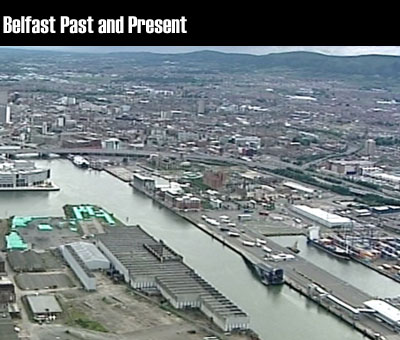  | 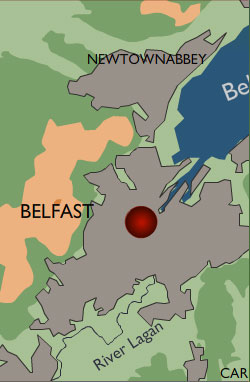 |
Belfast has a population of 580 000 people and is the capital city of Northern Ireland. The city is sited in a valley with the Divis and Black Mountains to the West and the Castlereagh Hills to the East. Belfast initially developed as a narrow bridging point where the Farset stream enters the River Lagan. Belfast grew slowly and by 1815 had only 30 000 inhabitants. In the early 19th century Belfast began to grow rapidly with the arrival of industrial cotton spinning. This growth continued throughout the 19th and 20th centuries with the establishment of the linen mills and ship building industries. As a result of all this industrial development Belfast grew outwards. The city centre grew around the new city hall and a range of important shops, offices and financial institutions were built. This area is known as the Central Business District or the CBD. Surrounding the city centre the docks developed to the East and industry developed to the North, South and West. This is the old industrial area or the zone of transition. The inner city grew as more and more people moved in from the surrounding rural areas to work in the new industries. Rows and rows of terraced housing were built around the factories and docks to accommodate the new workers. Outside this area larger houses were built for the managers and foremen of the new factories and mills. Further out again on the higher land, villas and mansions were built for the wealthy industrialists and leaders. But over the last 40 years there has been a significant redevelopment of the old Victorian cityscape as the city's population has declined and industry and land use has changed. Throughout the 1970s and 1980s there was massive industrial decline around the docks. Heavy industry closed and major employers such as Harland and Wolff had to lay off huge numbers of workers. Buildings and land around the docks were left empty and derelict. As the political situation worsened people began to move out of the inner city. Terraced housing was demolished and communities were relocated to estates on the edge of the city. One of the most significant changes to Belfast has come about with the development of the motorised transport. Improved routes have allowed people to move further away from the city centre and into the surrounding suburbs. As more and more people travel into and out of the city by car more roads and bridges have had to be built. Improved roads and greater car usage has allowed businesses to move out of the city centre. Over the past 15 years, Belfast has a seen a regeneration. A river weir was built in the 1990s to control the level of the Lagan. This combined with an increasingly peaceful political situation encouraged redevelopment of the surrounding docks area. Apartments, offices and entertainment facilities including the Waterfront Hall and the Odyssey complex have been built along the banks of the Lagan. People are moving back into the inner city. New apartments are being built and many of the remaining terraced houses have been redeveloped to accommodate workers in the new service industries. | Belfast Metropolitan Urban Area has a population of 580 000 people and is the capital city of Northern Ireland. Belfast developed as a narrow bridging point on the Farset river but grew with the arrival of the textile and shipbuilding industries. Throughout the 1970s and 1980s there was massive industrial decline around the docks. Buildings and land were left empty and derelict. Over the past 15 years, derelict land has been redeveloped for apartments, offices and entertainment facilities. |