|  |  |  |  |  |
 |  |  |  |
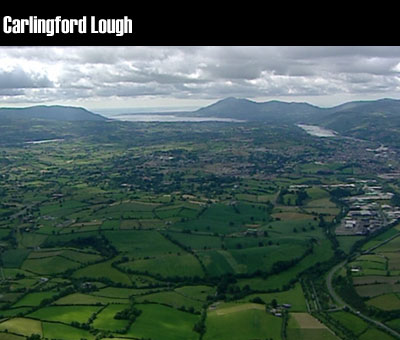  | 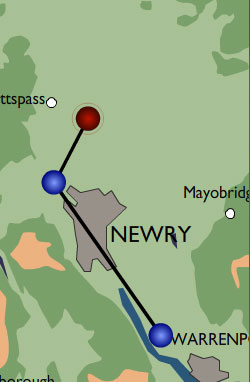 |
According to legend, below us is the spot where St Patrick planted a yew tree at the head of the strand at Carlingford Lough. The city of Newry, which now stands near the head of the lough, takes its name from this ancient story. The settlement, which has been here since the 12th century, straddles the boundary between two counties, meaning that one half is in County Down, the other in Armagh. Newry is also the gateway between Northern Ireland and the Republic. If you travelled by train from Dublin to Belfast, you would pass over the Craigmore Viaduct, which opened in 1852. It's the highest construction of its kind in Ireland and features 18 arches. One of the best known landmarks in the area is the keep at Narrow Water Castle. Its purpose in centuries past was to protect Newry against seaborne attacks. There's been a keep on this site since 1212. The walls of this building are nearly six feet thick in places, and it features arrow loops at the corners. This meant there were no blind spots for the archers defending it. The tower also has a murder hole above the door. This would allow defenders to attack any invaders at less risk to themselves. This is one of the finest examples in Ireland of a tower house, which were constructed throughout the island between the 15th and 17th centuries. It reportedly cost £361 to build. | According to legend, Newry takes its name from the spot at which St Patrick planted a yew tree at the head of the strand at Carlingford Lough. Craigmore Viaduct opened in 1852 and is the highest construction of its kind in Ireland with 18 arches. The purpose of the keep at Narrow Water Castle in centuries past was to protect Newry against seaborne attacks. There's been a keep on this site since 1212. |