|  |  |  |  |  |
 |
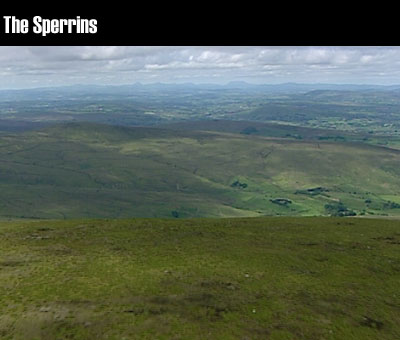  | 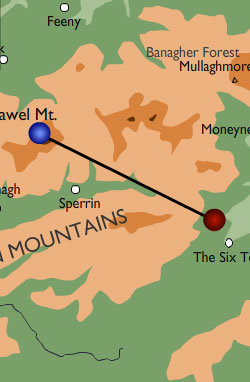 |
The landscape of central Ulster was sculpted by ice from metamorphic rock, which was formed under great pressure as the earth's tectonic plates shifted. The mountains here would once have been much taller. Here we see one of the prominent remaining peaks, Slieve Gallion, with Lough Neagh in the far distance. It's long been known that there's gold in these particular hills. At Plumbridge in Tyrone, prospectors have descended from time to time in search of riches. But locals will tell you that it takes weeks of laborious panning in the headwaters of the River Foyle to extract tiny amounts of precious metal. It's hard to believe, but these picturesque slopes were once regarded as bad for Ulster's image. When agents for the great merchant companies in the City of London were looking for places to invest in 1609, their guide was instructed by the Lord Deputy of Ireland not to show them the Sperrin Mountains, in case it gave a bad impression. There are thousands of standing stones and chambered graves in this landscape. And although the highest peak, Sawel, where we are now, is only 2,240 feet, you can see as far as Donegal from it. | The landscape of central Ulster was sculpted by ice from metamorphic rock, which was formed under great pressure as the earth's tectonic plates shifted. It's long been known that there's gold in these particular hills. At 2,240 feet, Sawel Mountain is the highest peak of the Sperrins. The range contains thousands of standing stones and chambered graves. |