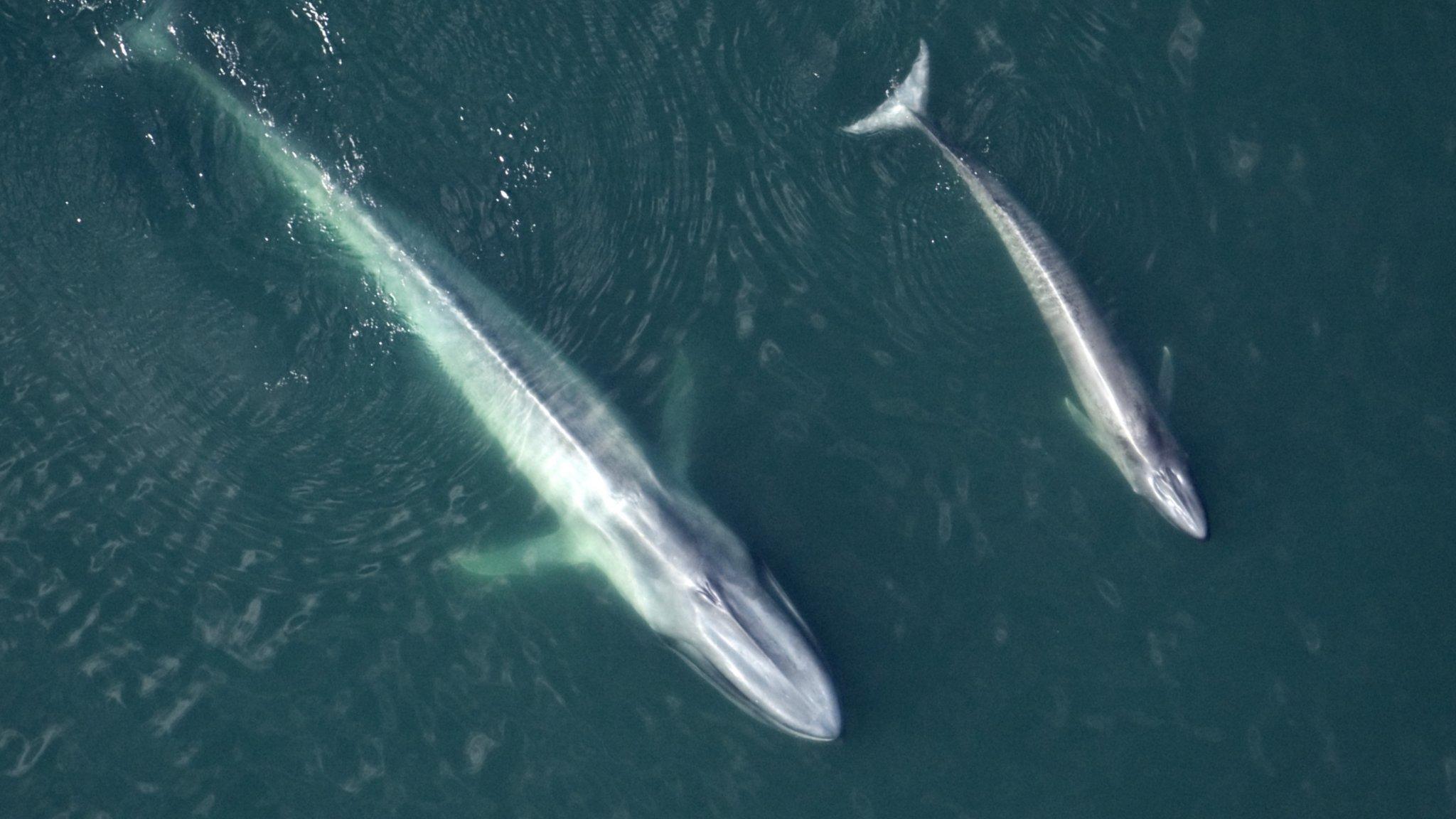
Why there's good news for mega-rare whales

- Published
Experts say there's good news for one of the world's most endangered whale species.
The North Atlantic right whale is one of the rarest whales on the planet with around 380 of them left.
However, the National Oceanic and Atmospheric Administration (NOAA) says 15 babies, which are called calves, have been born so far this season.
But although this is a positive year for the number of babies being born, experts are also warning that more need to be born each year to help the species recover.
More stories like this
Humpback whales greet humans by blowing bubbles, say scientists
- Published10 June 2025
Why are whales so big?
- Published26 January 2023
Humpback whale and other epic migrations
- Published11 December 2024

The North Atlantic right whale's population is thought to be 384 and experts suggest that number is slowly rising after years of decline.
NOAA data suggests 15 calves have been born already so far this season which is seen as good news although experts warn that 50 of more would need to be born per year to allow the species to recover.
The species was largely under threat in the past due to whaling, but have been protected from this since the 1930s.
However the animal wildlife charity WWF says the species still faces threats from fishing gear and collisions with ships.
What are North Atlantic right whales like?

North Atlantic right whales have dark grey bodies and white thick areas of skin on their heads which are called calluses.
They can grow to be longer than a double decker bus and weigh around four times as much as one.
Despite their huge frames, the species feeds on plankton - swimming through swarms of the creature with its mouth open.
They can now be found along the east coast of the US and Canada.
- Published7 March 2023
- Published2 September 2019
- Published20 February 2020