Triceratops lived in Europe millions of years ago, scientists discover

- Published
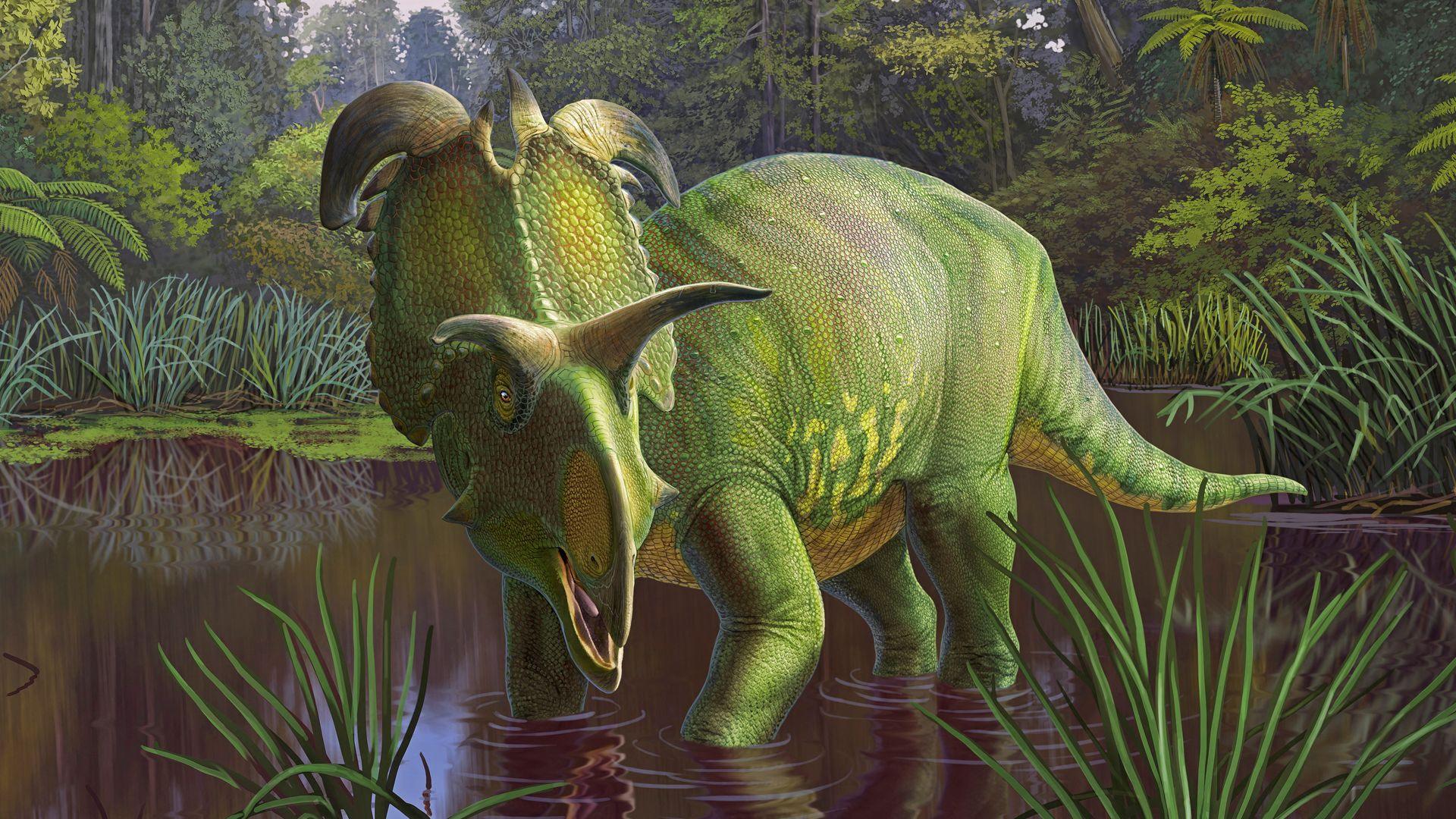
Scientists have discovered that horned dinosaurs - including the famous triceratops - lived in Europe millions of years ago.
Until now, it was believed that Ceratopsians, those huge plant-eating dinosaurs, only existed in Asia and North America.
The discovery of new, more complete skull fossils of the Ajkaceratops, a relative of the Triceratops, prompted a fresh investigation.
The breakthrough research also says that some dinosaur species, thought to be relatives of a different dinosaur family, Iguanadon, were in fact early ceratopsians.

Susannah Maidment, professor at the Natural History Museum, explained the discovery helped scientists understand how animals and the planet has changed over millions of years.
"We used old fossils and modern tools to take a fresh look at the treasures kept in natural history museums," she told Newsround.
"By doing this, we can learn more about what these animals were like, how they changed over a very long time, and how Earth itself has changed too."
Ceratopsians - the family that triceratops belongs to lived around 84 million years ago, during a period of time scientists call the Late Cretaceous period.
Fossils of Ceratopsians had, up until now, been almost completely absent from Europe, because only a handful of incomplete fossils had been found.
But the skull fossil, which was found in Hungary's Bakony Hills was much more intact.
Scientists who specialise in fossils, known as paleontologists, now think Ceratopsians were "much more common" than previously thought.
Dr Attila Ősi, a Hungarian paleontologist who led the research said: "This encourages us to re-examine the fossils collected years, decades, or even centuries ago."
The findings were published in the scientific journal Nature.
Fun Triceratops facts
The name triceratops, which comes from the Greek language, means three-horned face.
Despite its scary appearance, the triceratops was actually a herbivore.
Triceratops had hundreds of teeth, arranged in groups called batteries. They used their gnashers to chop through tough vegetation.
- Published22 August 2025

- Published23 June 2024

- Published6 August 2025