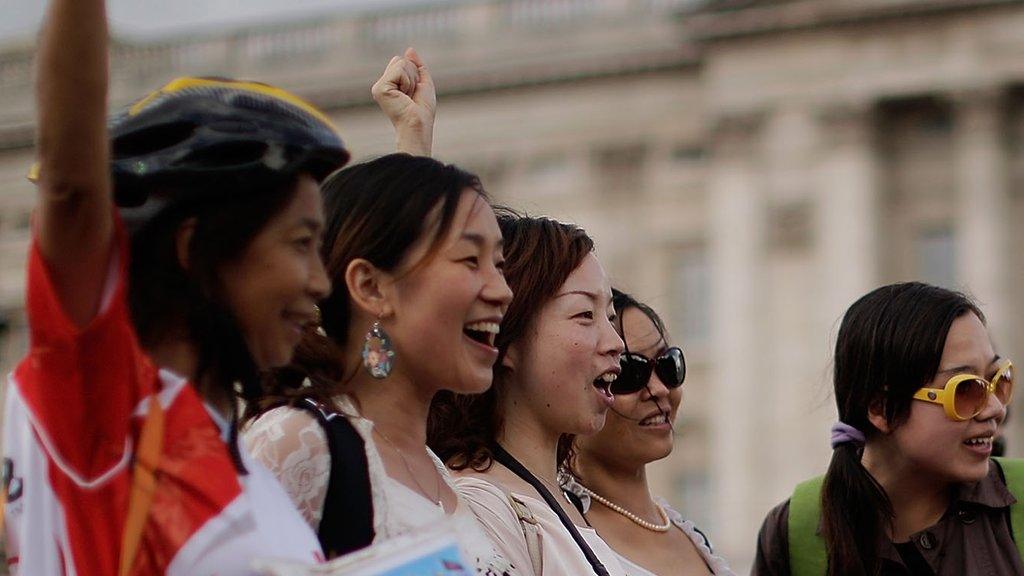
Millions of Chinese workers have migrated from rural areas to the big cities in the past few decades
China is to offer residency status to some of the millions of migrant workers who have moved from rural areas to cities in recent decades.
It means migrants will be entitled to use public services, such as health and education, where they live, rather than in the villages they come from.
Migrants will be able to apply if they can show proof of work, study or housing in a city for six months.
By 2030, up to 70% of Chinese will live in cities, the World Bank predicts, external.
An estimated 61 million Chinese children are left behind in the countryside by their parents.
Migrants who bring their children with them can only place them in unregistered schools, often of dubious quality.
The new rules, which come into effect on 1 January, will not apply to day labourers.

Read more:
White Horse village: One woman's journey to urban China
'Left-behind' children: The dark side of rural life
Cement and pig consumption: China's huge changes in numbers

Day labourers like these will be excluded from the new residency rules

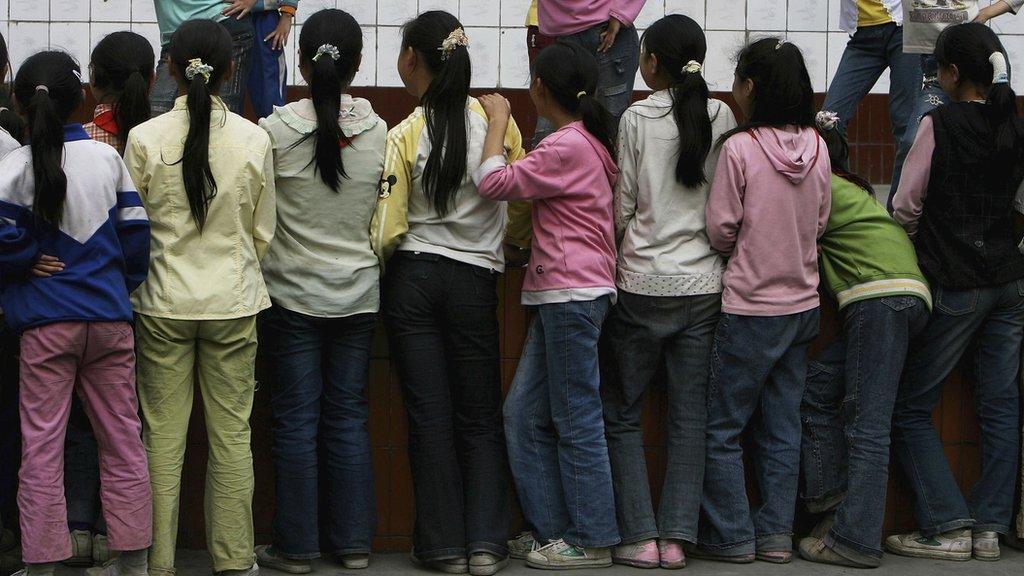
Unregistered migrant children are not allowed to attend state schools
Individual cities will be free to set their own rules for residency. The biggest cities - such as Beijing and Shanghai - are likely to set tougher conditions, so as not to encourage further migration.
This latest reform to China's registration system seems designed to address frustration amongst migrants and bolster social stability, says the BBC's Asia analyst Jill McGivering.
- Published10 December 2015
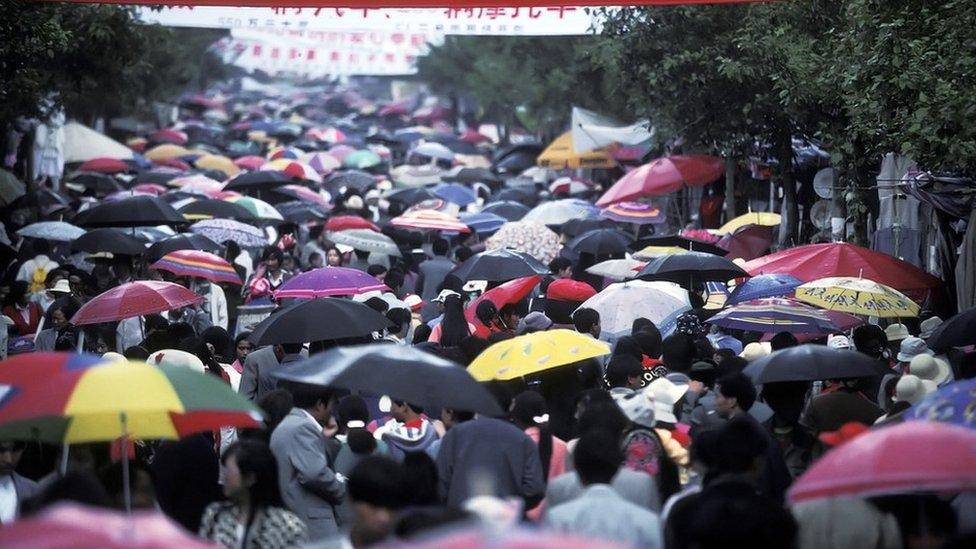
- Published12 August 2013
- Published21 September 2015