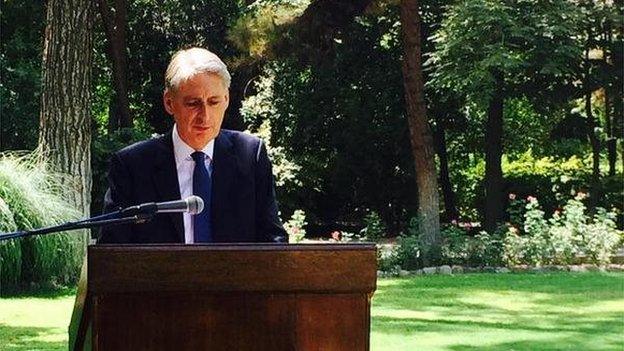
British Foreign Secretary Philip Hammond met with Iranian President Hassan Rouhani
Britain is right to work towards good relations with Iran but should "tread carefully", the foreign secretary said.
Despite a "deep legacy of distrust" Iran is "too important a player" to leave isolated, Philip Hammond said.
The two countries could also work together to tackle the Islamic State group, he told BBC Radio 4's Today.
Mr Hammond held talks with Iranian president Hassan Rouhani in Tehran. He said sanctions could be lifted next spring, Reuters reported.
"We could be talking as early as next spring to start to see sanctions lifting off," Mr Hammond said, according to the news agency.

On Sunday, the British embassy in Iran reopened, nearly four years after it was closed after it was stormed by protesters during a demonstration against sanctions.
Mr Hammond is the first UK foreign secretary to visit Iran since 2003.
He said Britain and Iran had a "difficult history", but relations had been steadily getting better and reopening diplomacy was a "sensible way forward".
"Yes, we should tread carefully. There is a deep legacy of distrust on both sides, and we have major areas where we have very substantial policy differences, but that doesn't mean we shouldn't be talking.
'Wants to do business'
"We do see eye-to-eye on the need to interdict the opium traffic between Afghanistan and Europe, we do see eye-to-eye on the need to challenge Isil [also known as Islamic State]," he said.
He was "not blind" to areas of contention, including Iran's human rights record, but the UK would not be able to influence such issues unless it opened a dialogue with the country's leaders, he said.
Following his meeting with President Rouhani, Mr Hammond told the BBC: "In all of the meetings we've been to we've heard a consistent message that Iran wants to do business with Britain, that it wants to see a new chapter in our relationship, that Iran will very much be open to British and other foreign businesses in this next phase."

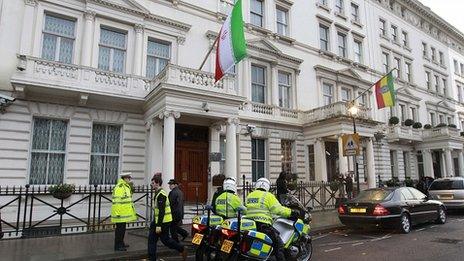
The British embassy in Tehran, seen here in 2003, has been closed since 2011
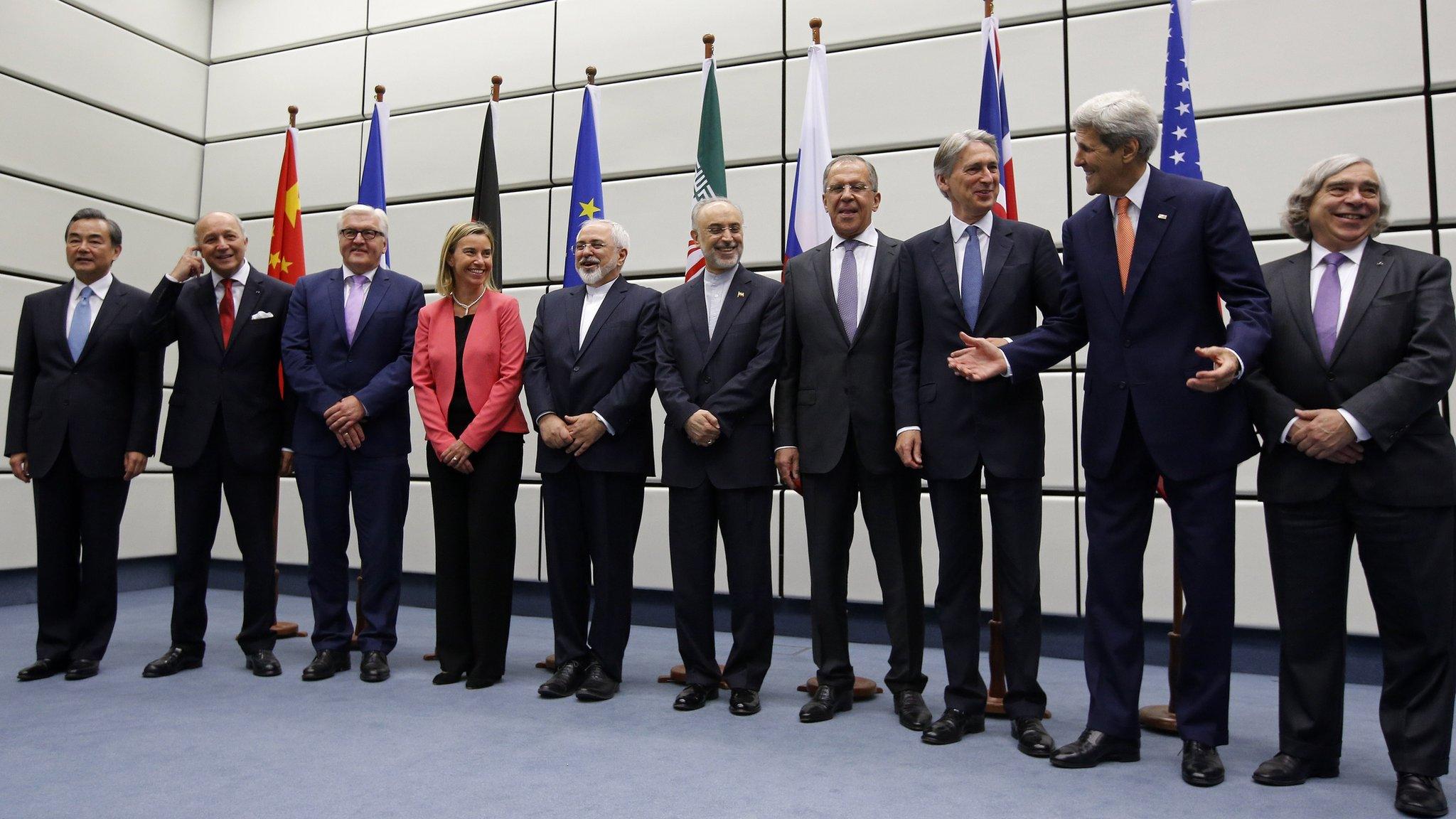
Mr Hammond's visit and the reopening of the embassy comes weeks after Iran reached a deal with six world powers aimed at curbing its nuclear programme.
Initially, the embassy will be headed by a charge d'affaires, Ajay Sharma, but Mr Hammond said an agreement on upgrading to full ambassador status is expected to be reached in the coming months.
'Best bet'
The foreign secretary acknowledged there were no guarantees the Iranian regime would not pursue a nuclear weapons programme in the future, but "you have to make a judgement".
"My judgement is that whatever Iran has or hasn't been doing in the past, the regime, the Iranian people, have come to the conclusion that pursuing, or being believed to pursue, an illegal military nuclear programme just imposes too great a cost on Iran," he said.
An Iran that was no longer isolated was "the best bet for the future", he said.

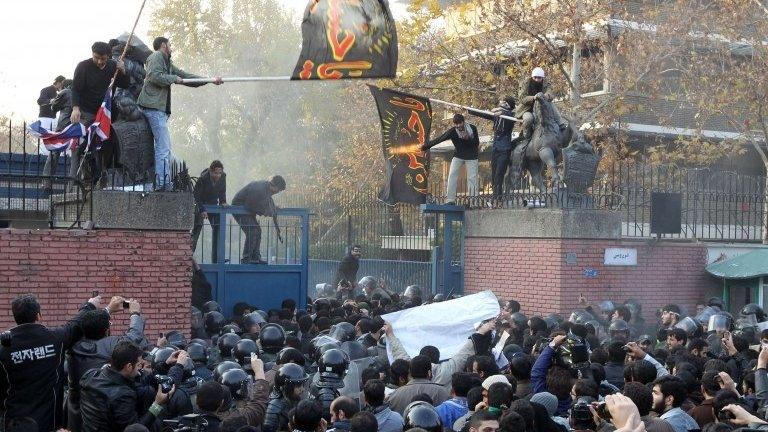
The British embassy in Tehran was stormed by protestors in 2011
In November 2011 Iran announced it was expelling the UK's ambassador in retaliation for British support for tougher sanctions on Tehran over its nuclear programme.
Hundreds of protesters stormed embassy compounds two days later, smashing windows, torching cars and burning union jacks.
The UK responded by closing the Iranian embassy in London later that month.
But following the election of Mr Rouhani and an agreement on how to deal with Iran's nuclear programme, the then Foreign Secretary William Hague proposed the reopening of the embassy in June last year.
- Published23 August 2015
- Published20 August 2015
- Published20 August 2015
- Published18 August 2015
- Published10 August 2015
- Published28 July 2015
- Published23 November 2021
- Published30 November 2011