Summary

  • Five cases of hantavirus have now been confirmed in relation to an outbreak on a cruise ship, the World Health Organization (WHO) says, and more may follow due to the virus's six week incubation period

  • But a top health official says: "I want to be unequivocal here... this is not the start of a Covid pandemic" - what is hantavirus?

  • Three people have died either on board or after travelling on the MV Hondius, which set sail from Argentina a month ago

  • The ship is heading to the Canary Islands, where it's expected to dock at the weekend

  • Contact tracing is under way in several countries for passengers who left the ship before the outbreak was detected - including the UK, Switzerland and the Netherlands

  • The origin of the outbreak is still unknown, with the WHO saying investigations are "still under way" - how does it spread?

  1. Analysis

    Questions remain despite reassurances from WHOpublished at 17:11 BST

    Imogen Foulkes
    Geneva correspondent

    No need to panic about hantavirus was the overriding message from the World Health Organization (WHO) at its briefing today.

    This is an outbreak of a rare virus, WHO officials said, on a cruise ship, with so far just five confirmed cases among a total of eight suspected. It is definitely not comparable to Covid, they insisted.

    That virus was brand new, while hantavirus, and this specific Andes strain, is known to epidemiologists. But to ordinary people, still scarred by the experience of the Covid pandemic, the headlines over hantavirus are unsettling.

    While the WHO tried hard to reassure, there are some unanswered questions, in particular about the tracing of people who may have been in contact with anyone on the ship.

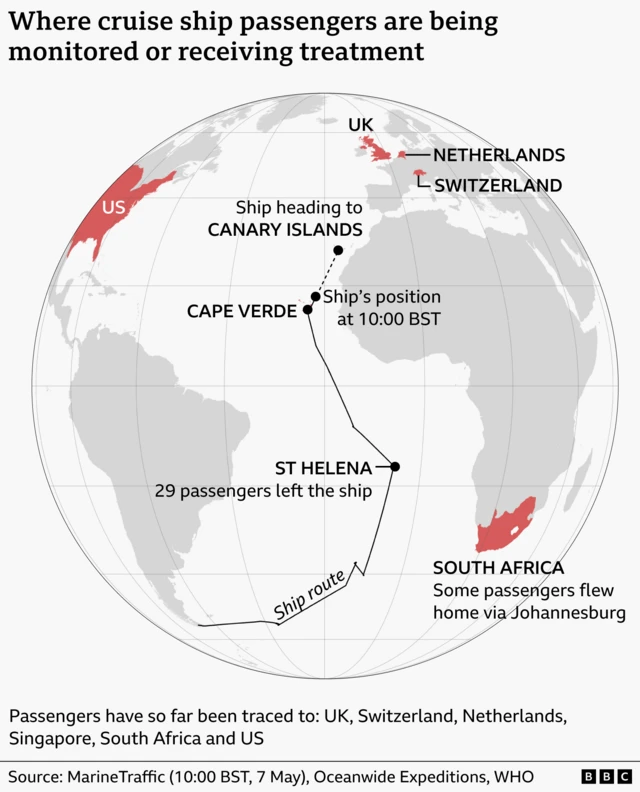
    We know a number of passengers left the cruise ship at St Helena, and returned home. One of them, a Swiss man, is now in hospital with hantavirus, but did not become ill until he was back home.

    Are all the passengers on the flights he must have taken being traced? What about the other passengers, from a dozen different countries, who also left the ship early?

    Here the WHO did not provide clear answers, though officials suggested they would be publishing guidelines for retrospective tracing and testing in the next few hours. They do expect more cases, but reiterated the risk to the general public is low.

  2. Dutch hospital confirms patient tests positive for hantaviruspublished at 17:01 BST

    Exterior of the University Medical CenterImage source, Reuters

    A patient in hospital in the Netherlands has tested positive for hantavirus.

    In a statement on its website, Leiden University Medical Centre says the individual "has given permission to share this information".

    The hospital has not identified the patient.

    Earlier, we reported that doctors at the hospital are believed to be treating 56-year-old Briton Martin Anstee, who was evacuated from the MV Hondius yesterday. Anstee has told the BBC he is fine.

  3. Passengers currently on ship show no symptoms of virus - cruise operatorpublished at 16:55 BST

    We've just had an update from Oceanwide Expeditions, the cruise operator of the MV Hondius.

    They say three people evacuated from the cruise ship on Wednesday are still being treated by medical professionals.

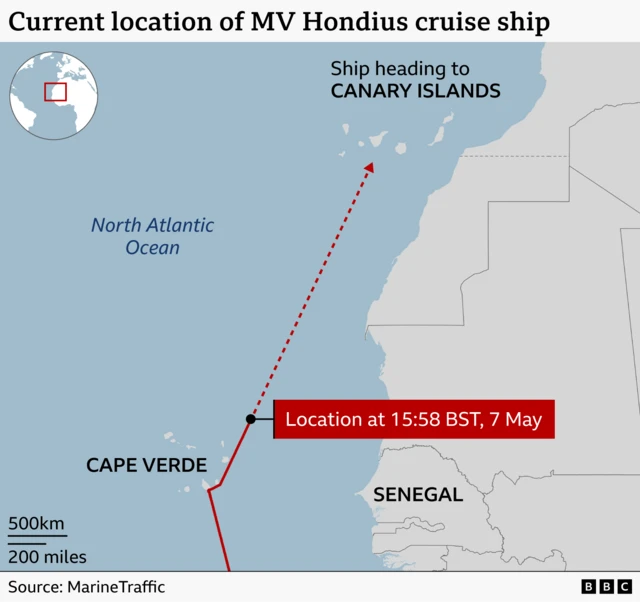
    The ship is now heading to Granadilla port in Tenerife, Canary Islands. It's expected to arrive in the early hours of Sunday.

    Passengers on board, the update says, are showing no symptoms of the virus.

    A map showing the location of the ship off Cape Verde
  4. Spanish health minister says she had 'productive meeting' with Canary Islands presidentpublished at 16:40 BST

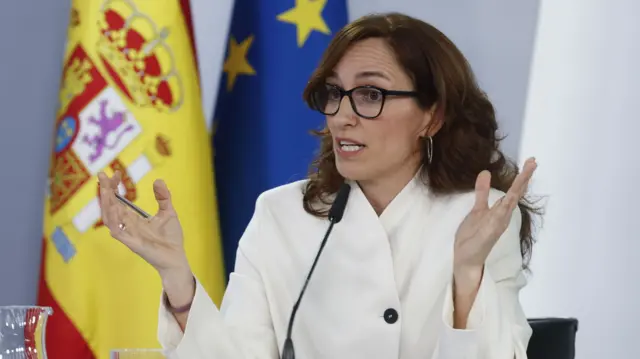
    Spanish Minister of Health Mónica García pictured speaking into microphone with white suit and glassesImage source, EPA

    Spanish Health Minister Mónica García says she has had a "productive meeting" with the president of the Canary Islands, telling him about "the need to act".

    This follows her announcement yesterday that the MV Hondius would sail to the Canary Islands, with passengers to be evacuated at Granadilla port in Tenerife. The president of the Canary Islands, Fernando Clavijo, said he had not been consulted.

    Writing on social media today, García says passengers will be assessed on board the ship and will only disembark for transfer or repatriation "with protective equipment" and "without contact with the population".

    Earlier, World Health Organization chief Tedros Ghebreyesus said the risk of the virus to people in the Canary Islands is low. He also thanked the Spanish prime minister for his "generosity, solidarity and meeting his moral duty".

  5. More cases could emerge, but hantavirus spread is not like Covid - recap of WHO news conferencepublished at 16:08 BST

    Nabiha Ahmed
    Live reporter

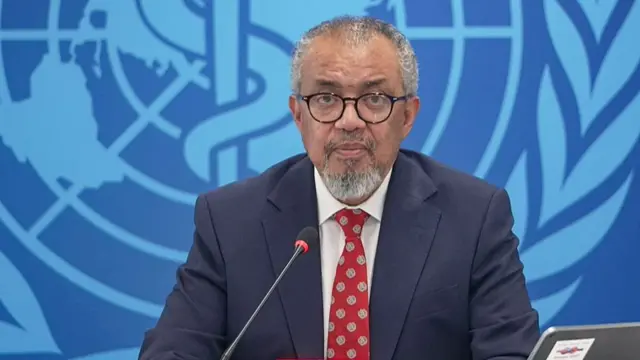
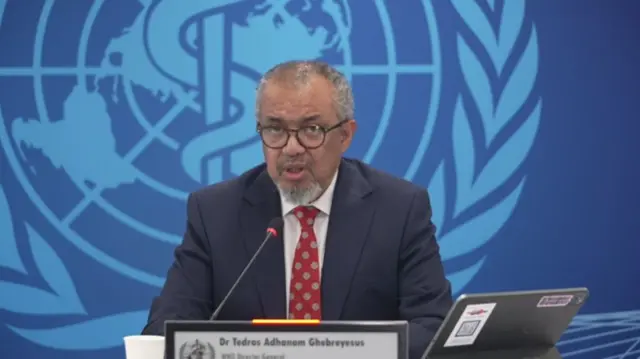
    Director-General Tedros Adhanom GhebreyesusImage source, AFP via Getty Images

    Here's what we've learnt from the WHO news conference earlier:

    This is not another Covid pandemic. WHO says hantaviruses spread "very, very differently" and through prolonged contact.

    Five of the eight suspected cases have been confirmed - all eight are people who were on board the ship.

    More cases could be reported. Given the incubation period of this disease, which can be up to six weeks, we could see more hantavirus cases.

    The public health risk is low. WHO's director general says this also applies to the Canary Islands, where the ship is heading now.

    The outbreak is being investigated. WHO says the couple who were the first to get infected visited places "where the species of rat known to carry the virus was present". Investigations of the outbreak are "still under way".

  6. Analysis

    Why did I ask WHO what is unusual about this outbreak?published at 15:45 BST

    James Gallagher
    Health and science correspondent

    That news conference was an attempt to reassure people and calm fears.

    It is not a surprise that many people's minds jump to the worst having lived through the Covid pandemic.

    However, the WHO experts were clear this is "not a pandemic" and they expected it to be a "limited outbreak".

    I asked what's unusual here because that's crucial to understanding the threat - if the virus had mutated then that would be a bigger problem.

    Instead, they pointed to the specific circumstances of the outbreak being on a boat - an environment where people are in close proximity.

    This is still a deadly disease, but they appeared confident that the hard work of figuring out who came into contact with which infected patients and when would be enough to contain the infection.

  7. 'We are always preparing for the next epidemic'published at 15:41 BST

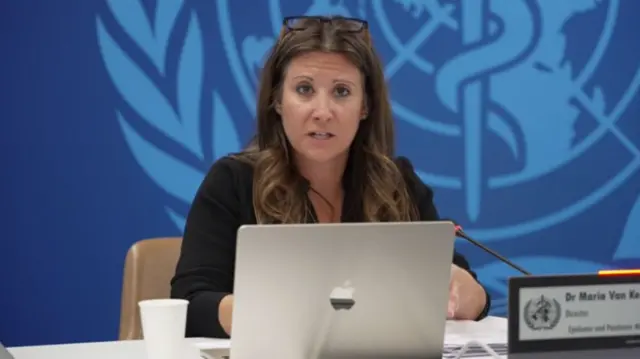
    Infectious disease epidemiologist Maria van Kerkhove says the WHO has done a lot of work over the last 10 years to develop better diagnostics and vaccines.

    She was responding to a question about how quickly a vaccine could be developed for hantavirus.

    "We benefited from that for Covid," van Kerkhove adds.

    She says a more holistic view is now used in global health research, and hantavirus is "one in a family of viruses where this approach is being taken".

    She stresses that while this is not the start of another major outbreak, the WHO stands ready: "We are always preparing for the next outbreak, the next epidemic."

    • The news conference has now finished, but we'll have analysis and a recap of what we've heard shortly
  8. Are there concerns about cruise ship passengers boarding flights?published at 15:33 BST

    We've heard a question about what happens with commercial flights after passengers disembark - are there any concerns about them boarding those flights?

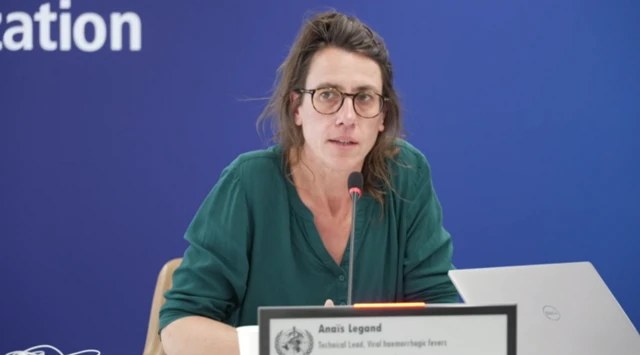
    WHO technical expert Anaïs Legand says "step-by-step guidance" is being developed to support this, with the WHO co-ordinating with national health authorities.

    This will make sure that anyone with symptoms can be "properly isolated and cared for", she says, with all passengers being "evaluated for their risk exposure".

    This guidance is still a "work in progress", she adds.

    Infectious disease epidemiologist Maria van Kerkhove says the WHO is also working with the ship's operator on guidance for the onward passage of crew members.

  9. Analysis

    WHO seeks to provide reassurance at news conferencepublished at 15:24 BST

    Hugh Pym
    Health editor

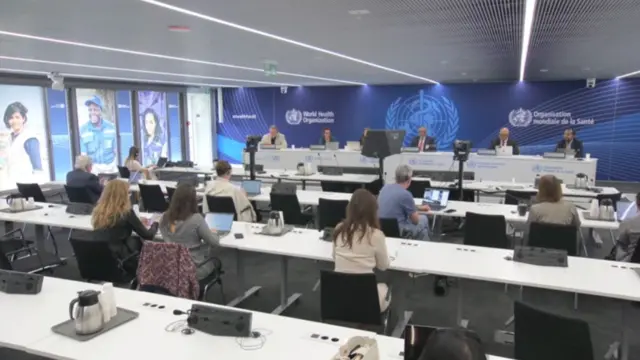
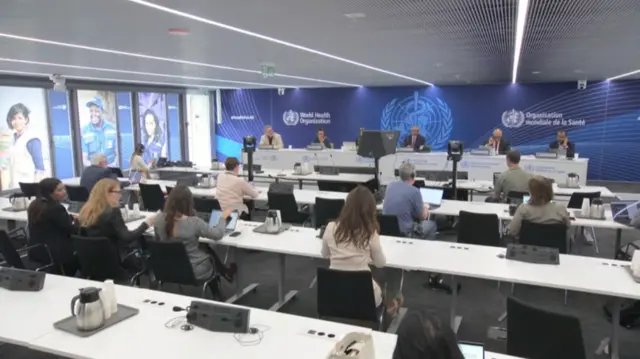
    WHO press conferenceImage source, WHO

    The central aim of the media conference set up by the World Health Organization (WHO) was to provide some reassurance about the extent and severity of hantavirus developments.

    Officials were at pains to say this was not similar to Covid-19 and was not the precursor to a pandemic. They stressed that, unlike Covid, transmission between humans required prolonged close contact.

    The WHO spokespeople said this would be a limited outbreak if public health measures were put in place and there was co-operation between different countries.

    Again they stated that the risk to the public was low. But they acknowledged this was a "serious incident" and more cases may well be reported.

    • The news conference is still under way - you can press watch live to follow along
  10. What we know about three people airlifted off the ship yesterdaypublished at 15:17 BST

    Nick Beake
    Reporting from University Medical Centre in Leiden, Netherlands

    Exterior of the University Medical CenterImage source, Reuters

    The WHO news conference is still under way, but in the meantime, here's a report from our correspondent.

    Doctors at the hospital in Leiden are treating a patient, believed to be 56-year-old Briton Martin Anstee, who was evacuated from the MV Hondius yesterday after the hantavirus outbreak.

    The BBC has spoken to him briefly and he indicated he is fine. He was previously reported by the Spanish government to be in a critical condition but is now said to be stable.

    Anstee is one of three people airlifted off the ship yesterday. Another was a German woman who arrived in the Netherlands last night - she has since been taken to Dusseldorf for further treatment.

    This morning in Amsterdam, another plane touched down with a 41-year-old Dutch national, said to be a member of the crew of the stricken ship.

    Also in Amsterdam, a woman with possible symptoms of the virus has been taken into hospital - it is reported she was a stewardess on the Dutch airline KLM. She is said to have been in contact with a woman who had been on ship, who went on to Johannesburg and subsequently died.

    This gives an indication of how this story of one ship is affecting lots of different countries, with authorities now trying to trace all those who may have been exposed to the virus for a substantial amount of time.

  11. First documented hantavirus transmission between people on ship - expertpublished at 14:58 BST

    WHO technical expert Anais LegandImage source, WHO

    The BBC's James Gallagher asks what the WHO thinks is unusual about this outbreak, or whether it fits what the experts expect.

    WHO technical expert Anaïs Legand says what makes this outbreak "most unusual" is the transmission of the virus between people on a boat.

    She says this is a "very specific environment" and is the "first documented to date with this particular virus".

    Apart from this, she says: "There is no indication to date there is something further unusual."

  12. WHO expert says 'not the start of Covid pandemic'published at 14:54 BST

    Maria van Kerkhove is then asked about the difference between this outbreak and the early days of the Covid-19 pandemic.

    She says we're not in the same situation as six years ago.

    "I want to be unequivocal here. This is not SARS-CoV-2. This is not the start of a Covid pandemic. This is an outbreak that we see on a ship," she says.

    Van Kerkhove explains it doesn't spread in the same way as coronaviruses, but rather through "close, intimate contact".

    She adds that actions being taken on board the ship are "precautionary to prevent any onward spread".

  13. 'This is not Covid, this is not influenza, it spreads very differently'published at 14:51 BST

    Maria van KerkhoveImage source, WHO

    Now back to the news conference.

    Moving on to questions, infectious disease epidemiologist Maria van Kerkhove says authorities have asked "everyone to wear a mask" on board the MV Hondius.

    Those in contact with or caring for suspected cases, she adds, should "wear a higher level of personal protective equipment".

    Van Kerkhove says the number of cases may rise, which shows that contact-tracing is effective, but the Andes hantavirus usually only spreads through close human-to-human contact.

    "This is not Covid, this is not influenza, it spreads very, very differently," she says.

  14. Seven British nationals disembark in St Helena, with two now self-isolating in UK - UKHSApublished at 14:47 BST

    While the WHO news conference is under way, here's an update from the UK Health Security Agency.

    The agency says it is aware of seven British nationals who disembarked the MV Hondius at St Helena on 24 April.

    In a statement, it says: "Two of these individuals are now self-isolating in the UK while the others have not yet returned.

    "Four of these individuals remain in St Helena and we are in touch with the relevant health officials to provide advice on contact management."

    Tracing efforts are continuing for the seventh individual, who has not yet returned to the UK, the agency says.

  15. Infected couple visited sites where rat species carrying hantavirus was present - WHOpublished at 14:37 BST

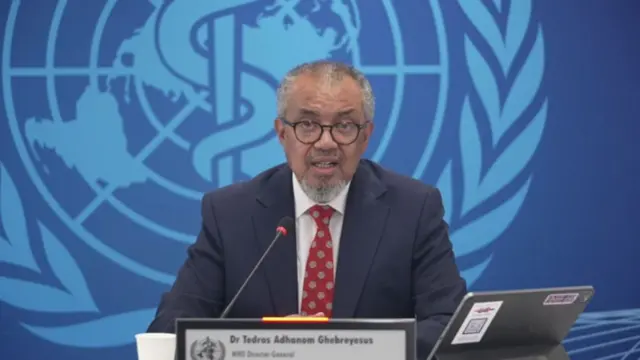
    Dr TedrosImage source, WHO

    Dr Tedros says investigations into the course of the outbreak are still under way.

    The first two cases "travelled through Argentina, Chile and Uruguay on a bird-watching trip which included visits to sites where the species of rat known to carry the virus was present," he says.

    The WHO is working with authorities in Argentina to understand the couple's movements, he adds.

    He also says he has been in touch with the captain of the cruise ship, who reports that morale has improved "significantly" since the ship started moving again.

    He ends there and moves to questions.

  16. Risk of virus to people in the Canary Islands low - Tedros Ghebreyesuspublished at 14:35 BST

    Dr Tedros says that, on Monday, he asked Spanish Prime Minister Pedro Sánchez to accept the ship - which Sánchez agreed to do.

    The ship is now sailing to the Canary Islands, says the director general, who thanks Sánchez for his "generosity, solidarity and meeting his moral duty".

    "We are confident in the capacity of Spain to manage this risk and we're supporting them to do so," he says.

    He also assures that the WHO has assessed the risk of the virus to the people of the Canary Islands as low.

    Dr Tedros says all passengers still on the ship have been asked to stay in their cabins, and anyone who shows symptoms has been told to isolate immediately.

  17. More cases could be reported, WHO sayspublished at 14:32 BST

    Dr Tedros says the WHO is aware of reports of other people with symptoms who may have had contact with passengers, and they're in touch with the relevant authorities.

    Given the incubation period of this disease - which can be up to six weeks - it's possible more cases may be reported, he says. But while it is serious, the WHO says it "assesses the public health risk as low".

    World map illustrating where cruise ship passengers are being monitored or treated, and the route of the ship across the Atlantic. The ship is shown travelling via Cape Verde and St Helena, where 29 passengers left, and heading toward the Canary Islands, with its position marked at 10:00 BST. Countries highlighted include the UK, Netherlands, Switzerland, United States and South Africa. Note says there have also been passengers traced to Singapore.
  18. Hantavirus passed between humans only after prolonged contact - WHO chiefpublished at 14:27 BST

    WHO press conferenceImage source, WHO

    Dr Tedros goes on to explain that in previous outbreaks, transmission between humans only happened due to "prolonged contact", which he says was the case here.

    When a man developed symptoms on the ship on 9 April, hantavirus was not suspected, Dr Tedros says, and samples were not taken at the time.

    The man's wife went ashore when the ship later docked at St Helena, and she later died in Johannesburg.

    Samples were taken in South Africa "and confirmed as hantavirus", Dr Tedros says.

  19. Five of eight suspected hantavirus cases from cruise ship now confirmedpublished at 14:23 BST
    Breaking

    Tedros Ghebreyesus says the UK notified the World Health Organization about a "cluster of passengers" with a respiratory illness on the ship last Saturday.

    So far, eight cases have been reported, including three deaths, he says. Five of these are confirmed cases, while the other three are suspected, the WHO chief says.

  20. WHO news conference under way - watch livepublished at 14:16 BST
    Breaking

    Tedros GhebreyesusImage source, WHO

    A news conference with Tedros Ghebreyesus, director general of the World Health Organization (WHO), has begun.

    Press watch live at the top of the page to follow along. We'll also bring you text updates throughout.