Summary

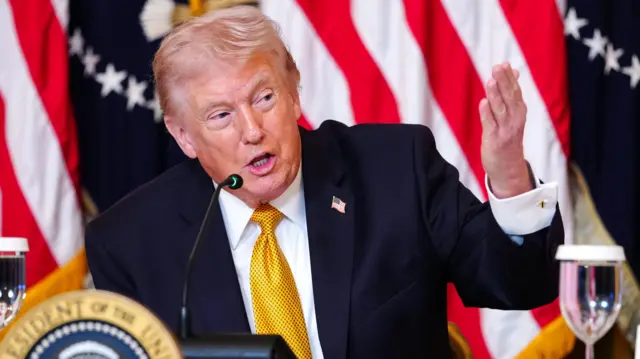
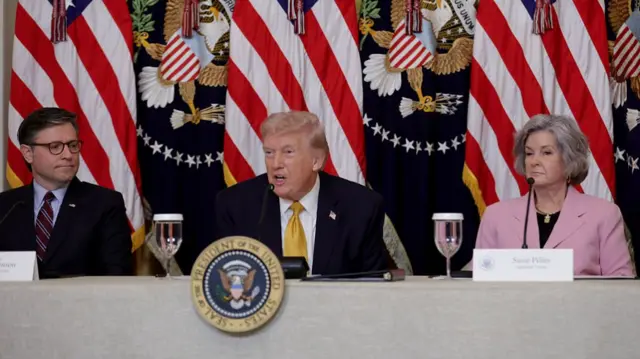
  • US President Donald Trump says he's "not happy" with the UK after Keir Starmer said it would not be drawn into a "wider war" over Iran

  • Trump repeats his call for other nations to assist in securing the Strait of Hormuz after earlier warning it would be "very bad for the future of Nato" if allies don't help secure the key oil shipping route

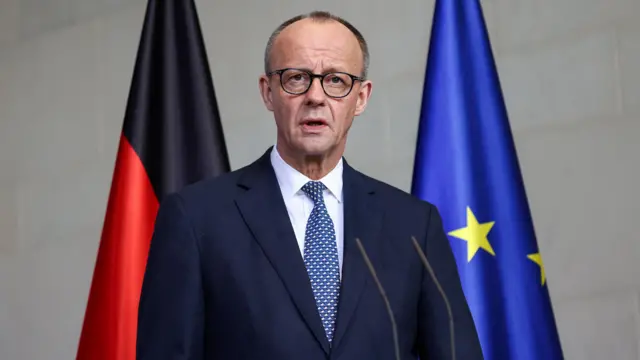
  • German Chancellor Friedrich Merz says this war "is not a matter for Nato", while Nato says "allies have already stepped up to provide additional security in the Mediterranean" - here's how other countries have responded

  • Earlier the Israeli military said it had begun "a wide-scale wave of strikes" in the cities of Tehran, Shiraz and Tabriz, with BBC Verify seeing videos of damage in Iran's capital

  • Qatar says it intercepted a second wave of missiles from Iran following an attack earlier, while in the UAE drone attacks caused fires at a large oil industrial area in Fujairah - the latest attacks at a glance

  1. 'Deeply alarming' humanitarian situation in Lebanon, say western leaders in statementpublished at 20:12 GMT

    The leaders of the UK, Canada, France, Germany and Italy have just issued a joint statement expressing "grave concern" by the "escalating violence in Lebanon".

    All five have called on a "meaningful engagement by Israeli and Lebanese representatives to negotiate a sustainable political solution".

    "Hezbollah’s attacks on Israel and the targeting of civilians must cease and they must disarm," the statement adds. "We condemn Hezbollah’s decision to join Iran in hostilities, which further jeopardises regional peace and security.

    "We condemn attacks directed at civilians, civilian infrastructure, health workers and infrastructure, as well as the United Nations Interim Force in Lebanon. These actions are unacceptable, and we call on all parties to act in accordance with international humanitarian law.

    "A significant Israeli ground offensive would have devastating humanitarian consequences and could lead to a protracted conflict. It must be averted. The humanitarian situation in Lebanon, including ongoing mass displacement, is already deeply alarming."
  2. Iran launched attack at Qatar, defence ministry sayspublished at 20:02 GMT

    The Qatari Defence Ministry has said that it was attacked by Iranian missiles on Monday, though most of them were intercepted.

    The attack involved 14 ballistic missiles and several drones, the defence ministry said, noting that 13 of the ballistic missiles were intercepted, as were all of the drones.

    One missile landed in " an uninhabited area without causing any losses," the ministry said.

  3. Israeli action against Hezbollah continues in southern Lebanonpublished at 19:49 GMT

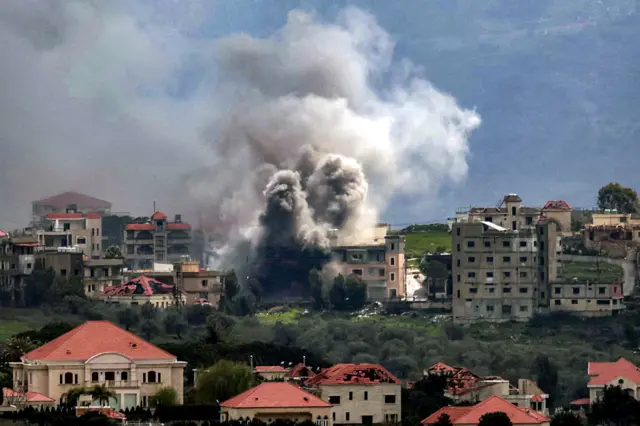
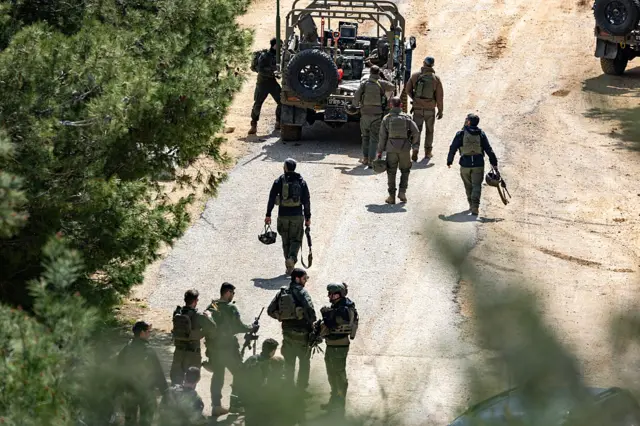
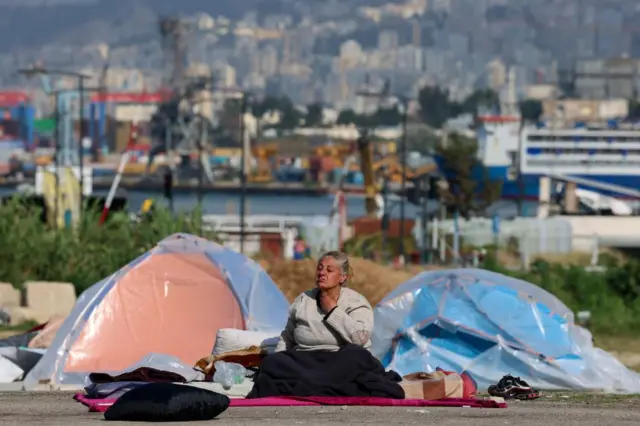
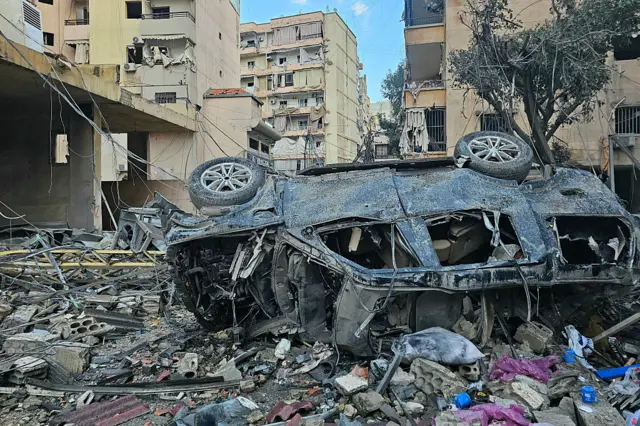
    Images show the destructive aftermath of Monday's "limited and targeted" operations against Hezbollah in southern Lebanon by the Israeli military.

    The fighting has destroyed southern parts of Beirut and left some residents stranded and displaced.

    A woman sits on a blanket on a street, tents are proped up behind her and the city scape of Beirut can be seen in the backgroundImage source, WAEL HAMZEH/EPA/Shutterstock
    Image caption,

    A woman displaced, living in a tent after fighting broke out in Beirut

    A destroyed car lays upside down and destroyed belongings and buildings can be seen, in the background some buildings remain standingImage source, AFP via Getty Images
    Image caption,

    The site of an overnight Israeli airstrike is pictured in the southern suburbs of Beirut

    Homes with red roofs and tan exteriors are seen in the foreground of the image as smoke plumes rise in the background and a building appears to be detroyedImage source, AFP via Getty Images
    Image caption,

    Smoke plumes rise following Israeli bombardment on the village of Khiam in southern Lebanon near the border with Israel

    Soldiers in uniform are seen walking along a dusty road, green trees are sprinkled on the sides of them. Some of the soldiers hold weapons and others hold their helmets in their hands.Image source, Odd ANDERSEN / AFP via Getty Images
    Image caption,

    Israeli army soldiers gather on the border with Lebanon in the Upper Galilee, northern Israel

  4. Explosions heard near US embassy in Baghdadpublished at 19:38 GMT

    News agencies are reporting explosions in Baghdad near the US embassy.

    Journalists at the AFP news agency have reported explosions in the Green Zone, the highly secure section of the Iraqi capital that is home to diplomatic missions including the US embassy, and international organisations.

    An eyewitness told Reuters of explosions and sirens near the embassy, which has repeatedly been targeted since the start of the US-Israeli war with Iran.

  5. Trump and Vance to hold signing ceremonypublished at 19:30 GMT

    Shortly, Donald Trump and his Vice-President JD Vance will be taking part in an executive order signing ceremony at the White House.

    Cameras are there in the Oval Office, so we will monitor what is said and bring you any remarks relevant to the conflict in the Middle East.

  6. Iran will not surrender to bullies - president tells Macronpublished at 19:23 GMT

    Iranian President Masoud Pezeshkian has held a call with French President Emmanuel Macron where he insisted "Iran did not begin this atrocious war".

    "Defending against invasion is a natural right, in which we are good at," Pezeshkian said on social media.

    "Using the American bases against Iran in the region, with the purpose of disturbing our relations with our neighbours, should be stopped."

    Pezeshkian insisted Iran "will not surrender to bullies" as he called on the "global community to condemn this invasion".

    "Speaking of ending the war, is meaningless, until we ensure there will be no more attacks in our land in the future," Pezeshkian adds.

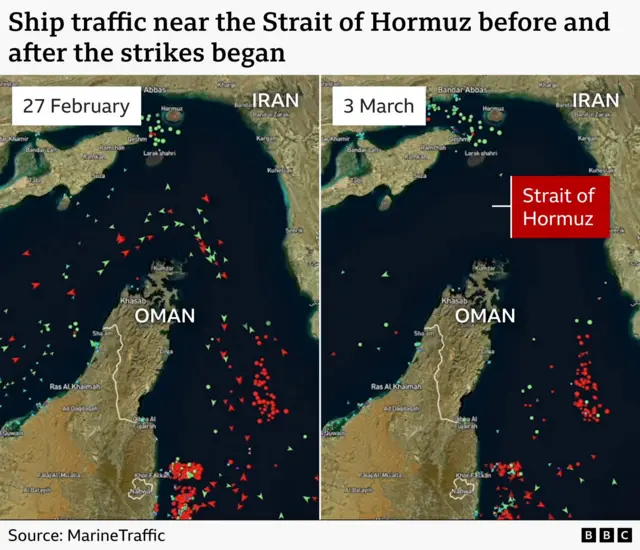
  7. UN conducting talks 'discreetly' for potential opening of vital straitpublished at 19:12 GMT

    The United Nations says it working discreetly as leaders look for a diplomatic solution to reopen the Strait of Hormuz.

    The vital shipping passageway has been largely blockaded by Iran after the US and Israel began airstrikes on Iran. Earlier today, the European Union's foreign policy chief Kaja Kallas said she held talks with UN Secretary General Antonio Guterres on a possible UN-backed initiative that would allow some cargo to pass through the strait.

    Guterres' spokesperson Stéphane Dujarric says the UN will not be publicly discussing those plans.

    "As you will recall during the run-up of the Black Sea Grain initiative, silence was the much better half of valor," Dujarric says referring to a 2022 agreement with Ukraine and Russia during the early months of their war that allowed tonnes of grains and fertilizer to safely pass through the Black Sea, helping to stabilise world food prices.

    "I can tell you that the Secretary-General remains in very frequent contact with senior officials in the region and beyond," Dujarric says in a statement. "We will not be feeding this speculation and will continue to work discreetly. The stakes are too high."

    a map showing shipping traffic in the Strait of Hormuz before and after the conflict began
  8. 'As many nations as possible' needed for Strait of Hormuz - UK defence secretarypublished at 18:59 GMT

    Earlier in the UK, Defence Secretary John Healey spoke to MPs in the House of Commons to update them on British involvement in the Gulf.

    He informed them that the RAF has now conducted over 550 hours of defensive operations in five countries and Drones have been shot down by UK forces nearly daily. The UK now has more jets flying in the region than at any time in the last 15 years.

    Calling the Strait of Hormuz "vital" to the "international economy and to security", Healey said the government is in "continued conversations with European allies and with the US" and that any plan to navigate the strait must be "multilateral" with "as many nations taking part as possible".

    He added that the UK has autonomous mine-hunting capabilities in the region, as well as counter-drone systems and he is now looking at "additional innovative options, including interceptor drones for the Middle East".

  9. Drone strike causes fire at a UAE oil field, officials saypublished at 18:45 GMT

    Officials in the Emirati capital of Abu Dhabi say they are fighting a fire caused by a drone strike on a nearby oil field.

    No injuries have been reported, the Abu Dhabi media office reports.

    Shah oil field, located 230km south of Abu Dhabi, is a large oil project operated by the state-owned Abu Dhabi National Oil Company (ADNOC).

    According to its website, the field has a production capacity of 70,000 barrels of oil per day.

  10. Israel's troops 'dismantle weapons in Lebanon' as defence minister warns displaced not to return homepublished at 18:32 GMT

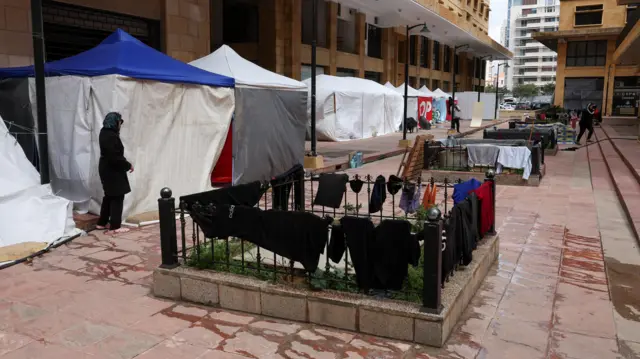
    Clothes of displaced people hang on a fence next to tents they use as shelter in BeirutImage source, Reuters
    Image caption,

    Some in Lebanon's capital Beirut have been forced to flee their homes as a result of Israel's operations against Hezbollah

    As Israel continues its operations against Hezbollah in neighbouring Lebanon, Defence Minister Israel Katz says Lebanese people displaced by the fighting will not be able to return home until the north of Israel is secure.

    Israel has been sharing evacuation warnings to residents in southern Lebanon, and today the Israel Defense Forces (IDF) says its troops are "operating in evacuated areas that were used by Hezbollah terrorists to exploit civilian infrastructure for terrorist activity".

    It says these "limited, targeted" operations have located weapons and "incitement materials", while IDF soldiers were also able to dismantle a weapons cache in southern Lebanon.

    Israel's ground offensive has, though, drawn criticism from Turkey.

    In a statement, the Turkish Embassy in London says "strongly condemn Israel’s attacks on Lebanon", which it says has resulted in the "displacement of approximately one million people".

    The embassy says it will continue to support the Lebanese population, and says Israel's attacks "threaten Lebanon’s territorial integrity and sovereignty".

  11. Message by Iran’s Supreme Leader published on Iranian outletspublished at 18:12 GMT

    Ghoncheh Habibiazad
    Senior reporter, BBC Persian

    Iran's new Supreme Leader Mojtaba Khamenei has instructed officials appointed by his father, late Supreme Leader Ayatollah Ali Khamenei, to remain in post and continue working under existing directives, according to the message published by Iranian outlets.

    “I hereby announce that, for the present, none of them requires the renewal of their appointment. It is crucial that they continue their work in accordance with the directives received during the lifetime” of Ayatollah Khamenei, says the message.

    Khamenei who was chosen as the successor of his father on 8 March has yet to be seen in-person - nor filmed or photographed - since being named as the new supreme leader.

    A message from him was read by the presenter on state-run news channel on 12 March. US Defence Secretary Pete Hegseth said on 13 March, without providing evidence, that Khamenei had been "wounded and likely disfigured" in one of the first air strikes on Tehran that killed Khamenei's father

    Son of Iranian President Masoud Pezeshkian, Yousef Pezeshkian, said in a message on 11 March he had "heard reports" that the supreme leader had been injured. "I asked several friends who had relevant contacts, and they said that: by the grace of God, he is safe and there is no problem," Pezeshkian said.

  12. Analysis

    Trump frames Strait of Hormuz efforts as test for Natopublished at 17:52 GMT

    Helena Humphrey
    Reporting from Washington

    President Trump is framing efforts to reopen the Strait of Hormuz as a test of Nato allies.

    The president says the United States does not necessarily need help securing the vital shipping route - but implies it would be revealing to see which countries 'rise to the challenge'.

    The task itself is significant: the Strait of Hormuz is one of the world’s most important energy chokepoints, through which a large share of global oil supplies normally pass.

    When asked during a White House media conference which countries had refused to help, Trump declined to name them.

    Instead, he joked about rating leaders’ performances - saying that “on a scale of zero to ten” French President Emmanuel Macron was “an eight - not perfect, but it’s France”.

    Trump also pointed out that the US receives only a small share of its oil through the Strait of Hormuz - singling out other countries such as Japan, which relies on the Middle East for about 95% of its oil imports.

    But the fact that he is asking other nations to help reopen the waterway - even while insisting the US does not necessarily need it - underlines the scale of the task now facing the administration.

  13. Five things we learned as Trump pushes allies for Strait of Hormuz supportpublished at 17:42 GMT

    Donald TrumpImage source, EPA

    Donald Trump took some time to address Iran while speaking at a White House event - here's what he had to say:

  14. Analysis

    A bullish Trump, but questions remainpublished at 17:35 GMT

    Bernd Debusmann Jr
    Reporting from the White House

    Trump sounded characteristically upbeat today, and bullish on the prospects of military success in this conflict.

    As he often has in the weeks since Operation Epic Fury, Trump was quick to repeatedly point to the damage that the US and Israel have inflicted on Iran's military.

    There are, however, several issues in which the president has been far less clear.

    For one, Trump still has not detailed what the end of the conflict looks like, or who he believes can run the country if not Iran's current Supreme Leader.

    Additionally, Trump seemed to suggest that his administration will remember which countries came to help secure the Straight of Hormuz and which did countries did not. He specifically mentioned the UK, several times.

    He did not name the countries that will participate in that operation - nor why that continues to be necessary if, according to him, Iran's ability to threaten shipping has been obliterated.

  15. Trump finishes speakingpublished at 17:19 GMT

    Trump has now finished speaking in Washington DC. We'll bring you a summary of what he said on Iran shortly.

  16. 'I was not happy with the UK... they should be involved enthusiastically'published at 17:17 GMT

    Donald Trump at Kennedy Centre Board lunchImage source, Getty Images

    The US president says he was "very surprised" with the attitude of the United Kingdom towards the war.

    "Two weeks ago I said 'why don't you send some ships over' and he [Keir Starmer] really didn't want to do it," Trump says.

    Trump says he told Starmer, "you're our oldest ally" and stresses that he's supported the UK's efforts in Ukraine.

    "Then they tell us that we have a mine ship around and they don't want to do it, I think it's terrible," he adds. "We requested two aircraft carriers which they have and he didn't really want to do it."

    Trump then suggests that Starmer eventually offered to send aircraft carriers to the Middle East, but says this was already "after the war had ended".

    "I was not happy with the UK," he says. "I think they'll be involved maybe, but they should be involved enthusiastically."

  17. Trump says he asked other countries for help 'because I want to find out how they react'published at 17:13 GMT

    Trump says he asked other nations to help out in the Strait of Hormuz "not because we need them, but because I want to find out how they react".

    He then repeats a claim he has made before, that the US is always protecting other countries, but other countries won't protect us when we need it.

    Moving on to speak about Mojtaba Khamenei, Iran's new supreme leader, Trump says he's he's heard reports from his advisors and the media that he has been disfigured as a result of attacks, or that he has lost a leg.

    "We don't know if he's dead or not," Trump says. "Nobody's seen him which is unusual."

    It was reported by Reuters news agency, citing an unnamed Iranian official, that Khamenei was "lightly injured", but there have been no details.

  18. Marco Rubio to announce countries who will aid US in Iran, Trump sayspublished at 17:07 GMT

    Back to Donald Trump, who is now taking question from reporters.

    He's asked first about which countries will be supporting US efforts in Iran. He says Secretary of State Marco Rubio will be making that announcement soon, and that some countries are local to the area and others are further away.

    A reporter asks the president if he has spoken to Emmanuel Macron about getting France's help to open the Strait of Hormuz.

    Trump says he has spoken to Macron, adding he rated him an eight out of 10 in terms of his support level. He says he thinks France will help.

  19. Germany's Merz says 'war in Iran is not a matter for Nato'published at 17:03 GMT

    Friedrich MerzImage source, Reuters

    German Chancellor Friedrich Merz has ruled out his country's participation in the US-Israel war against Iran, according to Reuters news agency.

    "We lack the mandate from the United Nations, the European Union or Nato required under the Basic Law. It was therefore clear from the outset that this war is not a matter for Nato," Merz has told a Berlin press conference.

    He says Germany was not consulted by either the US or Israel before they began their campaign.

    This means, Merz says, that there has never been a discussion of "whether" German troops should be involved.

    "That is why the question of how Germany might become militarily involved here does not arise," he says.

  20. Trump still speaking, but Iran remarks appear to have wrappedpublished at 16:43 GMT

    Trump has moved on and is addressing other topics in this media appearance.

    We're monitoring to see if the president says more about Iran - if he does, we'll bring you an update in this page.