Summary

  • The UK inflation rate rises to 3.4% in the year to December

  • Rising prices were driven partly by higher tobacco prices and airfares, the Office for National Statistics says

  • What is inflation? It's the rate of price increases over time, measured by tracking the costs of a selection of goods compared to the year before - it was 3.2% in the year to November

  • It is calculated by looking at common purchases but, depending on what you spend your money on, you may feel rising prices more or less than average

  • What it means: At 3.4% inflation, a product which cost £10 a year ago would cost £10.34 now

  1. UK inflation rises to 3.4%, driven by tobacco and airfarespublished at 09:03 GMT

    Caitlin Doherty
    Live reporter

    The rate of inflation in the UK rose to 3.4% in the year to December, according to fresh figures from the Office for National Statistics.

    Rising prices were driven in part by higher tobacco prices and airfares over the Christmas and New Year break.

    Chancellor Rachel Reeves says that her "number one focus is to cut the cost of living," but her Conservative counterpart, Mel Stride, blames the rising rate on what he calls the government's "economic mismanagement".

    If you strip out volatile elements - including tobacco, food and energy - then the inflation rate for the year to December was lower, at 3.2%.

    With that in mind, focus now shifts to the Bank of England's next meeting to set interest rates, which will be happening in February.

    We are now ending our live coverage, but you can read more of our team's coverage here., external
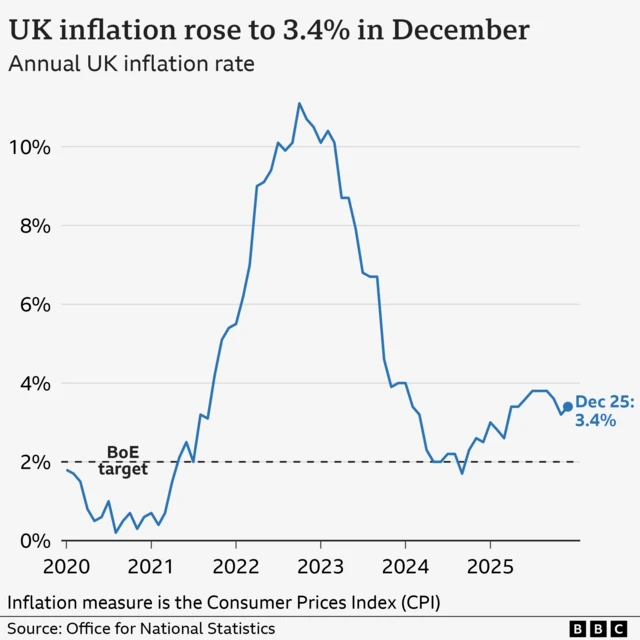
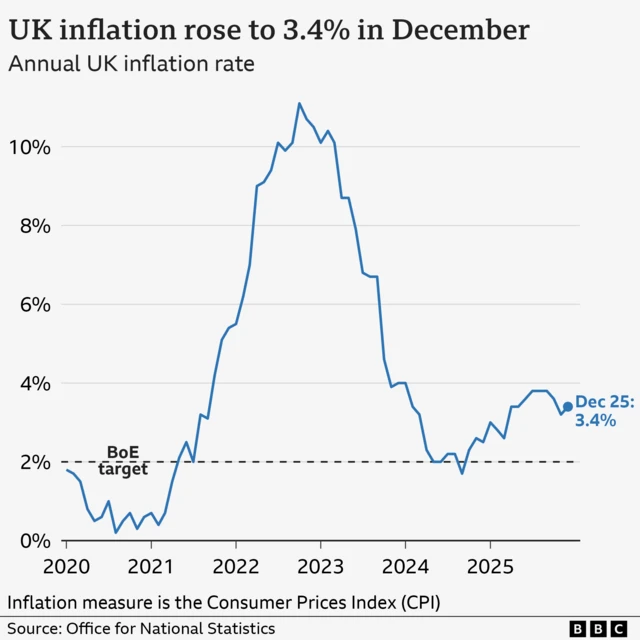
    A line chart titled 'UK inflation rose to 3.4% in December', showing the UK Consumer Price Index annual inflation rate, from January 2020 to December 2025.
  2. The meat of the matter is vealpublished at 09:01 GMT

    Dearbail Jordan
    Senior business and economics reporter

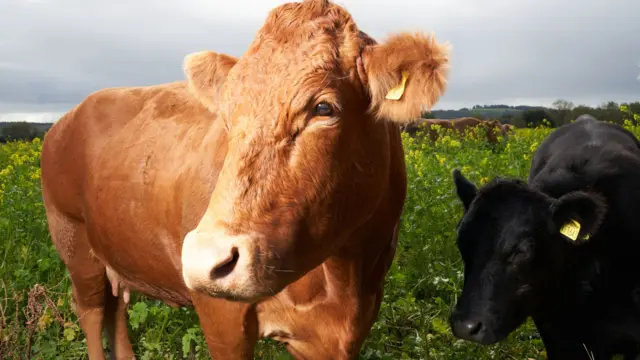
    A brown cow is picturedImage source, Getty Images

    Some areas of today's inflation figures stand out - such as veal, which is meat that comes from young calves, typically six months old.

    ONS data shows the price of veal and beef rose in December, as did the cost of whole milk and butter.

    The price rise is likely because cattle farmers in the UK endured a poor grass harvest, which meant that they had to pay more to feed their herds.

  3. Lib Dems say government 'unwilling to fix economic malaise'published at 08:51 GMT

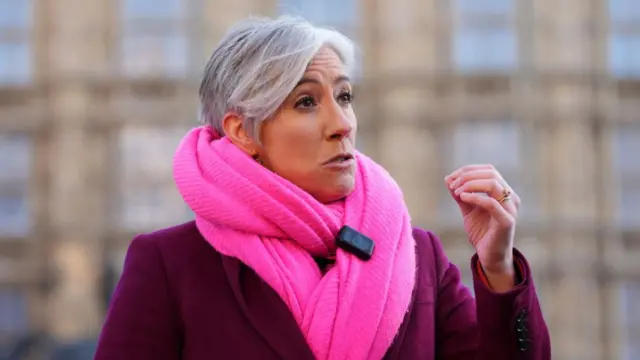
    Liberal Democrat deputy leader Daisy Cooper. She is wearing a purple coat and a bright pink scarfImage source, PA Media

    We have now also heard from the Liberal Democrats, who are calling on the chancellor to "pull her head out of the sand" on the cost of living.

    Daisy Cooper, the party's treasury spokeswoman, says: "Inflation ticking up while families continue to struggle to pay their bills and put food on the table is a sign of a government totally unwilling to fix this country’s economic malaise."

    She adds that Rachel Reeves needs to "pull her head out of the sand and tackle the cost of living crisis", which she suggests could start by bringing down energy bills.

    Cooper also says that the threat of new tariffs from Donald Trump risks "yet another cost of living hit".

  4. What do today's figures mean for interest rates?published at 08:41 GMT

    Dearbail Jordan
    Senior business and economics reporter

    As we've been reporting, a key contributor to the rise in inflation for December was tobacco, and this was largely down to duty rises announced in the Budget on 26 November.

    Taxes on cigarettes, cigars and hand-rolling tobacco increased by 5.6%.

    But some analysts point out that if you strip out volatile elements - like tobacco, food and energy - the inflation rate was 3.2% in the year to December. That is the same as it was in the year to November.

    Susannah Streeter, chief investment strategist at Wealth Club says: "Combine this with the cooling off in the labour market, with wage growth easing, then further interest rate cuts this year still look likely."

    The Bank of England's next meeting to set interest rates is in February. While Streeter doesn't think a cut could come that soon, "a reduction in March may be more likely".

  5. Sticky inflation might be slowing interest rate cuts, economist sayspublished at 08:40 GMT

    Jemma Crew
    Business reporter

    Michael Saunders, senior adviser at the consultancy Oxford Economics, says the December rise “is not the start of a new upward trend", but instead reflects "a variety of fairly temporary erratic factors”.

    “So we are not going to see inflation heading higher, but we do have an issue that inflation is relatively sticky and the underlying trends are well above the 2% inflation target,” he tells BBC Radio 4’s Today Programme.

    He says a Bank of England interest rate cut in February is unlikely, but expects a few “gradual” cuts this year.

    “The reason they can’t cut quickly is because inflation and pay growth are still too high for comfort,” he adds.

  6. With inflation, timing countspublished at 08:36 GMT

    Dearbail Jordan
    Senior business and economics reporter

    A woman walks through the airport with her childImage source, Getty Images

    As well as cigarettes and rollies, the cost of air travel pushed annual inflation higher.

    The ONS says that plane fares rose by 28.6% in December 2025.

    Sarah Coles, head of personal finance at Hargreaves Lansdown, says that the contribution to the overall inflation figure is influenced by the period the ONS looked at to measure prices.

    "This owes a lot to timing differences, particularly the fact that this time in 2024 the flight prices being measured were Christmas Eve and New Year's Eve whereas in 2025 it was 23 and 30 December," she says.

    "Prices are naturally lower on high days and holidays, and higher as people flock to get away in time for Christmas."

  7. Worries remain for the family financespublished at 08:32 GMT

    Kevin Peachey
    Cost of living correspondent

    For those watching every penny, the latest on the cost of essentials will initially be a concern, as will the increase in the rate of inflation overall.

    The pace of food price rises has ticked back up after better news last month.

    But housing costs have eased, such as the slowdown in rent rises, and mortgage lenders are currently battling for custom by lowering rates. There will be a drop in energy costs in April.

    All this comes with the backdrop of personal insolvencies – when someone’s finances are at a critical point – hitting their highest level for 15 years in England and Wales.

    The chancellor says this is the year that “Britain turns a corner” on the cost of living. Millions of people will hope it doesn’t take them into a financial cul-de-sac.

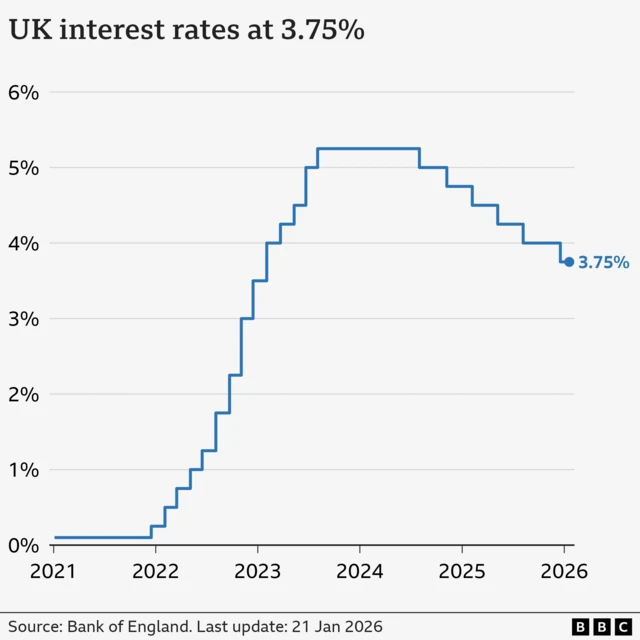
  8. Interest rates cut to 3.75% in December - the lowest level since early 2023published at 08:24 GMT

    Dearbail Jordan
    Senior business and economics reporter

    Just a little reminder, the government sets the Bank of England a target "to keep inflation low and stable".

    That target is 2% and it does this, the Bank says, to help everyone plan for the future.

    Since August 2024, the Bank has cut interest rates six times.

    The most recent reduction was in December, when the Bank's rate-setting committee voted to trim borrowing costs from 4% to 3.75%.

    A line chart showing interest rates in the UK from January 2021 to 2026. At the start of January 2021, rates were at 0.1%. From late-2021, they gradually climbed to a high of 5.25% in August 2023, before being cut to 5% in August 2024, 4.75% in November, 4.5% in February 2025, 4.25% in May, and 4% in August. At the Bank of England's latest meeting on 18 December, rates were cut to 3.75%. The source is the Bank of England.
  9. First time since summer that headline rate has risenpublished at 08:09 GMT

    Today's figures mark the first time in five months that the headline rate has risen.

    The inflation rate in the year to July 2025 was 3.8% - up from 3.6% in June.

    Here's a look back at how the last few months looked:

    • August: 3.8%
    • September: 3.8%
    • October: 3.6%
    • November: 3.2%
    • December: 3.4%
  10. UK inflation higher than Germany and Francepublished at 07:55 GMT

    At 3.4%, December's inflation rate in the UK was above some of our European neighbours.

    The ONS says inflation in Germany was 2% in the year to December, while in France it was 0.7%.

    "The last time the UK rate was lower than the rate in Germany was December 2024," it says.

  11. Tories blame inflation rise on 'economic mismanagement'published at 07:44 GMT

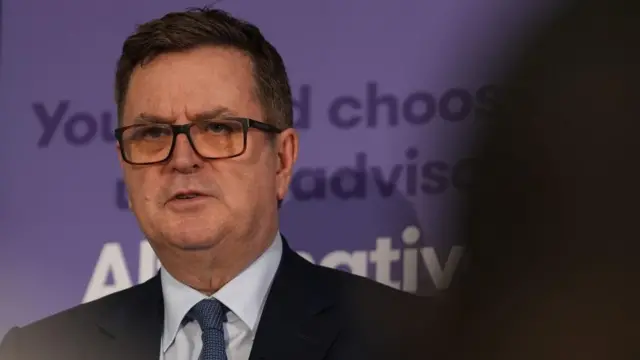
    Mel Stride stands in front of a purple signImage source, PA Media

    We've just heard from shadow chancellor Mel Stride, who blames the rising inflation rate on what he calls the government's "economic mismanagement".

    In a statement, Stride accuses the government of making the "wrong choices" and says "their Budget is unravelling day by day" and "punishing the most vulnerable".

    "A record-high tax burden and irresponsible borrowing are stifling growth and fuelling inflation – leaving working people worse off," Stride adds.

  12. Easing rent prices keep lid on inflationpublished at 07:38 GMT

    Dearbail Jordan
    Senior business and economics reporter

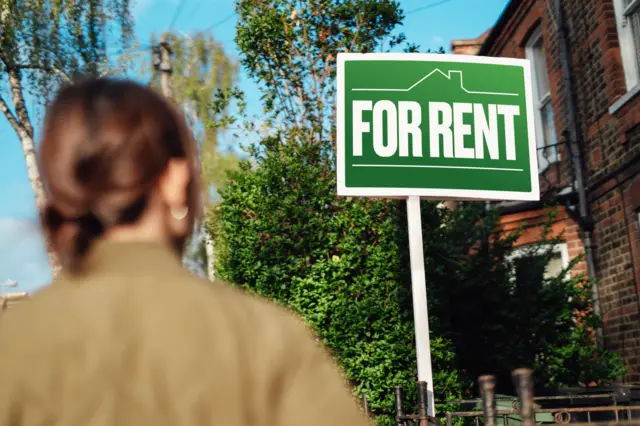
    A woman looks at a for rent sign on a streetImage source, Getty Images

    The rise in inflation rate for the year to December - from 3.2% to 3.4% - could have been worse. There are some areas where the pace of price rises eased.

    These include rent, which increased at a slower clip in December than other months.

    The ONS includes rent prices in a category it calls "housing and household services" and in this latest set of data, inflation eased to 4.9% in the year to December.

    That compares to 5.1% for the 12 months to November.

  13. Tobacco tax rises in Budget contributed to December inflation rate climbingpublished at 07:35 GMT

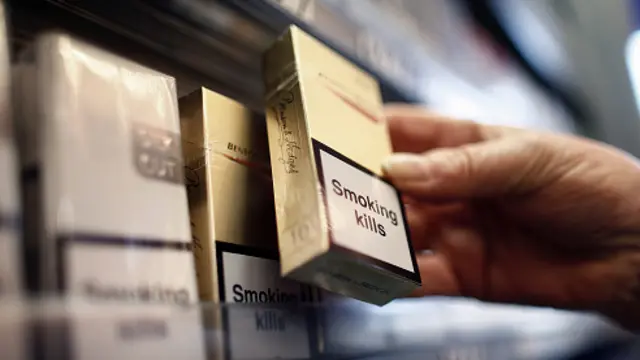
    A cigarette pack is seen being purchasedImage source, Getty Images

    As we reported earlier, an increase in tobacco prices is one of the factors behind the higher-than-expected increase in inflation.

    The ONS report points to the fact that tobacco duty increased in the Budget at the end of November, whereas in 2024 it increased in October.

    "This timing difference may help explain why prices fell by 0.1% in November 2025, compared with a rise of 3.3% a year before," the report says.

    "And then subsequently rose by 3.0% in December 2025, compared with a rise of 0.7% a year before."

  14. 'More to do,' says Reeves, after inflation rate climbs to 3.4%published at 07:26 GMT

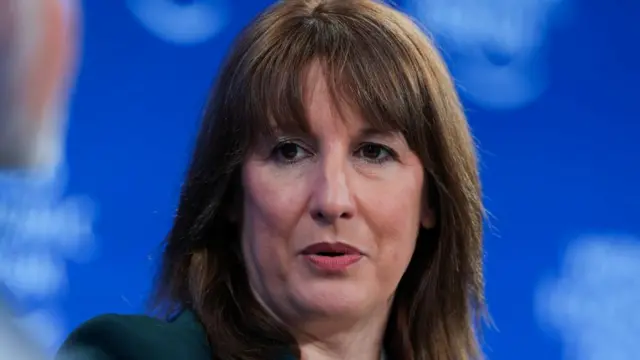
    Rachel ReevesImage source, Reuters

    We have just heard from Chancellor Rachel Reeves, after this morning's inflation rate increase.

    In a statement, Reeves says: “My number one focus is to cut the cost of living.

    "At the budget I announced £150 off energy bills, a freeze to rail fares for the first time in 30 years, a freeze to prescription charges for the second year running, and an increase to the national minimum and living wage.

    "Money off bills and into the pockets of working people is my choice. There’s more to do, but this is the year that Britain turns a corner.”

    We'll bring you more political reaction as we get it.

  15. Airfares, tobacco and bread drive rising pricespublished at 07:15 GMT

    Woman walks through airportImage source, Getty Images

    There are a number of factors behind the higher-than-expected rise in inflation in December including - as you might expect - Christmas.

    Grant Fitzner, chief economist at the Office for National Statistics, which released the data, says tobacco prices rose following recently-introduced excise duty increases.

    He adds: "Airfares also contributed to the increase with prices rising more than a year ago, likely because of the timing of return flights over the Christmas and New Year period.

    "Rising food costs, particularly for bread and cereal, were also an upward driver."

  16. Inflation rise more than expectedpublished at 07:05 GMT

    Dearbail Jordan
    Senior business and economics reporter

    The rise in the inflation rate - to 3.4% in the year to December - was higher than expected.

    Analysts had forecast a slight tick up to 3.3%.

    We'll delve down into the data and let you know what this means for your money.

    A chart shows the inflation rate rose by 3.4% in the year to December
  17. Inflation rate rises to 3.4% in year to Decemberpublished at 07:00 GMT
    Breaking

    UK inflation rate rose to 3.4% in the year to December, the Office for National Statistics says - up from 3.2% in November.

    Stay with us as we bring you analysis and reaction to this shortly.

  18. Keep an eye on airfarespublished at 06:44 GMT

    Jemma Crew
    Business reporter

    Lindsay James, investment strategist at Quilter, says the rise in flight prices before Christmas will be a factor if today’s inflation figures show an uptick, as expected.

    “The point at which they measure them is likely to be a little bit later in December, when of course we all know they are very expensive just before Christmas,” she tells BBC Radio 4’s Today Programme.

    But she says the longer term story is that inflation is coming down, and is expected to be between 2 and 2.5% by the end of 2026.

    “So we'll be looking deeper into this data today to see if we can still see that continuing,” she adds.

    A plane coming in to land at London Gatwick Airport as the sun risesImage source, PA Media
  19. Remind me, how is the UK's inflation rate measured?published at 06:38 GMT

    The prices of hundreds of everyday items, including food and fuel, are tracked by the Office for National Statistics (ONS).

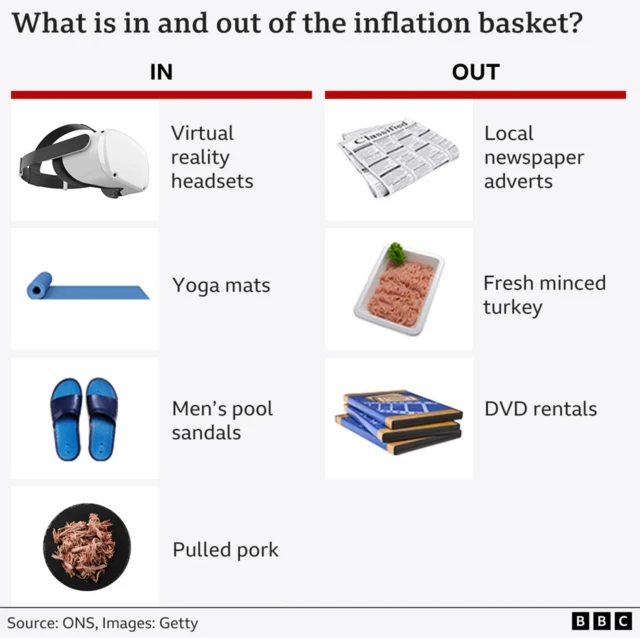
    This virtual "basket of goods" is regularly updated to reflect shopping trends, with virtual reality headsets and yoga mats added in 2025, and local newspaper adverts removed.

    The ONS monitors price changes over the previous 12 months to calculate inflation.

    The main inflation measure is called the Consumer Prices Index, external(CPI),, external and the latest figure is published every month.

    BBC graphic showing items that have been added in and taken out of the basket of goods used to measure inflation
  20. Minimum wage increase has ‘ripple effect’ on prices, London business sayspublished at 06:31 GMT

    Adam Woods
    Senior business and economics reporter

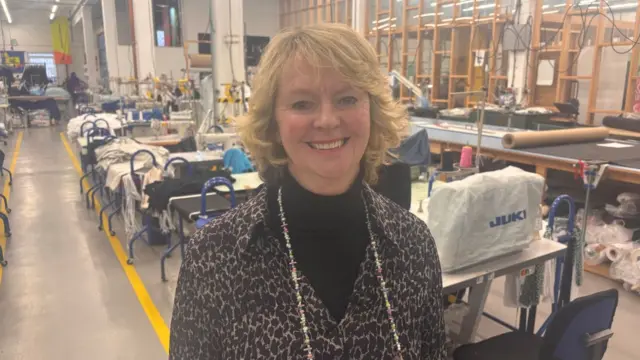
    A woman stands by a row of sewing machines

    Jenny Holloway is the chief executive of Fashion Enter, a garment manufacturer in London.

    Jenny says that increases in the minimum wage have put a squeeze on her business. When the minimum wage goes up, there is a “ripple effect” whereby the wages of senior staff must go up in turn, she says.

    Some of those costs are then passed on to the consumer.

    Electricity is another consideration, she says, and the factory is keeping its power usage as tight as possible in an effort to keep bills down.

    “It's constantly making sure that we're turning the lights off regularly. We've got all LED lighting now, for example. We're on timers so the lights will go off,” Jenny says.

    There are also some unexpected upsides to higher costs. While material costs have gone up by around 20%, the prices are higher for imported fabrics than for local ones.

    “We’re finding Leicester far more competitive, and so from a perspective of carbon emissions and sustainability we’d rather go local.”