Summary

Media caption,
How the Meta trial could change social media for young people
  1. Meta hooked children on Facebook and Instagram, court hearspublished at 00:00 BST 19 August

    Grace Eliza Goodwin
    US reporter

    A California court has heard claims Meta deliberately designed its platforms to be addictive to young people, as the biggest legal challenge the social media giant has faced began.

    Here's what happened during the first day of the trial:

    • Arguments of the states: California's deputy attorney general Megan O'Neill alleged that Meta hid the truth about the risks its platforms posed to children, that the business was designed to hook users and harvest their data, and that it actively intervened in its own mental health research
    • Meta's opening argument: Meta lawyer Paul Schmidt argued that the company has a track record of sharing information about social media harms, that enforcing content and age limit policies is complicated, and that its employees are actively working to improve the platforms' impact on user wellbeing
    • First witness: Meta whistleblower Arturo Béjar said in his testimony that Meta knew its platforms were harming young people, that safety and security was an afterthought, and that it was undercounting the prevalence of harm among users in its public reports
    • Outside court: Protesters and campaigners gathered outside the courthouse, including parents who said social media contributed to their children's deaths
    • What's next: The trial is expected to last 5-7 weeks

    We're ending our live coverage now, but you can learn more about the Meta trial here.

  2. Key players in the Meta trialpublished at 23:33 BST 18 August

    This Flourish post cannot be displayed in your browser. Please enable Javascript or try a different browser.

  3. Unpacking the legal strategies from the first day in courtpublished at 23:23 BST 18 August

    Lily Jamali
    North America Technology Correspondent, reporting from court

    We are starting to get a sense of what the respective legal strategies of the states and Meta will look like.

    During her opening statement, California deputy Attorney General Megan O’Neill tried to draw a contrast between Meta executives’ statements reassuring the public on safety, and what their internal research showed about just how widespread problems were.

    She’ll be out to hammer home that split screen to jurors over the course of this trial.

    By contrast, Meta lawyer Paul Schmidt worked to paint the company as an honest broker which has been transparent about potential issues, and has used internal research for tools that help protect young users. There will be internal documents showed to jurors during this trial, including emails among company employees.

    Some of the language "will be loose," Schmidt warned, in a bid to soften the impact that those emails will have on how jurors view the case.

  4. The $1.4 trillion questionpublished at 23:10 BST 18 August

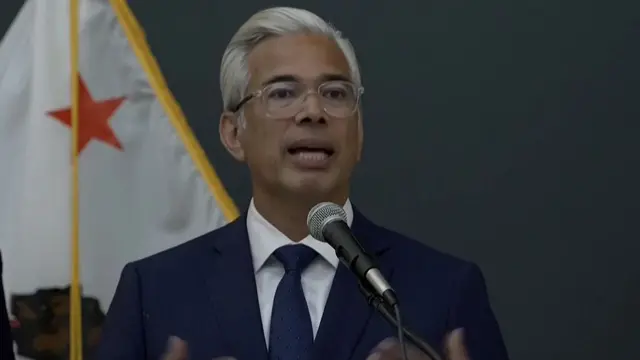
    California AG Rob BontaImage source, State of California Department of Justice
    Image caption,

    California Attorney General Rob Bonta

    The BBC's Lily Jamali asks California AG Rob Bonta about estimates that Meta could have to pay $1.4 trillion if it loses this case.

    "We are not asking for $1.4 trillion," Bonta answers, adding that number was one which Meta had used when talking about the case.

    "We will be asking for a significant financial payment" for civil penalties not damages, he says. "The judge will determine that."

    The press conference with the attorney generals has now finished.

  5. Will Mark Zuckerberg testify?published at 23:00 BST 18 August

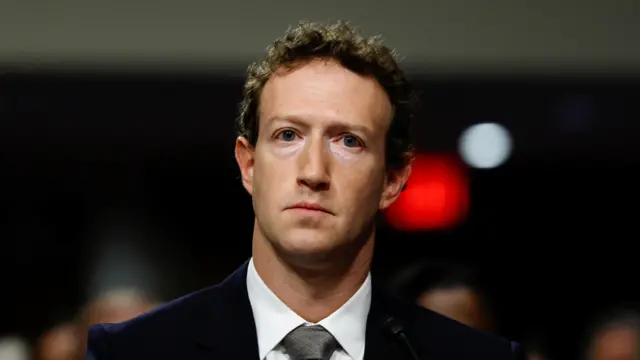
    Meta's CEO Mark Zuckerberg attends a Senate Judiciary CommitteeImage source, Reuters

    When asked if Meta CEO Mark Zuckerberg will testify in the trial, California AG Bonta says that is "unknown" at this point.

    He points out that Zuckerberg has testified in other cases, but whether he does here "is still TBD".

    Bonta says he has no personal preference if the Meta boss shows up or not.

  6. Social media-fuelled youth mental health crisis demands action - Colorado attorney generalpublished at 22:50 BST 18 August

    Colorado Attorney General Phil Weiser is now speaking. He begins by talking about one mother in court today whose teenage daughter died by suicide "after sustained exposure and engagement" on social media.

    He says the teenage girl spent many hours online, and had a social media addiction "watching videos that harmed her," adding she received guidance online not to talk to her parents about her mental health.

    He says the girl's mother fought through that pain and "found purpose" to fight for the families of other children.

    "This social media-fuelled youth mental health crisis demands action," he says.

    If you have been affected by any of the issues raised in this story you can visit BBC Action Line. Help and support outside the UK can be found at Befrienders Worldwide, external or you can call the US Suicide and Crisis Lifeline on 988.

  7. Meta's conduct is 'illegal', alleges California attorney generalpublished at 22:38 BST 18 August

    Bonta says Meta chose profits over the safety of users.

    The company's conduct is "illegal", he alleges, adding it had a legal and moral obligation to make products safe for young users.

    "If you are a parent... sadly you have likely seen some of this play out in your own life."

  8. California attorney general says Meta knows Instagram is harmful to teenspublished at 22:37 BST 18 August

    Rob BontaImage source, Reuters

    Bonta's team has proof that Meta knows "Instagram is harmful to a significant percentage of teenagers, including teen girls,” the attorney general says.

    He adds that Meta knows about instances of self harm and eating disorders sparked by the platform.

    Bonta also accuses Meta of being aware that the "like" button causes teenagerss to compulsively engage with Instagram.

  9. Trial likely to last five to seven weekspublished at 22:34 BST 18 August

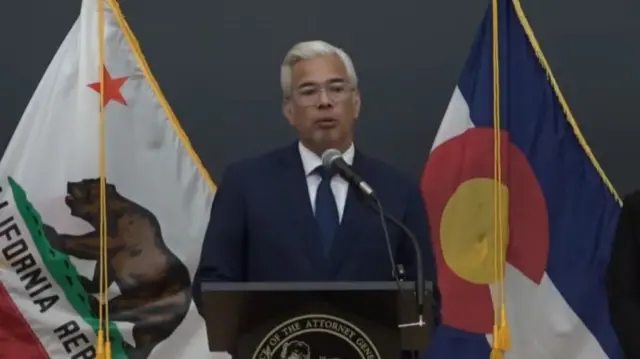
    California Attorney General Rob Bonta says this trial will last five to seven weeks.

    Both sides laid out their cases today, he says, adding that the states' case was particularly "compelling" with their first witness speaking of Meta knowing about harm to its users but failing to act.

    Meta's motto was to "move fast and break things", he says, adding, "Unfortunately, the thing that was broken here was the mental health of our children."

  10. Case is 'collaborative effort' - California lawyerpublished at 22:29 BST 18 August

    California Attorney General Rob Bonta opens his statements by thanking his colleagues who have helped bring this case, describing it as a "collaborative effort" between the 29 states involved.

  11. State attorneys general begin news conferencepublished at 22:26 BST 18 August

    Attorneys general from the states bringing this case agianst Meta are speaking to the press now, following the first day of arguments in court.

    You can watch live at the top of this page.

  12. A loss by Meta could have 'ripple effects' across all social media platforms, says expertpublished at 22:25 BST 18 August

    Sakshi Venkatraman
    US reporter

    This is one of the biggest legal challenges to ever face Meta -- and its effects could change the landscape of social media permanently, says James Grimmelmann, a professor of digital and information law at Cornell University.

    If the plaintiffs prevail, there will likely be billions of dollars in damages and major structural changes to Meta. That could "add up, even for a company of Meta's size," Grimmelman says.

    But the impacts may even be felt beyond Meta itself.

    "This very well could have ripple effects for a lot of platforms... all of them have their own slice of concerns they could be targeted with," he says. "The core idea that you could be held liable for interface and design... that cuts across the entire set."

    Grimmelmann adds that it's hard to know how Meta will tackle the issues the plaintiffs set out over the course of the trial, especially because several Meta employees are being called up to the stand by the plaintiffs. We're also not sure what the evidence will be.

    "Lots of this stuff hasn't really been extensively discussed in public," he says.

    But ultimately, if Meta doesn't prevail here, one thing is clear: "Kids could have very substantially reduced access to social media."

    Not only will Meta be forced to remove the features that are "most appealing" to an audience of minors, but legislation outside of this lawsuit may limit their access altogether.

  13. Court audio drops outpublished at 22:02 BST 18 August

    We've been following today's proceedings mainly via a livestream from the courthouse.

    That livestream provided by the court has just abruptly stopped, mid-testimony.

    We are now hearing the attorneys general from the states bringing the lawsuit will hold a briefing with media in about 30 minutes.

  14. Zuckerberg social media post created false impression of safety commitment - whistleblowerpublished at 21:53 BST 18 August

    Meta whistleblower Arturo Béjar references a 2021 social media post from Meta CEO Mark Zuckerberg Zuckerberg in which the leader said Meta does not prioritise profit over the safety and well-being of its users.

    Béjar says thought Zuckerberg's post was creating a false and misleading impression of Facebook's commitment to safety and the well-being of young people.

    That post from Zuckerberg prompted Béjar to send the Meta boss an email alerting him of the amount of harm that people were reporting they were experiencing on the platform.

  15. Meta leadership perhaps 'didn't know how bad the harm was' - former employeepublished at 21:31 BST 18 August

    The lawyer then asks Meta whistleblower Arturo Béjar about attempts he made to raise safety issues as he saw them. He shows the jury a chain of emails from Béjar to Chris Cox, who Bejar describes as "Mark Zuckerberg's right hand man".

    "I was trying to communicate... how big the gap was between what users were telling the company was harm that they were experiencing versus what the company was prioritising on and communicating to the public about harm."

    Again Béjar, tells the court that prevalence of policy-violating content is not the same thing as someone experiencing harm, and is a "very narrow measure of a very specific thing".

    Béjar says whenever Mark Zuckerberg was asked about harm internally, he would immediately start talking about prevalence, which made him think this was how Zuckerberg thought about the concept.

    "His [Cox's] response to this was very kind and then laying out the groundwork for eventually bringing it up to Mark and the belief that they didn't know how bad the harm was and that was the reason that the company was acting the way it did."

  16. Meta under-reports instances of violent and graphic content, former employee sayspublished at 21:18 BST 18 August

    Arturo Béjar says Meta's community standards report - in which it publishes statistics on the prevalence of harmful content across its platforms - under-counts the prevalence of such content.

    For example, he says, Meta reported that the risk of teens being exposed to graphic or violent content was 0.01 to 0.02%.

    But Meta also had user survey results - that it did not publish - showing that the prevalence of graphic or violent content was actually 100 to 400 times higher than the reported number, Béjar says.

  17. Facebook's metric for measuring harm was 'very narrow', witness sayspublished at 21:11 BST 18 August

    Béjar is now being asked to review a Meta report in which the tech company says it measures harm on Facebook by the prevalence of content that violates its standards.

    When asked if he agrees with that metric, the witness emphatically responds "no".

    "Harm is what people experience as harm," he says, giving the example of a thirteen year old child reporting distress and asking for help. "Prevalence is a very narrow measure of a very specific thing."

    He adds: “I wanted to bring up at every layer of management an awareness of the level of harm people were experiencing that was a result of the way the product was designed - and that was preventable in our experience."

  18. Instagram users lost control over product, former employee sayspublished at 20:52 BST 18 August

    Béjar says that Instagram changed from a product that you use "to a product that uses you".

    He says that at first it only showed you photos of people that you followed, with natural stopping points and users in control of their experience.

    He says that it went from being a product where a person has control to one where you don't, and people users connected with were "primarily strangers".

    He says that is a change that brings "substantial risks and issues".

  19. Former employee says daughter's experience motivated him to returnpublished at 20:41 BST 18 August

    Béjar is asked about the period between when he left Facebook in 2015 and returned in 2019 and what made him want to return.

    He says his daughter was 14 when he allowed her to set up an Instagram account, but: "Shortly after she went on, she started getting requests for sex and pictures of private parts from people she did not know."

    He says that when he asked his daughter if she had reported it, he was told there was no option to do this. "I just block them and they laugh it off and they just move on to the next person," he recounts his daughter telling him.

    He says he thought something had "broken or was not working" in the company and he wanted to address it with them, instead of criticising from the sidelines.

  20. Safety and security an 'afterthought', former employee sayspublished at 20:38 BST 18 August

    Béjar is asked if he believes Meta used its research to improve wellbeing.

    He says research was not "effectively" used, adding that Meta detected "significant number of harms including harms to young people” but did not make changes based on these findings.

    Béjar says that around the 2019 to 2021 period, Meta had the mantra "move fast and break things". This communicated to employees that their goal was to get things into the hands of users as quick as possible, Béjar says, while safety and security was an "afterthought".

    When asked about his interactions with Meta executives, Béjar says his role involved him interacting regularly with Mark Zuckerberg, including when there were issues or incidents that required the CEO's attention. Béjar estimates speaking to Zuckerberg at least 100 times.