Summary

Media caption,

Watch: Chopping and changing of leadership 'not in our national interest', says Starmer

  1. Leadership, Ukraine and asylum hotels: A recap of what Starmer saidpublished at 10:11 GMT 4 January

    We've just heard from Starmer on Sunday with Laura Kuenssberg. Here's the key lines from the interview, which as a reminder was recorded on Saturday:

    • Leadership: Starmer says he will still be PM this time next year but adds he is "not surprised people are frustrated"
    • Alaa Abd El Fattah: He says he regrets his social media post welcoming the British-Egyptian activist to the UK after his release from an Egyptian jail
    • EU: It is in the UK's "national interest" to have a closer relationship with the EU, he says, but rejects the idea of revisiting the freedom of movement in order to make that happen
    • Asylum hotels: He wants to bring forward the government's previous target to close asylum hotels by 2029
    • Ukraine: Starmer says he "certainly" hopes 2026 is the year for peace for Ukraine
    • Venezuela: He refuses to condemn America's action in Venezuela as he says the full picture is not available. He says he wants to speak to President Trump
    • Elections: Starmer says Labour will "fight for every vote" in the May elections in England, Scotland and Wales

    We'll be closing our live coverage soon, thank you for staying with us.
  2. What did the panel make of Starmer's interview?published at 10:02 GMT 4 January

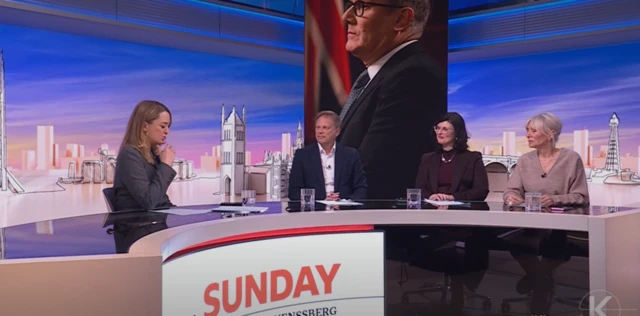
    A short moment ago we heard from the panel on the show, made up of former Tory cabinet minister Grant Shapps, Nadine Dorries, who served in Boris Johnson's government but has now switched over to backing Reform, and Liberal Democrats MP Layla Moran.

    Shapps says: "I don't think anything will make any difference for him, at this point in time it's basically over for him, which is not the same as thinking he's about to be replaced."

    The country has "already made up its mind" about the PM and "it's over", he adds.

    Dorries says she doesn’t believe Starmer will stay in post as he is “not fundamentally a politician, he’s more of a manager”. She adds she thinks he will resign as she doesn’t think his ego will allow Labour MPs to remove him.

    Moran thinks that people want to see growth and a shift towards the EU single market could help that.

    Laura Kuenssberg in the studio on the left, with Grant Shapps, Layla Moran and Nadine Dorries to the right
  3. That's a wrap on the first SWLK of the yearpublished at 09:58 GMT 4 January

    Laura Kuenssberg has just signed off on this morning's programme, which saw PM Keir Starmer questioned on topics from his leadership and the economy, to Ukraine and his relationship with Donald Trump.

    We're going to bring you comments from the guests, and a round-up of the key moments shortly - stay tuned.

  4. 'I will be judged at next election' - Starmerpublished at 09:50 GMT 4 January

    Media caption,

    Watch: Chopping and changing of leadership 'not in our national interest', says Starmer

    Next, the interview moves on to questions over Starmer's future in Number 10, something that has been a hot topic in Westminster as his poll ratings have tumbled.

    Many are looking towards May's elections in Scotland, Wales and across England as a potentially key point if Labour suffer big losses.

    Asked if there are any circumstances in which he would walk away should there be a leadership challenge after that, he says: "Under the last government, we saw constant chopping and changing of leadership, of teams, it caused utter chaos, utter chaos, and it’s amongst the reasons that the Tories were booted out so effectively at the last election."

    He says he is "not going to take us back to that kind of chaos".

    Asked again if he would walk away, the PM suggests he will lead the party into the next general election, and says he "will be judged at the next general election on whether we have brought about the change that people voted for".

    That's the end of Starmer's interview - we'll bring you reaction from the guests shortly.

  5. Labour will 'fight for every vote' in May electionspublished at 09:48 GMT 4 January

    The prime minister is now asked about the elections in May that will take place across Scotland, Wales and large parts of England, which could be a crucial point in Starmer's leadership of the Labour party.

    He calls them a "very important set of elections" and adds: "We will fight for every vote, and we take absolutely nothing for granted. I know that in these elections, as in all elections, every vote has to be earned".

  6. Starmer says he has 'strange alliance' with Donald Trumppublished at 09:47 GMT 4 January

    Media caption,

    Starmer on his and Trump's 'strange' alliance

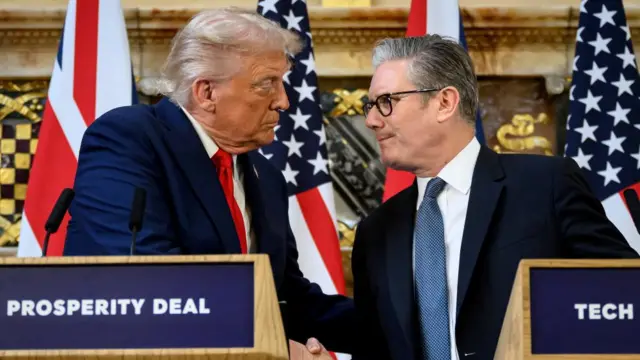
    The PM moves on to talk a little more about his relationship with US President Donald Trump, as he says the pair come from "different political traditions".

    Starmer says that the relationship between the UK and the US is "one of the closest relationships in the world" and important for defence and security. He says that "it is my responsibility to make sure that relationship works".

    "I do get on with President Trump," he says.

    "Now, that’s a strange alliance in a way, as he often points out, we’re from different political traditions, by a long shot."

    He says the pair "do have differences of views on various things" but the UK's relationship with the US "matters probably more than any other relationship we’ve got in the world", and it would not be in the UK national interest to weaken that.

    He adds that "we have made the relationship work, we do get along with each other and have the ability to spend time one-to-one" discussing world issues.

    Donald Trump and Keir Starmer shaking hands while stood at two lecterns - there are British and American flags behind themImage source, Reuters
    Image caption,

    Starmer says he has a 'strange alliance' with Donald Trump

  7. Starmer refuses to condemn President Trump over Venezuelapublished at 09:38 GMT 4 January

    We have just heard again the PM's response to America's actions in Venezuela over the weekend, which saw President Nicolás Maduro captured during strikes.

    Starmer says the situation is "fast-moving" and he wants to speak to President Trump, and says there was no UK involvement.

    Asked if he would condemn the American action, he says the full picture is not available, and says he is a "lifelong advocate" of international law.

    A reminder that this interview was recorded on Saturday and you can follow all of the breaking news on Venezuela here.

    Later on Saturday, the prime minister posted on X that the UK "regarded Maduro as an illegitimate president and we shed no tears about the end of his regime".

    Media caption,

    Starmer quizzed about US strikes on Venezuela

  8. Starmer suggests Ukraine allies 'further advanced' on security guarantees than beforepublished at 09:37 GMT 4 January

    Questions remain about what security guarantees other countries could give to Ukraine, and the PM says "I think we're much further advanced on that issue than we were ever before".

    One thing leaders will need to discuss in the coming days is "how do we integrate what the Americans are putting on the table with what the coalition of the willing countries have already put on the table".

    Earlier this week, Zelensky said the US has offered Ukraine security guarantees for 15 years during talks.

    "Without being over-optimistic, because these things can move around, 2026 seems to me the year in which we could make significant progress towards peace in Ukraine and what a difference that will make to the United Kingdom," Starmer says.

    The PM also goes on to discuss the importance of security guarantees and says that Putin "has ambition".

    "The lesson we know is that if we don’t have strong security guarantees in place, we may have a pause for months or a few years, but he will be back at it," Starmer says.

    Media caption,

    Starmer gives positive outlook for peace in Ukraine this year

  9. Starmer 'certainly' hopes 2026 could be year for peace for Ukrainepublished at 09:35 GMT 4 January

    The interview now moves on to talking about Ukraine, after there were talks between Volodymyr Zelensky and Donald Trump between Christmas and the new year.

    Asked if 2026 could be the year for peace, Starmer says "I certainly hope so".

    He says that nothing is certain, but that he thinks Zelensky is "right in saying we're 90% of the way there, so that is a good thing".

    "I think that we're probably closer now than we've been for months if not since the beginning of this conflict."

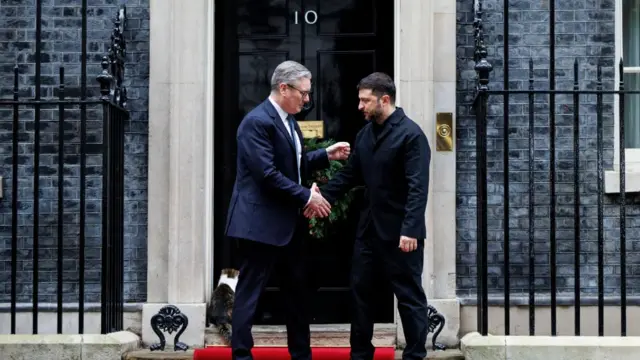
    Keir Starmer and Volodymyr Zelensky shaking hands on the steps of 10 Downing Street. The door is behind them, and Larry the cat is sat on the front step.Image source, EPA/Shutterstock
    Image caption,

    Starmer and Zelensky met at 10 Downing Street in December

  10. Asylum hotels to be shut earlier than 2029, suggests PMpublished at 09:30 GMT 4 January

    Next, Starmer is asked about the government's pledge to close asylum hotels.

    He criticises what he calls the last government's "absurd policy" of not processing asylum claims which led to a "growing pool" of people needing to be accommodated.

    Labour has previously said that they wanted to do close the hotels within this parliament, which would be by 2029, but the prime minister now says he wants to bring that forward.

    "I've said to the system, to the relevant departments, I want to see that brought forward, I want to shorten that," he says.

    Asked to when, he says "as soon as possible but no longer the end of parliament, bring it forward.

    "I want us to close hotels, I think over coming months you'll see evidence of that."

    Asked if it could be this year, he says he does not want to set a date until they think the government can meet it, but adds: "I'm determined we'll close them, and I have pushed the departments to say I want to see that timeline brought forward, I want to see this happening more quickly."

  11. Starmer not willing to look at freedom of movement with EUpublished at 09:26 GMT 4 January

    A little more now relating to our earlier post about the PM's desire for the UK to be closer to the European single market.

    Asked if he would be willing to revisit freedom of movement in order to make that happen, he says "no" but that ministers are "looking at a youth mobility scheme" which would allow young people to travel and work between the UK and the EU.

  12. 'No government wants to increase taxes' says Starmerpublished at 09:25 GMT 4 January

    The PM is also asked by Kuenssberg about businesses being "hacked off" and Labour MPs being banned from some pubs as part of a tax protest.

    He has justified tax increases to fund investment in the health service and other programmes such as childcare.

    He says: "When it came to tax increases, no government wants to increase taxes, of course they don’t, but the question is, what was it that we put those tax increases in for?

    "And we did it to stabilise the economy, to make sure we could invest in our NHS, hence waiting lists are coming down, satisfaction is going up, to invest in our infrastructure, to make sure we’ve rolled out childcare for example, to bear down on child poverty, all of which will benefit the economy in the long run."

  13. Starmer suggests UK should be closer to EU single marketpublished at 09:23 GMT 4 January

    Starmer says it is in the UK's "national interest" to have a closer relationship with the EU, and the government has taken "important steps towards that".

    He adds: "Relations between the UK and the EU are in the best position they've been for ten years and that has meant we've already taken steps... on food and agriculture to align with the single market, that's the sovereign decision that we have taken.

    "I think we should get closer and if it's in our national interest, in our interest, to have even closer alignment with the single market, then we should consider that, we should go that far."

    Media caption,

    We need a closer relationship with the EU, says Starmer

  14. Who is Alaa Abd El Fattah?published at 09:16 GMT 4 January

    Alaa Abd El Fattah is a British-Egyptian activist who has spent more than a decade behind bars.

    He was convicted of "spreading fake news" in 2021 for sharing a Facebook post about torture, in a trial that was widely condemned as unfair by human rights groups.

    In December, Abd El Fattah was released from an Egyptian jail where human rights groups said he had been unfairly detained, and he flew to the UK to be reunited with his family for the first time in 12 years.

  15. I should have been made aware of Abd El Fattah posts, says Starmerpublished at 09:14 GMT 4 January

    Starmer is asked about the government checking what Abd El Fattah had said before, and whether he is sorry he said he was "delighted" he was in the UK.

    He adds: "Of course I regret that, and your point that somebody in government should have known is one I have made myself to the appropriate team, because I do think I should have been made aware and I wasn't made aware."

    Abd El Fattah later apologised for the tweets, and you can read more about that story here.

  16. Starmer says he regrets social media post welcoming Alaa Abd El Fattahpublished at 09:13 GMT 4 January

    Next, the prime minister is asked about his social media post welcoming Alaa Abd El Fattah to the UK, which he now says he regrets.

    On Boxing Day, Starmer said he was "delighted" the British-Egyptian activist was in the UK and had been "reunited with his loved ones" after his release from an Egyptian jail.

    But the PM subsequently faced backlash after old social media posts emerged in which Abd El-Fattah called for the killing of Zionists and police officers.

    Starmer condemns El Fattah's comments as "abhorrent", adding: "As I've made clear, I didn't know about those comments at the time of welcoming El Fattah to this country."

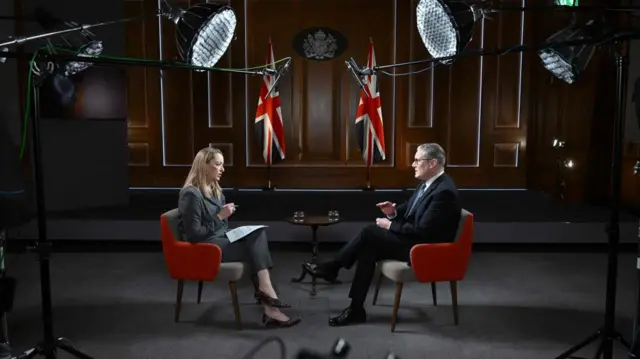
    Laura Kuenssberg interviewing Keir Starmer, they are sat on red chairs with TV lights and microphones visible over their heads
  17. Starmer 'not surprised people are frustrated'published at 09:12 GMT 4 January

    Asked about his unpopularity, Starmer says he is "not surprised that people are frustrated".

    "I completely get that," he adds, saying people have not seen their living standards improve since the late 2000s.

    He says people want change to come "more quickly" and he understands that.

    "I was given a five-year mandate to change this country around and I said we’d do it in a serious way with long-term measures that would actually benefit the country," he then says.

  18. 2026 will be year UK 'turns a corner', says Starmerpublished at 09:07 GMT 4 January

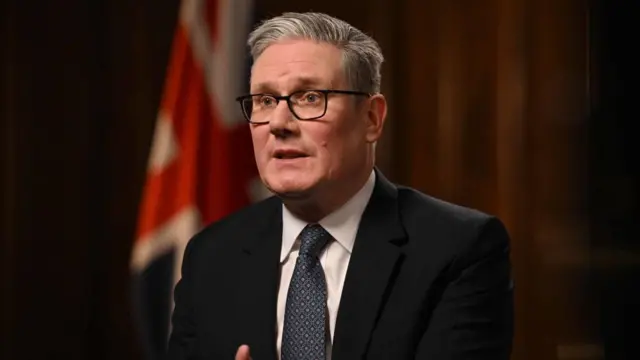
    Keir Starmer being interviewed by Laura KuenssbergImage source, Jeff Overs/BBC

    The interview starts with Starmer being asked what his new year's resolution is for 2026.

    The prime minister says he is "looking forward to 2026, I think it's going to be the year when we turn a corner as a country".

    "We talked about renewing the country, that will become a reality," he says, pointing to areas such as the economy, defence and education.

    He also indicates he will still be PM this time next year, as says he will still "be sitting in this seat by 2027".

  19. Watch live as Starmer faces Kuenssberg questionspublished at 09:00 GMT 4 January

    The first Sunday with Laura Kuenssberg programme of 2026 is now on air - you can watch live at the top of the page.

    In an exclusive interview, recorded in Downing Street on Saturday, Prime Minister Keir Starmer faces questions on his leadership, the cost of living, and the upcoming elections in Scotland, England and Wales in May.

    He will also discuss Venezuela, Ukraine and the government's pledge to close asylum hotels.

    Stay with us as we bring you the latest updates right here.

  20. Analysis

    Why 2026 is a make or break year for Keir Starmerpublished at 08:50 GMT 4 January

    Chris Mason
    Political editor

    It is Sir Keir Starmer's future in office – or the potential lack of it – that will dominate so much political conversation in 2026.

    Leading a government over the last 10 years in the UK has offered vanishingly little job security: Starmer is the sixth prime minister in a decade.

    Brexit, the pandemic, flatlining living standards, conflict in Europe, the breadth of electorally viable political parties, and the swirl of social media have all contributed, some at Westminster reflect, to the stamp of a much earlier sell by date on our leaders than ever before.

    It will be quite a year ahead.

    You can read more of my analysis here.