Summary

  1. Natural gas prices are still inflatedpublished at 15:26 GMT

    In addition to oil prices, natural gas prices have surged since the outset of the conflict in the Middle East.

    UK prices have decreased since they peaked on Monday, but are still hovering just above 120p per thermal unit. Prices were 70-90p before the conflict started.


    This Flourish post cannot be displayed in your browser. Please enable Javascript or try a different browser.

  2. Iran war offers a boon to Russia's war economypublished at 15:17 GMT

    Vitaliy Shevchenko
    Chief analyst, BBC Monitoring

    The ongoing crisis in the Middle East is allowing Russia to make more money out of oil and gas exports, analysts say.

    Russia is benefiting from the disruption of the global oil supply and the resulting higher energy prices, as well as from the easing of sanctions on Russian oil.

    According to the Centre for Research on Energy and Clean Air think tank a (CREA), a week after Israeli-US airstrikes on Iran started on 28 February, Russia’s average daily fossil fuel export earnings have totalled an estimated €510m (£441m) per day, 14% more than February’s daily average.

    CREA's Vaibhav Raghunandan says the figure is only likely to rise, undoing the recent damage to Vladimir Putin's war economy caused by sanctions imposed over his invasion of Ukraine.

    "There's a huge amount of sudden gains over the past week, and they'll only increase as time goes by. The longer this crisis continues, the better it is for Russia," Raghunandan told the BBC.

    "It's a bit of a gut punch for, I would say, Ukrainian support, simply because this is a huge huge oxygen boost for Russia," he said.

    Currently, oil and gas account for about a quarter of Russia's state revenue, according to CREA.

  3. How the war could impact your money: Send us your questionspublished at 15:06 GMT

    What does the conflict in the Middle East mean for your money? How could it affect your energy bills, petrol prices and your rent or mortgage?

    These are some of the questions our experts will be answering on this page and on the BBC News channel at 17:30 GMT today.

    You can send your specific queries to the team in the following ways:

    Please read ourterms & conditions andprivacy policy

    In some cases a selection of your comments and questions will be published, displaying your name and location as you provide it unless you state otherwise. Your contact details will never be published.

    BBC Your Voice branding
  4. UAE air defences deal with nine ballistic missiles and 35 drones today - MODpublished at 14:59 GMT

    United Arab Emirates air defences have detected nine ballistic missiles today, destroying eight while one fell in the sea, the nation's Ministry of Defence has said.

    An additional 35 drones were detected, 26 of which were intercepted while nine fell in UAE territory.

    According to the MOD's post on X, this brings the total of Iranian weaponry directed at the UAE to 262 ballistic missiles (241 of these destroyed) and 1,475 drones (1,385 of these intercepted).

    The attacks have resulted in six deaths, of Emirati, Pakistani, Nepalese and Bangladeshi nationalities.

    "The Ministry of Defense affirms that it is on high alert and readiness to deal with any threats and to firmly counter all that targets the destabilization of the state's security, ensuring the preservation of its sovereignty, security, and stability, and protecting its interests and national capabilities," the MOD said.

  5. British Airways cancels more Middle East flightspublished at 14:43 GMT

    Simon Browning
    Transport correspondent

    British Airways has cancelled more flights to the Middle East.

    BA said flights to Amman, Bahrain, Doha, Dubai, Tel Aviv have been cancelled up to and including 28 March.

    Abu Dhabi will not restart until October, as this is only a winter route for BA.

    The airline said the update was to give more certainty to passengers.

    BA still has two more repatriation flights from Oman to the UK this week, with tickets still on sale. The airline continues to operate a reduced service to Larnaca, Cyprus.

  6. Wall Street opens flatpublished at 14:39 GMT

    Natalie Sherman
    New York business reporter

    The US stock market is flat this morning, as concerns about the situation in Iran persist.

    The Dow Jones Industrial Average and S&P 500 were down about 0.3% in early trade, while the Nasdaq was flat.

    As a major producer of oil and gas, the US is less exposed to economic risks from the jump in oil prices sparked by the US-Israeli war.

    Its shares have been less impacted than those in regions that rely more heavily on energy imports.

  7. US and Iran trade threats as Hegseth promises 'most intense' day of strikes so farpublished at 14:33 GMT

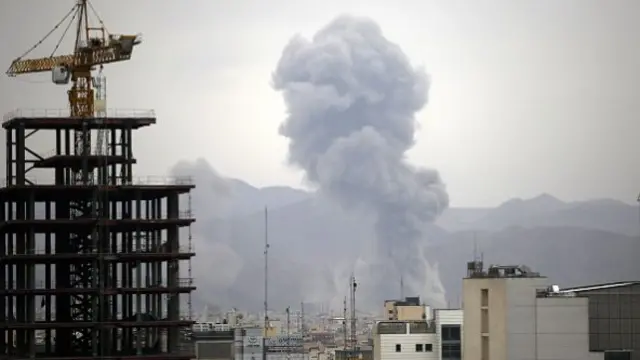
    Smoke rises above an area of Tehran following a strikeImage source, Getty Images
    Image caption,

    Israel is continuing its strikes on Tehran on Tuesday

    The US says it will ramp up strikes against Iran, as attacks continue across the Middle East. Here's what you need to know:

  8. 'Be careful so that you won't get eliminated', Iranian security official tells Trumppublished at 14:16 GMT

    Ali Larijani, Iran's top security official, has been responding to the US in a series of posts on X.

    He says that Iran is not scared of Trump's "worthless threats", adding that "even those bigger than you couldn’t eliminate Iranian nation".

    "Be careful, so that you won’t get eliminated," he concludes.

    It comes after the US president warned on TruthSocial that Iran would be hit "TWENTY TIMES HARDER" if the flow of oil through the Strait of Hormuz is stopped.

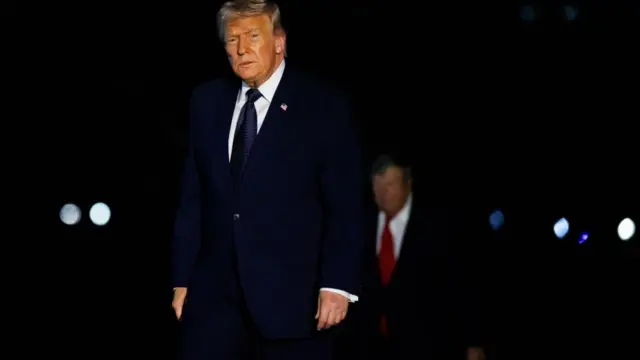
    Donald Trump returning to the White House on Sunday eveningImage source, EPA
  9. Strait of Hormuz can be strait of 'peace' or 'suffering', warns Iranian officialpublished at 14:05 GMT

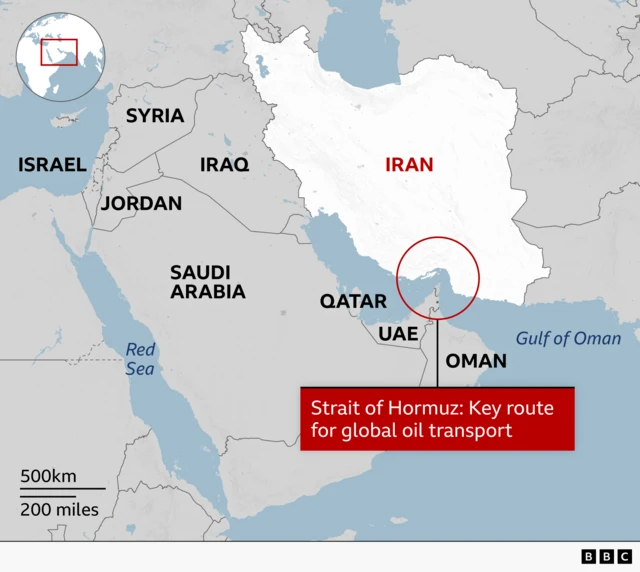
    Map showing where the Strait of Hormuz is in the Gulf of Oman, a key route for global oil transport. The strait lies between Iran and the peninsula of the United Arab Emirates and Oman. The map also shows countries in the wider Middle East region including Saudi Arabia, Iraq, Jordan and Israel

    Ali Larijani, Iran's top security official, has issued a warning - seemingly toward the US and Israel - that the Strait of Hormuz can be a "strait of peace" or "suffering".

    The full message, which Larijani posted in six different languages, reads: "Strait of Hormuz will either be a Strait of peace and prosperity for all or will be a Strait of defeat and suffering for warmongers."

    It comes as oil prices have spiked over fears the war with Iran could cause disruption to supplies from the Middle East through the strait - which sees about a fifth of the world's oil supply shipped through it.

  10. Israel launches fresh wave of strikes towards Beirutpublished at 13:51 GMT

    Israel announces it has launched fresh strikes towards the Lebanese capital of Beirut.

    In a message on Telegram in English, the Israel Defense Forces (IDF) says it is targeting "Hezbollah infrastructure" in the Dahieh suburb of the city.

    The fresh strikes in Lebanon come after reports of further explosions in the Iranian capital Tehran earlier today.

    An image of a blast in the eastern part of the city was shared with the BBC.

  11. British air defence takes out drone in Iraqi airspace overnightpublished at 13:44 GMT

    A British air defence system took out a drone in Iraqi airspace overnight, the UK Ministry of Defence says.

    The MoD says a "ground-based British counter-uncrewed aerial systems unit" took out the drone, which it says was "heading towards coalition forces".

    The department says that British pilots have completed "more than 230 flying hours" on defence operations in the region.

    It comes after the MoD announced this morning, a ship - the RFA Lyme Bay - is being prepared in case it is needed in the eastern Mediterranean. It is currently in Gibraltar.

  12. People seek shelter as Iranian missile attacks continue in Israelpublished at 13:29 GMT

    Yolande Knell
    Middle East correspondent, in Jerusalem

    Smoke rises from the site of an Israeli airstrike that targeted an area in Beirut's southern suburbs. The picture shows large blocks of flats with a huge plume of dark grey smoke coming out from the middle of themImage source, Getty Images
    Image caption,

    An Israeli airstrike targeted an area in Beirut's southern suburbs this morning

    Millions of people across northern and central Israel and the occupied West Bank have had to rush for shelter as alerts went off three times today to warn of a missile attack from Iran.

    The last two alerts came in quick succession.

    In northern Israel – which is worst affected by drone and missile fire from Hezbollah in Lebanon - there have been at least 30 warnings of incoming missiles and drones today.

    Earlier, the Israeli military said it was carrying out more strikes in Tehran. It said that an underground complex used by the Revolutionary Guard for weapons research had been targeted overnight.

    In his latest comments, Israel’s Prime Minister Benjamin Netanyahu has said that Israel is working to dismantle Iran’s theocratic leadership, but he hopes that Iranians will “break the yoke of tyranny” in their country.

    This mirrors President Donald Trump’s appeal to the Iranian people to “take over your government” on 28 February after the first joint military attacks with Israel against Tehran.

    Again, it seems to leave some wriggle room for the US and Israel to exit the war in future, even if it does not bring about regime change.

  13. Attacks on vital civilian infrastructure will lead to 'humanitarian catastrophe' - Qatarpublished at 13:15 GMT

    Barbara Plett Usher
    Reporting from Doha

    Three ankers are seen off the coast of Fujairah, in the distance on blue sea and a little bit obscured by mist/ fogImage source, Reuters
    Image caption,

    Iran has vowed to fire on ships transiting the Strait of Hormuz, like these tankers that are currently stationed off the coast of Fujairah

    I’ve been to a press briefing at Qatar’s foreign ministry, here’s some of what I heard.

    The spokesperson Majed al-Ansari said that attacks on regional infrastructure on both sides of this war were a “dangerous precedent,” that they would cause economic loss in the region and “repercussions throughout the world”.

    Al-Ansari also said any strikes on vital civilian infrastructure such as desalination plants either in Iran or in the Gulf would lead to “humanitarian catastrophe”.

    “Civilians in cities should not be attacked in any way,” he said. He told journalists that Qatar’s strategic defence partnership with the United States and other countries is not in question.

    When asked whether any naval escort would help resolve the blockage of transit through the Strait of Hormuz, al-Ansari said “a viable solution would be to stop attacks against our energy facilities”.

    The spokesperson said that all conflicts can be solved at the negotiating table and that communication channels between Qatar and Iran are not cut, but Doha cannot not mediate when it is being attacked by Iran.

    When we left the foreign ministry, emergency alerts buzzed on our phones and we heard the sound of explosions as the Qataris intercepted incoming fire.

  14. BBC Verify

    'They’ve destroyed the whole town': Video shows car window shattered by shockwavespublished at 13:05 GMT

    By Sarah Jalali

    A video showing the window of a moving car being shattered by the shockwave from nearby strikes in the Iranian city of Karaj has been verified.

    In footage BBC Verify has confirmed was first shared online today, the rear window of the vehicle is blown away and huge smoke plumes can then be seen in the near distance.

    The man filming, who appears to be a passenger in the backseat of a taxi, shouts in fear and urges the driver to go faster and leave the area. At least half a dozen explosions can be heard.

    “They’ve destroyed the whole town,” he says, adding later in the clip: “Everything has been destroyed.”

    BBC Verify was able to identify the general area where it was filmed using satellite imagery of Karaj - a city around eight miles (13km) from the capital Tehran - but the target of the strike is unclear.

    Media caption,

    Dramatic moment aftershock of explosion shatters car window in Karaj

  15. Analysis

    Trump 'gets to control the throttle', says Hegseth after president's mixed signalspublished at 13:02 GMT

    Tom Bateman
    US State Department correspondent, reporting from the Pentagon

    Hegseth continued his ambiguity over his view of the war’s timeline.

    Trump gave mixed signals last night saying the war was “very complete” but also acknowledging Hegseth’s earlier comments that the assault was “only just the beginning”.

    Hegseth was asked about this. He told reporters “our will is endless” but it was up to the president how long it lasts. “He gets to control the throttle”, Hegseth said.

    It feels like he's trying to hedge on this point given Trump’s ambiguity, a frequent trait of this administration. It was also pointed out to Hegseth and Caine that their percentage figures for the decrease in the number of Iranian missiles being fired since the start of the war seemed similar to the ones they gave last week.

    Hegseth said the downward trend continued, which didn’t really answer the question.

  16. Today will be the 'most intense' of US attacks, Hegseth says - a recappublished at 12:56 GMT

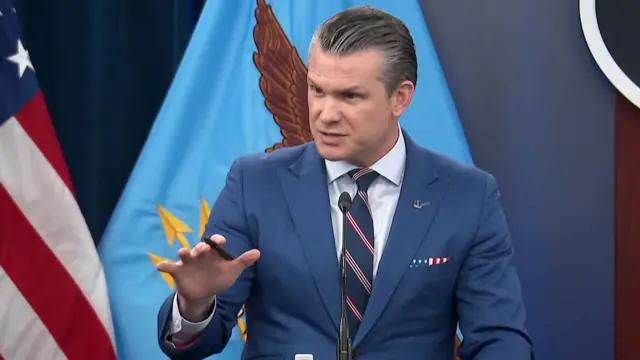
    Pete Hegseth in a blue suit, with his right hand raised with a pen in between his fingers, speaking into a microphone on a podium

    The Pentagon press conference has finished - here's what was said:

    • Defense Secretary Pete Hegseth said today will be the "most intense" day of US strikes on Iran so far - with "the most fighters, the most bombers, the most strikes"
    • He said Iran has fired the fewest number of missiles in a 24-hour period since the war began
    • Echoing that message, Chair of the Joint Chiefs of Staff Gen Dan Caine said: "Ballistic missile attacks continue to trend downwards, 90% from where they started, and one-way attack drones have decreased 83% since the beginning of the operation"
    • Meanwhile, the US is "looking at options" which would enable the military to escort vessels through the Strait of Hormuz, Caine said
    • Hegseth said Iran's new Supreme Leader, Mojtaba Khamenei, "would be wise" to heed Donald Trump's message not to pursue nuclear weapons
    • Questioned about what measures the Pentagon takes to minimise civilian casualties, the defense secretary said they will investigate any allegations that need looking into, but claimed no nation "takes more precautions to ensure there's never targeting of civilians"
  17. Defense secretary says aftermath of war 'is going to be in America's interests'published at 12:45 GMT

    For the final question, Hegseth is asked about Trump suggesting the military operation will wrap up sooner than originally thought and whether the US will play a role in the aftermath.

    Hegseth says ultimately "the aftermath is going to be in America's interest" - and the country will not live "under a nuclear blackmail scenario" or a cloud of threat.

    That brings the press conference to an end, and the officials leave the stage.

  18. 'No nation takes more precautions to ensure no targeting of civilians than the US', says Hegsethpublished at 12:39 GMT

    The defense secretary is asked about what measures the Pentagon is taking to minimise civilian casualties in strikes inside Iran.

    "No nation takes more precautions to ensure there's never targeting of civilians than the United States of America," Hegseth says.

    He says they will investigate any allegations that needs looking into, and "open source is not the place to determine what did and did not happen".

    The question comes amid reports that a US missile hit a military base near a school in Iran.

    Expert video analysis shows a US Tomahawk missile hit a military base near a primary school in southern Iran where Iranian authorities said 168 people, including around 110 children, were killed.

  19. US 'looking at options' to escort ships through Strait of Hormuz - Cainepublished at 12:35 GMT

    Chair of the Joint Chiefs of Staff Gen Dan Caine is asked whether the military is open to escorting vessels through the Strait of Hormuz.

    Caine says he is "looking at a range of options to set the military conditions to be able to do that", including looking at risk factors and resources required to do it.

    Hegseth steps in, referring to Donald Trump's post on Truth Social last night threatening Iran against stopping the flow of oil through the shipping route.

    "He takes very seriously the condition of that strait," he says.

  20. 'Our will is endless' - Hegsethpublished at 12:33 GMT

    The officials are asked what stage of the war we're up to.

    "Our will is endless, but ultimately the president gets to determine the end state of those objectives," Hegseth says.

    He adds that it's up to US President Donald Trump to decide how long the war goes on for, as he was the one elected into office.

    Hegseth is asked what his message is for Americans who are not in favour of the war and influence of Israel on the decision to strike Iran.

    He says Israel has been a strong partner and that the US has stayed focused on its own objectives.

    "The president is leading and determining where we want to go," he says and adds that they are not being pulled in any direction.