Summary

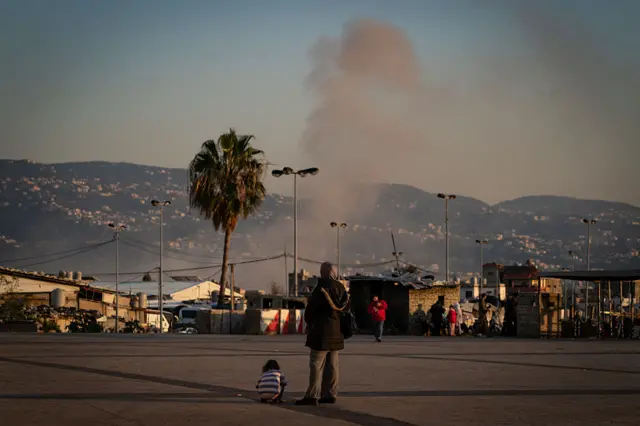
  1. Watch: Explosions rock Beirut after new strikespublished at 01:59 GMT

    As we reported earlier, Israel has launched a new wave of strikes on Hezbollah targets in Beirut.

    Soon after, explosions rocked the southern suburbs of Lebanon's capital.

    Media caption,

    Watch: Explosions rock Beirut after new wave of Israeli strikes

  2. Oil prices steady while Asian stocks continue recoverypublished at 01:19 GMT

    Osmond Chia
    Business reporter

    It's Wednesday morning trading in Asia and oil prices are largely flat after huge volatility earlier in recent days as markets take stock of the developments in the Iran war.

    US-traded crude is currently priced at $83.35 (£62.06) a barrel, while Brent was around $87.88. Both are down after surging to almost $120 on Monday, but still well above their prices before the war began.

    Member of the International Energy Agency (IEA) are also discussing a plan to potentially release oil reserves to bring down prices, though no decision has been made.

    Stock markets in Asia also continued their recovery in early trade on Wednesday, adding to Tuesday's gains.

    South Korea's Kospi index is up by 2.5%, while Japan's Nikkei 225 gained by nearly 2%.

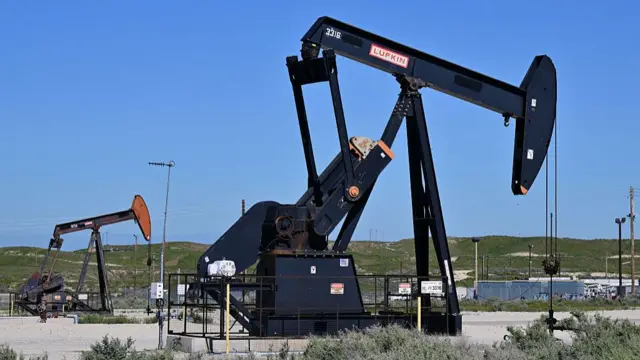
    Pumpjacks work the wells operated by Chevron at Midway-Sunset field near Fellows, north of Taft, in Kern County, CaliforniaImage source, Getty Images
  3. Iran war cost will be passed to consumers, shipping boss tells BBCpublished at 00:49 GMT

    Jonathan Josephs
    BBC business reporter

    Increased shipping costs driven by the conflict in Iran will be passed on to consumers, the boss of the world's second biggest shipping company has said.

    "We have traditional contracting mechanisms that pass on this fuel fluctuation, whether they go up or they go down, onto the customers," Vincent Clerc, the boss of Danish shipping giant Maersk, told the BBC in an exclusive interview.

    "So what it means is that ultimately, in this case, these increases will pass to our customers and will pass on to the consumers."

    He called on the US, Israel and Iran to come to "some kind of deal" to restore global trade routes in the Middle East.

    The war has brought two vital shipping routes to an almost complete standstill.

    Before the conflict, around a fifth of global oil supplies travelled through the Strait of Hormuz, which is effectively closed because of Iran's threats to target shipping.

    Governments, including the United States and France, have suggested that naval escorts could be a way to open the waterways again - but the Maersk boss said he won't put anyone in harm's way.

    "The main concern is the safety of our crews, is the safety of our assets," Clerc said.

    He said that as long as the significant threat of drone strikes remains, with no guarantee of a truce between the two sides, "it is very hard for us to put our colleagues and our ship in harm's way".

  4. Analysis

    War in Iran something of an exception to Trump Vance united frontpublished at 00:29 GMT

    Daniel Bush
    Washington correspondent

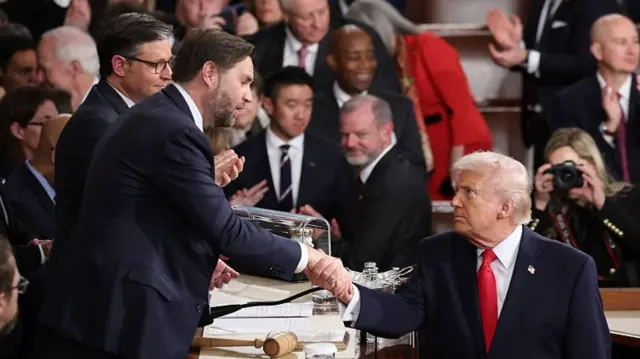
    JD Vance and Donald Trump shaking hands following State of the Union addressImage source, Getty Images

    President Donald Trump and Vice President JD Vance have presented a united front on most major domestic and foreign policy issues since taking office.

    The war in Iran is proving to be something of an exception.

    Trump admitted as much on Monday, telling reporters at a press conference in Florida that there was some daylight between his view on the war and Vance's. The war has entered its 11th day as the US and Israel continue airstrikes to degrade Iran's military and nuclear program.

    Vance was "philosophically a little bit different from me" at the start of the war, Trump said. The vice president was "maybe less enthusiastic" about launching the war, Trump added.

    The remarks acknowledged a complicated balancing act for Vance, a frontrunner to succeed Trump as the Republican Party's presidential nominee in 2028.

    The vice president has been a vocal critic of US interventions abroad - a popular position with the Maga base Vance would need to win over in a White House run.

    In a 2023 Wall Street Journal op-ed, Vance said he backed Trump because "I know he won’t recklessly send Americans to fight overseas.”

    Vance reiterated the position in an interview with the Washington Post just hours before Trump launched the military campaign against Iran.

    Since then, Vance has publicly backed the war effort. But in private, he reportedly pushed for a short military campaign that doesn't turn into a protracted conflict.

    Vance's position on Iran also stands in contrast to Secretary of State Marco Rubio, who has emerged as a vocal supporter of US interventions abroad. Rubio is also rumored to be a potential 2028 Republican contender.

  5. Our customers think Iran has fallen apart but exports are continuing, says manufacturing workerpublished at 00:11 GMT

    Soroush Pakzad
    BBC News Persian

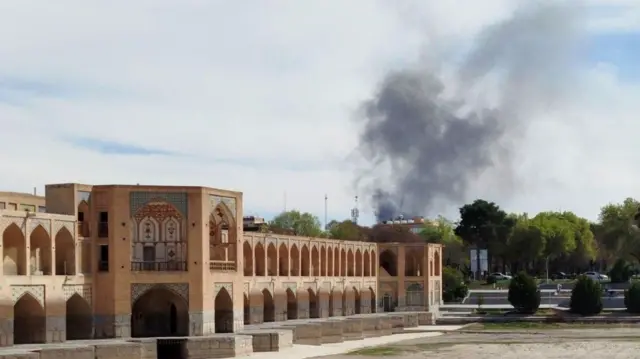
    A building in Isfahan with smoke coming upwards in the distance
    Image caption,

    Isfahan is home to major industries in Iran and has been under many bombardments in the past few days

    I have been speaking to a businessman from a manufacturing and export company in Isfahan, Iran.

    "All of our foreign customers think Iran has completely fallen apart," he says, and customers are "extremely frightened".

    "But in reality, none of the infrastructure has been hit yet. Our factories are operating, and exports are continuing."

    The businessman said that Russian and Iraqi customers today "suddenly insisted that we deliver and ship their goods faster".

    "They were willing to pay double the logistics cost just to make sure their products leave Iran this week — especially the Iraqi clients," he said.

    "One customer told me, “In the next few days they’re going to hit Iran’s fuel and electricity industries — pack up and go to Turkey."

    Isfahan is home to major industries in Iran and has been under many bombardments in the past few days.

    Some people within Iran are more hopeful for a deal.

    My source says managers "believe Trump will eventually back down" and that many people are "counting on" a possible agreement between the US and Iran.

    But he admits that "operations have been disrupted" - "there are no trucks available, and transportation prices are completely chaotic".

    "Since the start of the war, we’ve only been able to sign one contract; the rest have pulled back, and customers have fled," he adds.

  6. Saudi Arabia says it intercepted six missiles headed for a military basepublished at 23:49 GMT 10 March

    Saudi Arabia's Defence Ministry says it has intercepted and destroyed six ballistic missiles headed for Prince Sultan Air Base, a military facility located in the east of the country.

    The ministry also says it has intercepted several drones today, including two in the northeastern city of Hafar Al-Batin.

    The posts did not specify the source of the missiles or drones.

  7. Over 40,000 Americans have fled the Middle Eastpublished at 23:29 GMT 10 March

    More than 43,000 American citizens have returned to the US from the Middle East since the conflict with Iran began on 28 February, a US State Department spokesperson says.

    Spokesperson Tommy Pigott says the department has assisted 30,000 of those through a task force set up for the purpose.

    The US has completed more than two dozen charter flights helping Americans evacuate the region, though those flights have operated with less than 40% capacity, on average, as many Americans have chosen to fly commercial instead, the department said earlier today.

    Charter flights and ground transport operations out of the Middle East are continuing to run. Any American citizen can request assistance, the department added.

  8. 'My sleep schedule depends on the bombings': A glimpse of daily life in Iran's capitalpublished at 23:13 GMT 10 March

    Ghoncheh Habibiazad
    Senior reporter, BBC Persian

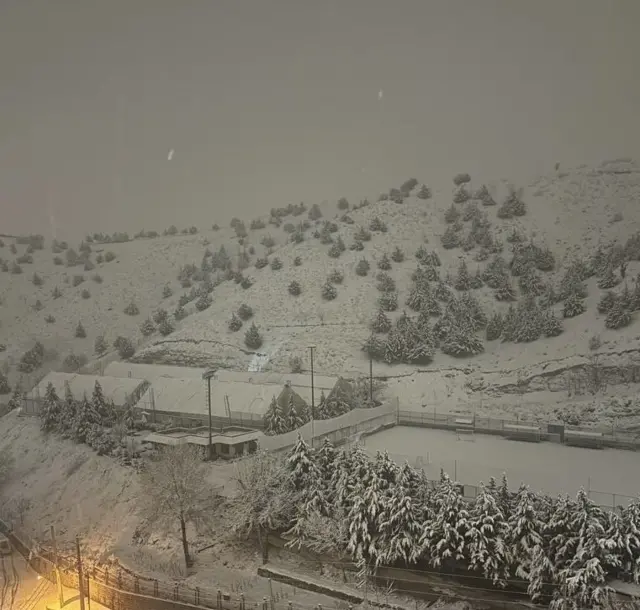
    Snow covering a hillside and trees, with two buildings and a large pitch at the bottom of the hillImage source, Supplied

    Snow was falling tonight in some parts of Tehran, after days of polluted air following strikes on at least four oil depots in the capital.

    But life still goes on, even as the war drags on.

    The internet outage imposed by the government is not helping citizens, although some manage to find ways to connect momentarily. People staying inside their homes still have to find ways to keep themselves busy.

    “Made some food, read a book, played a computer game. Then found out that a girl I went to school with has been killed and her body still hasn’t been found", says a woman in her 20s.

    "Why do we have to experience such horror when we’re at the prime years of our youth?”

    A man in his 30s says: "My sleep schedule depends on the bombings now. I go to sleep at around six or seven in the morning and wake up at 2pm. Sometimes I have to go out to buy groceries, but the city is very empty."

    “Woke up today feeling terrible. Watched a film, and another one after that. During the day, sometimes I forget that a war is happening outside. I’m locked up at home, waiting for an explosion", says another man in his 30s.

  9. Israel launches fresh strikes at Beirutpublished at 22:47 GMT 10 March
    Breaking

    The Israeli military has just issued an update, saying it's launched a new wave of strikes at Beirut in Lebanon.

    It says it's targeting infrastructure that belongs to Iran-backed Hezbollah in the south of the Lebanese capital.

    We'll bring you more detail on this when we have it.

  10. US Central Command says 16 Iranian mine-laying ships destroyedpublished at 22:40 GMT 10 March

    US Central Command (Centcom) says US forces have "eliminated" 16 Iranian mine-laying ships today near the Strait of Hormuz.

    Centcom also shared a video that appears to show the ships being struck.

    It follows earlier comments by US President Donald Trump, where he said forces struck 10 inactive Iranian boats in the Strait, after promising to deal with the ships "quickly and violently".

    For context:The passage of ships through the strait - the world's busiest oil shipping canal - has been severely disrupted amid the US-Israeli war with Iran. US intelligence assets believed Iran was preparing to deploy naval mines in the Strait of Hormuz, the BBC's US partner CBS News reported earlier today.

  11. Recap: 11th day of US-Israeli war with Iran as fresh strikes launched across regionpublished at 22:29 GMT 10 March

    Charlotte Hadfield
    Live reporter

    • The Israel Defense Forces says it has begun an "additional wave" of strikes on targets in Tehran, Iran, while the UAE says its defence systems are responding to a "missile threat"
    • Israeli Prime Minister Benjamin Netanyahu has also addressed the "people of Iran" in a statement on X, calling for them to overthrow the Ayatollah regime and "gain your freedom"
    • A woman crossing the border from Iran into Van, eastern Turkey, says "sometimes we felt like we were dying" as the US-Israeli missile strikes shook her home
    • Meanwhile in Lebanon, families who have been displaced by Israeli airstrikes have taken shelter in schools, stadiums and other public buildings
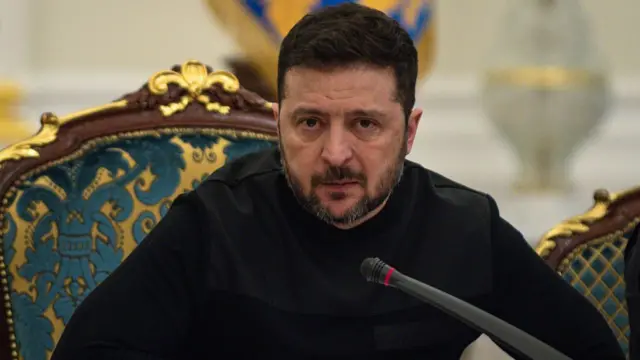
  12. Ukrainian drone experts heading to the Gulf - Zelenskypublished at 22:14 GMT 10 March

    Zelensky sits at a microphone, wearing an all-black shirtImage source, Getty Images

    Ukrainian President Volodymyr Zelensky says his military experts are on their way to the Gulf nations to share their expertise on downing drones.

    "Ukraine has the greatest experience in the world in countering attack drones, and without our experience it will be very difficult for the Gulf region, the entire Middle East, and partners in Europe and America to build strong protection," he says on X.

    Since the start of Iran's retaliatory strikes against neighbouring countries, Zelensky voiced his willingness to support where possible, given Ukraine's experience downing Russian drones since Moscow launched its full-scale invasion four years ago.

    He has maintained that help from Ukraine will be available to those who return the favour, supporting Ukraine in its continuing war with Russia.

    "Those now seeking Ukraine’s help must continue to assist our own defence – first and foremost, our air defence," he adds.

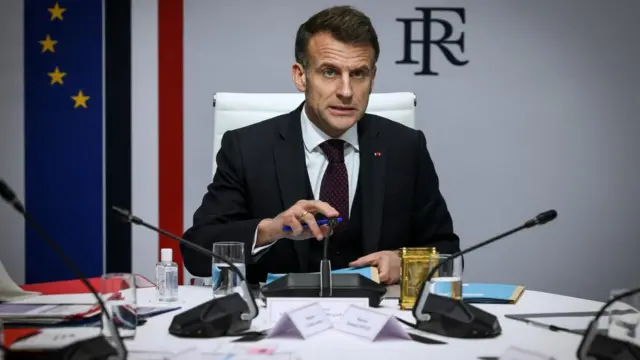
  13. G7 leaders to meet as Macron and Carney agree to 'increase coordination'published at 22:06 GMT 10 March

    France's President Emmanuel Macron speaks during a national defense council meeting at the Elysee Palace, in ParisImage source, Reuters

    French President Emmanuel Macron will chair a G7 leaders meeting on Wednesday to discuss the impact of the conflict in the Middle East.

    It comes after Macron spoke to Canadian Prime Minister Mark Carney on Tuesday about the war and its impact on the global economy.

    The leaders agreed to "increase coordination among G7 partners", a statement from Carney's office added.

  14. UK government chartered flight heads to UK from Dubaipublished at 21:50 GMT 10 March

    Another flight chartered by the UK government to bring British nationals home from the Middle East left Dubai earlier on Tuesday.

    It's the second such flight to have departed the city in the United Arab Emirates, the first having landed in the UK this morning.

    In recent days the government has also arranged three charter flights from Oman, the third of which landed in the UK on Monday morning.

    Officials estimate that more than 45,000 British nationals have left the Middle East since 1 March across commercial and charter routes.

  15. UAE government says air defence systems are responding to 'missile threat'published at 21:31 GMT 10 March
    Breaking

    "Air defence systems are currently responding to a missile threat" in the United Arab Emirates, the country's National Emergency Crisis and Disaster Management Authority says.

    In an update on X, it asks the public to remain in a safe location and follow official guidance.

  16. Israeli military launches fresh strikes on Iranpublished at 21:26 GMT 10 March
    Breaking

    The Israel Defense Forces (IDF) says it has begun an "additional wave" of strikes on targets in Tehran, Iran.

    It comes after the IDF said earlier today that it had struck key command centres of the Iranian armed forces.

  17. Iranian police chief warns against potential anti-government protestspublished at 21:22 GMT 10 March

    Ghoncheh Habibiazad
    Senior reporter, BBC Persian

    Iran police chief Ahmadreza Radan has warned those Iranians who might protest on the streets against the establishment “at enemy’s bidding” that they will be treated as the “enemy”.

    “If someone comes at the enemy’s bidding, we do not regard them as a protester or anything of the sort; we treat them as we would treat the enemy, and we deal with them in the same way we deal with the enemy", Radan said on state TV.

    "All our forces also have their fingers on the trigger, ready to defend the [Revolution]”, he added.

    Israeli Prime Minister Benjamin Netanyahu had issued a direct message on 8 March to the Iranian people urging them to stand up against the establishment.

    Israeli officials, including Netanyahu, have publicly said they hope the ongoing conflict could lead to regime change in Iran.

    Iran has recently seen a wave of nationwide anti-establishment protests that started in late December, prompting the deadliest crackdown in the Islamic Republic's history.

    The US-based Human Rights Activists News Agency (Hrana) said it had confirmed the killing of at least 7,000 people during that wave.

  18. Israeli PM tells Iranian people: Remove your 'tyrants' and 'seize the moment'published at 21:08 GMT 10 March

    Israeli Prime Minister Benjamin Netanyahu has posted a thread on X addressed to the "people of Iran", calling for them to overthrow the Ayatollah regime and "gain your freedom".

    "The Ayatollah is no more, and I know you don't want him replaced with another tyrant. So you must act. We are creating the conditions for you to do so," the thread reads.

    The prime minister adds that he respects the Iranian people's sovereignty, and that he wants them to take action as the US and Israel aim to topple those in power.

    "In the coming days we will create the conditions for you to grasp your destiny," he writes, adding later: "When the time is right, and that time is fast approaching, we will pass the torch to you."

    Netanyahu posted a similar message on 8 March.

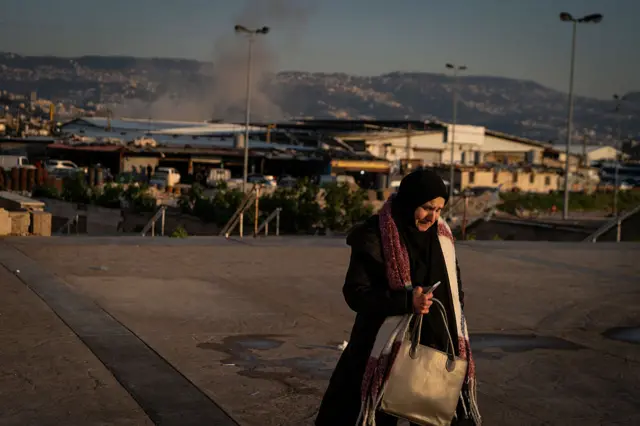
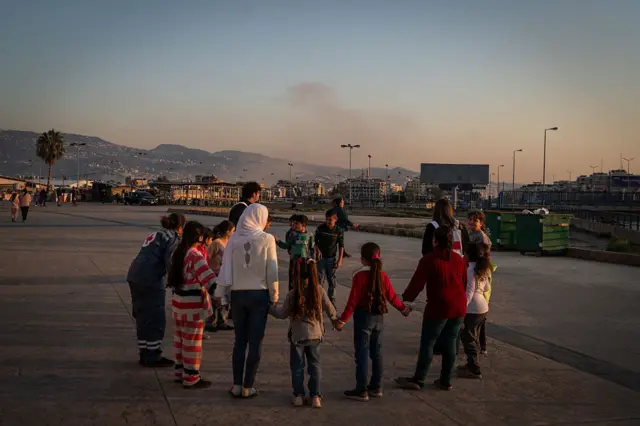
  19. Smoke rises in Beirut suburbs as families take shelter at stadiumpublished at 20:58 GMT 10 March

    Families who have fled Israeli airstrikes in Lebanon have taken shelter in stadiums and schools.

    In Beirut's southern suburbs, Camille Chamoun Sports City Stadium, the home ground of Lebanon National Football Team, is among those being used as a makeshift shelter for displaced people.

    A woman who has been displaced by the conflict cries following an Israeli strike on Beirut's southern suburbs. She is wearing a red and white scarf and carrying a grey handbag.Image source, Getty Images
    Image caption,

    A woman, who has been displaced by the conflict, cries following an Israeli strike on Beirut's southern suburbs

    Children hold hands as they play at a shelter on the Camille Chamoun Sports City Stadium in Beirut, Lebanon, as smoke rises from a nearby strikeImage source, Getty Images
    Image caption,

    Children play at a shelter on the Camille Chamoun Sports City Stadium in Beirut, Lebanon, as smoke rises from the strike

    A child sits on the floor at the Camille Chamoun Sports City Stadium. An adult looks on at the smoke rising from a strike in Beirut's southern suburbsImage source, Getty Images
    Image caption,

    Israel announced on Tuesday that it has launched fresh strikes towards the Lebanese capital. The Israel Defense Forces (IDF) said it was targeting "Hezbollah infrastructure" in the Dahieh suburb of the city

  20. Iran says Israel killed four diplomats in strike on Beirut hotelpublished at 20:45 GMT 10 March

    Damage to the outside of a beige coloured building cause by an Israrli strokImage source, Reuters

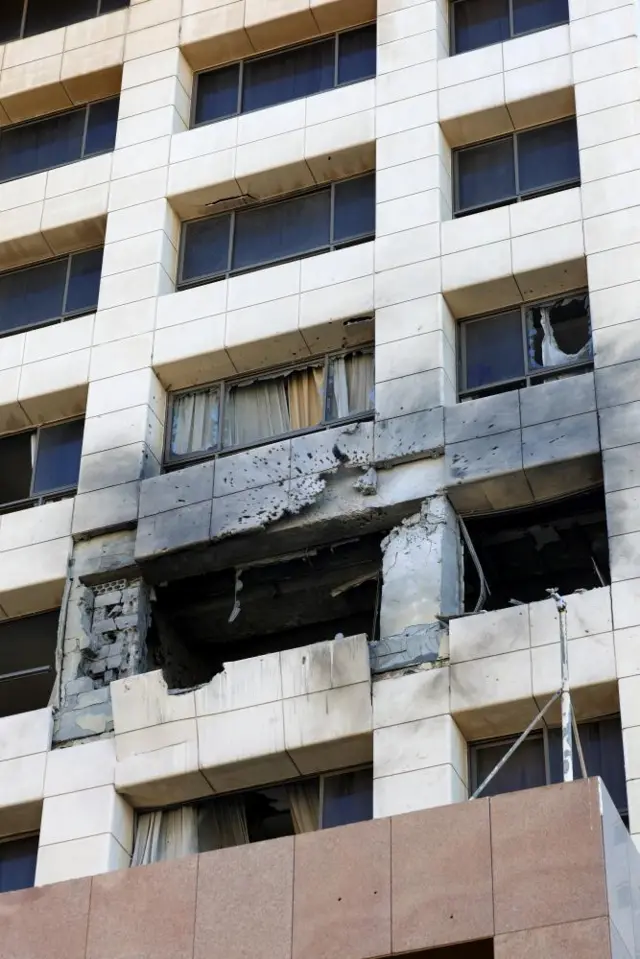
    Iran's ambassador to the UN, Amir Saeid Iravani, has formally accused Israel of killing four Iranian diplomats in an attack on the Ramada Hotel in Beirut on Sunday.

    In a letter to UN Secretary General Antonio Guterres, Iravani says the attacks were "deliberate" and "targeted" after the diplomats had moved from their official residences to the hotel.

    "The targeted killing of four Iranian diplomats while they were serving as official representatives of a sovereign Member State on the territory of another sovereign State constitutes a grave terrorist act and a serious breach of international law," the letter says.

    The strike hit the fourth floor of the hotel in central Beirut. The Israeli military said a secret meeting of Iranian operatives was under way inside.

    The Israel Defense Forces said the five men killed in the strike worked for Iran's elite Quds Force - the overseas operations arm of the Islamic Revolutionary Guard Corps.

    An initial toll by the Lebanese health ministry said four people had been killed and 10 injured in the strike, but it did not identify them.