Summary

Are you affected?


  1. People 'calm, but very scared' as ground shookpublished at 04:27 BST

    We have more from the Newsday interview with Chantel Mohar, the tourist who witnessed the earthquake.

    She says many people were standing outside to stay safe, and some were throwing up. She says they appeared "calm, but very scared".

    At one point, she recalls, their bus driver got out to direct traffic.

    Water was a concern, as power was out and they could not get bottles of water from vending machines.

    "They did a great job at taking care of us. They were really concerned about water," she said of the guides.

    "We're here and we're just happy to be here."

  2. 'Rocking and confusion', recalls tourist caught in earthquakepublished at 04:24 BST

    Chantel Mohar, an American tourist, was in Kumamoto with her family when the earthquake struck yesterday.

    They were travelling on a full tour bus when all their phones went off with earthquake alerts.

    "There was just a lot of rocking and confusion," she told the BBC's Newsday programme.

    What was meant to be a 2.5-hour ride turned into nine hours, as the bus was made to detour onto an evacuation route.

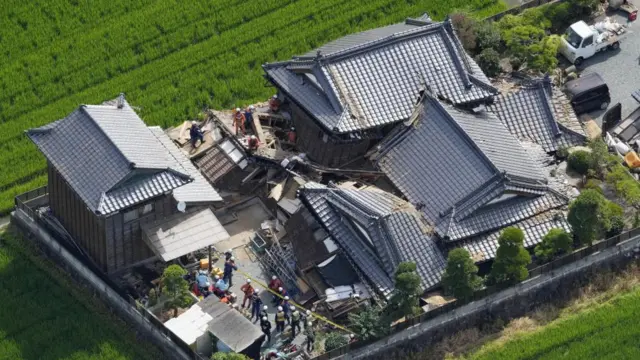
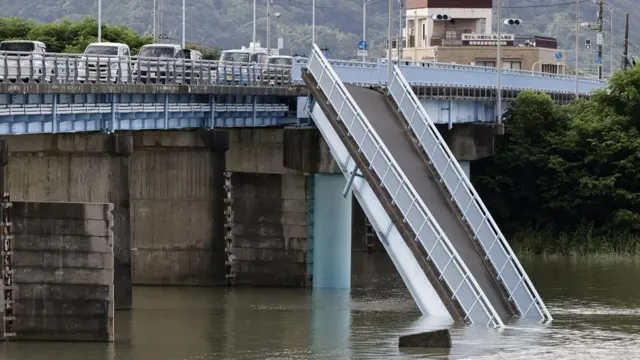
    She says they saw devastation caused by the tremors, including smashed cars and collapsed homes.

  3. 'All I could do was hold the chair'published at 03:54 BST

    Chie Kobayashi
    BBC News in Japan

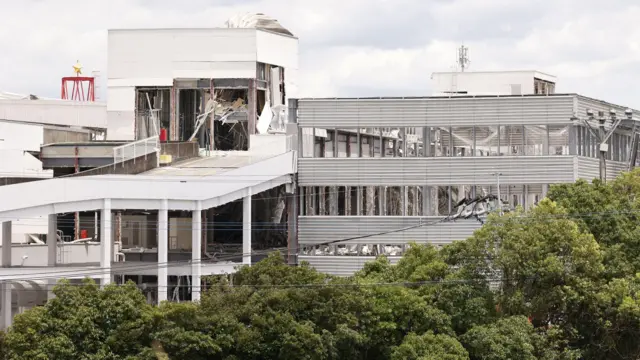
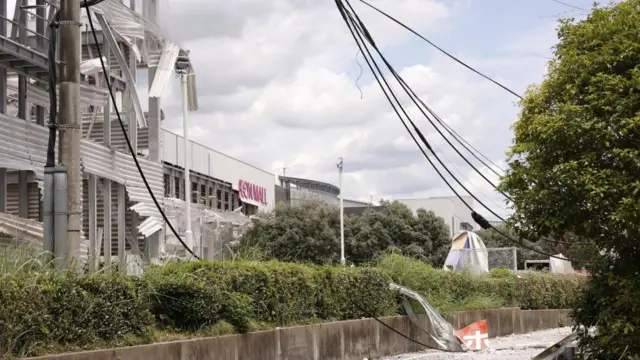
    I've just spoken to a woman whose cake shop is located about 600m (660 yards) from the Aeon mall that partially collapsed during the earthquake.

    An explosion ripped through the mall about an hour after the quake.

    "I couldn’t tell which sound was the sound of earthquake, and which was the sound of explosion," says the woman, who was sitting in the back office of her shop when the quake struck.

    There were no customers in the shop at the time.

    "All I could do was hold the chair I was sitting in and big jolts came one after another," she says, appearing to still be in shock.

    "I didn’t know what to feel, I couldn’t even feel scared in such a situation. Even now I don’t know what to feel, and I don’t know how to explain."

    She has closed her cake shop for today, and there is no visible damage except for things that have fallen from the shelf.

    She says she would have to check if her ovens are still functioning before deciding if she can go back to work.

  4. Operations at earthquake-hit TSMC chip facility gradually resumingpublished at 03:26 BST

    Osmond Chia
    Business reporter

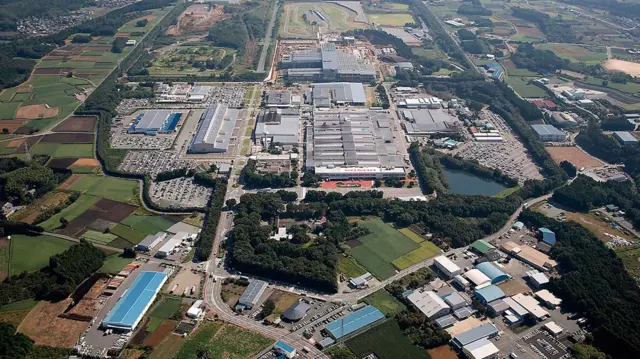
    A general view of the Japan Advanced Semiconductor Manufacturing Company, pictured in the background behind a Japanese townImage source, AFP via Getty Images

    Operations at a Kumamoto semiconductor plant run by Taiwanese chip giant TSMC are "gradually resuming" after the lab recorded a "maximum seismic intensity of level 5", TSMC tells the BBC.

    All personnel are safe, TSMC said.

    The company has also conducted post-earthquake inspections, and has confirmed the structures to be safe, it said, adding that further assessments continue.

    "As there may still be occasional aftershocks, parts of the construction works are suspended as a safety precaution," TSMC said.

  5. Trains still suspended on Kyushupublished at 03:00 BST

    Train operations have been suspended on Kyushu island, where the earthquake struck, according to Japan Railways.

    The rail operator said seven passengers were injured by the earthquake on the Kyushu Shinkansen, also known as bullet trains, public broadcaster NHK reported.

    As the trains were stranded on the broken tracks after the quake, some passengers had to spend the night on the trains, NHK reported.

    Repairs are under way.

  6. Nearly 10,000 people evacuated, say Kumamoto officialspublished at 02:35 BST

    Chie Kobayashi
    BBC News in Japan

    Kumamoto prefecture officials say 9,872 people have been evacuated.

    Meanwhile, some 36,700 households are without electricity, they add.

  7. Heatstroke fears for residents and rescuerspublished at 02:32 BST

    Takaichi also noted hot days are continuing, and told residents and rescue personnel to take preventative measures for heatstroke.

  8. PM says rescuers in 'race against time'published at 02:28 BST

    During her update on the situation this morning, Prime Minister Sanae Takaichi gave her condolences to those who had died and thanked emergency services for their continued efforts.

    She says there are still many people waiting to be rescued.

    "It’s a race against time," Takaichi said.

  9. Earthquake likely caused by unruptured fault from 2016 - expertspublished at 02:20 BST

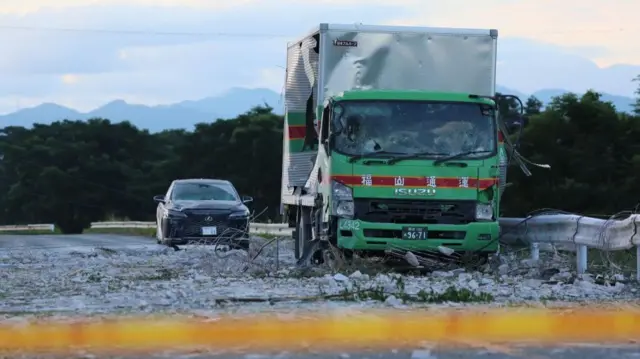
    A damaged truck is seen on a debris-covered roadImage source, AFP via Getty Images

    The magnitude 7.1 earthquake that struck Kumamoto prefecture on Tuesday was likely caused by a fault that had been left unruptured after quakes from 2016, experts have told local media.

    In April 2016, two quakes - magnitudes 6.5 and 7.3 - struck two days apart, killing more than 270 people.

    Those quakes were linked to the Futagawa and Hinagu fault zones, according to experts.

    And Tuesday's quake stemmed from an unruptured section of the Hinagu fault zone, Sakai Shinichi, a professor at Tokyo University's Earthquake Research Institute, told public broadcaster NHK

    Shinji Toda, a seismology professor, similarly told Kyodo news agency that the 2016 quakes had "caused a significant strain and stress, resulting in movements along part of the Hinagu fault zone" this time.

    The Japan Meteorological Agency hasn't directly linked Tuesday's earthquake quake to those from 2016.

  10. Death toll rises to 13published at 01:59 BST
    Breaking

    Chie Kobayashi
    BBC News in Japan

    Japanese Prime Minister Sanae Takaichi says the death toll from the quake has risen to 13.

    We'll bring you more updates as we get them.

  11. Search efforts continue at shopping centrepublished at 01:41 BST

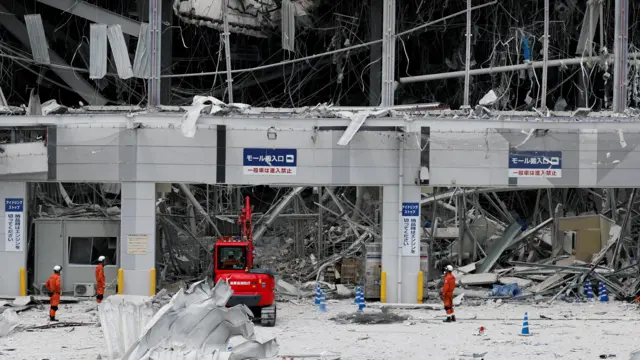
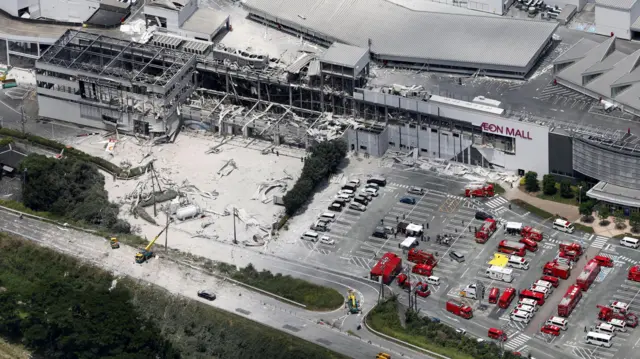
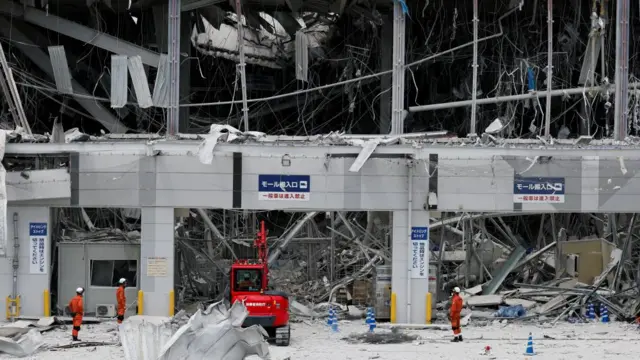
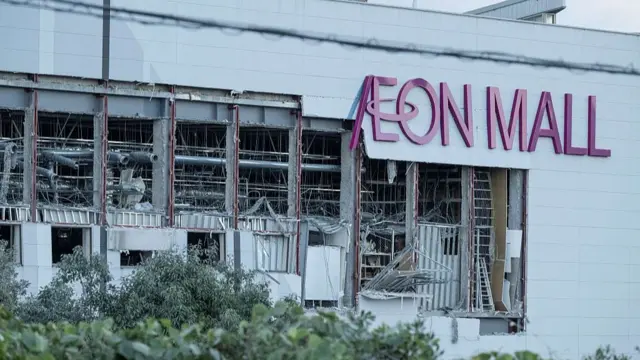
    Search and rescue operations continue at the Aeon Mall, where three people have died.

    Earlier, the local fire service said several people are trapped inside the shopping centre, and there were reports of an explosion.

    Sunrise over the Aeon mall after the earthquake.Image source, EPA/Shutterstock
    Image caption,

    The Aeon Mall, where many people remain trapped

    A large group of emergency workers in blue and yellow boiler suits.Image source, Getty Images
    Image caption,

    Emergency workers gather outside the mall

    A group of red emergency vehicles are clustered on a road.Image source, Getty Images
    Image caption,

    Emergency vehicles also arrive at the mall

    Rescuers in orange jumpsuits combing through debris in the darkImage source, Fire and Disaster Management Agency
    Image caption,

    Rescuers search inside the collapsed mall

  12. Officials confirm death of third personpublished at 01:03 BST
    Breaking

    Chie Kobayashi
    BBC News in Japan

    A third person has now been confirmed dead, an official from Kumamoto prefecture's Disaster Management Division has said.

    The person died after experiencing a cardiac arrest.

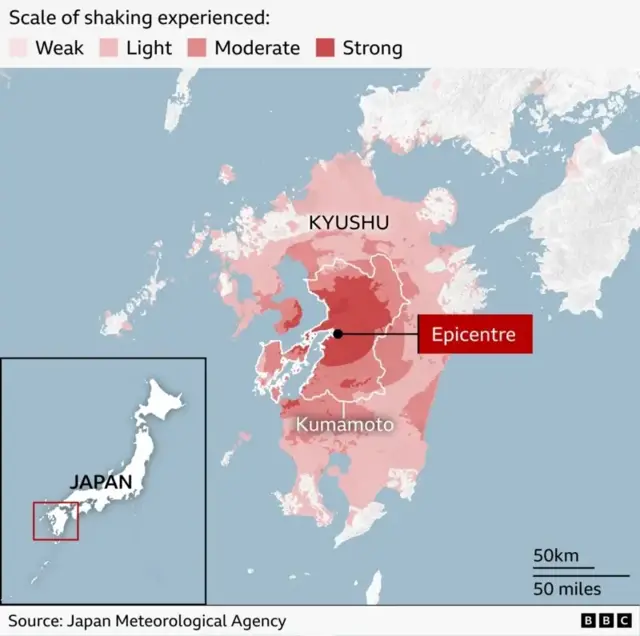
  13. Where did the earthquake happen?published at 00:26 BST 29 July

    Kumamoto - where the collapsed Aeon Mall is located - is a city on Kyushu, one of Japan's four main islands.

    The southern island is the third largest and the second most populous.

    A map of the earthquake's epicentre on Kyushu island, shaded in red. Different shades of red correspond to weaker or stronger levels of shaking experienced. Kumamoto prefecture is outlined in white. Another map of Japan is included, highlighting Kysuhu island in the South.Image source, BBC News
  14. Eight rescued at shopping centre, says officialpublished at 23:57 BST 28 July

    Chie Kobayashi
    BBC News in Japan

    Kumamato prefecture public relations official Akino Sonoda says eight people have been rescued from the Aeon Mall.

    Four people have been moderately injured, one lightly injured and one is in cardiopulmonary arrest, she adds.

    Earlier, we reported that four people had been rescued and 10 were unaccounted for.

    Officials are now checking on the number of missing people and information regarding those trapped in the building.

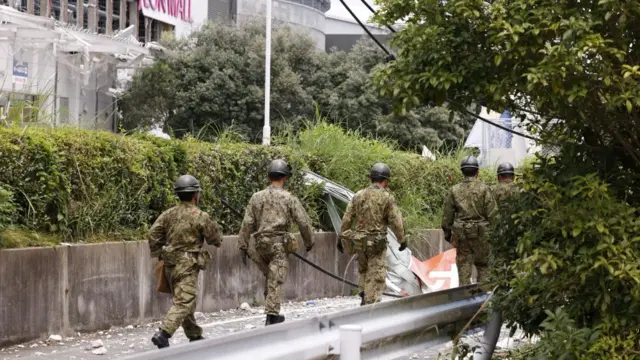
    Rescue operations have continued through the night, conducted by the fire department, police and Japan's Self Defence Force.

  15. Hunt continues for missing people, residents fear more quakes - a recappublished at 23:24 BST 28 July

    Freya Scott-Turner
    Live reporter

    Multiple cars with red lights parked outside a building at night timeImage source, EPA/Shutterstock
    Image caption,

    Emergency vehicles surround the badly damaged Aeon Mall in Kumamoto

    Rescue efforts have been continuing overnight in the Kumamoto prefecture of Japan, which was struck by an earthquake at 16:27 local time (07:27 GMT) on Tuesday. If you're just joining us, here's the latest:

    • The magnitude: Japan's Meteorological Agency recorded a provisional magnitude of 7.1, but the US Geological Survey later put it at 6.8.
    • Collapsed shopping centre: A rescue operation has been ongoing at Aeon Mall, where eyewitnesses reported seeing an explosion and the second floor collapse. Two women have died there, Japan's public broadcaster NHK reports, citing local officials
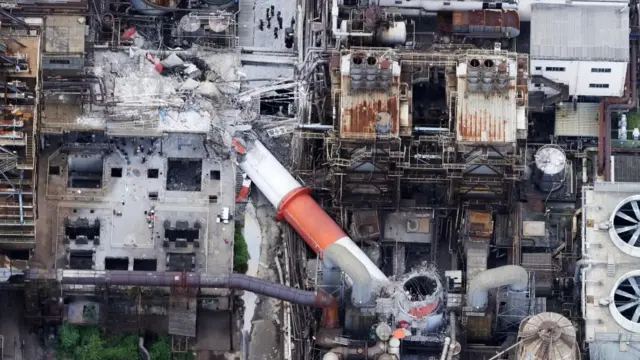
    • People missing at paper factory: Two people "were found in cardiac arrest" and nine people are still missing after a chimney collapsed at the Nippon Paper Industries plant in Yatsushiro, a city south of Kumamoto
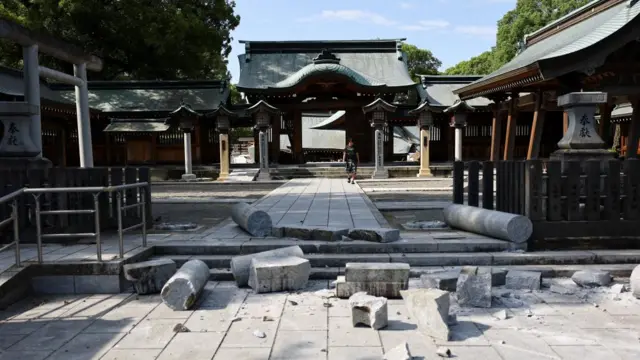
    • More widely in Kumamoto City: Tens of thousands of people experienced power and water outages, at least 45 medical facilities have been damaged, while the exterior walls of a 17th Century castle have tumbled down
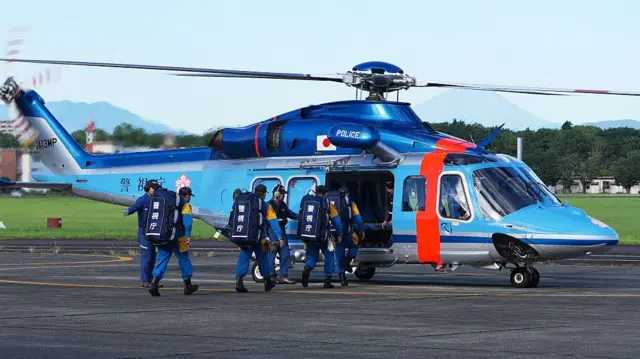
    • Prime minister sends reinforcements: Japanese Prime Minister Sanae Takaichi put 3,600 personnel on the ground to assist with recovery, and said that teams would work "tirelessly through the night" to assess and monitor the damage in affected areas
    • What was it like: "My TV fell on me",one eyewitness told the BBC, while another described feeling like the "building beneath you turns into liquid". Residents have also been reporting "constant aftershocks" in the hours since the quake
    • Fears of more to come: Shinji Kiyomoto of Japan's Meteorological Agency has asked the public to "remain vigilant" for additional earthquakes. He referenced a deadly series of earthquakes that hit the same Kumamoto prefecture days apart in 2016 killing 278 people, according to NHK
  16. 'It's like the land becomes the sea'published at 22:49 BST 28 July

    Sean Wilson - a Scottish man who lives in Kumamoto - has been describing his experience of the earthquake to the BBC.

    He tells the BBC's Outside Source programme that it's the second quake he's experienced there in 10 years. Sean Wilson adds that he also spoke to the BBC in the aftermath of the deadly earthquake that hit the region in 2016.

    "This particular area is not that badly damaged compared to what it was 10 years ago," he says

    Having experienced the ground shaking 10 years ago, Sean Wilson says he quickly headed to wait by the nearest shelter, but says his new dog was spooked by the sounds and movement of the earth.

    "The sound is so disorienting, everything's moving underneath your feet, it's like the land becomes the sea," he says.

    "The dog looked terribly upset," he explains, describing how he was forced to run back into his home to grab his pet when it took off".

    Sean Wilson says: "I was thinking, this would be terrible if we were both killed while I try to fetch the dog."

  17. Two confirmed dead in shopping centre hit by Japan earthquake - NHKpublished at 22:23 BST 28 July
    Breaking

    Two people are confirmed to have been killed at the collapsed Aeon Mall in Kumamoto, Japan's public broadcaster NHK is reporting, citing the Kumamoto prefecture.

    The two people who died were women, the outlet said, adding that another person rescued from the shopping centre is in a state of cardiac arrest.

    This follows an earlier update from an official in Kumamoto City's Disaster Management Division, who said that 10 people remained unaccounted for at the shopping centre and four people had been rescued.

  18. Can earthquakes actually be predicted?published at 21:59 BST 28 July

    Shaimaa Khalil and Flora Drury
    BBC News

    Not according to Robert Geller, professor emeritus of seismology at the University of Tokyo.

    When authorities issued a megaquake warning in 2024, after a 7.1 quake struck southern Japan, Prof Geller told the BBC that the warning had "almost nothing to do with science".

    The advisory was "not a useful piece of information", he said.

    This, he argued, is because while earthquakes are known to be a "clustered phenomenon", it is "not possible to tell in advance whether a quake is a foreshock or an aftershock”.

    Indeed, only about 5% of earthquakes are "foreshocks", geologists Kyle Bradley and Judith A Hubbard have said.

    The aftermath of the 2011 earthquakeImage source, Getty Images
    Image caption,

    A massive earthquake in Japan in 2011 killed more than 18,000 people

    However, the 2011 earthquake was preceded by a 7.2 magnitude foreshock, they note - one which was largely ignored.

    The warning system was drawn up after 2011 in an attempt to prevent a disaster of this scale again. August 2024 was the first time the Japan Meteorological Agency (JMA) used it.

    But, crucially, while it told people to be prepared, it did not tell anyone to evacuate. Indeed, they were keen to play down any massive imminent risk.

    "The likelihood of a new major earthquake is higher than normal, but this is not an indication that a major earthquake will definitely occur," the JMA said at the time.

  19. Avoid drinking tap water, Kumamoto City government tells residentspublished at 21:36 BST 28 July

    The Kumamoto City government is asking people to refrain from drinking tap water in the aftermath of the earthquake.

    In an update, Kumamoto waterworks says that turbid - or cloudy - water has been seen in some parts of the city.

    It adds that it is currently inspecting water supply facilities, and advises people not to drink any tap water or use it for cooking until its safety is confirmed.

    The water can still be used in toilets and for cleaning, it adds.

    The authority says in a separate update that it is providing waters bags and other supplies at a number of supply locations around the city.

  20. 'I've experienced earthquakes here before but not to that degree'published at 21:12 BST 28 July

    James Kelly
    Journalist, Your Voice

    Matt Gingell poses for a selfie

    Matt Gingell, 26, from Kent, has been living in Kumamoto for nearly two years, teaching English to Japanese children.

    He was in a cafe when the quake struck and instinctively took cover by ducking under a table.

    "I've experienced a few earthquakes here so it's a sensation I have come to be a bit more familiar with, but not to that degree," he tells BBC News.

    Taking a walk through the local shopping centre, he says he's seen cracked buildings and small pieces of debris littering the floor.

    He feels safe in his third floor apartment, but says the "occasional jolts and rumbles of aftershocks" are keeping him "pretty on edge" at the prospect of further tremors.

    BBC Your Voice banner. You Voice is written in white text on a purple backgroundImage source, Your Voice