Summary

  • Scotland's six larger parties continue on the campaign trail across the country

  • They are highlighting - among other things - energy bills, the NHS and nuclear power

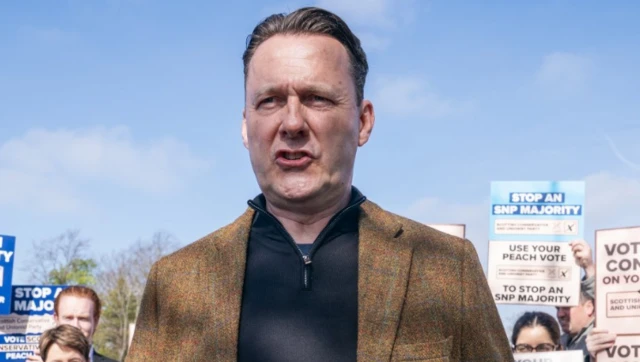
  • Reform UK Scotland leader Malcolm Offord is being criticised for owning six houses

  • Voters will go to the polls on 7 May to elect 129 members of the Scottish Parliament

  • Have you decided which party should get your vote? If not, you can read the BBC's guide on where the main parties stand on the issues most important to voters

  1. The headlinespublished at 17:03 BST 29 April

    That brings an end to our campaign trail coverage - here are the main headlines:

    That's all from us today. The editor was Paul McLaren and the writer was Craig Hutchison. Join us tomorrow morning when there will be only one week to go until the election. Thanks for joining us.
  2. Construction begins on makeshift studios for election results broadcastingpublished at 16:55 BST 29 April

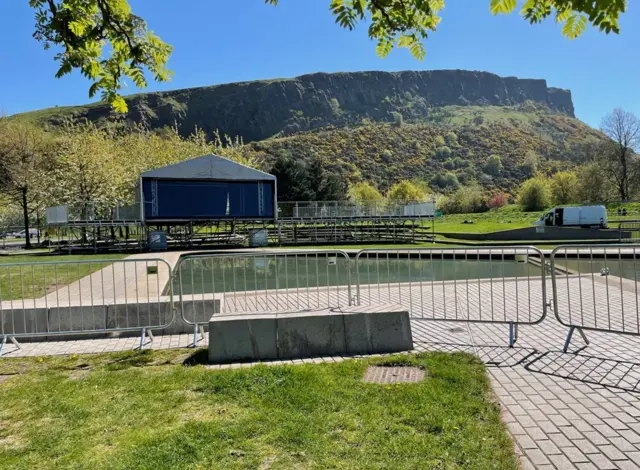
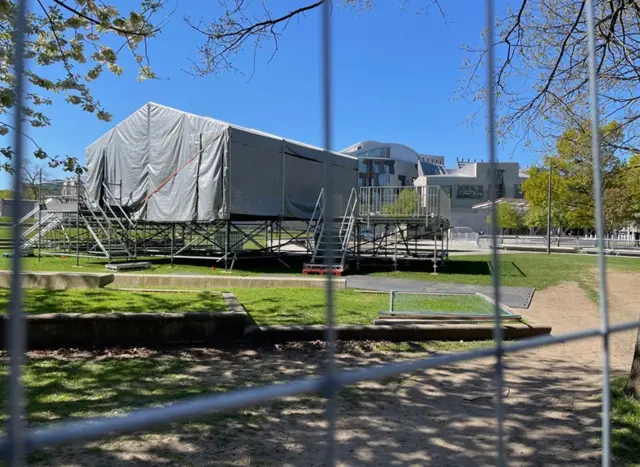
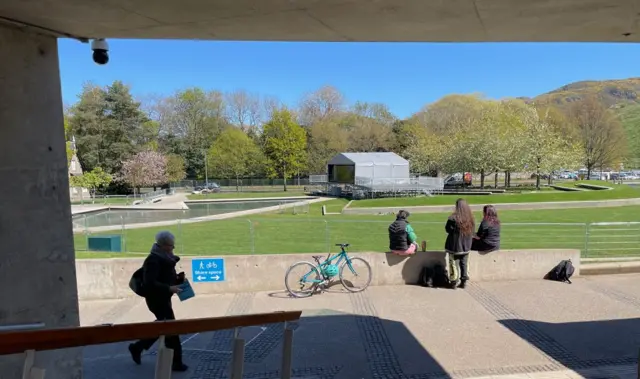
    Construction is under way outside the Scottish Parliament at Holyrood on the makeshift studios which will be used by broadcasters to report on the election results.

    Voters go to the polls on Thursday 7 May and the count will begin the following morning, with the media descending on Holyrood.

    You will be able to join our live page team for all the results, reaction and analysis throughout the count.

    Scottish Parliament
    Image caption,

    The media will descend on Edinburgh on Friday 8 May as the count gets under way

    The construction is bathed in glorious sunshine today
    Image caption,

    The construction is bathed in glorious sunshine today

    Arthur's Seat
    Image caption,

    Arthur's Seat towers over the media construction at Holyrood

  3. BBC Verify

    Greer's second and empty homes claim fact-checkedpublished at 16:50 BST 29 April

    By BBC political correspondent Phil Sim

    During the STV debate, in response to Reform UK’s Malcolm Offord noting that he owns six homes, Scottish Green co-leader Ross Greer said “there are three times as many holiday homes and empty properties in this country as there are homeless children”.

    The latest figures, external show there were 10,480 children in temporary accommodation as of September 2025 - the highest number on record since 2002.

    Council tax records, external state that as of the same month, there were 20,927 second homes in Scotland - defined as those which are not someone’s main residence, but which are lived in for at least 25 days a year. That number has been gradually declining since 2014.

    Meanwhile there were 44,453 properties that had been empty for six months or longer.

    The number of empty properties has been rising over the past 20 years, although it has been relatively steady since a peak during the Covid pandemic in 2020.

    So combining the number of second homes and empty properties, there are in fact more than six times as many as there are homeless children.

  4. Ross Greer and Gillian Mackay - rapid rises to frontline politicspublished at 16:44 BST 29 April

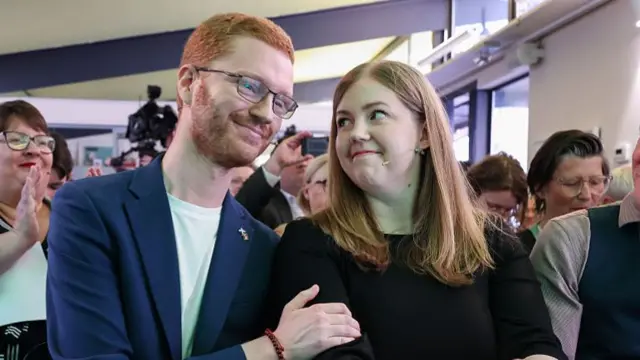
    Ross Greer and Gillian MackayImage source, Getty Images
    Image caption,

    Ross Greer and Gillian Mackay are co-leaders of the Scottish Greens

    Scottish Green co-leaders Gillian Mackay and Ross Greer have both enjoyed rapid rises into frontline politics.

    Mackay, from Grangemouth, studied marine biotechnology and biodiversity at Heriot-Watt University.

    She described herself as an "accidental" MSP, having applied for an internship with the Greens due to a lack of opportunities in marine science.

    She later took up a role as a party staffer, before being elected to Holyrood in 2021 aged 29.

    Greer, from Bearsden, East Dunbartonshire, cut short a degree in politics and psychology to take up a job with Yes Scotland ahead of the 2014 independence referendum.

    Aged 21, he became Holyrood's youngest-ever MSP when he was elected in 2016.

  5. Alex Cole-Hamilton - Aberdeen student turned charity workerpublished at 16:36 BST 29 April

    Alex Cole-HamiltonImage source, PA Media
    Image caption,

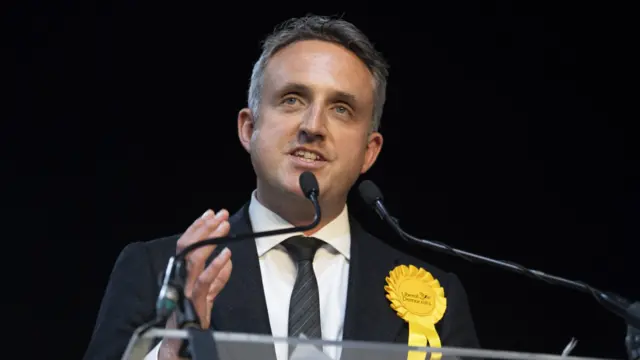
    Alex Cole-Hamilton worked for children's charities before he was elected in 2016

    Scottish Lib Dem leader Alex Cole-Hamilton moved to Scotland from Hertfordshire, England, as a child.

    He went to school in St Andrews before studying politics and international relations at the University of Aberdeen.

    After graduating he worked for children's charities, including YouthLink Scotland and Aberlour.

    Cole-Hamilton made several unsuccessful attempts to be elected to Holyrood before he won the Edinburgh Western seat in 2016.

  6. Russell Findlay - former journalist and relative newcomerpublished at 16:22 BST 29 April

    Russell FindlayImage source, Getty Images
    Image caption,

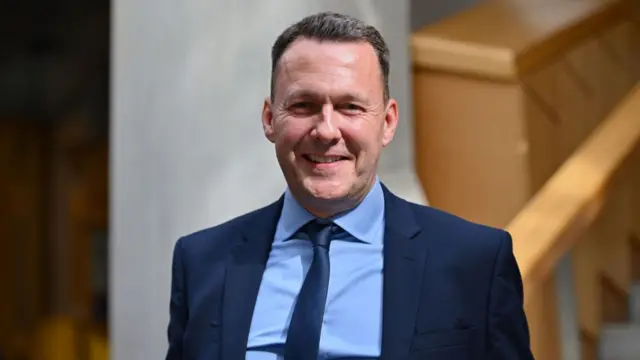
    Russell Findlay worked as a crime reporter before joining the ranks at Holyrood

    Scottish Conservative leader Russell Findlay is a relative newcomer to frontline politics, having first been elected as an MSP in 2021.

    From Milngavie, East Dunbartonshire, he studied journalism at Edinburgh Napier University.

    He spent the next 30 years working for the Sunday Mail, Scottish Sun, STV and several other outlets, becoming a renowned organised crime reporter.

    In 2015, while working for The Scottish Sun, Findlay survived an acid attack from a man who came to his door disguised as a postman. The then investigative reporter made a full recovery and his attacker was jailed.

    His political career began in 2020, when he joined the Scottish Conservatives as director of communications.

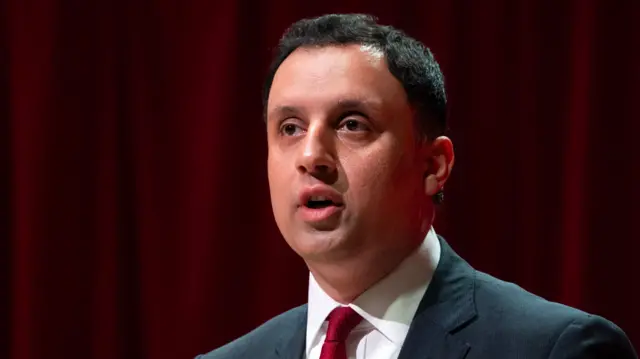
  7. Anas Sarwar - son of a millionaire and NHS dentistpublished at 16:13 BST 29 April

    Anas SarwarImage source, PA Media
    Image caption,

    Anas Sarwar worked as a dentist in Paisley before entering politics

    As Anas Sarwar is quick to mention, he was an NHS dentist before becoming a politician.

    The son of millionaire businessman Mohammad Sarwar - the UK's first Muslim MP - he attended the private Hutchesons' Grammar School in Glasgow.

    After school he studied dentistry at the University of Glasgow.

    Sarwar spent five years as an NHS dentist in Paisley, before succeeding his father as MP for Glasgow Central in 2010.

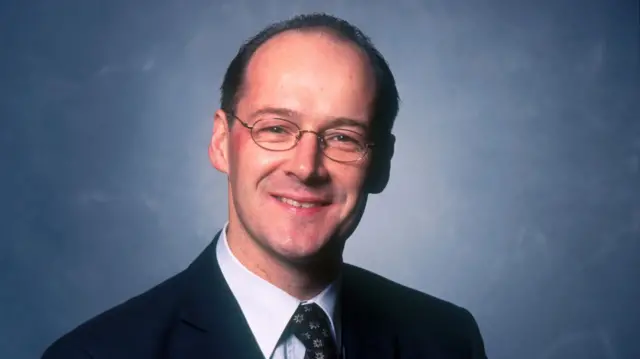
  8. John Swinney - Scotland's longest-serving parliamentarianpublished at 15:59 BST 29 April

    John Swinney
    Image caption,

    John Swinney first led the SNP between 2000 and 2004

    First Minister John Swinney was born and raised in the capital and attended the University of Edinburgh.

    He graduated with a degree in politics in 1986.

    Although Swinney is Scotland's longest-serving elected parliamentarian, he did have a life before politics.

    After leaving university, Swinney took up a role with the Scottish Coal Project, before spending five years at Scottish Amicable Life Assurance.

  9. Malcolm Offord - Scotch pie diet to London bankerpublished at 15:47 BST 29 April

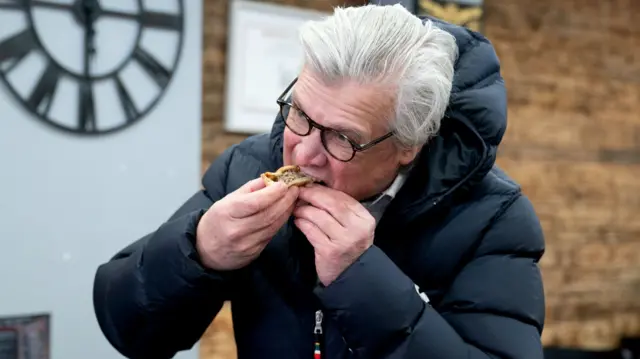
    Malcolm Offord eating a Scotch pieImage source, PA Media
    Image caption,

    Malcolm Offord says he lived on a diet of Scotch pies and beans when he was a student

    We've been taking a look at what the Scottish party leaders did before their lives in politics.

    Lord Offord was born in Greenock and describes his upbringing as "lower-middle class".

    He later studied law at the University of Edinburgh, telling the BBC's Scotcast he lived on a diet of Scotch pies and beans, and that he still eats a Scotch pie most days.

    Offord became a banker in London, where he later founded the investment firm Badenoch and Co.

    After being given a life peerage by Boris Johnson in 2021, Offord took up a ministerial role in the UK government.

    He stepped back from the House of Lords after defecting to Reform.

  10. 'Nuclear has got to be part of the mix going forward' - Offordpublished at 15:34 BST 29 April

    Jenni Davidson
    BBC Scotland senior politics reporter

    Malcolm Offord, who has been campaigning at Torness nuclear power station, says the SNP's ban on nuclear power is “just madness”.

    The Reform UK Scotland leader says: “What we need is more nuclear, not less."

    Ahead of a tour of the power station’s visitor centre, Offord insists the country is committing a “complete act of self-harm” by shutting down North Sea oil and gas extraction and that nuclear has to be part of the energy mix too.

    Offord says that while energy is a matter reserved to Westminster, they could “mitigate some of the nonsense” at Holyrood.

    He says £5bn of the Holyrood budget was being spent on net zero, which was “a nonsense”, and the nuclear ban was “also a nonsense”.

    But he says it would need Reform to get into government at Westminster to “pull the big lever” and get oil and gas pumping again.

  11. Cross-border income tax differences exploredpublished at 15:16 BST 29 April

    Glenn Campbell
    BBC Scotland Political Editor

    Douglas Russell, who’s a partner with Armstrong Watson
    Image caption,

    Douglas Russell is a partner with Armstrong Watson and works in Dumries

    On cross border income tax differences, we’ve been exploring the advantages and disadvantages with an accountancy firm withoffices in both Dumfries and Carlisle.

    In Dumfries, Douglas Russell, who’s a partner with Armstrong Watson told us that some people decide where to live on the basis of what tax they’ll pay.

    “We’re certainly aware of both clients and colleagues that have chosen to live south of the border, perhaps taking a job in Scotland and deciding to live south of the border because of these tax differentials” he said.

    Those earning more than about £33,500 pay higher income tax in Scotland. Someone on about £50,000 might pay £1,500 more, rising to around £4,000 extra for someone on £110,000.

    The location debate is really only for very high earners or those who aspire to be among them, especially when the extra benefits available in Scotland are taken into account.

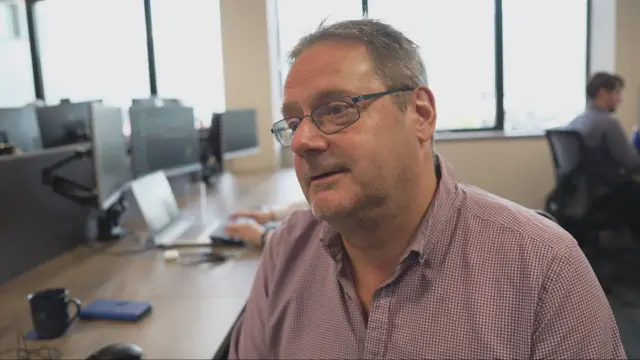
    Mark Fielding-Pritchard works in the Carlisle office
    Image caption,

    Mark Fielding-Pritchard works in the Carlisle office

    In Armstrong Watson’s Carlisle office we met a high earner who weighed up a move to Scotland when his son went to university but calculated the short term gain of free tuition would soon be offset by higher tax.

    In the same office, Mark Fielding-Pritchard who is also a high earner said he was comfortable living in Scotland and working in England, partly because his family benefits from free university tuition.

    He also said that he did not grudge paying taxes that would benefit wider society.

    “I am not getting a huge sense of feedback that ‘oh my God we’re being robbed in Scotland and the English are so much better off than we are’” he said.

  12. Analysis

    Scotland's larger parties have different income tax viewspublished at 15:03 BST 29 April

    Glenn Campbell
    BBC Scotland Political Editor

    There is a significant divide between the larger political parties on income tax at this election.

    Not everyone is content with the current policy of divergence from the rates and bands that apply in England.

    At the moment, those earning below about £33,500 (a majority of taxpayers) pay slightly less in Scotland while those above that threshold pay more.

    The higher you earn, the more you pay with those on £50,000 a year paying around £1,500 more than they would elsewhere in the UK.

    The Conservatives and Reform UK want income tax cuts paid for by cuts to public spending.

    Labour aspires to reducing tax when economic conditions allow. The Liberal Democrats want to narrow the tax difference with England.

    The SNP’s starting point is not to introduce new tax bands or increase rates over the next five years with the caveat that flexibility may be needed. The party would like to simplify the current system.

    The Greens want to keep a redistributive system that taxes wealthier people more.

    For some these policy differences could sway how they choose to cast their Holyrood votes.

  13. Analysis

    Taxing questions put to the electorate in Dumfriespublished at 14:46 BST 29 April

    Glenn Campbell
    BBC Scotland Political Editor

    The tax clash on the STV leaders’ debate reveals one of the big dividing lines in this election - where the parties stand on using Holyrood’s income tax powers.

    At the moment, while a majority (55%) of earners pay a little bit less than they would in England, the rest (45%) are expected to pay more — increasingly so as their income rises.

    In Dumfries, we asked voters if they thought this principle was fair.

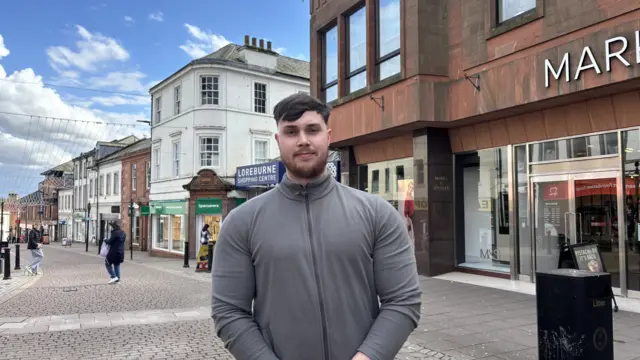
    Thomas spoke to us in Dumfries
    Image caption,

    Thomas says "the more you put in, the less you get out"

    Thomas, who is in the early stages of his career, said that he felt that “the more you put in, the less you get out”.

    He also argued that higher tax on higher earnings could be a disincentive to those with ambition.

    “I feel like it’s unfair especially as you work your way up. Makes you feel like ‘what’s the point?’”

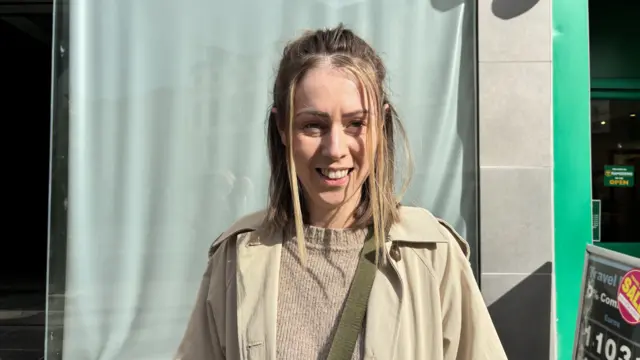
    Amy says we must look after society as a whole
    Image caption,

    Amy says we must look after society as a whole

    By contrast, Amy who is a student receiving free university tuition that’s not available in other parts of the UK said “I think that we should look after society as a whole.

    “I also think that by paying a little bit more we are getting more up here in Scotland so I would like to see that continue”.

    The bigger income tax take from higher earners in Scotland helps to fund a more generous welfare system.

    Some politicians think it’s too generous and that cutting it would encourage more people into work. Others think it provides essential support to those on the lowest incomes and helps to reduce poverty.

  14. BBC Verify

    Would monitoring all sewage sites make a difference?published at 14:35 BST 29 April

    BBC Scotland: Aimee Stanton

    The Scottish Greens have pledged to reduce pollution in Scotland's waterways with a proposed Clean Water Bill.

    The bill would enforce full monitoring of all overflow sites in Scotland and set statutory requirements for action when pollution is recorded.

    Unlike in England, where every combined sewage overflow is monitored, only around a third of all combined overflow sites are monitored by Scottish Water.

    In December 2025, the public body said it had around 1,400 overflow monitors in place and there were plans to increase coverage to around 2,000 locations in total, or almost 50% coverage.

    But achieving full coverage of overflow sites would be expensive. Scottish Water said a significant number of overflow locations are predicted to never spill , externaland likely only provide information that overflow events do not happen in the area.

    Figures from campaign group Surfers Against Sewage, external, who are also calling for 100% monitoring of overflow sites in Scotland, said in 2024 there were 23,000 reported sewage spills, or 62 spills per day. Scottish Water’s annual overflow event data for 2025 will not be published until August, external.

  15. Analysis

    Is the Offord row straight out of the Trump playbook?published at 14:18 BST 29 April

    Kirsten Campbell
    BBC Scotland political correspondent

    I’m sensing a degree of frustration from politicians that so much of the focus today is on Malcolm Offord’s revelations about his wealth.

    “It’s straight out of the Trump playbook” said one, arguing that journalists were falling for Reform’s tactics.

    He added that Reform would no doubt be delighted with the publicity while real issues of substance were being ignored.

  16. Scottish election campaign: Today's headlines so farpublished at 14:00 BST 29 April

    If you're just joining us, today's political campaigning has so far been somewhat overshadowed by news that Reform UK Scotland leader Malcolm Offord has six houses, five cars and six boats, which emerged during the STV leader's debate.

    It has led to the party leaders giving their views on the comments and stimulated a debate on wealth.

    Here are the headlines so far:

  17. Greer pledges to cut down on second homes and holiday homespublished at 13:38 BST 29 April

    Simon Smith
    BBC News

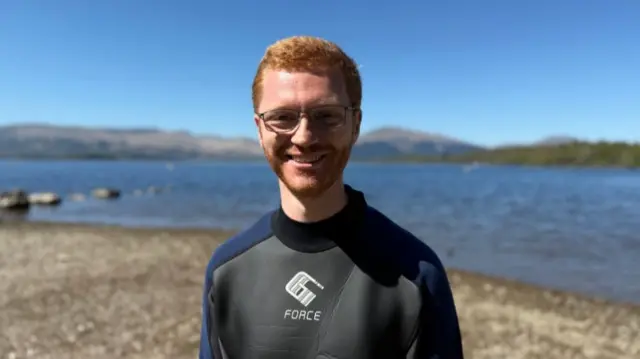
    Scottish Greens co-leader Ross Greer is campaigning at Loch Lomond today
    Image caption,

    Scottish Greens co-leader Ross Greer is campaigning at Loch Lomond today

    Ross Greer, the co-leader of the Scottish Greens, says the way to tackle the country’s housing crisis is to cut down on the number of second and holiday homes.

    He is speaking after a TV debate in which Reform UK’s Malcom Offord revealed he has six houses as well as a number of boats and cars.

    The Greens argue higher earners should pay more tax to help those on lower incomes.

    Greer was speaking on the banks of Loch Lomond where he went swimming to highlight the party’s calls for more monitoring of Scotland’s waters to check on pollution.

  18. We need more homes for people who need them most, says Sarwarpublished at 13:21 BST 29 April

    Andrew Kerr
    BBC Scotland political correspondent

    Anas SarwarImage source, Getty Images

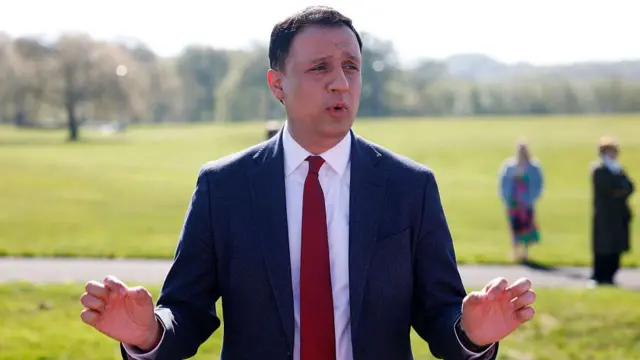
    On the multi-home ownership row, Anas Sarwar says it comes at a time when there are more than 10,000 children homeless in our country.

    "That's why we will build 125,000 new homes in the next Parliament.

    "That's about fast-tracking our planning system so we can attract investment here.

    "It means more social homes so we can target that support to those that need it most.

    The Scottish Labour leader adds: "It means driving down the cost of mortgages and of rent so people can live an affordable life in a warm, safe and secure home and that will be a top five priority for me in the next parliament."

  19. 'We don't sneer at success...but struggling voters may find bragging jarring' - Russell Findlaypublished at 13:07 BST 29 April

    russell findlayImage source, PA Media

    Scottish Conservatives leader has been having his say on the Malcolm Offord "six houses row".

    He says: "As Scotland's party of aspiration, business and hard work, we don't sneer at success.

    "But voters struggling with the cost of living might find it jarring to hear Lord Offord bragging about his vast wealth."

  20. 'People are parked on welfare... we need to get them back to work'published at 12:55 BST 29 April

    Jenni Davidson
    BBC Scotland senior politics reporter

    We asked Malcolm Offord what Reform UK is going to do to ensure that every child has a house, our theme of today.

    The Reform UK Scottish leader replies: "What we need to do here is get people back to work."

    He adds some people are "parked on welfare" and there is no programme for getting people back earning.