Our live coverage has come to an endpublished at 15:55 GMT 20 March
Our live updates for the day have now ended.
You can read more about today's proceedings here.
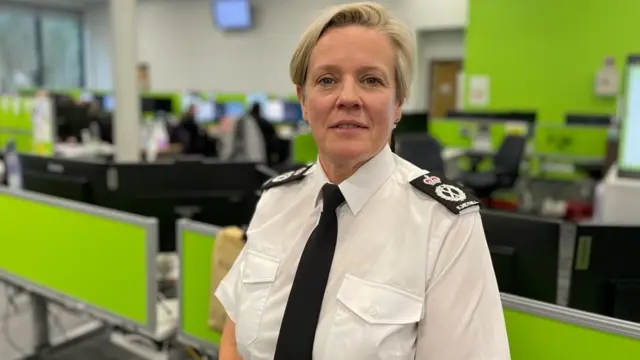
Former Nottinghamshire Police Chief Constable Kate Meynell has been giving evidence to the public inquiry into the Nottingham attacks of 13 June 2023
Valdo Calocane killed Barnaby Webber, Grace O'Malley-Kumar and Ian Coates in Nottingham and seriously injured three others across the city
Meynell, who retired from the force three days ago, said there were "no excuses" for not arresting Calocane, who was subject of an arrest warrant issued in September 2022, adding the warrant went into an inbox that was not monitored regularly
Meynell was quizzed about a "non-reportable" briefing she held for the press, as well as her son being in the same WhatsApp group as an officer who received a final warning over a message sent about the attacks
The victims' families were not told about the briefing, for which Meynell apologised, and "fundamental failures" in police communicating with the survivors of the attacks were admitted
Our live updates for the day have now ended.
You can read more about today's proceedings here.
 Image source, PA Media
 Image source, PA Media
Updates on the public inquiry - which is examining the events leading up to the attacks on 13 June 2023 - are being rounded up in our Need To Know series.
The latest instalment sees BBC reporter Asha Patel taking you through yet more harrowing footage of triple killer Valdo Calocane, and Nottinghamshire Police answering difficult questions about CCTV.
Former Nottinghamshire Police Chief Constable Kate Meynell's evidence has now concluded.
The Nottingham Inquiry will resume at Mary Ward House in London next week.
Talking about the non-reportable briefing, Beggs asks if the media "always reported police matters accurately and fairly" - to which Meynell replied "no".
Beggs asked: "Is it part of a chief constable's role to try to ensure fairer and more accurate reporting?"
"Yes," Meynell said.
Beggs said: "Was it your intention by the non-reportable briefing to achieve that?"
"That's what I was trying to achieve, yes," Meynell said.
Asked if, with hindsight, she achieved that, Meynell says she did not, and she agrees it was a mistake not to tell families about the briefing, and to complain to the press standards watchdog over the reporting of it.
Cross-examination of Meynell is continuing across a number of issues.
John Beggs KC, representing Nottinghamshire Police, is talking about the precedent of multi-agency domestic homicide reviews in domestic murder cases.
Meynell said a similar approach would have been useful in killings involving mental health.
In a following press release, the inquiry heard the force said it was "keeping an open mind" and "working with counter-terrorism policing".
Asked if using the word terrorism would lead the public to think it was a terrorism-related incident, Meynell said: "That was the position at the time I made the statement."
Asked if that was likely to make people think it was unsafe to go into the city centre, she said: "People have to make the decision whether they want to go themselves and I need to give them the information to make that decision themselves.
"At the time I was keeping the press informed and then would deal with any issues which arose in community tensions afterwards."
The inquiry has heard there was widespread reporting of the attacks, with the BBC the first to run a report at about 06:00 BST on 13 June 2023.
Meynell agreed it was her role to provide reassurance, and calm tensions.
One of the points Meynell discussed with communications staff Lyn Heath and Matthew Jarram was to make sure that the public knew it was safe to go into Nottingham.
Briefing documents are being shown discussing "tensions in the community".
Asylum seekers were concerned about being targeted following Calocane's attacks, the documents noted, and fears among the black community were discussed.
Hate comments were being taken off social media, the inquiry heard.
Emails were then sent while Wayne Birkett was in a coma and in a critical condition, which told the media he was in a stable condition, the inquiry heard.
Meynell agrees it was "wholly inadequate" that information was put in the public domain.
She then confirms that she was the one signing off on releases to the media.
Sophie Cartwright KC, representing the survivors, has asked Meynell how and why information given to the media was inaccurate.
An initial press release said all three survivors were hit by a van in Milton Street. However, that was not the case.
Wayne Birkett was initially hit in Milton Street. Calocane then struck Sharon Miller and Marcin Gawronski at the junction of Parliament Street and Market Street.
Cartwight said: "Would you agree that again, from an issue of openness and candidness, again, this is not accurate about what happened and in particular what happened to the survivors?"
Meynell replied: "It's not accurate and particularly around the injuries that the survivors sustained, it's not accurate and that is unacceptable.
"However, in terms of the movements of the vehicle, I think this is a media release trying to summarise and give some sort of overview about what happened."
An accelerated misconduct hearing report for an officer is now being shown, outlining details known by the force about the offending by the special constable who resigned.
The hearing never happened, due to the resignation, but it showed access to bodyworn footage from the killings of Barnaby Webber and Grace O'Malley-Kumar in Ilkeston Road.
The inquiry is told that far fewer details were being shared with the survivors, Wayne Birkett, Sharon Miller (pictured below), and Marcin Gawronski.
"I think the details in relation to the individuals should have been shared, yes," Meynell said.
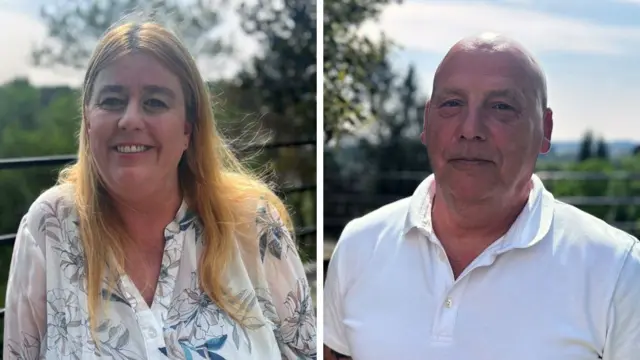
A letter to Meynell from survivor Wayne Birkett's partner Tracy Hodgson has been outlined, expressing anger at updates being read by the survivors online - before being informed by police.
It said: "This information is old news, literally word for word had already been on social media, and this shouldn't be the way we find out.
"Wayne, Sharon and Marcin all seem to be forgotten because they are survivors of this horrendous crime that was committed by VC [Valdo Calocane].
"Please could you remember to keep us informed by post and more importantly, before it reaches the media?"
Asked if she would agree there had been "fundamental failures of communication" with the surviving victims, Meynell said: "Yes."
Meynell continues to be challenged on the details of her "non-reportable" press briefing by Sophie Cartwright KC, the barrister representing the survivors.
The inquiry has heard details of police's early contact with triple killer Valdo Calocane, after incidents involving his neighbours at Brook Court in Nottingham were not mentioned in the briefing.
That includes an incident when Calocane broke into a woman's flat and she fractured her spine attempting to flee from a first-floor window.
Asked why that information was not shared, Meynell said: "That was a mistake on my behalf.
"I've already acknowledged that I didn't prepare as best as I should have."
She added she was reading from a summary of offences and "casting [her] eye" along the lines, and subsequently "missed some details out".
Cartwright said: "And was it a mistake, or a deliberate failure to provide relevant information to the press that was in the public interest?"
Meynell replied: "It was a mistake."
Regarding the WhatsApp message posted by PC Matthew Gell - which led to misconduct proceedings - Moloney asked if officers have a duty to report breaches of standards, to which Meynell agreed.
Asked if it was "a cause of concern" to Meynell that nobody had reported the message by Gell, she said: "Not at the time, no."
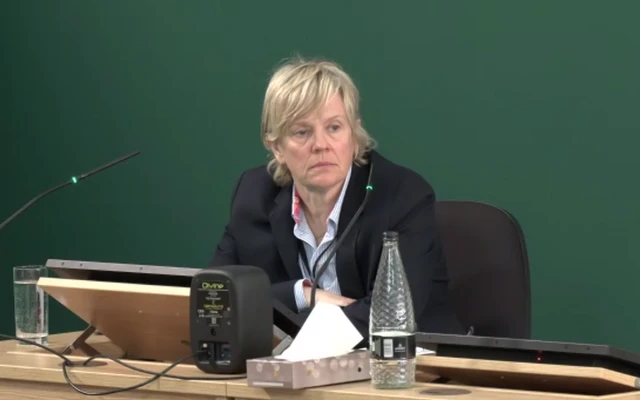 Image source, Nottingham Inquiry
Moloney is moving on to Ian Coates's partner, Elaine Newton.
She met Meynell following Calocane's sentencing to a hospital order in January 2024.
Meynell said Newton was concerned about the warrant being outstanding for Calocane, which had been outstanding for months before his killings, but said she could not recall if she spoke about a lack of action by the force over the warrant.
Meynell said: "I remember her being disappointed.
"I'm not evading the question, I just cannot remember what I said."
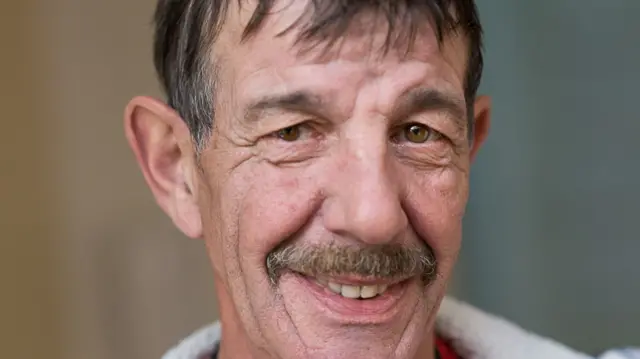 Image source, Nottinghamshire Police
The barrister representing the bereaved families, Tim Moloney KC, has challenged Kate Meynell on her view that executing an outstanding arrest warrant for Calocane in the months before the attacks, might not have made a difference.
Meynell agreed that had he appeared in court, the court would want to know more about Calocane's history of previous incidents and admissions to hospital.
She also accepted that if Calocane was bailed, he would have been bailed with conditions.
Moloney KC said: "So to be clear are you, as the former chief constable of Nottinghamshire Police, today saying to the chair that it would have made no difference?"
Meynell said: "I couldn't be sure what difference it would have made."
Moloney KC replied: "Precisely."
Kate Meynell's evidence is now continuing, following a lunch break.
A special constable also left the force after viewing bodycam footage showing the aftermath of the Nottingham attacks.
They have not been publicly named.
Nottinghamshire Police's former Chief Constable Kate Meynell said the special constable had been sacked for viewing the footage - although today's evidence heard they had resigned.
This morning's evidence has explored the communications around a misconduct hearing over messages sent by an officer, PC Matthew Gell.
Gell was handed a final warning for accessing files on Calocane without authorisation.
A misconduct hearing was told Gell used systems to look up Calocane following his arrest.
Two days after the attacks, the Nottinghamshire officer used the police system to look up custody records despite having "no role whatsoever in the investigation".
He admitted that his "lapse of judgement" amounted to gross misconduct.
