Election

Scottish Parliament results

65 seats for majority
129 of 129 seats
  • Scottish National Party 58 seats 6 seats lost
  • Labour 17 seats 4 seats lost
  • Reform UK 17 seats 17 seats gained
  • Scottish Green 15 seats 6 seats gained
  • Conservative 12 seats 19 seats lost
  • Liberal Democrat 10 seats 6 seats gained
Change since 2021

Summary

  1. Scottish parliament election 2026: The round-uppublished at 17:15 BST 9 May

    We're bringing our live coverage to an end after two monumental days of election build-up, results, reaction and analysis. Here are the headlines:

    • The SNP has won its fifth Scottish Parliament election in a row, taking 58 seats. It is by far the largest party but is short of an overall majority.
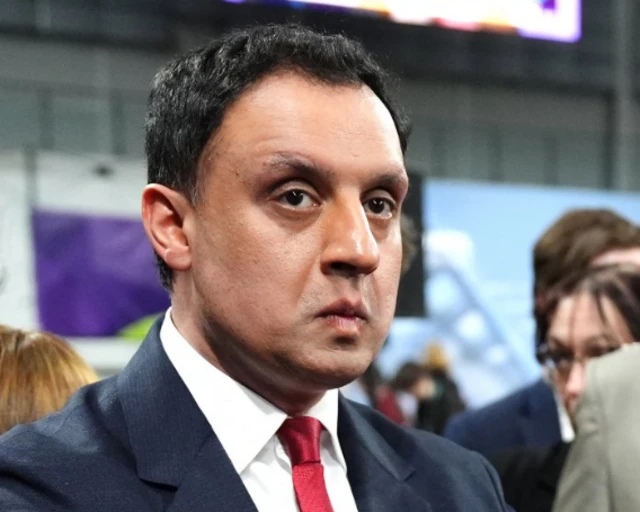
    • Anas Sarwar said his "party was hurting" after they fell well short of challenging for leadership of the Scottish Parliament. They lost four seats overall.
    • Reform UK won its first seats in Holyrood and ended the night with 17 MSPs, putting them on a par with Scottish Labour.
    • It was also a big election for the Scottish Greens who gained their first constituency MSPs in Edinburgh Central and Glasgow Southside in addition to their 13 regional seats.
    • The Scottish Conservatives lost the most seats in Holyrood, returning just 12 of their MSPs.
    • The Scottish Liberal Democrats gained six MSPs.
    • Today, John Swinney said his party won the election "emphatically" calling it a "landslide" for a pro-independence parliament.
    • He said he intends to invite all Scottish party leaders to St Andrews House next week to discuss how they can work together - except the leader of Reform UK in Scotland.
    • Malcolm Offord made the case for Reform UK to be granted opposition privileges, arguing they got a bigger vote share than Scottish Labour.
    • The Greens said they would be open to working with the SNP.
    • The Scottish Conservatives ruled out any working relationship with Reform.

    It's been a hectic few days, thanks for joining us. This page has been edited by Paul McLaren, Graeme Esson, Catherine Lyst and Mary McCool. The writers were Megan Bonar, James Delaney, Craig Hutchison, Katy Scott and Claire Thomson.

  2. Swinney's (nearly) open invitation to multi-party talkspublished at 17:09 BST 9 May

    Glenn Campbell
    BBC Scotland Political Editor

    In the next parliament, the SNP plus any other party would have enough votes in parliament to get things done together.

    We can expect the SNP and Greens to use their joint majority to back steps to pursue independence.

    That will frustrate pro-UK parties like the Conservatives who point out that John Swinney targeted an overall majority for the SNP as a mandate for another referendum.

    Swinney has told the BBC that his independence ambitions should not stop other parties collaborating with him to deliver shared priorities.

    He’s inviting opposition leaders - with the exception of Reform UK - to Scottish government HQ to discuss joint-working.

    Reform UK is open to working with the SNP on issues like economic growth but has said it is “disgraceful” and “undemocratic” that Swinney is excluding them from talks.

  3. Offord accuses Swinney of being arrogant and out of touchpublished at 17:05 BST 9 May

    Kirsten Campbell
    BBC Scotland political correspondent

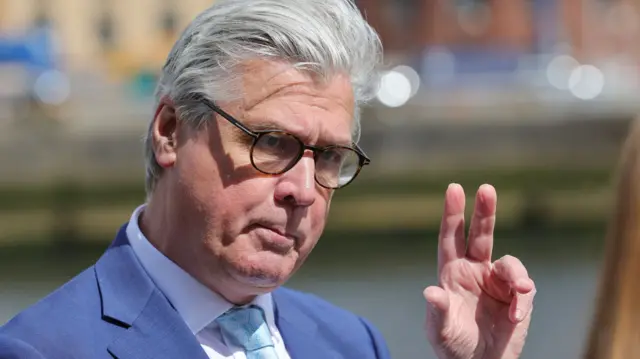
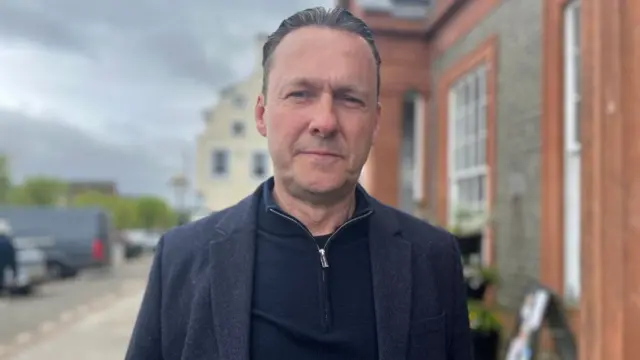
    Malcolm OffordImage source, PA Media

    The Reform UK Scotland leader Malcolm Offord has accused First Minister John Swinney of being arrogant and petty and of pouring scorn on the 383,425 Scots who voted for his party.

    In his victory speech, the SNP leader said he would hold talks with all party leaders at Holyrood except for Reform.

    Malcolm Offord said that demonstrated the kind of out-of-touch establishment politics people are sick of.

    “No matter. He may shut us out from his cosy club, but he cannot stop their voices being heard in Holyrood.”

  4. Reform UK Scotland officially elects Offord as leaderpublished at 17:01 BST 9 May

    Reform UK Scotland’s MSP group has met to officially elect the leader and deputy leader of the party.

    Malcolm Offord is officially named party leader, with Thomas Kerr as his number two.

  5. Swinney's opponents want the independence issue put to bed - it won't bepublished at 16:50 BST 9 May

    Glenn Campbell
    BBC Scotland Political Editor

    At this election, John Swinney said that “an SNP majority” would be a mandate for the transfer of powers to Holyrood to enable an independence referendum.

    Having fallen short of the 65 seats that would amount to a majority in the Scottish Parliament, his opponents want the constitutional argument set aside.

    It won’t be. Given that the SNP and Greens together have secured the largest ever pro-independence majority at Holyrood, they will ensure the issue is not forgetten.

    They will be emboldened by the election of the independence-supporting Plaid Cymru as the largest party in Wales and by the potential for Reform UK to challenge for power at Westminster.

    Woven into the SNP’s programme for its first 100 days are a number of potential flashpoints that would allow it to press the case for independence.

    There is the likelihood of an early Holyrood vote to demand another referendum, a request for the devolution of energy powers, calls for an exemption from the UK internal market act to cap some food prices and the submission of Scottish visa plans to the UK government for consideration.

    It’s not that Swinney is naive enough to think that any of these proposals will be readily accepted.

    If there is movement he would claim progress. If not, he will fold rejection into his ongoing effort to make a case for independence.

    UK ministers will no doubt want to consider carefully how to respond to a fifth term SNP administration, at a time when Labour is on the back foot in Scotland, Wales and England.

  6. Greens will hope they have the SNP over a barrelpublished at 16:43 BST 9 May

    Phil Sim
    Scotland political correspondent

    The Scottish Greens were one of the biggest stories of the election, scooping their first ever constituencies in Edinburgh and Glasgow and winning regional seats in every corner of Scotland.

    The party ended up only a few seats shy of competing with Labour and Reform for second place.

    It seems unlikely there will be any repeat of the Bute House Agreement of 2021, with John Swinney’s SNP rather more distant from Green ideals than Nicola Sturgeon’s.

    But Ross Greer and Gillian Mackay will still be hoping to wield huge influence in the coming term.

    Their manifesto read like a menu of options for budget negotiations, and they will be aiming to hold the SNP over a barrel to get as many of their policies delivered as possible.

  7. Greens plan to co-operate with SNP, says Greerpublished at 16:32 BST 9 May

    Paris Gourtsoyannis
    BBC Scotland political correspondent

    Ross Greer

    Scottish Greens co-leader Ross Greer says the "progressive majority" in Holyrood means there is no need for Reform to be part of cross-party talks in the new Scottish parliament.

    "There is no need to pump politics full of hatred and division," Greer says.

    He says the Greens instead would continue to “work constructively” with the new SNP government led by John Swinney, and their priority will be measures to ease the cost of living.

    "The Greens and the SNP have proven repeatedly that we can work together," the Greens co-leader reiterates.

    He adds that his party's policies have been delivered by co-operating with the SNP and he is "more than prepared" to continue that going forward.

  8. Lib Dems look to be finally shaking off their Tory-pact baggagepublished at 16:16 BST 9 May

    Phil Sim
    Scotland political correspondent

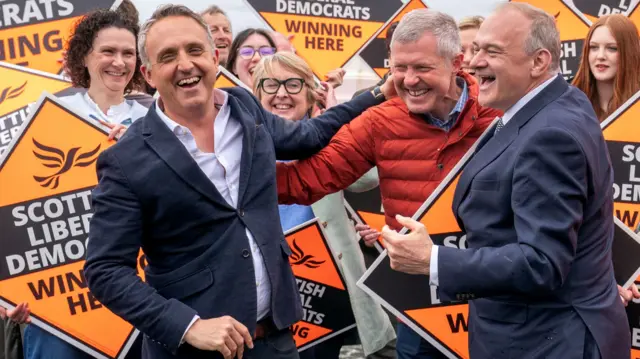
    Alex Cole-Hamilton, Willie Rennie and Ed Davey with Lib Dem MSPsImage source, PA Media
    Image caption,

    Alex Cole-Hamilton, Willie Rennie and Ed Davey were in celebratory mood in Edinburgh today

    The Lib Dems have been on a long road since they last hit double figures in terms of seats at Holyrood.

    They were once a party of government, forming coalitions with Labour in 1999 and 2003.

    But it was a partnership with the Conservatives at Westminster in 2010 which really trashed their political fortunes.

    That led to them winning just four seats in 2021, meaning they technically didn’t even constitute an official party group at Holyrood.

    But 11 years after the Westminster pact ended, they seem to finally be shedding that baggage.

    Yes, they suffered a blow in Shetland, which voted in a non-Liberal parliamentarian for the first time since 1945 with Hannah Mary Goodlad’s win for the SNP.

    But their typically targeted campaigning strategy paid off again with constituency wins in Edinburgh, greater Glasgow and the Highlands.

    Alex Cole-Hamilton will be hoping to compete with the Greens to extract policy promises from the government when it comes to budget negotiations.

  9. Sarwar faces another Labour rebuild - but where to start?published at 16:03 BST 9 May

    Phil Sim
    Scotland political correspondent

    anas sarwarImage source, PA Media
    Image caption,

    The Scottish election was a chastening experience for Anas Sarwar

    Scottish Labour appears to be stuck in reverse gear at Holyrood.

    The party has lost seats at every Scottish Parliament election since 1999.

    Hopes of a new dawn following the 2024 general election landslide were comprehensively dashed, and while the party gained a seat in Na h-Eileanan an Iar, it otherwise failed to lay a glove on the SNP in all of its target areas.

    Anas Sarwar is facing yet another rebuild, with few clear indications of where to start.

    He may well blame Sir Keir Starmer’s UK administration for this reverse - he had got ahead of that before the campaign even began.

    But there are serious questions for Scottish Labour too about its strategy and its future direction after another desperately disappointing result.

  10. Swinney's to-do listpublished at 15:40 BST 9 May

    Phil Sim
    Scotland political correspondent

    John Swinney is heading back to Bute House.

    The SNP leader fought a frenetic campaign, criss-crossing the country multiple times, and he can feel he’s earned his customary summer holiday to Tiree.

    But there is a stack of work awaiting the first minister.

    He has to reshape his cabinet, having seen a host of experienced faces step down - or lose their seats, in the case of Angus Robertson.

    A particularly key appointment will be Shona Robison’s replacement as finance secretary - finance experts have warned that the budget to be drawn up at the end of the year looks incredibly challenging.

    There is almost no money left for public pay deals, and a looming funding gap of almost £5bn in the coming years.

    The SNP also has a manifesto to implement - Swinney pledged to take immediate action on a food price cap, but major questions remain over how deliverable that is.

    All of that comes before you consider how Swinney approaches the issue of independence.

    He fell short of his target of an outright SNP majority, but may feel that the presence of pro-independence parties atop all three devolved parliaments in Edinburgh, Cardiff and Belfast could ramp up pressure on the UK government.

  11. SNP's Westminster leader Flynn says UK government should approve oil and gas drillingpublished at 15:32 BST 9 May

    James Cook
    Scotland editor

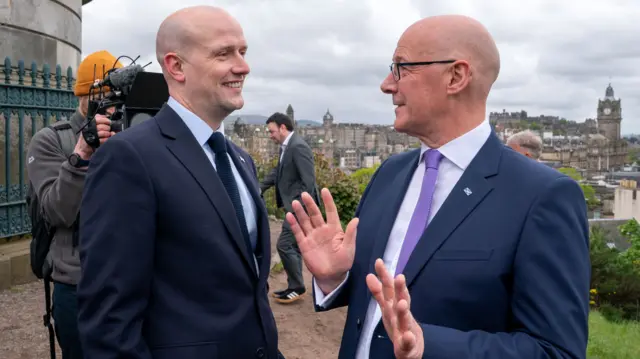
    Stephen Flynn joined John Swinney and the SNP's other newly-elected MSPs in EdinburghImage source, PA Media
    Image caption,

    Stephen Flynn joined John Swinney and the SNP's other newly-elected MSPs in Edinburgh

    The Scottish National Party's Westminster leader, Stephen Flynn, says the UK government should approve drilling for oil at the Rosebank field off Shetland and gas from Jackdaw east of Aberdeen.

    Flynn is moving from Westminster to Holyrood where he narrowly won the Aberdeen Deeside and North Kincardine seat in Thursday's election.

    "I think it's probably about time the UK government got off the fence and approved those projects," Flynn told me.

    "They are essential for energy security within these isles," he added, although that is contested by environmentalists.

    His comments go further than those by SNP leader John Swinney who has repeatedly said that any new oil and gas fields should be approved only if they are compatible with the UK's obligation to tackle climate change.

    Flynn also said he did not want to become first minister and praised Swinney's leadership.

    "I could not be prouder to have John Swinney as a leader for what he has done for our party over the course of the last two years," he said.

    Asked whether a fall in the SNP's vote share and seat total meant that the party should focus on bread and butter issues rather than trying to force an immediate second referendum on independence, Flynn said it looked as if the UK was about to have pro-independence first ministers in Wales and Scotland as well as a first minister in Stormont in favour of a united Ireland.

    "The constitutional fabric of the UK is about to change dramatically, and having spent time in Westminster, they are not prepared for that." said Flynn.

  12. Where do the Tories go from here?published at 15:18 BST 9 May

    Phil Sim
    Scotland political correspondent

    The Scottish Conservatives spent two terms as the largest opposition party at Holyrood.

    But that bubble has comprehensively popped, with the party plummeting to its worst ever result in a Scottish Parliament election.

    The question is where they go from here.

    The Tories saw their greatest success while cloaking themselves in the Union flag, off the back of the 2014 independence referendum.

    If John Swinney continues his push for a fresh vote despite falling short of his targeted SNP majority, they may carve out a niche for themselves by continuing their campaign of opposition to that.

    But the party has a diminishing platform, having slumped into fifth place in the parliament.

    And across the UK there is an existential question on the right of politics - is there room for both the Tories and Reform UK?

    That may not ultimately be for Russell Findlay to decide, but it will have a massive bearing on the future fortunes of his party.

  13. Findlay 'disappointed' but rules out Reform pactpublished at 15:09 BST 9 May

    Gillian Sharpe
    BBC Scotland reporter in Moffat

    Russell Findlay looking directly at the camera.
    Image caption,

    Russell Findlay said he was "bitterly disappointed" with the result

    Russell Findlay says the Scottish Conservatives will remain the only “strong, credible voice of opposition” at the Scottish Parliament, despite a poor showing in the election.

    The party recorded their worst ever performance in a Holyrood election, returning just 12 MSPs and falling to fifht behind the tied Labour and Reform as well as the Scottish Greens.

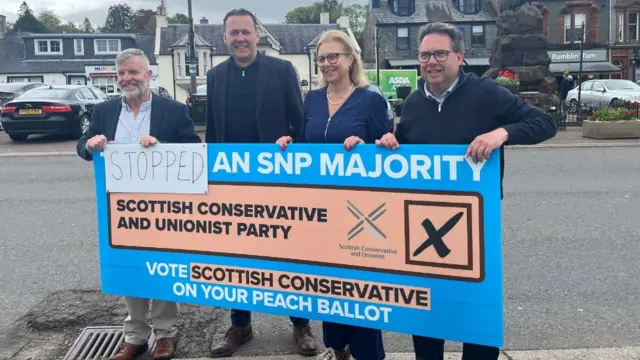
    Findlay, who has teamed up with three other Tory MSPs in Moffat today, says he's “bitterly disappointed” with the result, but argues his party “stopped” an SNP majority.

    He says he was not considering his future and adds there is no prospect of working with Reform at Holyrood.

    Finlay Carson, Russell Findlay, Rachel Hamilton and Craig Hoy holding up a peach ballot banner.
    Image caption,

    Finlay Carson, Russell Findlay, Rachel Hamilton and Craig Hoy celebrate winning their seats in Moffat on Saturday

    “There's absolutely no need for my party to work with anyone,” he insists.

    “We are going to be the sane, credible, common-sense voice of opposition in that parliament.

    “Scotland desperately needs a strong Conservative and unionist party and for all that we took a step backwards in this election, we are rebuilding for the future.”

  14. There's no doubting Reform's influence on the campaignpublished at 14:57 BST 9 May

    Phil Sim
    Scotland political correspondent

    Reform UK had a big influence on the Holyrood election campaign.

    It’s fair to say they didn’t make many friends in other parties, with frequent rows during debates - which served the purpose of driving the agenda onto the party’s favoured topics like immigration.

    We also saw every other party trying to shape themselves as the anti-Reform vote, using the party of Nigel Farage as a sort of bogeyman to get their own supporters to come out and vote.

    Anas Sarwar and Malcolm Offord had a furious spat over whether they could have done a deal to stop the SNP, but now they are going to have to figure out some kind of arrangement about who sits where and who gets the lion’s share of questions in the Holyrood chamber, with their parties tied on 17 seats.

    As an avowedly anti-establishment vehicle, Reform looks sure to shake up the coming parliamentary term just as much as they did the campaign itself.

  15. Reform should get the second-place privileges, says Offordpublished at 14:44 BST 9 May

    Paris Gourtsoyannis
    BBC Scotland political correspondent in Glasgow

    Malcom OffordImage source, PA Media
    Image caption,

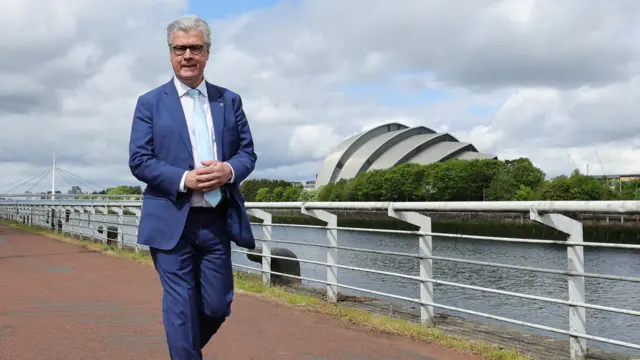
    Malcolm Offord joined Reform's new Scottish MSPs in Glasgow

    Reform UK Scotland leader Malcolm Offord says his party should be designated the main opposition to the SNP in the Scottish Parliament, because it won a greater share of the vote than Scottish Labour.

    Both parties won 17 seats in Thursday’s election, putting them in joint second place - a first in the history of Scottish devolution.

    Offord has been meeting his party's other 16 new MSPs in Glasgow.

    He says he believes Reform should get the privileges given to the second-placed party, such as guaranteed questions in the chamber, because of the vote share and the fact Labour had lost votes, while his party was competing in its first election.

    He adds Reform would contest the two Westminster by-elections created by the election of SNP MPs to Holyrood.

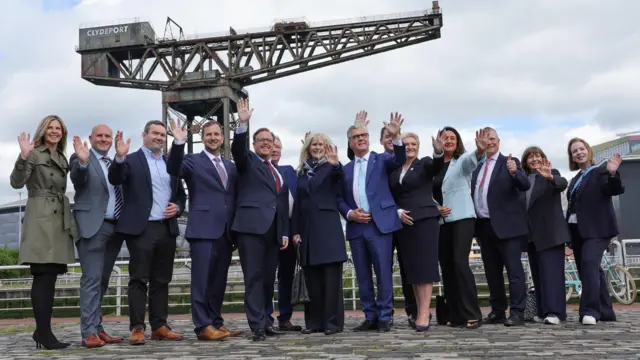
    Elected Reform candidates waving at the camera during a photocallImage source, PA Media
    Image caption,

    Reform UK took 17 seats in total

  16. WATCH: Swinney says election results show 'urgent' need for independencepublished at 14:32 BST 9 May

    John Swinney has just delivered an election victory speech in Edinburgh.

    He says the result was an emphatic win for the SNP and a "landslide" for a pro-independence parliament.

  17. Here's a recap of Swinney's speechpublished at 14:16 BST 9 May

    Swinney has now finished his speech, so here are some of the main talking points;

    • The SNP leader said his party won the election "empathically" calling the result a "landslide" for a pro-independence parliament.
    • He called on Westminster to take note that all leaders of the devolved nations are "committed to constitutional change", adding he will set out his plans for a referendum in the coming weeks and months.
    • Swinney says he will invite all Scottish party leaders to engage in discussions - expect the leader of Reform UK in Scotland
    • He added that yesterday's results show Nigel Farage has a real chance at becoming the next prime minister.
    • The SNP leader said it will be his job as first minister to show leadership which stops Reform UK's "troubling rhetoric" spreading
  18. The questions on Reform keep comingpublished at 13:58 BST 9 May

    Swinney has now received several questions about his thoughts on Reform UK.

    He is asked if he is concerned that by freezing out Nigel Farage's party he will make them look like victims and alienate a group of the population.

    The first minister says he will continue to address issues which matter to people, such as the cost of living.

    Swinney adds he is aware he has ministerial code responsibilities to answer questions and address constituency concerns, but reiterates the SNP will not get into a collaborative deal or arrangement with Reform.

  19. Swinney will be 'deliberately firm' in freezing out Reformpublished at 13:57 BST 9 May

    Swinney says while he is "obliged" under the ministerial code to answer any questions posed to him by Reform leader Malcom Offord at First Minister's Questions, but he is not obligated to invite the party for co-operation talks.

    "That will be viewed by some people as me being exclusive, it's me being deliberately firm in what I’m going to do," he says.

    Swinney says during his long spell in Holyrood he has never felt any sense of a "troubling rhetoric" in the chamber but thinks that will change in the coming session.

    Swinney says it's his job to show leadership that stops the Reform U rhetoric from getting any traction in Scotland.

  20. Swinney to talk to other party leaders - but no invite for Reformpublished at 13:46 BST 9 May

    Swinney says he plans to engage in discussions with the leaders of the main Scottish parties - but he says he has no plans to talk to Reform.

    He says the others will all be “invited” in individually, starting next week.

    Swinney adds he “recognises the need to work collaboratively,” and says it is “not beyond the bounds of possible” that parties can work together.

    But, again, Swinney says Reform will have no part of it.