Summary

  1. Gulf states brace for potential retaliationpublished at 22:05 BST

    Frank Gardner
    Security correspondent

    Soon after the sirens sounded in Bahrain tonight an eery calm descended over much of the capital Manama.

    Some residents of high rise buildings have been warned to expect power outages, while the US Embassy has ordered all Americans to shelter in place.

    Bahrain is home to the headquarters of the US Fifth Fleet. Like its neighbours, it has been subjected to nightly bombardments by Iranian drones and ballistic missiles, a small portion of which get through the island's air defences.

    But Iran has threatened to hit the Arab Gulf states with devastating force if Donald Trump goes through with his threat to "bomb it back to the Stone Age".

    Its retaliation is expected to target power generation, desalination plants and other civilian infrastructure up and down the Gulf.

    In Qatar today a Foreign Ministry briefing for the international media was packed, with one journalist saying the situation felt "apocalyptic".

  2. BBC Verify

    Iran state media videos show demonstrations at infrastructure sitespublished at 21:55 BST

    By Joshua Cheetham

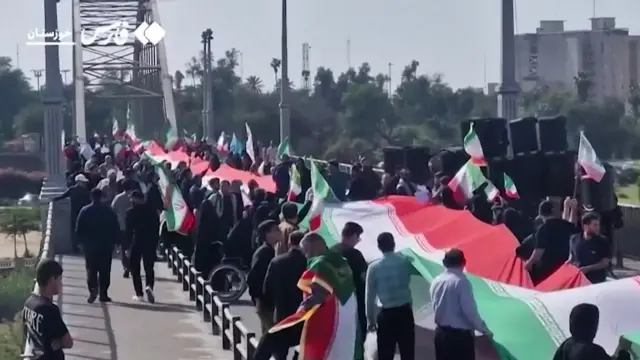
    Verified videos and images showing dozens of people forming "human chains" at several bridges and energy sites in Iran have been shared by state media, following days of US threats to attack them.

    BBC Verify has checked several clips which show Iranian government supporters gathered near the sites, including:

    • Kazeroun power plant in south-western Fars province and Shahid Rajaee power plant in northern Qazvin province
    • Bridges in the cities of Dezful and Ahvaz, in south-western Khuzestan province
  3. Iranian minister encourages 'human chains' around infrastructurepublished at 21:55 BST

    Some authorities in Iran are encouraging Iranians to form "human chains" around power plants to deter threatened attacks from the United States.

    Iran's deputy minister of youth and sports Alireza Rahimi posted a statement on X, saying the "Human Chain of Iranian Youths for a Bright Tomorrow" campaign was held "across the country" today.

    Footage shared by Iran's official Fars state news agency and verified by the BBC showed what it said was a "Human chain in front of the Kazerun combined cycle power plant".

    In a post on Telegram, an account for the Iranian government said: "Those who participated in this campaign unanimously condemned the American-Israeli aggression and declared their strong support for the country's armed and defence forces.

    "In this movement, young people across the country considered any attack on the country's infrastructure to be a war crime and condemned these actions with one single voice."

    In a separate post on X, Iran President Masoud Pezeshkian said that 14 million Iranians had signed up to "sacrifice their lives to defend Iran". Applicants can register by sending a text message to a designated phone number.

    Trump later slammed the reported use of human shields around physical infrastructure.

    "Totally illegal," Trump told NBC News. "They’re not allowed to do that."

    Iranians gather on a bridge holding a large flagImage source, Reuters
  4. Analysis

    Some Democrats call for Trump's removalpublished at 21:34 BST

    Ione Wells
    Reporting from Washington DC

    A growing number of Democratic politicians in the US are calling for the 25th Amendment to be invoked after Donald Trump's threats today.

    It's a mechanism written into the US Constitution that allows the vice-president to take over from the president if he is unable to fulfil his duties.

    Section 4 of the amendment covers a scenario where the president can't or won't declare his own inability himself. If the vice-president and the majority of the cabinet agree the president is unable to do the job, they can send a declaration saying so to the leaders of Congress, which the president can then challenge.

    There's no sign that members of Trump's cabinet or Vice-President JD Vance are considering this, so it remains an unlikely scenario. But that hasn't stopped Democrats from calling for it.

    Dozens of Democratic lawmakers have accused Donald Trump of "threatening genocidal war crimes" or being "too dangerous" to "have the nuclear codes".

    Congresswoman Alexandria Ocasio-Cortez said on social media: "This is a threat of genocide and merits removal from office. The President's mental faculties are collapsing and cannot be trusted."

    Separately, senior Democrats in the House of Representatives have called on Republicans to join with them in a "vote to end this reckless war of choice in the Middle East before Donald Trump plunges our country into World War III", calling Trump "completely unhinged".

    "His statement threatening to eradicate an entire civilisation shocks the conscience and requires a decisive congressional response."

    The House is currently on recess and not due to return until 14 April.

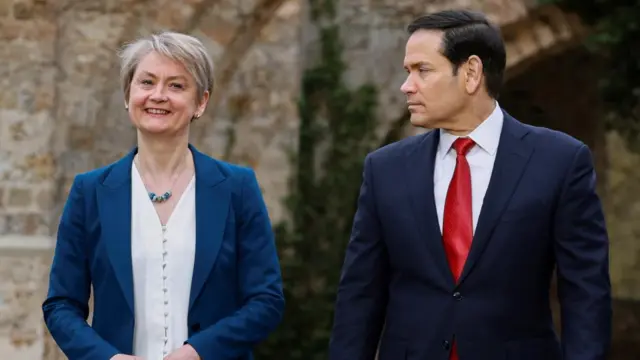
  5. Marco Rubio and Yvette Cooper agree on 'need for international efforts'published at 21:32 BST

    US Secretary of State Marco Rubio and UK Foreign Secretary Yvette Cooper agreed today "on the need for international efforts" in response to the escalating crisis in the Middle East, according the State Department.

    According to US State Department principal deputy spokesman Tommy Pigott, the pair spoke about "the Iranian regime's ongoing attacks across the Middle East and the critical importance of restoring freedom of navigation in the Strait of Hormuz."

    He says: "The secretary and foreign secretary agreed on the need for international efforts to ensure shipping can move freely and energy supplies can reach global markets."

    Cooper and Rubio pictured in March 2026Image source, Reuters
    Image caption,

    Cooper and Rubio pictured in March

  6. Qatar intercepts missile headed for its borderspublished at 21:28 BST

    Qatari armed forces say they have intercepted an incoming missile strike headed for their borders.

    The country's Ministry of Defence wrote on social media that it neutralised the threat "by the grace of God".

  7. UAE 'actively engaging' in shooting down missilespublished at 20:44 BST

    The UAE's ministry of defence says its air defence systems are "actively engaging" with incoming missiles and drones.

    In a graphic with English text shared on X, the ministry says that "the sounds heard across the country are the result of ongoing engaging operations of missiles and UAVs."

    It continues: "The public is urged to remain calm and follow the safety and security instructions issued by relevant authorities".

  8. Kuwait government urges people to stay inside their homes tonightpublished at 20:37 BST

    People in Kuwait are being told to avoid going out from 12:00 midnight to 06:00 tomorrow morning.

    The Ministry of Interior says in a statement shared on X that "citizens and residents are urged to stay at home and only go out if absolutely necessary".

    It says that the "measure aims to maintain safety, support security operations, and ensure stability".

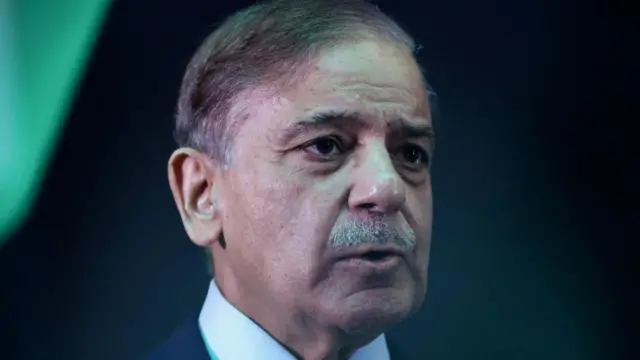
  9. Pakistan's prime minister calls for Trump to extend deadlinepublished at 20:26 BST

    Pakistan's Prime Minister Shehbaz Sharif looks on during a business and investment conferenceImage source, Reuters

    The Prime Minister of Pakistan Shehbaz Sharif has called on US President Donald Trump to extend his deadline for two weeks "to allow diplomacy to run its course".

    He also asks for Iran to open the Strait of Hormuz.

    In a post on X, he writes: "Diplomatic efforts for peaceful settlement of the ongoing war in the Middle East are progressing steadily, strongly and powerfully with the potential to lead to substantive results in near future.

    "To allow diplomacy to run its course, I earnestly request President Trump to extend the deadline for two weeks.

    "Pakistan, in all sincerity, requests the Iranian brothers to open Strait of Hormuz for a corresponding period of two weeks as a goodwill gesture.

    "We also urge all warring parties to observe a ceasefire everywhere for two weeks to allow diplomacy to achieve conclusive termination of war, in the interest of long-term peace and stability in the region."

    Pakistan has acted as a mediator in the conflict, which you can read more about here

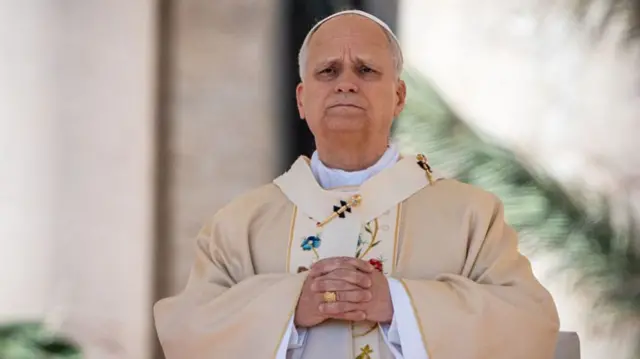
  10. Pope Leo calls threats against Iranian civilians 'unacceptable'published at 20:16 BST

    Davide Ghiglione
    Reporting from Rome

    Pope Leo stands in a cream-colored robe with his hands folded over his chestImage source, Getty Images

    Pope Leo has said that threats directed at Iran’s population are "unacceptable".

    It comes hours hours after Trump said on social media that a "whole civilization will die tonight" unless Iran reaches a deal on reopening the Strait of Hormuz.

    The Pope, who is American, has increasingly voiced criticism of the Iran war.

    Speaking to reporters as he left the papal retreat at Castel Gandolfo, outside Rome, he referenced a threat earlier today against the Iranian people, calling it "truly unacceptable".

    He also urged people around the globe to contact their political representatives and press for an end to the conflict.

  11. 'Only the president knows where things stand and what he will do' - Leavittpublished at 19:58 BST

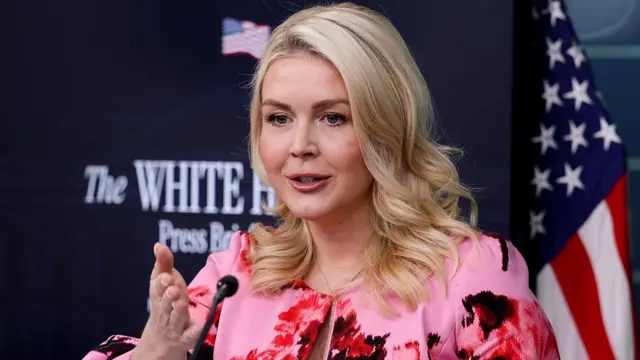
    White House Press Secretary Karoline Leavitt gesturing with her right hand and speaking to a reporter through a microphone, with a White House Press Briefing sign behind her and an American flagImage source, Getty Images

    White House Press Secretary Karoline Leavitt says only Donald Trump "knows where things stand and what he will do" as the deadline he set for Iran to open the Strait of Hormuz looms.

    Her statement came in response to a request for clarification from the BBC about comments made by US President Donald Trump and his Vice President JD Vance earlier.

    As we've reported, Trump said earlier "a whole civilisation will die tonight" unless Iran reaches a deal on opening the Strait of Hormuz - adding he doesn't want that to happen "but it probably will".

    Vance then said the Iranian regime has to know the US has "tools in our tool kit that we so far haven't decided to use. The President of the United States can decide to use them and he will decide to use them if the Iranians don't change their course of conduct".

    Responding to a claim on social media that Vance had suggested the US could use nuclear weapons, the White House said "literally nothing" Vance said had implied that was the case.

    Asked by the BBC to clarify its stance on using nuclear weapons, the White House sent the following statement from Leavitt: "The Iranian regime has until 8PM Eastern Time to meet the moment and make a deal with the United States. Only the President knows where things stand and what he will do."

  12. 'No damage' to Kharg Island's critical infrastructure in latest strikes - Iranian mediapublished at 19:35 BST

    As we reported earlier, the US has carried out further strikes on Iran's Kharg Island, home to a major oil terminal.

    Iran's semi-official Mehr news agency is reporting that "no damage was done to critical infrastructure" in the latest strikes.

  13. 'Civilised' nation will prevail over 'brute force', says Iranian foreign ministrypublished at 19:03 BST

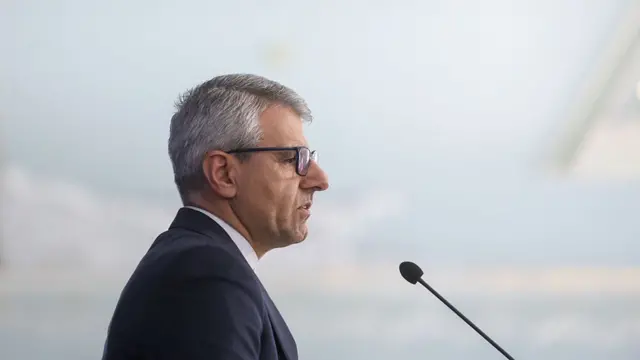
    Iran foreign ministry spokesperson Esmaeil Baqaei speaking into a microphone from a side profile and looking towards the right side of the frame, with a blurry light background behind himImage source, Getty Images

    Iranian foreign affairs spokesman Esmaeil Baqaei says a "civilized" country's "logic"will prevail over "brute force".

    In a statement on X shared this afternoon, he writes: "The power of a "CIVILIZED" nation's culture, logic, and faith in its righteous cause will undoubtedly prevail over the logic of brute force."

    He adds: "A nation that has every faith in the righteousness of its path shall harness all its capacities and capabilities to safeguard its rights and legitimate interests."

    He shares it with the hashtag "IranWillWin".

  14. UN Secretary-General 'deeply troubled' by threats to civilianspublished at 18:55 BST

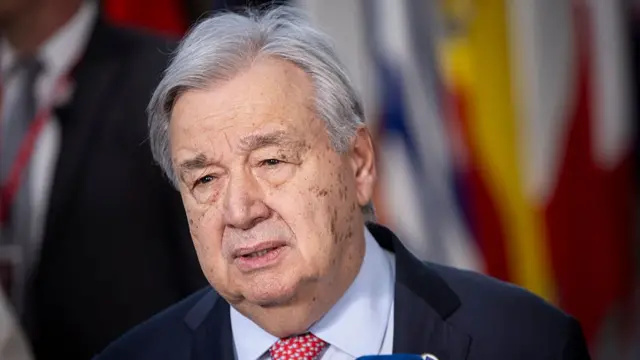
    Guterres speaks into a mic during a conferenceImage source, NurPhoto via Getty Images

    UN Secretary-General António Guterres is "deeply troubled" by recent threats around civilian population, says his spokesperson.

    Whilst not mentioning the US president directly, remarks from Guterres's spokesperson Stéphane Dujarric come after Donald Trump said "a whole civilisation will die tonight," as the deadline he issued to Iran looms.

    Dujarric says the UN secretary-general was concerned about comments "suggesting that entire civilian populations or civilisations may be made to bear the consequences of political and military decisions".

    There is "no military objective that justifies the wholesale destruction of a society's infrastructure" or "the deliberate infliction of suffering on civilian populations," he adds.

    Guterres also believes that war can end "when leaders choose dialogue over destruction" - a choice that "still exists".

  15. BBC Verify

    At least 45 vessels have crossed Strait of Hormuz since Fridaypublished at 18:33 BST

    By Kayleen Devlin

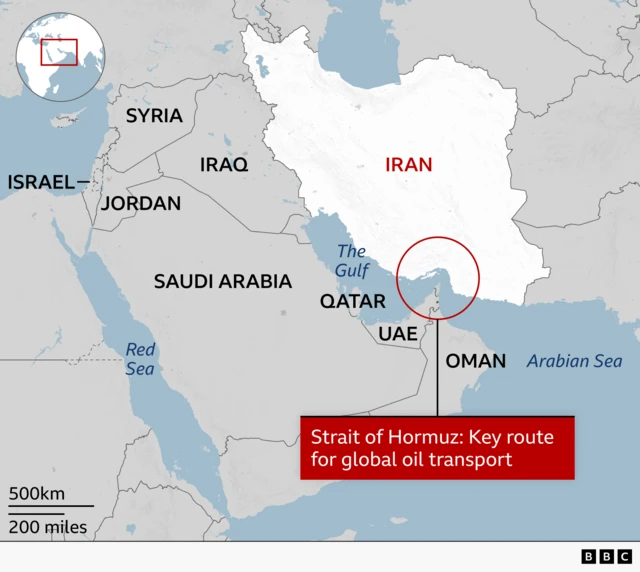
    At least 45 commercial ships have crossed the Strait of Hormuz since Friday, the latest tracking data from maritime intelligence firm Kpler shows.

    The figures shared with BBC Verify show that, since the outbreak of the war on 28 February, 324 vessels have used the vital shipping lane for oil and gas exports.

    The highest daily number was on 28 February itself, when 31 vessels transited the strait. The pre-war average was about 100 commercial vessels a day.

    Separate analysis from maritime intelligence company Windward indicates more ships are travelling on the southern side of the strait, closer to Oman’s coastline.

    Windward notes “multiple” vessels used this route between 2 and 5 April, including three Omani-operated ships.

    Map showing where the Strait of Hormuz is in the Gulf of Oman, a key route for global oil transport. The strait lies between Iran and the peninsula of the United Arab Emirates and Oman. The map also shows countries in the wider Middle East region including Saudi Arabia, Iraq, Jordan and Israel
  16. Israeli military issues 'urgent warning' to vessels off coast of Lebanonpublished at 18:17 BST

    The Israel Defence Forces (IDF) has issued an "urgent warning" to vessels in the maritime space between Tyre and Ras Naqoura in Lebanon.

    In a statement on X IDF spokesperson Avichay Adraee claims there is Hezbollah activity that is putting vessels in danger, so they will take action.

    Sharing an image of a mapped area, he tells anchored or sailing ships there to head north.

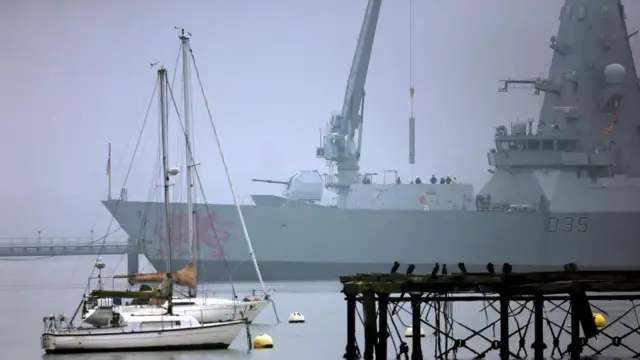
  17. HMS Dragon docking at port for 'routine logistics stop' after minor tech issuepublished at 18:05 BST

    Jonathan Beale
    Defence correspondent

    The Ministry of Defence has confirmed a Royal Navy destroyer will be going into a port in the region for “a routine logistics stop and a short maintenance period”.

    HMS Dragon recently arrived in the Eastern Mediterranean to potentially intercept Iranian missiles and drones

    The MOD said the logistics stop was planned. However, it said a minor technical issue with the ship’s onboard water system also needed to be looked at.

    The MOD says HMS Dragon will remain at high readiness during the period and will be able to sail at short notice.

    • The ship departed for the Middle East on 10 March, amid criticism that the UK government was too slow to deploy it to the region. HMS Dragon is its first and only warship eastern Mediterranean
    HMS Dragon, pictured in Portsmouth in March ahead of deployment to CyprusImage source, EPA
    Image caption,

    HMS Dragon, pictured in Portsmouth in March ahead of deployment to Cyprus

  18. Analysis

    Trump's threat 'could plausibly be interpreted as a threat of genocide' - ex-State Department adviserpublished at 17:33 BST

    Tom Bateman
    US State Department correspondent

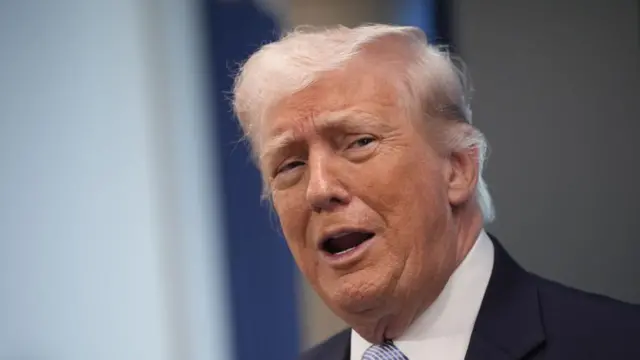
    President Donald Trump, pictured on MondayImage source, EPA

    Trump’s Truth Social post is yet another extraordinary scaling up of rhetoric to a level previously unthinkable from a president of the United States, in at least the post-World War Two era.

    Brian Finucane, a former legal adviser at the State Department, says of Trump’s post: “This threat against a ‘whole civilization’ could plausibly be interpreted as a threat of genocide.

    "Trump may hope this puts pressure on Tehran to reach a deal. But the risk of further US escalation against Iran is very real.”

    The US is a signatory to the 1948 Convention on Genocide, which binds the contracting parties “to prevent and to punish” the crime of genocide, defined as “acts committed with intent to destroy, in whole or in part, a national, ethnical, racial or religious group”.

    I asked the US State Department if the post was a threat of genocide, to which a spokesperson said: "That is not what the president said and you should go read his statement again. President Trump was clear: 47 years of extortion, corruption, and death, will finally end."

    Trump’s post says if Iran doesn't do a deal, "a whole civilization will die tonight, never to be brought back again”, before going on to say he hopes it won’t happen, but it “probably will”.

    His rhetoric could be seen as a negotiating tactic, with some arguing previously it shouldn’t necessarily be taken literally.

    The administration has repeatedly said his objective is to prevent Iran’s leadership developing a nuclear weapon, an issue over which Trump has abandoned diplomacy in favour of military force several times.

    But even if it's a bluff, the rhetoric will raise even more concerns about the potential erosion of international norms on warfare, as we’ve written about here.

  19. Russia and China veto UN Security Council vote on Strait of Hormuzpublished at 17:08 BST

    Nada Tawfik
    Reporting from New York

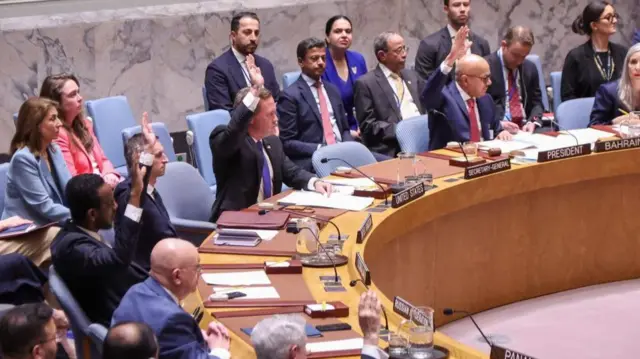
    Security Council members raise their hands to vote at a UN meeting in New York.Image source, Reuters

    Russia and China have vetoed a Gulf draft resolution at the UN Security Council that strongly encouraged defensive, co-ordinated efforts to secure the Strait of Hormuz.

    Eleven countries voted in favour and two council members abstained (Pakistan and Colombia).

    After weeks of negotiations, the draft was watered down from initially being under Chapter VII (authorising military force) to removing Chapter VII but “authorizing states to use all defensive means necessary” to finally strongly encouraging defensive efforts.

    Bahrain's Foreign Minister Dr Abdullatif bin Rashid Al Zayani chaired the meeting.

    Speaking before the vote, he told council members that the draft didn’t create a new reality, but was a serious response to a pattern of recurring hostile Iranian behaviour that must cease.

    He said failure by the Security Council to respond to the weaponising of the vital waterway for leverage would have grave consequences for the world and could be replicated in other straits and waterways, transforming the world in to a jungle.

    The BBC has reported that China is among the countries that has been able to keep using the Strait while Russia could be set to benefit as sanctions on oil are relaxed in response to the closure

  20. Analysis

    Is Trump’s latest threat serious?published at 16:42 BST

    Frank Gardner
    Security correspondent

    In a way, President Donald Trump’s "end-of-civilisation" threat to Iran, posted on his Truth Social account, is even more shocking than his earlier one that was rich in un-presidential-like expletives.

    To suggest, even as a bluff, that "a whole civilization will die tonight" is to invite comparisons with those who have sought to destroy remnants of the great civilisations of the wider Middle East.

    The Taliban blew up the giant stone 6th-Century Buddhas of Bamiyan, and ISIS demolished parts of the 2nd-Century city of Palmyra.

    Is Donald Trump planning to go down in history as the man who bombed Iran’s priceless vestiges of its ancient civilisations like the ruins of Persepolis? Or the Unesco World Heritage site of the Friday Mosque at Isfahan?

    Even Vladimir Putin, in his savage war on Ukraine, has spared the golden domes of Kyiv’s cathedrals.

    Even if the US president is just using the term "civilization" loosely, to mean civil infrastructure like bridges and power plants, this still risks being classed as a war crime.

    But this, lawyers say, is a grey area, as anything which can be proven to have a military role does not fit the definition of a war crime.