Summary

  1. Full moon offers crew unique opportunity to see eclipsepublished at 02:05 BST

    Esme Stallard
    Science reporter

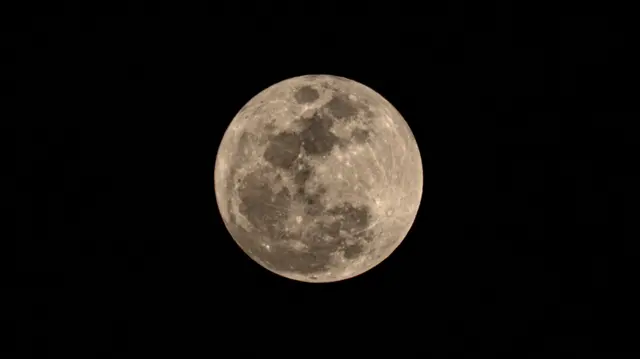
    A picture of a full moon, it appears slightly tinged yellowImage source, Kevin Church/BBC

    A full moon has risen at the Kennedy Space Centre.

    A successful launch today means that the astronauts will get to see a partial eclipse from the spacecraft.

    The moon will be blocking the sun, although they will be able to see the Sun's corona - the outer part of its atmosphere.

    "It will be a unique opportunity," Dr. Lori Glaze, acting associate administrator at Nasa, tells journalists at the press conference.

    The press conference has now finished - you can continue to watch the spacecraft's journey live at the top of the page.
  2. 'Competition can be a good thing' - Nasa administrator on space race with Chinapublished at 01:52 BST

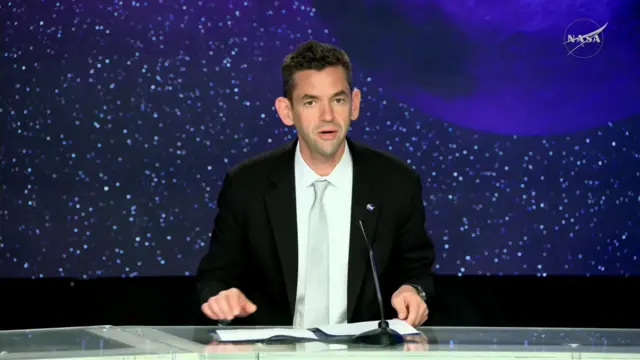
    Nasa administrator Jared Isaacman is asked why it's so difficult to get to the Moon today.

    He says "financial resources are part of the equation", but the emergence of a new space race is seeing resources concentrated back in this area.

    "This one's going to be close", he says.

    • For context, China says it wants to get its Taikonauts to land on the lunar surface by 2030

    "Competition can be a good thing - we certainly have competition now," Isaacman says. "We're going to get back in the business of launching rockets in a regular cadence."

  3. 'It is amazing to be at this altitude' - astronautpublished at 01:46 BST

    Esme Stallard
    Science reporter

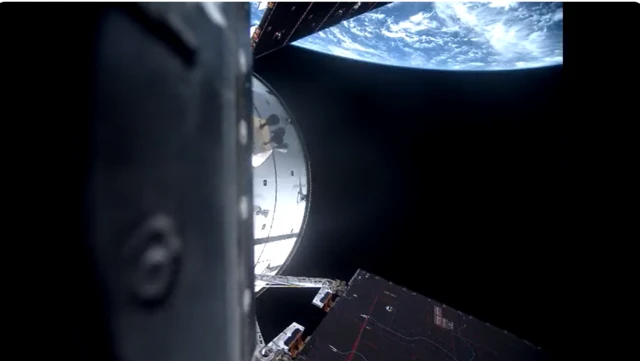
    A picture showing a black sky, the Earth visible partially in the background. Part of the spacecraft including a solar array can be seen on the left of the picture

    While the press conference is ongoing, the spacecraft is continuing to orbit Earth.

    On Nasa's live video feed on board the Orion spacecraft, the blue of Earth can be seen in the distance.

    But from the astronauts' perspective they are seeing a far more impressive sight of our planet.

    "The view of Australia was epic just now, it is amazing to be at this altitude," Reid Wiseman, the Artemis II commander says.

  4. Nasa team 'quick on their feet' in resolving pre-launch issues, official sayspublished at 01:42 BST

    Nasa's associate administrator Amit Kshatriya speaks about the two issues encountered before launch - a problem with the flight termination system, and a separate battery issue.

    The first one was resolved using old hardware from the previous Space Shuttle programme.

    Kshatriya says the Nasa team were "really quick on their feet [and] swapped to a different range receiver".

    "This is what the training is for; this is what the practice is for," he says, adding that the team "did really well".

    Earlier, Nasa said the issue with one of the batteries on the Launch Abort System would not affect the launch.

  5. Astronauts 'safe, secure and in great spirits', Nasa administrator sayspublished at 01:27 BST

    Nasa administrator Jared Isaacman kicks off the press conferenceImage source, NASA

    Nasa administrator Jared Isaacman kicks off the press conference by giving an operational update on the mission.

    He briefly references an earlier communications issue, where the team on the ground couldn't hear the crew aboard the spacecraft.

    This has since been resolved, he says, and the crew is "safe, secure and in great spirits".

    He then switches to the significance of the mission.

    "After a brief 54 year intermission, Nasa is back in the business of sending astronauts to the Moon," he says.

    "This mission belongs as much to you as it does the crew," he tells the Nasa workforce.

    The team "know the challenges ahead" and will only hold its celebrations when the astronauts splash down after the mission is complete, Isaacman says.

  6. Nasa holding press conference - watch livepublished at 01:17 BST
    Breaking

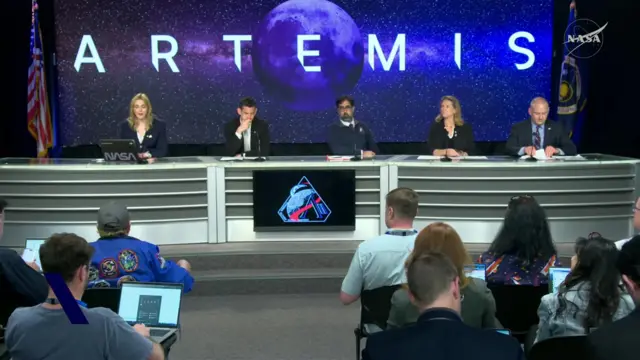
    Line of four people sitting behind table with a screen with the word 'Artemis' on it behind themImage source, NASA

    Nasa is holding a press conference following the launch.

    You can watch live at the top of the page and we'll bring you the key lines here.

  7. How the 10-day mission will unfoldpublished at 01:09 BST

    Pallab Ghosh
    Science correspondent

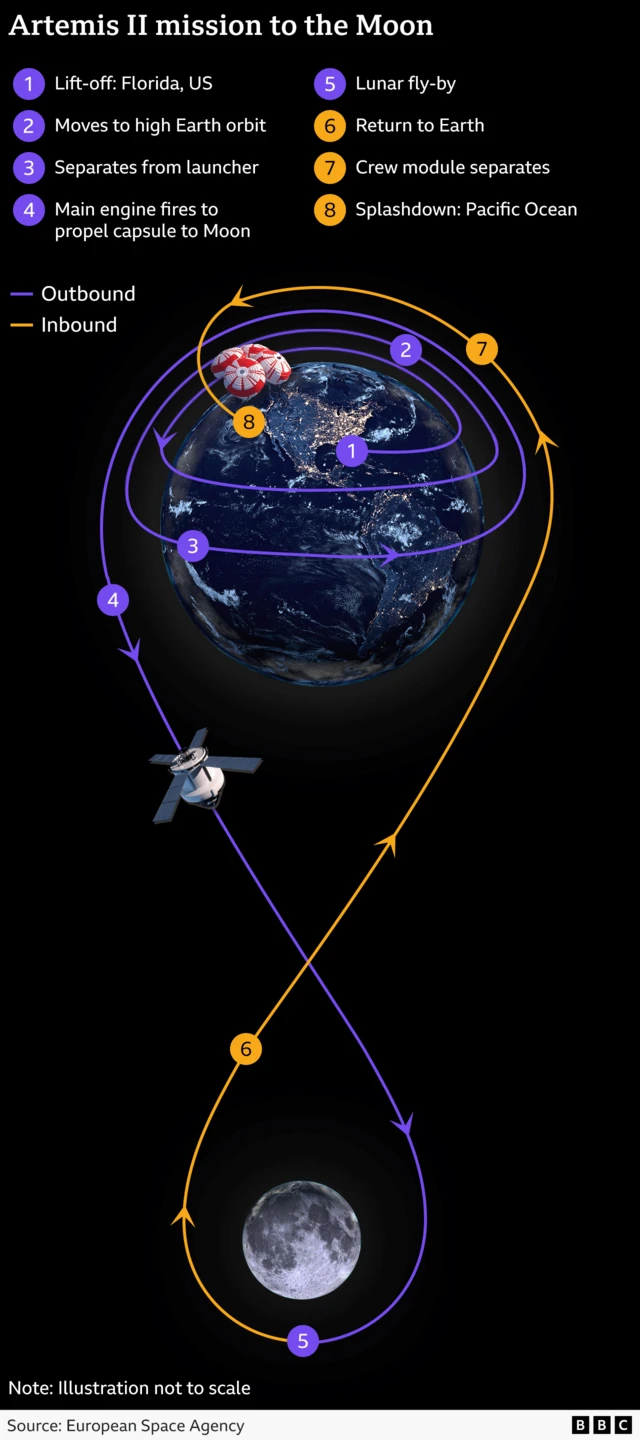
    Over the next ten days, the four astronauts will put their Orion spacecraft through its paces on a long, looping voyage that will sling them out to lunar distance before gravity guides them back to Earth.

    After a day of checks in high Earth orbit, they’ll fire the European‑built service module engine in what’s known as a “trans‑lunar injection” burn - the crucial manoeuvre that will push them away from the safety of home and commit them to deep space.

    For several minutes the spacecraft accelerates hard. This is the big shove that tips Orion out of Earth orbit and sets it on a curved path towards the Moon - the combined gravity of Earth and Moon will naturally loop the spacecraft back home without another big engine burn.

    If something serious goes wrong, the crew can effectively coast back along that track – a built-in safety feature that makes sense for a first crewed test.

    It takes about four days to cruise out to the Moon. During that time, the astronauts will work through emergency drills, including how they would ride out a major solar radiation storm.

    At its furthest, the trajectory takes the crew to around 230,000 miles from Earth, looping them behind the far side of the Moon.

    After the flyby, Orion makes a series of gentle course correction burns to line up its path for the return to Earth.

    Roughly four days later, Orion separates from the European Service Module and heads for home.

    The capsule slams into the upper atmosphere at high speed, its heatshield glowing white hot as it sheds the energy of the trip.

    Parachutes then unfurl, slowing the spacecraft for splashdown in the Pacific Ocean, where US Navy ships will be waiting to fish the crew and their capsule out of the water.

    Graphic showing the Earth and the Moon, with the spacecraft’s figure of eight orbital trajectory highlighted. Specific points are labelled. These are: 1. Lift-off at the Kennedy Space Centre, 2. Orbit around the Earth, 3. Rocket separation, 4. Main engine fires to take spacecraft to the Moon, 5. Lunar fly-by, 6. Return to Earth, 7. Crew module separates, 8. Splashdown in Pacific Ocean
  8. The toilet has a faultpublished at 00:57 BST 2 April

    Esme Stallard
    Science reporter

    The crew are going through the life support system checks onboard the spacecraft.

    And of course one of the crucial ones is being able to empty their bladders.

    "Toilet is powered, waste tank merged" we hear the astronauts tell mission control.

    But then a few minutes later they say the toilet's amber warning light is on.

    Mission control say they are going to need some time to figure that one out.

    Media caption,

    Watch: How will the Artemis astronauts go to the toilet in space?

  9. 'That was amazing!!!' - reaction from the friends and family area at launchpublished at 00:56 BST 2 April

    Katie Williams
    Live reporter

    Stacey Morgan and her husband Andrew Morgan, pictured wearing a space suit. Andrew went on a mission to the International Space Station in 2019Image source, Stacey Morgan
    Image caption,

    Stacey pictured with her husband Andrew Morgan, who went to the International Space Station in 2019

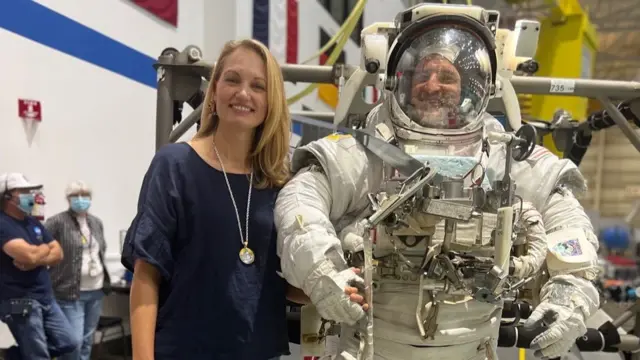
    One person watching the launch was Stacey Morgan. She is married to Nasa astronaut Andrew Morgan, who has previously spent nine months on the International Space Station.

    "That was amazing!!!" she says.

    "The Canadians are so excited! They are the BEST!" she adds. Mission specialist Jeremy Hansen is the first Canadian to fly to the Moon - and it's also his first time in space.

    Following earlier technical issues, she says everyone was just "excited for this to happen".

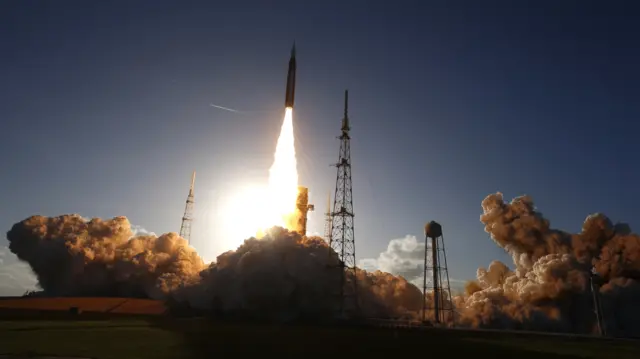
  10. Astronauts soar towards Moon after successful lift-off - a recap in picturespublished at 00:46 BST 2 April

    Rocket lifts off from Kennedy Space CenterImage source, Reuters
    Image caption,

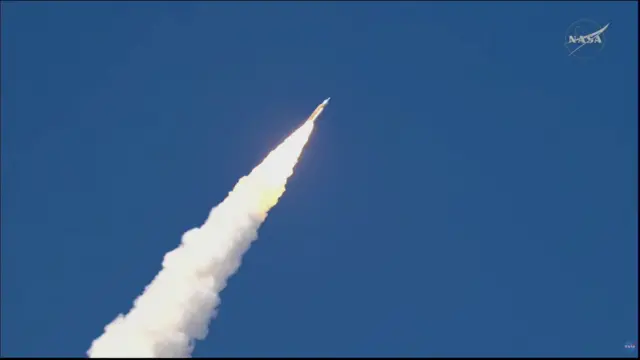
    We saw the powerful SLS rocket launch the Artemis II crew towards the Moon, leaving a trail of flames and smoke in its wake after a successful lift-off

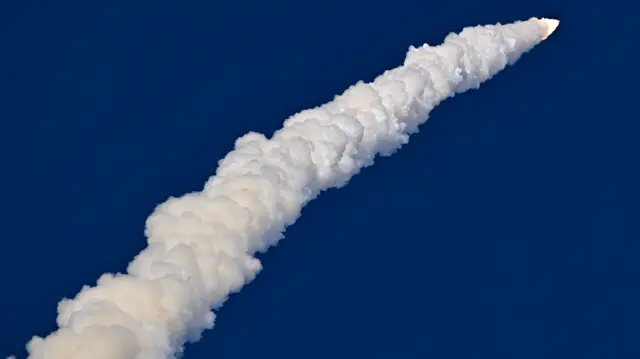
    Rocket with the Orion crew capsule, ascends after lift offImage source, Reuters
    Image caption,

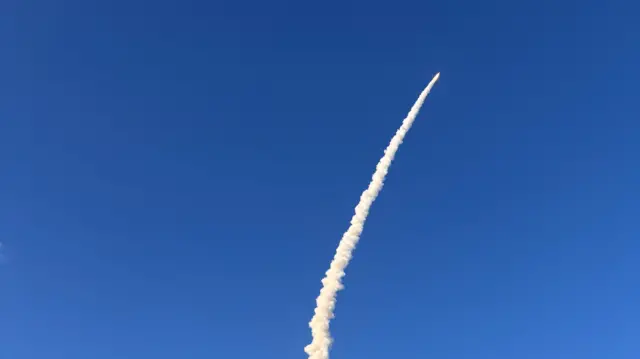
    The trail of smoke curled to one side as the rocket shot towards the edge of the Earth's atmosphere, before crossing the boundary into space

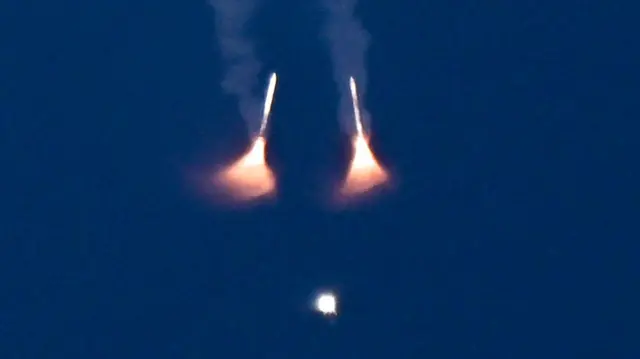
    Capsule ascends after liftoff, with its solid rocket boosters already detachedImage source, Reuters
    Image caption,

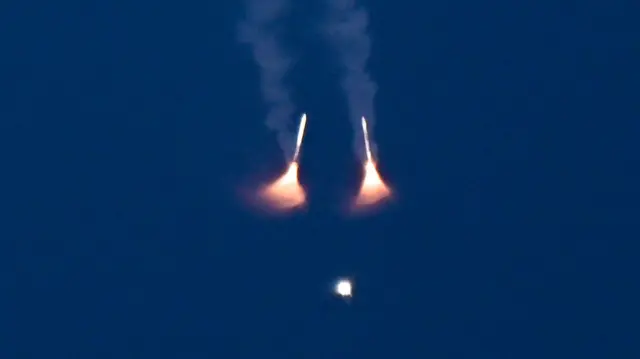
    The pair of solid rocket boosters separated - the spacecraft has since entered orbit around the Earth

    People gather to watch launch at Kennedy Space CentreImage source, Reuters
    Image caption,

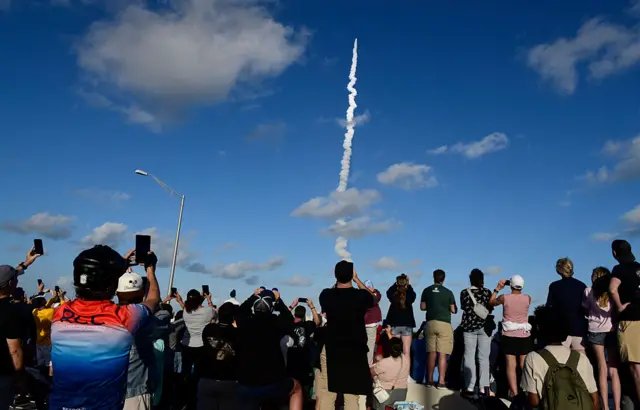
    Crowds reacted with a mix of joy and wonder as the dramatic scene unfurled

  11. Solar cells deployed, and now the backflipspublished at 00:29 BST 2 April

    Esme Stallard
    Science reporter

    The next critical stage of the mission has taken place - the solar array wings are open.

    These four wings have 15,000 solar cells on them each. They will harness solar energy to now power the spacecraft on the remainder of its time in Earth's orbit, and on its journey to the moon.

    One of the next milestones - a few hours into the flight - the crew will try to test drive Orion.

    The propulsion stage will provide a couple of boosts to the spacecraft and then separate.

    As the spacecraft and its crew move away, Orion will perform a backflip to face the propulsion stage.

    This will help it practice for future missions when it will need to dock with other spacecraft.

  12. From technical issues to 'go for launch' - what just happened?published at 00:11 BST 2 April

    Pallab Ghosh
    Science correspondent, reporting from the launch

    Spacecraft seen against dark skies, shooting up into the airImage source, Reuters

    In the hour before take-off there were issues which threatened launch concerning the Launch Abort System.

    This is the system that enables Nasa engineers to eject the astronauts and blow up the rocket if there is a malfunction.

    The countdown clock was held at 10 minutes while engineers resolved the problem – which they speedily did.

    Then came the staccato rhythm of the calls by each engineer responsible for the rocket’s critical systems.

    One by one the voices came back: “Booster, go”, “GNC, go”, “Range, go” – each reply, a tiny release of tension and a build-up of expectation.

    “Artemis II, this is Launch Director – you are go for launch,” the crew was told. “We go for all humanity, Commander Reid Wiseman responded.

    The four RS‑25 engines and twin solid rocket boosters lit with a sheet of flame that seemed to engulf the rocket, driving more than 8.8m lbs of thrust into the Florida evening sky.

  13. My first rocket launch didn't disappointpublished at 00:05 BST 2 April

    Leyla Khodabakhshi
    Reporting from the Kennedy Space Center

    Crowd points phones to the sky as they take pictures of rocket take offImage source, Getty Images

    This was my first rocket launch, and it was spectacular.

    From the moment I arrived here, people kept telling me you don’t just see a launch - you feel it. And they were right.

    As the rocket lifted off, you could feel it through your body.

    Now, the smoke is still lingering in the sky, hanging there - almost giving you a moment to take it in.

    If you can ever fully take it in.

  14. 'Great view', says astronaut Reid Wisemanpublished at 23:57 BST 1 April

    Esme Stallard
    Science reporter

    A few minutes into the launch as the astronauts began to enter the Earth's upper atmosphere, the spacecraft commander Reid Wiseman takes to the comms.

    "Great view" he declares. "We have got a great Moonrise".

    The astronauts will see views on this trip only a handful of humans in history have seen.

  15. Giddy euphoria among Nasa employeespublished at 23:56 BST 1 April

    Pallab Ghosh
    Science correspondent, reporting from the launch

    There was giddy euphoria at the Kennedy Space Center. Staff are laughing and clapping - this is the moment that they have spent years working for.

    There is still work to do - but for a moment they are bathing in the moment of triumph.

  16. You can feel the force of the rocket passing through your bodypublished at 23:50 BST 1 April

    Rebecca Morelle
    Science editor, reporting from the launch

    Wow - that is just spectacular…

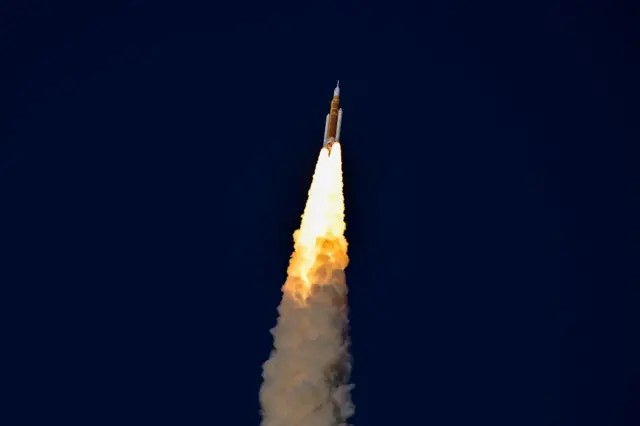
    It’s not just what you can see and hear as the rocket lifts off. You can actually feel the force of it passing through your body.

    This is the most powerful rocket that Nasa has ever built - and it needs to be, because it’s sending these four astronauts 250,000 miles (400,000 km) away to the Moon.

    Rocket takes off into the sky with huge trail behind itImage source, BBC/Kevin Church
  17. Astronauts now in orbit around the Earthpublished at 23:48 BST 1 April

    Esme Stallard
    Science reporter

    Reid, Wiseman, Koch and Hansen have passed the Kármán line - the boundary between Earth's atmosphere and space. They are now in orbit around the Earth.

    All initial stages appear to have gone to plan.

    There is still ten days to go with this mission but so far, so good.

  18. Boosters have separatedpublished at 23:47 BST 1 April

    Esme Stallard
    Science reporter

    The Space Launch System (SLS) rocket carrying NASA's Artemis II Orion crew capsule ascends after liftoff, with its solid rocket boosters already detached, from the Kennedy Space Center in Cape Canaveral, Florida, U.S., April 1, 2026.Image source, Reuters

    The pair of solid rocket boosters, which provide 80% of thrust, have done their job getting the system to more than 10,000 mph.

    They have now separated from the rocket.

    Within the next couple of minutes they are expected to splashdown in the Atlantic Ocean.

  19. Key moments to look out forpublished at 23:46 BST 1 April

    Pallab Ghosh
    Science correspondent, reporting from the launch

    It's now been ten minutes since launch - here's some of the key moments to look out for for the rest of the flight:

    After about eight minutes the core runs dry and drops back towards Earth, while the upper stage of the rocket - the interim cryogenic propulsion stage (ICPS) - takes over, lighting its engine to nudge the crew the rest of the way into orbit.

    With two engine burns, the ICPS places Orion into a high, stretched out orbit around Earth.

    At its furthest, the spacecraft will be about 46,000 miles away; at its nearest, roughly 115 miles up.

    That loop takes about a day. During this first day, Orion separates from the ICPS and carries out a docking practice manoeuvre, flying towards and around the spent stage as if it were a future Moon lander or small space station.

    All of this is rehearsal for what comes much later in Nasa’s grand plans for a long term presence on the lunar surface, when Orion will have to hook up in space with lunar landers and an orbiting outpost near the Moon.

    Artemis II is the crew’s chance to see how the capsule’s autopilot and thrusters behave when they really lean on them.

  20. Flames and cheers as rocket lifts offpublished at 23:39 BST 1 April

    rocket flying through skyImage source, NASA

    You can see the flames under the spacecraft, and hear an almighty roar as the rocket lifts off into the blue sky. A trail of smoke is left in its wake.

    You can hear the crowds at the launch cheer as the spacecraft shoots into the sky.

    As a reminder, you can watch live at the top of the page.