Summary

  • Donald Trump says US military action in Iran could end in "two to three weeks"

  • He says the US will "leave whether we have a deal or not" once he's certain the regime cannot build a nuclear weapon "for years" - here's what else he said

  • Iranian President Masoud Pezeshkian says Tehran has the "necessary will" to end the war provided its enemies guarantee it will not flare up again

  • Oil prices fell back below $100 (£75) a barrel following the comments from the US and Iranian presidents

  • Meanwhile, China and Pakistan draw up a five-point plan to end the war, which includes an immediate ceasefire and the reopening of the Strait of Hormuz - why is China getting involved?

  • Strikes between Israel and Iran continue - and Iran is also attacking its Gulf neighbours: a drone strike sparks a fire at Kuwait's international airport; a tanker is hit off the coast of Qatar; and Saudi Arabia and Bahrain also report attacks

  • Thousands of people have been killed in the war, the vast majority in Iran and Lebanon

  1. Analysis

    Starmer likely to face questions on deteriorating relations with Trumppublished at 09:53 BST

    Henry Zeffman
    Chief political correspondent
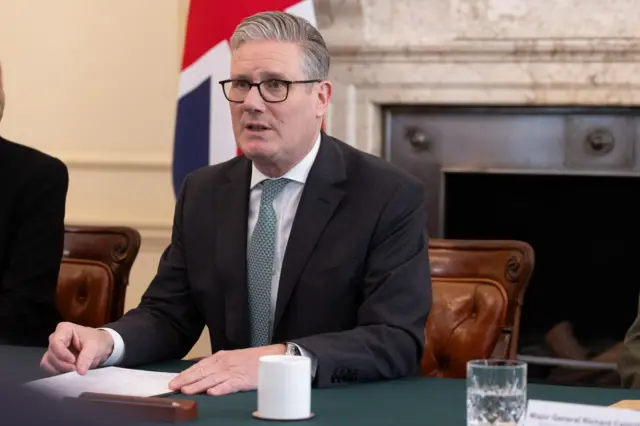
    Keir Starmer in a black suit, white shirt and patterned green tie sitting down at a table inside No10Image source, EPA

    Sir Keir Starmer will give a press conference from Downing Street soon, focusing on the conflict in the Middle East and what it means for the British economy.

    On the diplomatic side, expect the prime minister to face questions about his deteriorating relationship with President Trump. He may try to avoid responding directly to the president’s assertion that the UK should “go get your own oil” from the Strait of Hormuz.

    Yet it’s been striking in recent weeks how willing Starmer has been to embrace the fact that he resisted pressure from Trump for the UK to play a greater role in the war.

    On the economic side, expect the prime minister to reiterate the position of his chancellor that support is coming for those who need it – but not until the autumn. That is coming under pressure from opposition parties who believe that there are immediate measures the government should take both on fuel prices and household energy bills.

    As today is 1 April, there are various new prices taking effect today. The energy price cap of course – which means that for many prices will fall before the now-inevitable price rise – but also increases in the minimum wage rates, the state pension and working age benefits.

    It is likely that Starmer will argue that these amount to support with the cost of living, even though they were planned before this conflict.

  2. Houthis claim third strike on Israelpublished at 09:46 BST

    A spokesperson for the Iran-backed Houthis says the group has carried out a third strike on Israel.

    The Yemen-based group fired missile at "sensitive targets of the Israeli enemy" in the south of the country, Yahya Sarea says in a video statement translated by Reuters.

    He adds that the operation was conducted in co-operation with Iran and Hezbollah. The group entered the conflict on the weekend by firing projectiles at Israel.

  3. UK airlines trade body says there is no disruption to jet fuel supplypublished at 09:38 BST

    Simon Browning
    Business Reporter

    A passenger jet taking off from a runway.Image source, PA Media

    The trade body representing airlines operating in the UK says they “are currently not seeing disruption to jet fuel supply”.

    Airlines UK says it continues to engage with fuel suppliers and government to monitor the situation.

    Other airline sources have told the BBC they have good visibility and supply for the next five to six weeks and there are no crisis meetings happening about operational supply.

    Reports have suggested that the UK is a week away from running out of jet fuel, something that aviation leaders do not recognise, with one referring to that as "sensationalist".

    While there are issues with supply in other regions of the world, those who have spoken to the BBC say it could present problems - but those problems are not imminent.

    One aviation source fears that "we are talking ourselves into something that isn’t real".

  4. Man killed in UAE, tanker fire in Qatar, Kuwait airport targeted as Gulf states face attackspublished at 09:32 BST

    As Iran and Israel trade strikes this morning, Gulf states are continuing to face projectile attacks.

    • UAE: A Bangladeshi man died after debris from an intercepted drone fell at a farm in the emirate of Fujairah
    • Qatar: A tanker off the coast of the country was struck by "two projectiles", according to the UK Maritime Trade Operations (UKMTO) Centre
    • Bahrain: Sirens sounded this morning, according to the Ministry of Interior, and emergency workers responded to a fire "in a facility of a company as a result of the Iranian aggression"
    • Saudi Arabia: The defence ministry said it had intercepted and destroyed two drones this morning and more last night
    • Kuwait: Fuel tanks at Kuwait International Airport were targeted by drones, according to the civil aviation authority, who blamed Iran. It said a "large fire" broke out and the attack resulted in "significant damage" but no casualties
  5. 'I feel like I've been in purgatory for a month': What's happening inside Tehranpublished at 09:20 BST

    Ghoncheh Habibiazad
    Senior reporter, BBC Persian

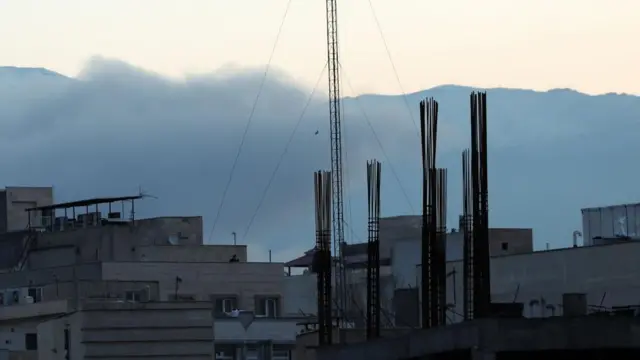
    Smoke rises over buildings in Tehran on Wednesday morning.Image source, EPA

    It’s still very difficult to contact those inside Iran amid a government-imposed internet outage, but from what I’ve heard, the strikes on the city mostly happened early this morning.

    “I feel like I’ve been in a purgatory for a month. I can’t do anything, and everything is up in the air. I’m so tired of the war,” a Tehran man in his 20s says.

    Some still support the strikes. A woman in her 40s in the capital tells me: “I want them to continue striking. I’m tired of this situation, I want them [clerics] to go.”

    Some have tried to find routines for themselves as the war goes on, like going to cafes, walking outside in a park, or going to the gym.

  6. Iran internet blackout enters 33rd daypublished at 09:07 BST

    Ghoncheh Habibiazad
    Senior reporter, BBC Persian

    Iran's internet blackout has now entered day 33, with most users cut off from the outside world for over 768 hours, according to internet monitoring group NetBlocks.

    Connectivity to the outside world remains at 1% of normal levels.

    Netblocks has said that “authorities widen their crackdown on satellite terminals in a bid to eliminate remaining means of communication with the outside world".

    Meanwhile, the BBC understands that some officials, pro-establishment users, and journalists still have unrestricted access, while others are paying large sums to get online.

    A few people have managed to connect using satellite internet such as Starlink and other methods, but using or possessing Starlink can lead to up to two years in prison in Iran.

  7. Oil below $100 and European stock markets open higherpublished at 08:52 BST

    Dearbail Jordan
    Senior business and economics reporter

    Oil prices have fallen even further and are now back down below $100 a barrel – for the moment.

    Following US President Donald Trump’s statement about the Iran war potentially ending “very soon”, Brent crude is now trading at $99.32.

    European stock markets have opened higher. In London, the FTSE 100 is up 1.7%. Germany’s Dax is ahead 2.5% and in France, the Cac has risen by 2.1%.

    Oil prices have been extremely volatile during the five weeks of the US-Israel war with Iran.

  8. Trump says US will leave Iran in 'weeks' - as Iran says it has 'necessary will' to end warpublished at 08:33 BST

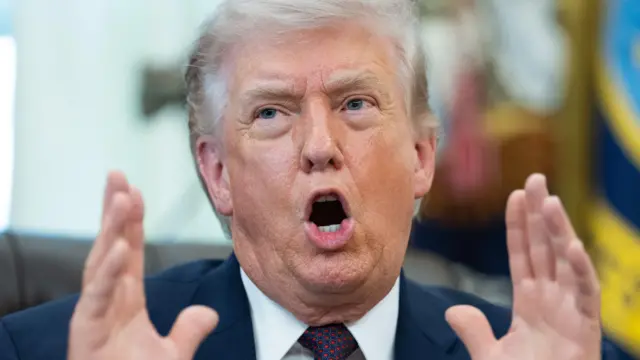
    US President Donald J Trump gives remarks during an executive order signing event in the Oval Office of the White House in Washington DC.Image source, EPA

    We're now bringing you up to speed on the latest developments. US President Donald Trump says the US will "leave" Iran in "two to three weeks" when they are certain the regime cannot build a nuclear weapon "for years".

    He says while Iran is "begging to make a deal", whether it happens is "irrelevant" to America's timetable. His latest comments delivered in the Oval Office come ahead of a national address on Iran Trump is scheduled to make on Wednesday night Washington local time.

    Iran's president Masoud Pezeshkian has said his country has the "necessary will" to end the war with the United States and Israel as long as certain conditions are met.

    Meanwhile, the head of Iranian Parliament's National Security Committee, Ebrahim Azizi, says in an X post addressing Donald Trump, "the Strait of Hormuz will certainly reopen, but not for you", in reference to Iran's blocking of the key shipping lane that has caused global energy prices to soar.

    Israel and Iran have continued to trade strikes overnight, with injuries reported following a strike outside Tel Aviv, and a tanker was hit by two projectiles off the coast of Qatar, and a man has been killed in the UAE as Gulf States continue to confront strikes.

    In the UK, Prime Minister Keir Starmer will hold a media conference on the war, including how the government is responding to rising costs.

  9. Oil prices fall as Trump says war will end 'very soon'published at 08:12 BST

    Dearbail Jordan
    Senior business and economics reporter

    Oil prices have fallen on Wednesday, down more than 3% to just above $100 per barrel.

    It follows US President Donald Trump's remarks in the Oval Office last night the country will be leaving Iran “very soon” and military action could end in two or three weeks.

    However, Brent crude prices remain 39% higher compared to 28 February, when the war began and Iran effectively closed the Strait of Hormuz, a crucial route for global oil and gas supplies.

    This Flourish post cannot be displayed in your browser. Please enable Javascript or try a different browser.

  10. Number of injured rises to 14 following strike outside Tel Avivpublished at 08:01 BST

    A MDA yellow ambulance parked in between cars on a street in Israel struck in a wave of Iranian attacksImage source, Magen David Adom

    Fourteen people, including an 11-year-old girl and 13-year-old boy, have been injured in the earlier Iranian strike on the outskirts of Tel Aviv.

    In an update on the injuries suffered in the strike, Magen David Adom, Israel's emergency services, says the girl suffered shrapnel injuries and has been evacuated to a local hospital.

    In a separate update, the service says no further injuries have been reported following another barrage of strikes from Iran.

  11. Man killed by falling debris in the UAEpublished at 07:36 BST

    A man has died after debris from an intercepted drone fell at a farm in Al Rifa, in the Emirate of Fujairah in the UAE, local authorities say.

    The man was a Bangladeshi national, the Fujairah Media Office says in a statement shared on social media.

    The UAE has intercepted 1977 drones and 433 ballistic missiles since the start of the war, the country's ministry of defence said yesterday.

  12. Israel carries out new strikes over Tehran as Iran launches multiple missiles in returnpublished at 07:24 BST

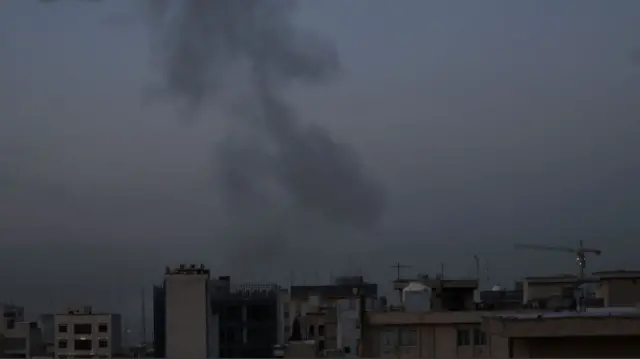
    A cloud of black smoke emerges over a cluster of residential buildings in Tehran in the early hours of the morningImage source, EPA
    Image caption,

    Smoke rises over buildings in Tehran, where Israel carried out strikes overnight

    A little earlier, the Israel Defense Forces (IDF) said it had carried out a wide-scale wave of overnight strikes on Iran's capital, Tehran.

    The IDF says it has been targeting infrastructure site linked to the Iranian regime.

    In the last hour and a half, Tehran has responded with three separate missile launches on Israel.

  13. One of two projectiles that hit tanker off Qatar 'remains unexploded in vessel's engine room'published at 07:07 BST

    The UK Maritime Trade Operations (UKMTO) Centre has provided an update on the tanker struck off the coast of Qatar earlier.

    UKMTO says the vessel was struck by "two projectiles". One caused a fire which has now been extinguished while the other "remains unexploded within the vessel's engine room".

    The centre says it is currently unable to confirm the origin of the projectiles and an investigation is underway.

  14. Three injured in latest Iranian strikes on Israelpublished at 06:48 BST

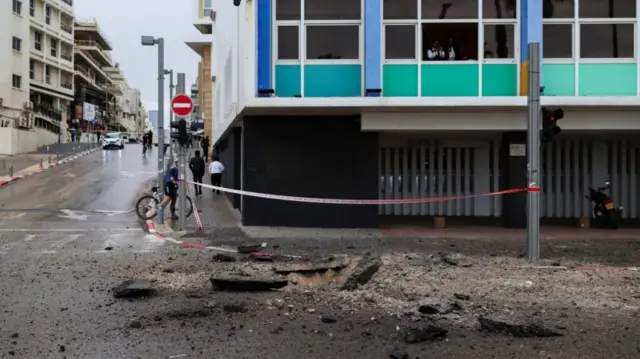
    Debris on the streets of Tel Aviv outside a residential building, another street with people walking away on the leftImage source, Reuters
    Image caption,

    Strikes have been reported in Tel Aviv and surrounding areas

    Israel emergency services, Magen David Adom, says its teams have been deployed to multiple areas after reports of fresh Iranian missiles strikes.

    The Israel Defense Forces (IDF) said a little before 06:00 BST (08:00 local time) it had detected a new wave of projectiles fired from Iran.

    MDA says it has provided treatment to an 11-year-old girl in a "serious condition" and two others in Bnei Brak, east of Tel Aviv.

  15. UK chancellor says energy bill support would be based on household incomepublished at 06:31 BST

    Peter Ruddick and Shanaz Musafer
    Business reporters

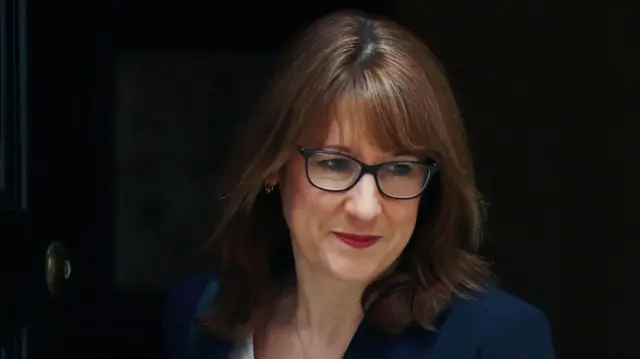
    Chancellor Rachel Reeves, a woman with medium-length brown hair and glasses in a dark suit.Image source, EPA

    Staying in the UK, Chancellor Rachel Reeves has told the BBC any support the government offers to help people with high energy bills pushed up by the Iran war would be based on household income.

    Wholesale oil and gas prices have soared over the past month, with supply from the Middle East severely disrupted. While household energy bills are set to fall in April under Ofgem's price cap, there is likely to be a big jump over the summer.

    Rachel Reeves said it was "too early" to say exactly who would get help but hinted any support would not arrive until the autumn.

    In a new interview with BBC Breakfast, she said: "I want to learn the lessons of the past because when Russia invaded Ukraine, the richest, the best-off third of households got more than a third of the support. That makes no sense at all."

    When asked if support could go beyond people who receive benefits, Reeves said: "We're looking at ways in which we can support people based on their household income."

    Read the full story here

  16. Keir Starmer to give update this morning on latest situation in Middle Eastpublished at 06:23 BST

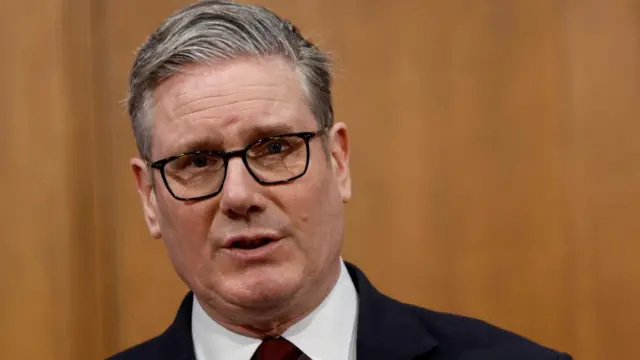
    UK Prime Minister Keir Starmer, a man with short, grey hair, glasses and a dark suit.Image source, Reuters

    We're expecting to hear from Prime Minister Keir Starmer later this morning. He'll be providing an update on the latest situation in the Middle East and how the government is planning to support families amid the cost of living.

    The ongoing war in Iran has fuelled concerns that energy bills may rise further and Starmer has previously pledged to "protect the British people at home and abroad".

    The update follows the announcement that extra British troops and UK defence systems will be deployed to the Middle East for defensive action against Iranian attacks.

    The prime minister said earlier this week that the UK is "not going to get dragged into this war" but would continue to defend its interests and allies in the region.

  17. Where did we see strikes overnight?published at 05:56 BST

    Katy Watson
    Reporting from Doha

    Overnight, US Central Command released a video showing its forces dropping what it called precision munitions on underground military targets deep inside Iran.

    Israel says it attacked a factory which it says was involved in the production of chemical weapons. Iran says it was making medicines.

    The Gulf continues to be targeted too, as Iran retaliaites – fuel depots at Kuwait’s International Airport were hit by drones, causing a huge fire.

    Saudi Arabia said it had intercepted two drones, Bahrain was also attacked and a tanker off the coast of Qatar was hit by a missile.

    Gulf leaders aren’t saying much right now – their main focus is on defending their territory – but countries in the region have made it clear they want an end to the war and an end to the uncertainty that comes with this conflict.

  18. 'The Strait of Hormuz will certainly reopen but not for you' - Iran MP to Trumppublished at 05:44 BST

    Ghoncheh Habibiazad
    Senior reporter, BBC Persian

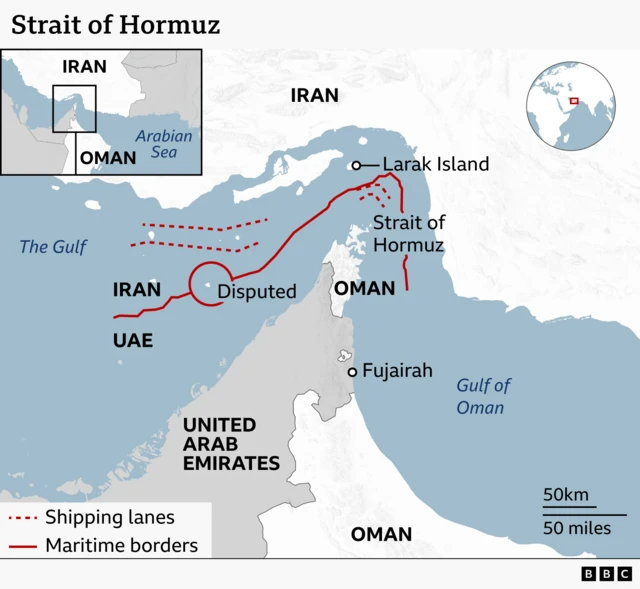
    The head of Iranian Parliament's National Security Committee, Ebrahim Azizi, has used his X account to send a message to Donald Trump, telling him: "The Strait of Hormuz will certainly reopen, but not for you; it will be open for those who comply with the new laws of Iran."

    Azizi has said the "47 years of hospitality are over forever", referring to the period since Iran’s 1979 Revolution.

    Azizi added: "Trump has finally achieved his dream of 'regime change'—but in the region's maritime regime!"

    Iran's National Security Committee has approved a plan to toll vessels crossing through the Strait of Hormuz, the semi-official Fars News Agency reported on Monday.

    An annotated map of the Strait of Hormuz that shows shipping lanes and maritime borders.
  19. Israel aims to keep security control over a swathe of southern Lebanon after war endspublished at 05:10 BST

    Israel's Minister of Defence has said a buffer zone will be set up inside southern Lebanon and that Israel will keep security control over a swathe of the territory, even after the end of the current war against the armed group Hezbollah.

    Israel Katz said the area to be occupied would go up to the Litani River - about 30km from the border with Israel. The plan has drawn criticism from the UN, European nations and Canada - who called it "a violation of territorial sovereignty".

    Katz said more than 600,000 displaced Lebanese residents would be "completely prohibited" from returning to that area until the safety of residents of northern Israel was guaranteed. He added that all the houses in Lebanese villages near the Israeli border would be demolished, "according to the model of Rafah and Beit Hanoun in Gaza".

    The BBC's Hugo Bachega in Beirut told the Global News Podcast, external what that could mean for Lebanon.

  20. Brent crude makes highest monthly gain since 1990 Gulf warpublished at 04:37 BST

    Osmond Chia
    Business reporter

    The price of Brent crude oil to be delivered in May rose by a record 64% in March - the highest monthly gain since the Gulf war in 1990.

    The global benchmark for oil is a contract to buy a barrel of Brent crude one month in the future. When this price rises, it typically pushes up fuel prices too as oil is a key component in its production.

    On Wednesday, the price of Brent for June delivery was trading 1.2% higher to $105.36 (£79.61).

    Brent's previous highest monthly gain was in 1990 during Iraq's invasion of Kuwait, which disrupted the global supply of energy and sparked fears of a broader Middle East conflict, said Alberto Bellorin from InterCapital Energy.

    These conditions mirror those seen in the ongoing conflict with Iran, which has driven up oil prices as markets take account for the heightened geopolitical risk, he said.

    Oil prices are likely to continue to rise if shipping flows remain disrupted and if the conflict does not ease, said Goh Jing Rong from the Singapore Management University.

    Meanwhile, Asian stock markets jumped this morning after President Donald Trump said the US will leave Iran in "two to three weeks".

    Japan's Nikkei 225 index gained by 4%, while the Kospi in South Korea rose by more than 6%.

    Read more here.

    A driver refuels a vehicle with unleaded petrol at a gas station in New YorkImage source, Getty Images