Trump has threatened to leave Nato before. Here's what he's said and why he probably can'tpublished at 01:19 BST
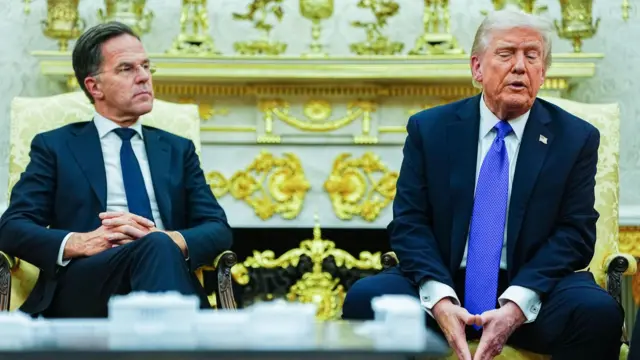 Image source, EPA
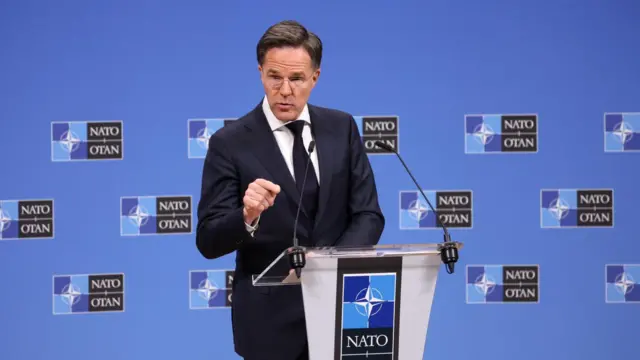
Trump has threatened to leave the Nato alliance - the defensive body that the US helped establish after World War Two.
But he has said this before.
Before the start of his first term as US president in 2017, he repeatedly dismissed Nato as a "paper tiger", described it as "obsolete", and said that it was "costing a fortune" for the US.
In 2019, he showed "clear signs" that he was "preparing to act on his threat", former Nato Secretary General Jens Stoltenberg wrote in his memoir, On My Watch.
Trump has long taken issue with Nato's military spending, showing dissatisfaction with a 2014 "guideline" that countries should spend 2% of their GDP on defence. Military spending has since ramped up by nearly all members, partly in response to Trump's threats and in part due to Russia's growing threat, writes Lyse Doucet, the BBC's chief international correspondent.
Leaving the alliance isn't up to the president alone. The president cannot unilaterally withdraw from Nato without the approval of a two-thirds Senate majority or an act of Congress.
The 2024 legislation was backed at the time by Trump's current Secretary of State Marco Rubio, who has been in near lock-step with the commander-in-chief on the Iran war.
Appearing on Fox News on Tuesday, Rubio said the US is going to have to "re-examine" whether or the alliance is "still serving that purpose". Rubio also referred to it as "a one-way street where America is simply in a position to defend Europe".
Earlier this year, Trump said Russia would have occupied all of Ukraine if the US had not acted as Nato's enforcer.
For context: After the 9/11 attacks in 2001, Nato provided large scale support to the US under Article 5, which states that an attack on one member is considered an attack against all. It was the first use of Nato military assets under Article 5.