Summary

  1. Fire now out at Kuwait airport following fuel tank strikespublished at 17:24 BST

    Kuwaiti firefighters have extinguished a massive fire that broke out in fuel tanks at Kuwait International Airport.

    There were no casualties, a government spokesperson said, and only material damage.

    The tanks were hit by drones this morning as Iran retaliated with strikes across the Gulf.

  2. Analysis

    Trump faces legislative hurdles if he tries to pull the US out of Natopublished at 17:08 BST

    Bernd Debusmann Jr
    White House reporter

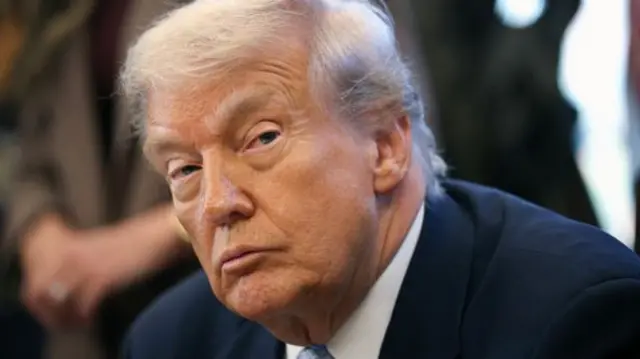
    US President Donald Trump looking to the side.Image source, Getty Images

    Trump has threatened to leave the Nato alliance before - and this time it's over what he perceives as the failure of allies to come to America's aid during the war in Iran.

    Nato is heavily reliant on the size and capabilities of the US military, and a US withdrawal could spell disaster and the end of a transatlantic alliance that has endured since the aftermath of World War Two.

    The president, however, would face significant legislative hurdles if the country were to go ahead.

    Foreseeing this possibility, in 2023 Congress approved a measure that was explicitly aimed at preventing a US president from unilaterally withdrawing the US from the alliance without congressional approval.

    Doing so would require approval of two-thirds of the Senate or a specific act of Congress - a tough, but not impossible, hill for Trump to climb.

    Notably, that measure was a bipartisan effort pushed for, in part, by then-Senator Marco Rubio.

    Now Trump's secretary of state, Rubio has recently struck a much different tone - this week he referred to Nato as a "one-way street" which the US was going to have to "re-examine".

  3. Finnish president: I've had 'constructive' talks with Trump about Iran and Natopublished at 17:05 BST

    Alexander Stubbs says he's had a "constructive discussion and exchange of ideas" with US President Donald Trump.

    In a short post on X, Finland's leader, known to be close to Trump, says the pair talked about Ukraine, Iran and Nato, which Finland is a member of.

    "Problems are there to be solved, pragmatically," Stubbs says.

    It comes hours after Trump reportedly told the Telegraph he was strongly considering pulling the US out of Nato. You can read more on that here.

    Trump and Stubbs are pictured playing golf togetherImage source, Instagram/Reuters
    Image caption,

    This photo from last year shows Trump and Stubbs playing golf at the president's Mar-a-Lago residence

  4. BBC Verify

    BBC Verify identifies tanker struck off coast of Qatarpublished at 16:57 BST

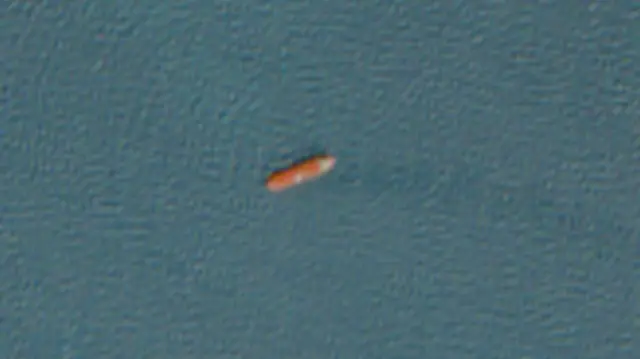
    A satellite image showing an orange ship in the seaImage source, Sentinel-2, Copernicus
    Image caption,

    A satellite image of the Aqua 1, captured on 29 March

    By Barbara Metzler and Kayleen Devlin

    BBC Verify has identified the tanker that was struck by a projectile near Qatar on Tuesday as Aqua 1.

    Maritime security centre UKMTO, which did not identify the tanker, said it was struck at 20:35 GMT (23:35 local time) north of Ras Laffan causing a fire which was later extinguished.

    BBC Verify identified Aqua 1 by checking satellite images and location data of ships in the Gulf against the description of the struck tanker. This allowed us to narrow it down and confirm it is Aqua 1, as it is the only Panama-flagged tanker in the Ras Laffan area.

    Analysis of tracking data also shows the ship increased speed shortly before it was struck.

    Qatar's Ministry of Defence said on X that three Iranian missiles were launched at the country - with one hitting a tanker while two were intercepted. All 21 crew members were evacuated without injury.

    BBC Verify has contacted Aqua 1's owners to ask for more details of the incident.

  5. Death toll in Lebanon rises to more than 1,300 - health ministrypublished at 16:50 BST

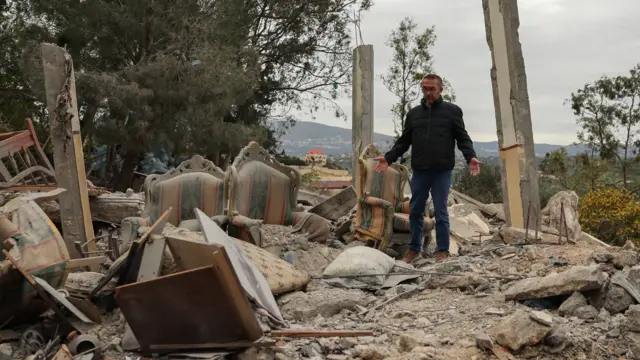
    The mayor of Houmine El Tahta, Lebanon, gestures as he inspects the site of a house destroyed by an Israeli strikeImage source, Reuters

    In Lebanon, the number of people who've died since the war started on 28 February now stands at 1,318, according to health ministry figures reported by Lebanon's state-run National News Agency (NNA).

    A further 3,935 people are reported to have been wounded - adding that 50 have died in the past 24 hours alone.

    • For context: Hezbollah joined the ongoing regional war on 2 March, sending missiles towards Israel, after the US and Israel attacked the armed group's ally Iran on 28 February. Since then, Israel has sent ground troops into southern Lebanon and launched broad strikes across the country.
  6. 'False and baseless': Iran's foreign ministry denies country has asked US for ceasefirepublished at 16:24 BST
    Breaking

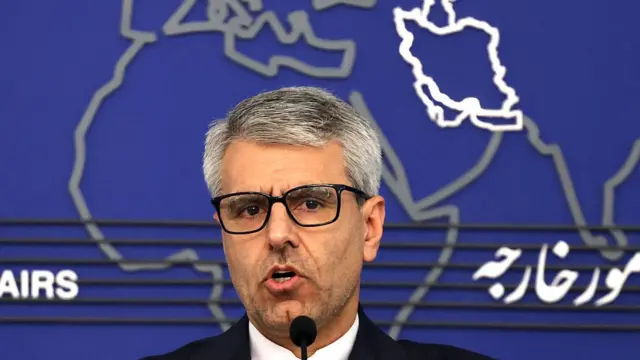
    Esmaeil Baqaei wears glasses and speaks into a microphone with a screen with a map and English and Arabic writing on it behind himImage source, AFP via Getty Images

    Iran's foreign ministry says President Donald Trump's claim that the country has asked for a ceasefire is "false and baseless".

    Iranian state TV is reporting the remarks as having been said by foreign ministry spokesman Esmaeil Baqaei.

    It comes after Trump said earlier in a Truth Social post that Iran's "New Regime President", who he did not name, had asked for a ceasefire - and that he would consider it "when Hormuz Strait is open, free, and clear".

  7. Analysis

    Unease in Israel as Trump signals the US' war with Iran may soon be overpublished at 16:15 BST

    Yolande Knell
    Middle East correspondent, in Jerusalem

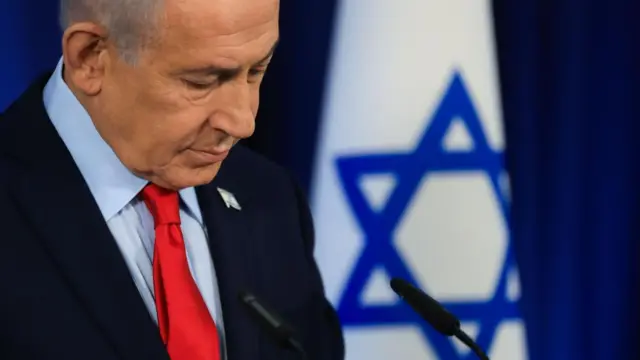
    Israeli Prime Minister Benjamin Netanyahu looks down as he speaks at a lectern with the national flag in the background.Image source, EPA

    Some commentators suggest Donald Trump's remark that the US may leave Iran "very soon" could be part of a ruse so that Iran lets its guard down before the launch of a ground invasion.

    But there is a general sense that Israel must be ready for a speedier US exit from the war than it might like.

    While key Iranian leaders are dead and Tehran’s military capabilities have been badly hit, there is an assumption that the regime will try to rebuild and will continue to pose a threat to Israel and its Gulf Arab neighbours.

    Israeli officials have suggested that beyond the end to this war, Israel will continue to carry out strategic attacks in Iran.

    Israel’s Prime Minister Benjamin Netanyahu has also dangled the possibility of new defence ties with Gulf Arab countries who have recently found themselves under attack. Currently, Israel has only normalised relations with the United Arab Emirates and Bahrain in the Gulf.

    Netanyahu said in an address on Tuesday that Israel was "forming new alliances with important countries in the region against the common Iranian threat".

  8. Explosions heard across parts of Israelpublished at 15:54 BST
    Breaking

    Joel Gunter
    Reporting from Jerusalem

    Sirens and loud booms have just been heard across parts of Israel, including Jerusalem and Tel Aviv, following what appears to be a volley of ballistic missiles fired from Iran.

    The booms were likely from interceptions by Israel’s Iron Dome system or missiles falling in unpopulated areas - no casualties have been reported.

    The missile launches come as families across Israel are preparing to mark the Jewish holiday of Passover on Wednesday evening with Seder meals - typically a time of celebration.

    There had been a brief lull in attacks here in Israel, but Iranian strikes on Tuesday night injured more than a dozen people, including an 11-year-old girl who was hit by shrapnel in the central town of Bnei Brak and is reportedly in critical condition.

  9. Six key things to know about the warpublished at 15:46 BST

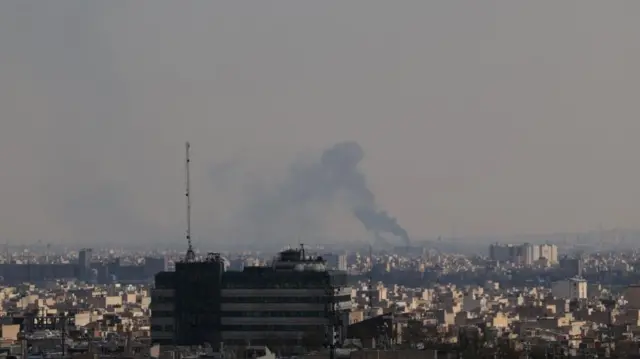
    Smoke rises following a strike, amid the U.S.-Israeli conflict with Iran, in Tehran, Iran, April 1, 2026.Image source, Reuters
    Image caption,

    Smoke rises in Tehran earlier following a reported strike on the Iranian capital

    • Sources west of the Iranian capital, Tehran, tell the BBC heavy strikes are ongoing
    • Earlier, President Donald Trump said Iran's "new regime president" - who he did not name - has asked for a ceasefire. In a post on social media, he added: "We will consider when Hormuz Strait is open, free, and clear.Until then, we are blasting Iran into oblivion or, as they say, back to the Stone Ages!!!"
    • We're yet to hear Iran's response - Trump had previously said the war in the Middle East would be coming to an end in "two to three weeks"
    • These comments, as well as some from Iranian President Masoud Pezeshkian, who said Iran had the "necessarily will to end the war", were followed by oil prices falling back to below $100 a barrel (£75)
    • However, with the Strait of Hormuz remaining closed due to the ongoing conflict, the head of the International Energy Agency (IEA) has warned that we're "heading towards a major, major disruption" with jet fuel and diesel shortages set to hit Europe hard in April
    • UK Prime Minister Keir Starmer also warned the British public about the coming months, saying they will not always "be easy"
  10. Strikes heard in Tehranpublished at 15:18 BST
    Breaking

    Ghoncheh Habibiazad
    Senior reporter, BBC Persian

    Heavy strikes are happening in Tehran right now, two sources in the west of the Iranian capital tell me.

    Iranian outlets are also reporting that new explosions have occurred there.

  11. Analysis

    European leaders hold firm that the Iran war is not theirspublished at 15:00 BST

    Katya Adler
    Europe editor

    Donald Trump’s assertion that he’s considering leaving Nato is a front page headline across European news websites, but political leaders across the continent are keeping pretty quiet.

    Why? The US leaving Nato would be catastrophic for them.

    Despite European powers - including the UK - recently talking up the idea of a "European pillar" inside the defence alliance where they would lean far less on the US and do far more for their own defence, right now the truth is that they are still hugely US dependent, when it comes to intelligence, for example, to command and control and for air defence.

    America is Nato’s biggest and most powerful member by far. Behind the scenes, Europe’s leaders are fervently hoping Trump is not about to slam the door of the defence alliance shut behind him. They believe he is more than capable of doing so. He’s made Nato-disparaging pronouncements before but was cajoled and or flattered into backing down.

    This time though, leaders across Europe, encouraged by public opinion polls at home, are holding firm and making clear that the Iran war is not "theirs" and that they don’t want to get dragged into the violence.

    Nato countries closest to Russia, such as the Baltics, Poland and Nordic nations, are anxious to see what the US president will do. Nato’s power lies in the alliance’s pledge that an attack against one member will be treated as an attack against all of them. Without the US onboard, that prospect loses a lot of weight, with a greatly diminished deterrent effect from Moscow’s point of view.

  12. UK to host meeting of 35 countries on reopening key oil shipping channelpublished at 14:58 BST

    Foreign Secretary Yvette Cooper will host a virtual meeting of around 35 countries on Thursday to discuss viable diplomatic measures for reopening the Strait of Hormuz - one of the world's busiest oil shipping channels.

    Iran has effectively blocked the strait with a mix of threats, including drones, missiles, and potentially mines, since the US and Israel attacked the country on 28 February. As a result, global energy prices have risen.

    At a Downing Street news conference earlier, UK PM Keir Starmer said the best way to address rising costs of living is to push for de-escalation and ensure the strait is reopened.

    This Flourish post cannot be displayed in your browser. Please enable Javascript or try a different browser.

  13. IRGC: Strait of Hormuz will remain closed to Iran's enemiespublished at 14:45 BST

    In Iran, the Islamic Revolutionary Guard Corps (IRGC) says the Strait of Hormuz will remain closed to "enemies of this nation".

    On state TV, the IRGC says the strait is "firmly and dominantly" under the control of the corps' naval forces.

    A short while ago, US President Donald Trump took to Truth Social and said Iran has asked for a ceasefire. He added: "We will consider when Hormuz Strait is open, free, and clear. Until then, we are blasting Iran into oblivion or, as they say, back to the Stone Ages!!!"

    Iran's yet to respond to Trump saying it's asked for a ceasefire.

  14. How well-placed is the UK economy to withstand the Iran war?published at 14:31 BST

    Dearbail Jordan
    Senior business and economics reporter

    Is the UK “well-placed” to weather the Iran war, as Prime Minister Keir Starmer suggests?

    Let’s have a look at some key economic figures to see just how storm-proof we really are.

    Before we get to all that, bear in mind that none of the most up-to-date official data we have includes the period covering the conflict, which began on 28 February.

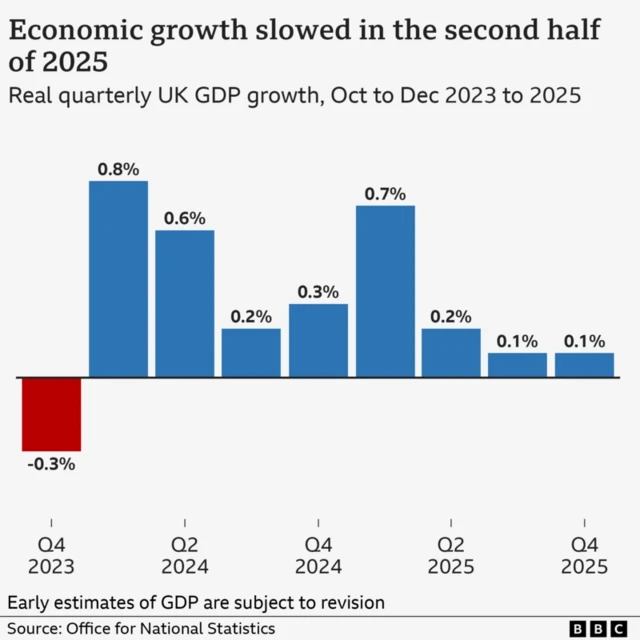
    So, first things first, the British economy. Between October and December last year, the UK expanded by just 0.1%, according to the Office for National Statistics.

    In January, there was 0% growth.

    How about inflation? In the year to February, the pace of price rises held steady at 3%, close to the Bank of England’s 2% target.

    The Bank had expected inflation to fall back to its target in spring. Now, it stands ready to lift interest rates if an energy shock sends inflation sharply higher.

    What does the jobs market look like? Well, the unemployment rate was 5.2% between November and January – that’s a five-year high.

    It will still be some time before we get a proper readout of how the UK economy has responded to the Iran war.

    A chart showing UK GDP from the last quarter of 2023 up until the last quarter of 2025
  15. Strike appears to hit former US embassy in Iranpublished at 14:24 BST

    The US former embassy in Tehran appears to have been hit in the strikes from the US and Israel on Wednesday.

    Part of the complex's outer walls have been damaged, according to AFP news agency.

    Washington and Tehran have had no diplomatic ties since the embassy was siezed and more than 50 people were held hostage for 444 days during the Iranian Revolution in 1979.

    The embassy building is now a museum.

  16. Who has asked Trump for a ceasefire?published at 14:20 BST

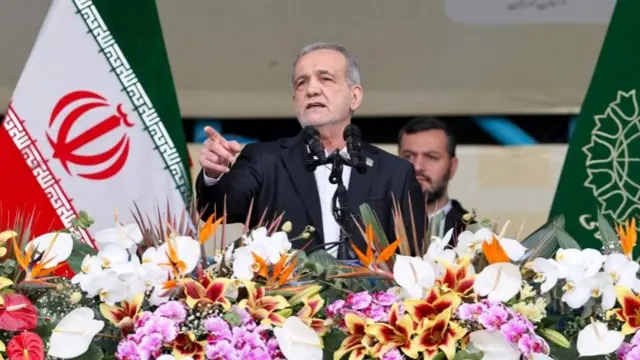
    Masoud Pezeshkian has been Iran's president since 2024 - it's not clear if he is the person Trump was referring toImage source, WANA/Reuters
    Image caption,

    Masoud Pezeshkian has been Iran's president since 2024 - it's not clear if he is the person Trump was referring to

    Trump says "Iran's New Regime President" has asked him for a ceasefire.

    It is not clear who he is referring to.

    Since the US and Israel began air strikes on Iran on 28 February, a number of senior Iranian leaders have been killed, including the country's Supreme Leader Ayatollah Ali Khamenei.

    He was succeeded by his son, Mojtaba Khamenei, on 8 March. He has issued a number of written statements since then but not appeared in public. Trump himself has said he doesn't know if he is alive.

    Iran does not have a new president. Masoud Pezeshkian, who was elected in 2024, has appeared in public - most recently yesterday, according to Iranian media. He said yesterday that Iran had the "necessary will" to end the war.

    Iran has denied Trump assertions that it is involved in negotiations to end the war, saying only some messages have been exchanged with the US through intermediaries.

  17. Trump says Iran has asked for a ceasefirepublished at 13:54 BST
    Breaking

    Donald Trump says "Iran's New Regime President" has asked the US for a ceasefire.

    In a statement on Truth Social, he does not mention the top official by name, but describes the individual is "much less Radicalized and far more intelligent than his predecessors".

    He adds: "We will consider when Hormuz Strait is open, free, and clear. Until then, we are blasting Iran into oblivion or, as they say, back to the Stone Ages!!!"

  18. Five ballistic missiles launched by Iran, says United Arab Emiratespublished at 13:51 BST

    The United Arab Emirates (UAE) says five ballistics have been launched from Iran today.

    There have also been 35 drone attacks, says the update by the country's ministry of defence.

    This brings the total number of ballistic missiles launched from Iran to 438, and drone attacks to 2,012, it adds.

    Iran's retaliatory attacks against US allies in the Gulf have continued unabated since the beginning of the US and Israeli strikes on 28 Februry.

    In the UAE alone, two members of the country's armed forces have been killed since then, in addition to one military contractor and nine civilians, the latest briefing says.

  19. Iran's supreme leader - not seen in public since succeeding his father - reaffirms support for Hezbollahpublished at 13:33 BST

    Ghoncheh Habibiazad
    Senior reporter, BBC Persian

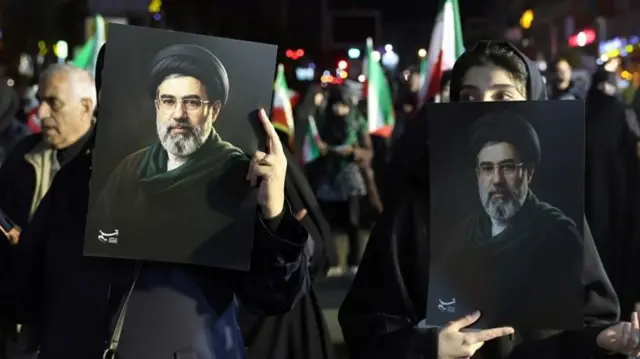
    Iranian people hold posters of new supreme leader Mojtaba Khamenei during a rally in support for the military in Tehran on 25 MarchImage source, EPA
    Image caption,

    Iranian people hold posters of new supreme leader Mojtaba Khamenei during a rally in support for the military in Tehran on 25 March

    In his latest written message, Iranian Supreme Leader Mojtaba Khamenei reaffirms support to the leader of Lebanon's Iran-backed armed group Hezbollah, Naim Qassem.

    The message also expresses "appreciation for Hezbollah’s condolences" following the killing of former Supreme Leader Ali Khamenei, Mojtaba Khamenei’s father, on 28 February - the first day of US and Israeli strikes.

    Mojtaba Khamenei has not been seen in public or featured in Iranian media since succeeding his father on 8 March.

    Israel, however, had previously vowed, both before and after his succession, that he would be a target.

    US President Donald Trump said that Mojtaba Khamenei was "either dead or in very bad shape, because no one has heard from him".

    Meanwhile, Iran’s ambassador to the United Nations in Geneva said that Khamenei’s absence from public view was due to "security considerations".

  20. Jet fuel and diesel shortages to hit Europe hard in April, warns energy agency chiefpublished at 13:29 BST

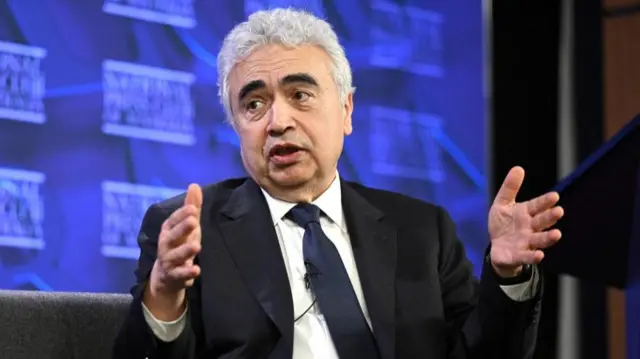
    Fatih Birol speaks in a file photoImage source, Reuters

    "We are heading towards a major, major disruption." That's what Fatih Birol, the head of the International Energy Agency (IEA), is warning.

    He tells the In Good Company podcast that shortages of jet fuel and diesel will soon be felt in Europe.

    "April will be much worse than March", he says, because there were still be some cargoes of oil and gas arriving at ports around the world that had been loaded up before war broke out.

    "In April, there is nothing," he says, estimating that the loss of oil "will be twice the loss of oil in March".

    Describing shortages of jet fuel and diesel as "the biggest problem today", Birol says that "we are seeing [the shortages] already in Asia", but this supply issue will "soon" be felt in Europe.