Summary

Media caption,

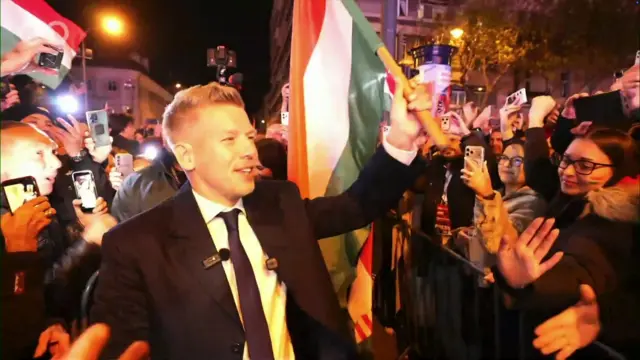
Watch: Péter Magyar tells huge crowd "we did it" as his party heads for election win

  1. Backing from Trump and Putin couldn't prevent election wipe-out for Orbánpublished at 01:27 BST

    Sean Seddon
    Live reporter

    With just shy of 99% of the votes counted, Hungary's opposition is on course to win two thirds of all the seats in parliament - the type of landslide victory that means they will be able to make sweeping changes to the country.

    In doing so, Viktor Orbán, the man who has dominated Hungary's politics for 16 years, has been removed from office, the scale of the defeat so clear he conceded before counting had really even got going.

    We are pausing our live coverage now but you can read more about this story elsewhere on the BBC News website. And below you can see analysis from BBC reporters in Hungary and around the world about what this election result means.

  2. After 16 years, the Orbán experiment is overpublished at 01:15 BST

    Nick Thorpe
    Central Europe correspondent, in Budapest

    What Viktor Orbán did for the last 16 years in power was an experiment - but even he didn’t know what to call it.

    "Illiberal democracy" sounded too negative. His American friends liked to call it "national conservatism", which sounds better, but it was never strictly true, because unlike most conservatives, Orbán was a rebel, he constantly radicalised himself - so what could he conserve?

    He portrayed himself as an "anti-globalist" but invited German car makers and Chinese and South Korean EV battery makers to Hungary.

    He painted himself as the champion of national sovereignty, but refused to stand up for Ukrainian sovereignty against Russia.

    He railed against immigration, but quietly encouraged immigration to build his new factories.

    One year after winning a two-thirds majority in 2010, he wrote a new constitution, reshaping Hungary in his own image, to suit his own party.

    He pushed through one law after another, to change the structure of the courts, the electoral system, and the economy.

    But on Sunday, Hungarians decisively told him: "We don't want to be experimented on any longer."

  3. Who is Péter Magyar? The insider-turned-rebel who will be Hungary's new prime ministerpublished at 00:58 BST 13 April

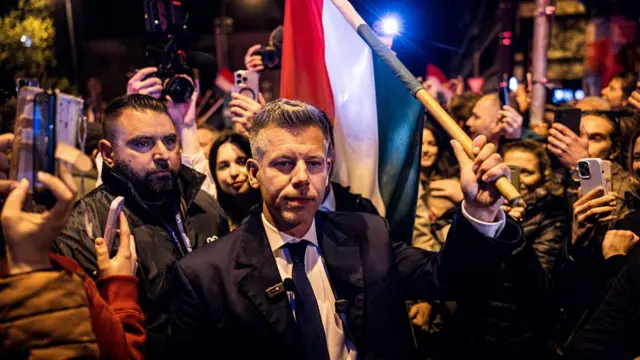
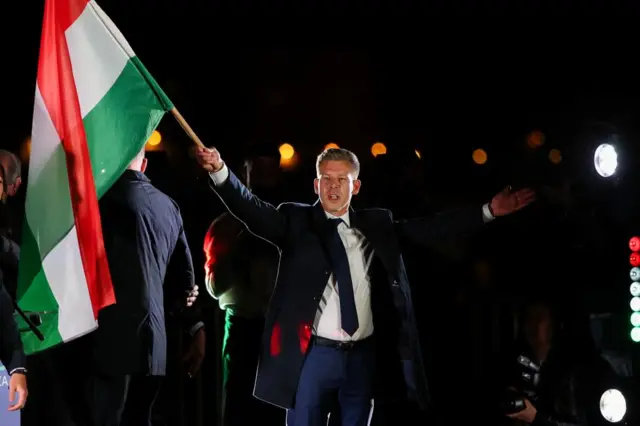
    Peter Magyar, leader of the Tisza party, carries a Hungarian flagImage source, Getty Images

    Péter Magyar is set to replace his former ally Viktor Orbán as prime minister of Hungary after pulling off a massive election win.

    The 45-year-old became interested in politics from an early age and studied law at a Catholic university in Budapest, before joining Orbán's Fidesz party shortly after it lost power in 2002.

    He was an important behind-the-scenes figure within the group for over two decades, despite being little known to the wider public.

    But in 2024, Magyar stunned Hungarians by publicly breaking with it following a sex abuse scandal over which his ex-wife, Hungary's former justice minister, was forced to resign.

    Magyar says he never planned to become a mainstream political figure.

    But driven by what he saw as corruption and anti-democratic policies, he announced he would launch a new political movement under the Tisza banner to challenge Fidesz, despite sharing some of its conservative leanings.

    Over the last two years, he has built a wide support base by touring the small towns and villages where Fidesz traditionally dominates, giving up to seven speeches a day - and on Sunday, it was transformed into a landslide victory.

  4. Orbán bet everything on the Ukraine war - and it cost himpublished at 00:34 BST 13 April

    Rita Palfi
    BBC World Service, in Budapest

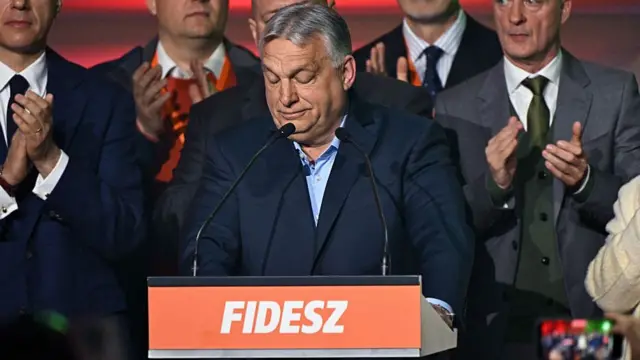
    Viktor Orban looks down as he stands behind a podium on stageImage source, Getty Images

    Hungary’s 2022 election took place just weeks after Russia launched its full‑scale invasion of neighbouring Ukraine.

    In that anxious moment, Prime Minister Viktor Orbán’s governing party Fidesz successfully weaponised a remark made by the opposition’s then challenger, suggesting it might be conceivable to send Hungarian troops or weapons to Ukraine.

    Fidesz secured a two‑thirds majority, and Ukraine has played a central role in the party’s political messaging ever since. The core campaign narrative remained unchanged in the run‑up to the 2026 election, which Fidesz framed as a choice between war and peace.

    However, Hungarian voters were no longer sufficiently afraid the country could be drawn into the conflict: according to polls by independent political research institute Policy Solutions, the number of Hungarians who fear they could be dragged into the war has halved in recent years.

    Even in the region of Hungary which directly borders Ukraine, the opposition outperformed Fidesz.

    In the final weeks of the campaign, Fidesz attempted to shift its message towards government‑provided benefits, capped fuel prices and low household utility costs.

    But by that stage, Péter Magyar and his party were clearly setting the political agenda, forcing uncomfortable issues into the public debate and dictating the pace of the campaign.

  5. Orbán's defeat is very bad news for Vladimir Putinpublished at 23:57 BST 12 April

    Steve Rosenberg
    Russia editor

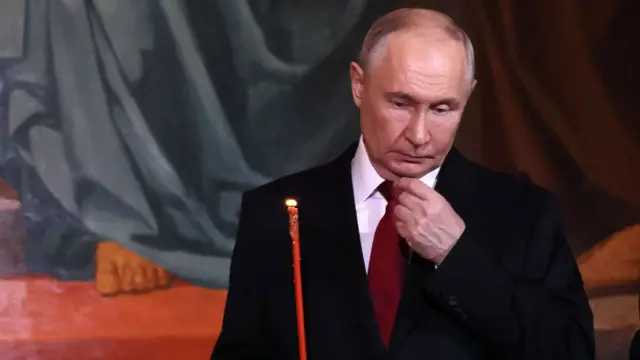
    Vladimir Putin holding a candleImage source, Getty Images

    There has been no official reaction yet from Moscow to this election, but it's clearly bad news for Vladimir Putin - very bad news.

    To use the same kind of language that Donald Trump uses about cards: Who's got the cards? Who hasn't got the cards?

    For years, Viktor Orbán has been a super-strong card in Putin's hand, a kind of trump card. A pro-Moscow, pro-Russia, pro-Putin leader of an EU country, of a Nato member state, who opposed further sanctions against Russia.

    He opposed further assistance for Ukraine and the idea of it becoming a member of the EU.

    This is why Orban was so useful to the Kremlin: it saw him as a destabilising force within the EU.

    Now he's gone. We could see attempts by the Kremlin to reach out to the new administration in Budapest, and Russian authorities probably think they have a few cards still to play regarding Hungary.

    Under Orbán, Hungary became very dependent on Russian energy. That situation isn't going to change overnight and neither will attempts by the Kremlin to destabilise the situation inside the EU.

    Over the last few months, Russian commentators have been predicting that if the economic situation in Europe gets worse, the energy situation becomes more complicated, destabilisation could be unavoidable.

  6. The party is in full swing in Budapest nowpublished at 23:29 BST 12 April

    Rajini Vaidyanathan
    BBC presenter, in Budapest

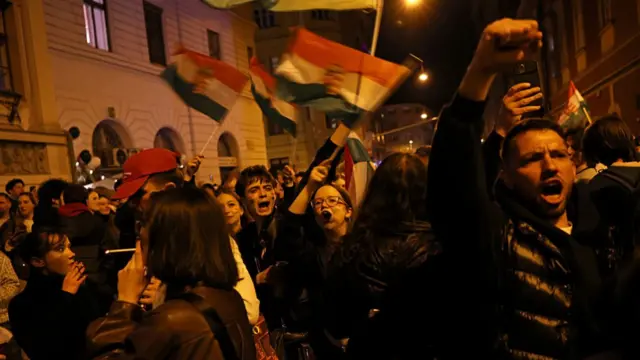
    Opposition supporters celebrate in BudapestImage source, Getty Images

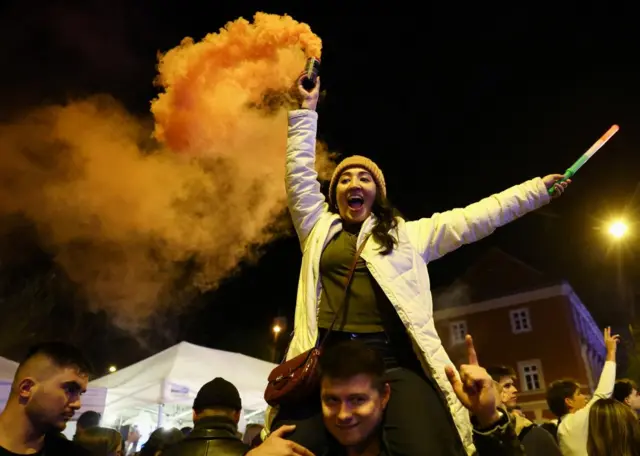
    This has turned into a party now - people are dancing in the streets as the celebrations go late into the night in Budapest.

    Some were even dancing up on the stage as Péter Magyar finished his victory speech.

    The smell of smoke from flares is mixed in with the smell of champagne and beer hanging in the air.

    Everyone I’ve spoken to among the crowd has said the relationship between Hungary and Russia was what defined their vote.

    “I’m finally proud to be Hungarian,” one woman told me.

    A woman lighting a flare while on someone's shoulders in BudapestImage source, Reuters
  7. Hungary has made history, says Magyar, looking to futurepublished at 23:10 BST 12 April

    Paul Kirby
    Europe digital editor, in Budapest

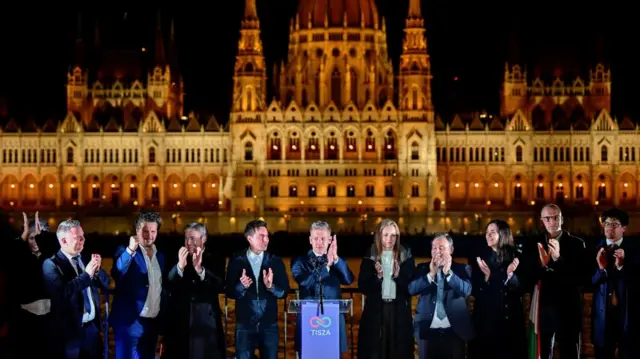
    Standing on a stage beside the Danube, overlooking Hungary's magnificent parliament building on the other side of the river, Péter Magyar's speech looked almost choreographed.

    Magyar has been addressing Hungarians this way, in town squares and cities for two years, but tonight he went national and global with a stirring message that harked back to President John F Kennedy.

    "Today we won because the Hungarian people didn't ask what their country could do for them, but what they could do for their country," he told his supporters, who chanted back "Ria-Ria-Hungaria".

    Magyar compared the ousting of Viktor Orbán to the Hungarian revolution in 1848 and the 1956 uprising against the Soviet Union.

    Condemning what Orbán's government had done to the economy, healthcare, child protection and law enforcement, he said the system that took over Hungary and its institutions was finished.

    "It's over, it's over," the crowd chanted, as Magyar offered a hand of reconcilation in a bid to unify Hungarians.

    "Let this be a victory be a victory for all Hungarians."

  8. Zelensky welcomes Magyar's victory as shaky war truce formally endspublished at 22:55 BST 12 April

    Sarah Rainsford
    Eastern Europe correspondent, in Kharkiv, Ukraine

    From Ukraine, Volodymyr Zelensky has sent his congratulations to Péter Magyar and his party "on their resounding victory”, writing on X that a “constructive approach” had prevailed.

    Zelensky said Ukraine was ready for cooperation and good relations.

    His foreign minister, Andrii Sybiha, called the vote a “turning point” for Hungary and welcomed the chance to “open a new chapter” in relations.

    Behind the calm diplomatic tone lies great relief here at this result.

    Orbán’s Hungary has been the most pro-Russia country in the EU - a “spoke in the wheels” as one man put it to me tonight, regularly blocking EU loans and aid to Kyiv, as well as sanctions on Moscow.

    But in the fifth year of a relentless war, Ukraine needs all the allies it can get.

    News of Orbán’s ousting broke shortly before the end of a short Easter truce in Ukraine, which was violated hundreds of times, and just as the air raid sirens went off again here in Kharkiv to warn of another incoming attack drone from Russia.

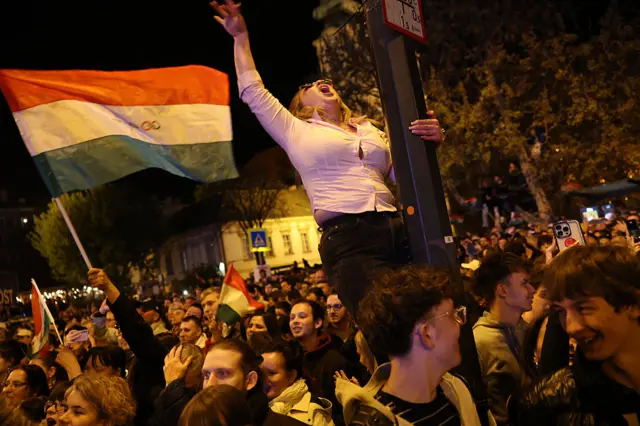
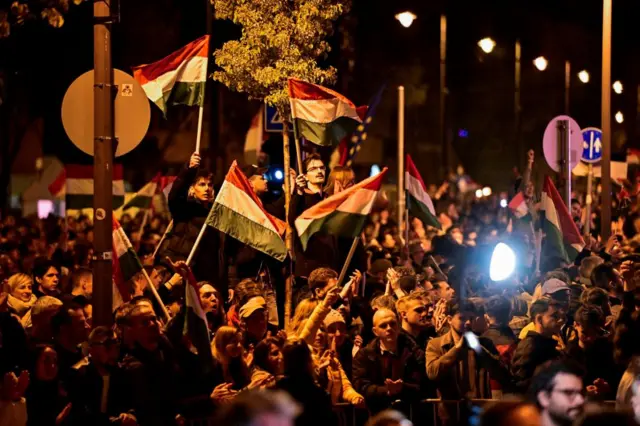
  9. Opposition supporters flood into streets of Budapestpublished at 22:43 BST 12 April

    A woman celebrating while climbing a lamppostImage source, Getty Images
    Image caption,

    There have been wild scenes of celebration in Budapest tonight after opposition party Tisza swept to power

    A crowd in BudapestImage source, Reuters
    Image caption,

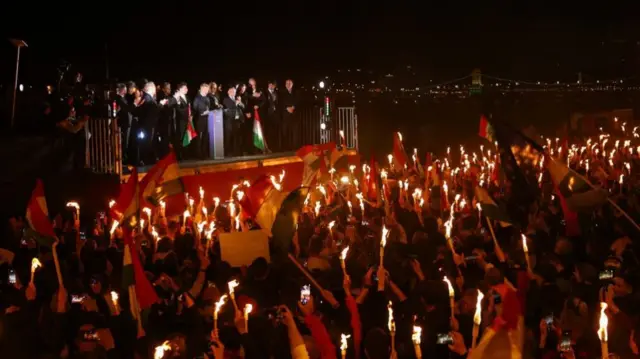
    A huge crowd gathered in the capital to hear Péter Magyar give his victory speech, waving Hungarian and EU flags

    Peter Magyar waving a flagImage source, Reuters
    Image caption,

    Magyar and his supporters danced and waved flags on stage, with Tisza on course to win a super-majority in parliament

  10. Tisza on course for a comfortable two-thirds majoritypublished at 22:43 BST 12 April

    Rita Palfi
    BBC World Service, in Budapest

    We are now at 96.37% of the votes counted and Tisza is projected to have 138 seats, Fidesz 55 seats and Our Homeland on six.

    Tisza is in the lead in 93 constituencies, while Fidesz is ahead in 13.

    Some votes are yet to be counted but a landslide victory is all but certain.

  11. Orban's puppets must go from Hungary's institutions, says Magyarpublished at 22:15 BST 12 April

    Zsofia Paulikovics
    BBC World Service

    Peter MagyarImage source, Reuters

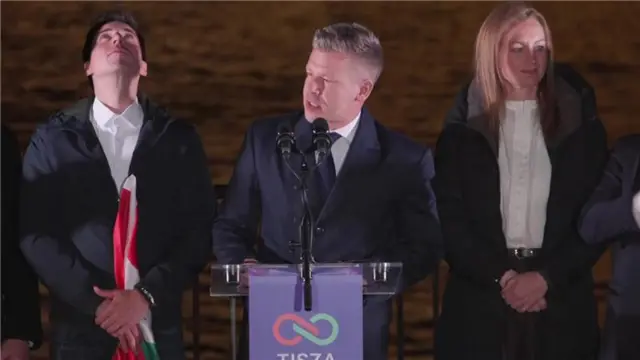
    Hungarians have said "yes to Europe" with this vote, Magyar says.

    The new government has a great task ahead, he tells the huge crowd, and calls on them to celebrate peacefully tonight, before beginning the "healing" of the country tomorrow.

    He says his party will work every day to earn the trust that was given to them with this victory.

    Magyar also calls on Viktor Orbán not to take any action between now and formally leaving office which would obstruct the job of the new government when it is formed.

    He says the "puppets" of the Orbán government must go and the institutions of the state have to change.

    Checks and balances will be restored, he vows, telling supporters he will restore Hungarian democracy.

    As he speak, the crowd chants "Europe".

    He says Hungary "will no longer be a country without consequences", adding that those who "stole from the country have to face consequences".

  12. Crowds chanting 'Russians go home' at Magyar victory rallypublished at 22:03 BST 12 April

    Zsofia Paulikovics
    BBC World Service

    A crowd hold torches as Peter Magyr gives a speechImage source, Reuters

    Magyar says his victory isn't one party triumphing over another, but Hungarians triumphing over those oppressing them.

    He says Hungary wants to be a European country again, as the crowd breaks into chants of "Russians go home".

  13. 'Love won today, because love always wins'published at 21:54 BST 12 April

    Zsofia Paulikovics
    BBC World Service

    Magyar, surrounded by Tisza officials on a platform, claps on a platform as the Hungarian Parliament Building is seen in the backgroundImage source, Reuters

    Magyar tells the crowd that never in the history of democratic Hungary has there been as many people voting.

    He goes on: "Tisza did not just win the election - all signs post to a strong two-thirds majority at the National Assembly. This means a peaceful, efficient transfer of power."

    Magyar says the Orbán regime used all it had to try to stop Tisza, claiming the intelligence service was used against his party, and that with his victory "truth triumphed over lies".

    He goes on to say "love won today, because love always wins", and thanks Hungarians for "not being afraid".

  14. Magyar says election win has 'liberated' Hungarypublished at 21:49 BST 12 April

    Zsofia Paulikovics
    BBC World Service

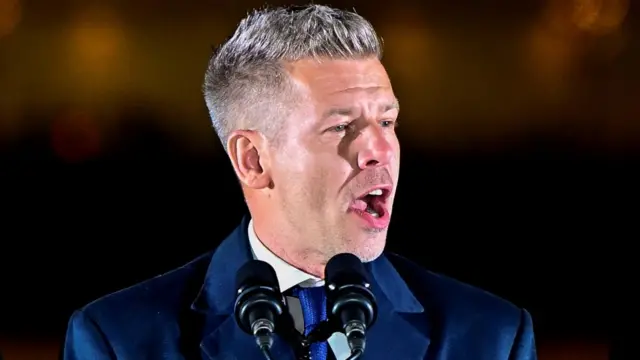
    Magyar, who has greying hair in a short back and sides style and wears a suit and tie, speaks into mic on a lecternImage source, Reuters

    "We did it," Magyar says to cheers from the crowd in Budapest, adding: "Tisza and Hungary won these elections."

    He goes on: "Together, we liberated Hungary and got rid of the Orbán regime."

    Magyar says it could not have been done without the people.

  15. Magyar to give victory speech to huge crowd in Budapestpublished at 21:44 BST 12 April

    Zsofia Paulikovics
    BBC World Service

    Peter Magyar waving a Hungarian flagImage source, Reuters

    Péter Magyar is about to give his victory speech in front of a huge crowd which has gathered in the capital.

    He is walking through the jubilant mass of people carrying a Hungarian flag, as supporters hold torches in the air.

    We'll bring you his words shortly.

  16. Starmer hails 'historic moment for European democracy'published at 21:42 BST 12 April

    Keir Starmer has congratulated Peter Magyar, the man set to be Hungary's new prime minister, calling his election victory an "historic moment, not only for Hungary, but for European democracy".

  17. European leaders congratulate Péter Magyar on decisive winpublished at 21:34 BST 12 April

    Rita Palfi
    BBC World Service, in Budapest

    A chorus of European leaders have welcomed Péter Magyar's victory that brings an end to Viktor Orbán's 16-year era - and it's not surprising, as Orbán angered many of them by reneging on an agreement to lend tens of billions of euros in aid to Ukraine.

    His veto on the aid was widely seen as an election ploy, and under Magyar it's unlikely to last long.

    "Europe’s heart is beating stronger in Hungary tonight," European Commission President Ursula von der Leyen wrote on social media. "Hungary has chosen Europe. Europe has always chosen Hungary".

    “Hungary has spoken,” said Chancellor of Germany Friedrich Merz, who looked forward to working with Péter Magyar, "toward a strong, secure, and above all united Europe".

    Pedro Sánchez of Spain said "today Europe wins and European values win, while French President Emmanuel Macron welcomed what he called Magyar's "victory of democratic participation, the Hungarian people’s commitment to the values of the European Union, and Hungary’s commitment to Europe".

  18. A two-thirds majority is on the cards for Magyarpublished at 21:11 BST 12 April

    Paul Kirby
    Europe digital editor, in Budapest

    Péter Magyar has completed his first task - that's winning the election.

    But if he is going to reverse the system of cronyism and corruption that has dogged Hungarian society during 16 years of Viktor Orbán’s Fidesz government, then he needs to win two thirds of the seats in the Hungarian parliament.

    He is currently on course to do that. With 81.49% of the vote counted, his Tisza party is on course for 137 seats - five more than the 133 he needs for a constitutional majority.

    Magyar is at heart a conservative, but he has brought under his wing a broad spectrum of Hungarians, so the government he will form will include health and education specialists and economists whose main task is to fix the chronic problems that have emerged in the schools and hospitals and the broader economy.

    Without those 133 seats in parliament, they cannot change the constitution, and will be limited in what they can achieve.

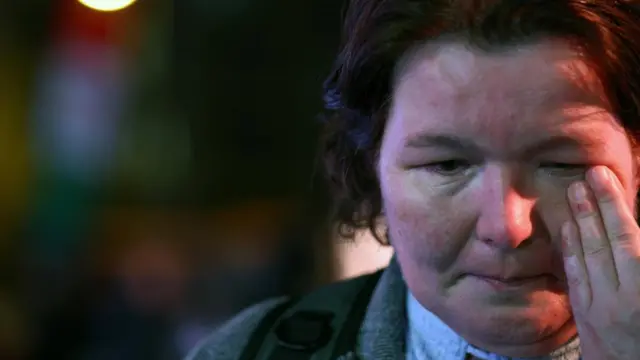
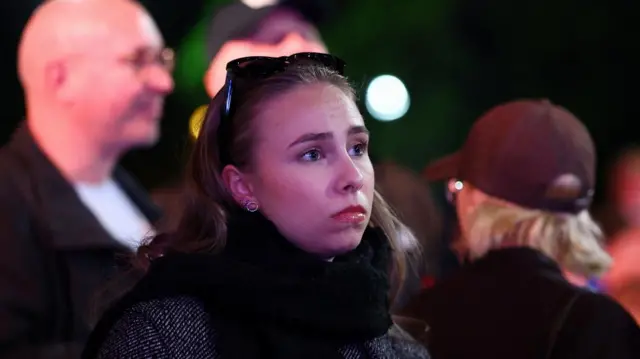
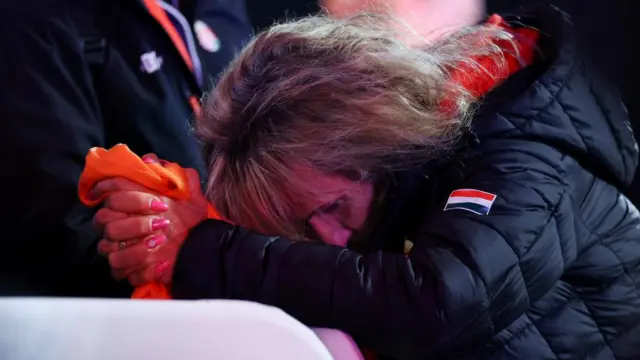
  19. Fidesz supporters in despair as scale of election defeat becomes clearpublished at 20:55 BST 12 April

    A woman wipes away a tear following Viktor Orbán's speech, during which he conceded to his opponent Péter MagyarImage source, Reuters
    A woman pouts her lip in a crowd of people following the partial results of the Hungarian parliamentary electionImage source, Reuters
    A woman clasps her hand together and bows her head following the partial results of the Hungarian parliamentary electionImage source, Reuters
  20. An astonishing victory that will be watched around the worldpublished at 20:51 BST 12 April

    Nick Thorpe
    Central Europe correspondent, in Budapest

    Orbán has led Hungary almost unchallenged for 16 years.

    A short while ago, he rang his rival Péter Magyar, the leader of the opposition Tisza Party, to concede.

    He congratulated him on his victory and then, surrounded by gloomy-faced leading members of his party Fidesz, he announced his party’s defeat to his supporters.

    On the other side of the River Danube in Tisza headquarters, party workers hugged each other, while the crowds on the shore of the river began to celebrate.

    The margin of victory looks huge - big enough to secure a two-thirds majority in the new parliament for Tisza.

    This is an astonishing victory for a centre-right party only founded two years ago and a serious blow to national populists - not just here in Hungary, but across Europe.