Summary

  1. Israel and Hezbollah exchange strikes in southern Lebanonpublished at 15:01 BST
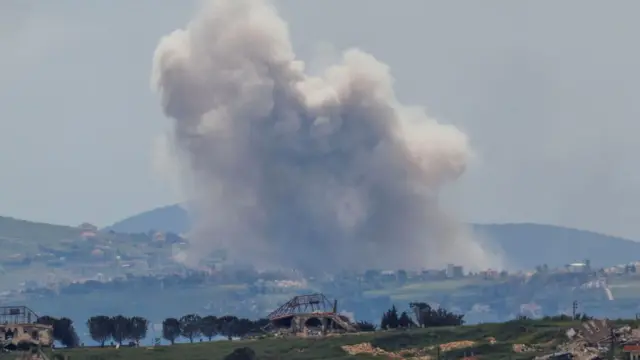
    Smoke rises in the distance of a countryside view, with mountains in the background and trees in the foregroundImage source, Reuters
    Image caption,

    Smoke seen rising from southern Lebanon

    While questions remain over whether the US and Iran could reach a deal to end the war, the Israeli Defense Forces (IDF) has said it is continuing to strike Hezbollah targets in southern Lebanon.

    In an update earlier today, the IDF said two of its soldiers were injured by two explosive drones in the region, which it says were launched by Hezbollah.

    Several posts from today in a Telegram group affiliated with Hezbollah said the group has targeted Israeli forces in southern Lebanon.

    Lebanon's health ministry also says four people have been killed and five wounded in an Israeli attack in the southern town of Zilaya, in the Western Beqaa district, reports the country's National News Agency.

    The town was included in an evacuation warning from IDF spokesperson Avichay Adraee earlier today.


  2. Analysis

    Is the Iran war nearly over?published at 14:12 BST

    Frank Gardner
    Security correspondent

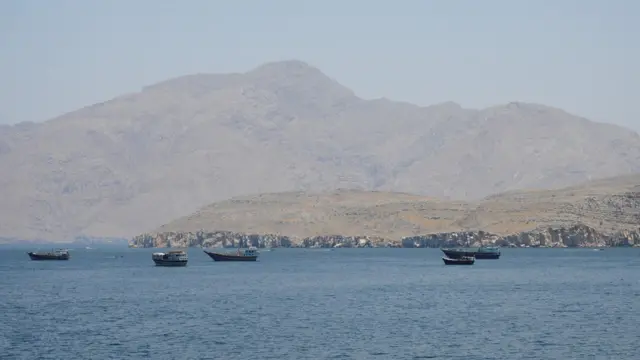
    Vessels in the Strait of Hormuz on Wednesday, May 6Image source, Reuters

    Not yet, but the signs today are perhaps more encouraging than they have been for days.

    Both Iran and the US want a permanent end to hostilities, but on their terms, which have, until now, been too far apart for compromise. That may be about to change.

    President Trump has tried repeatedly to use military force to persuade Iran to do what he wants.

    Initially, this meant joining Israel in a war of choice on 28 February "to prevent Iran from acquiring a nuclear weapon", a goal Tehran has always denied pursuing.

    More recently, the US imposed a naval blockade on Iran’s Gulf ports in an unsuccessful bid to break Iran’s chokehold on the Strait of Hormuz.

    When that failed, the US announced "Project Freedom" to help ships pass through the strait.

    Maritime experts say this has no chance of succeeding as long as Iran can threaten shipping. It has now been paused.

    A US-Iran deal then, is possibly the only viable way out of this damaging standoff in the Gulf.

  3. IRGC hints at Strait of Hormuz reopening if 'threats' endpublished at 13:42 BST

    Iran’s Islamic Revolutionary Guard Corps (IRGC) Navy has released a statement, alluding to the Strait of Hormuz reopening if there is an "end of the aggressors' threats".

    While it's not immediately clear what the statement means, the IRGC thanks vessel owners for their "cooperation in transiting through the Strait of Hormuz in accordance with Iranian regulations".

    The statement adds: "With the end of the aggressors' threats and in the shadow of new procedures, the possibility of safe and sustainable passage through the Strait will be provided."

    It comes hours after US President Donald Trump announced that Project Freedom - a US operation intended to safely escort ships through the strait - has been paused.

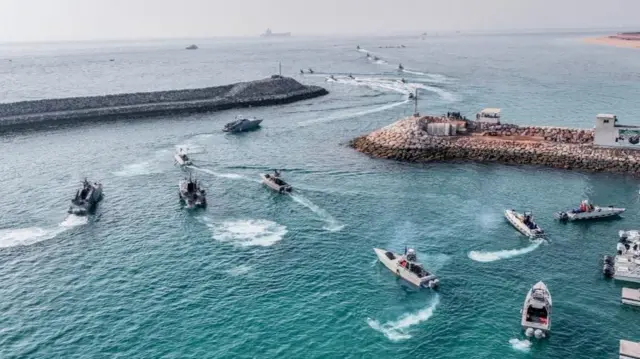
    Around a dozen small speedboats are shown departing from an Iranian port.Image source, Wana News Agency via Reuters
    Image caption,

    IRGC Navy speedboats during an exercise in 2023. The speedboats have played a key role in Iran's ability to threaten shipping in the Strait of Hormuz

  4. Analysis

    A night and morning of twists and turns at the White Housepublished at 13:24 BST

    Bernd Debusmann Jr
    White House reporter

    Donald Trump's announcement that Project Freedom was being put on hold yesterday caught many by surprise - particularly after top officials spent the day discussing the plan and its goals.

    Soon after, reports in Axios and Reuters suggested that a framework of a deal was right around the corner, which would have marked a significant milestone for the US president.

    But now, Trump appears to himself be cautioning that a deal may well not come soon.

    In his most recent Truth Social post, Trump says that any agreement by the Iranians is "a big assumption" and that a failure to come to a deal will result at bombardments "at a much higer level and intensity" than was the case during Operation Epic Fury.

    We don't know much about the president's thinking on where things stand. It may well be that Project Freedom was, in part, an effort to calm panicky global markets with a promise of renewed freedom of commerce and navigation in the Strait of Hormuz.

    But as things stand, the situation remains very similar to what it was last week, with more than 1,000 ships still stuck in the Gulf.

    The plight of the majority of the sailors on those ships remains unchanged, despite Project Freedom's stated objective of coming to their aid.

    • There are different estimates for how many ships and sailors are stranded; a Pentagon briefing on Tuesday said there were 22,500 mariners stuck on 1,550 vessels, while the BIMCO (Baltic and International Maritime Council) shipping association told the BBC today there were about 1,000 stranded ships with some 20,000 seafarers on board.
  5. Trump: Deal could end war and US blockade, but 'higher level' bombing if Iran doesn't agreepublished at 12:56 BST

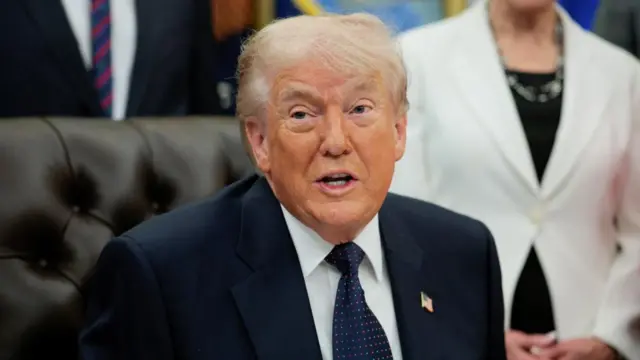
    Trump speaks at the White HouseImage source, Reuters

    US President Donald Trump has posted on social media about the latest developments between the US and Iran.

    On his Truth Social platform, he says the Iran war and blockade could end with a deal, but bombing could intensify if Iran doesn't agree to one.

    If Iran "agrees to give what has been agreed to" - which he describes as "a big assumption" - then Operation Epic Fury will be at an end, he says.

    Trump adds the US Blockade would also "allow the Hormuz Strait to be OPEN TO ALL, including Iran".

    The president also threatens that bombing will resume if Iran doesn't agree to a deal, "and it will be, sadly, at a much higher level and intensity than it was before".

    • As we heard earlier, Axios is reporting that the White House believes it is close to a memorandum of understanding with Iran on ending the war
  6. To and fro over the strait - how Trump's 'Project Freedom' played outpublished at 12:26 BST

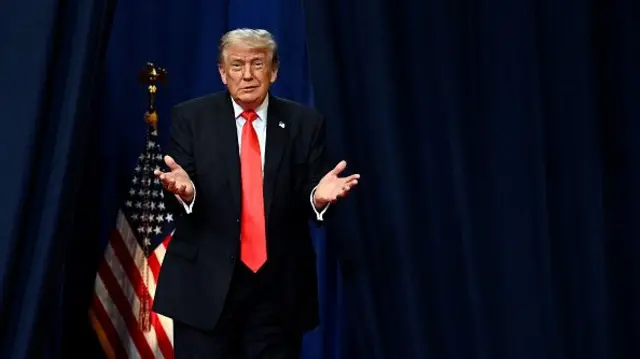
    Donald Trump makes a weighing up gesture with his hands, standing on a stage.Image source, Getty Images

    Claim, counterclaim and denial ensued after President Donald Trump announced "Project Freedom". Now it's been paused, let's revisit how two days of confusion played out.

    Trump announces: The US would begin a military operation to "guide" trapped ships out of the Gulf, he writes in a Truth Social post late on Sunday. More than 15,000 service members and 100 aircraft will support the plan, US Central Command (Centcom) says.

    Iran responds: In a statement on Monday, Tehran's central command says that Iran has full control of the strait, and threatens to target "any foreign armed force" that tries to approach or enter.

    US military claims success: Centcom says later on Monday that two US-flagged merchant vessels "successfully transited" through the strait.

    Pushback from Iran: The Islamic Revolutionary Guard Corps (IRGC) calls the report about the two US vessels "outright lies". It also separately says it fired against "hostile enemy destroyers" in the strait after the Americans "disregarded" warnings. Centcom denies this.

    Trump says the US sinks several Iranian 'small boats': Centcom later on Monday adds that these were destroyed with helicopters. Iran doesn't comment.

    One ship confirms exit: Shipping company Maersk confirms to the BBC that one of its vessels exited the Gulf that day, accompanied by the US military, late on Monday evening.

    Iran warns US: Also late on Monday evening, Iran's foreign minister says the US "should be wary" of being dragged "back into a quagmire".

    US claims shipping lane 'is clear': "No, the ceasefire is not over", US Defence Secretary Pete Hegseth tells a Tuesday press conference. The "lane is clear" in the strait, he says, and Iran is "embarrassed" by the passage of two ships.

    Trump announces 'Project Freedom' pause: He says the operation is on hold following "great progress" in talks with Iran, in a Truth Social post on Tuesday evening. His comments follow an announcement from Secretary of State Marco Rubio that Operation Epic Fury - the joint US-Israeli offensive against Iran - is over.

  7. BBC Verify

    What’s known about French ship struck in Strait of Hormuz?published at 12:05 BST

    By Paul Brown

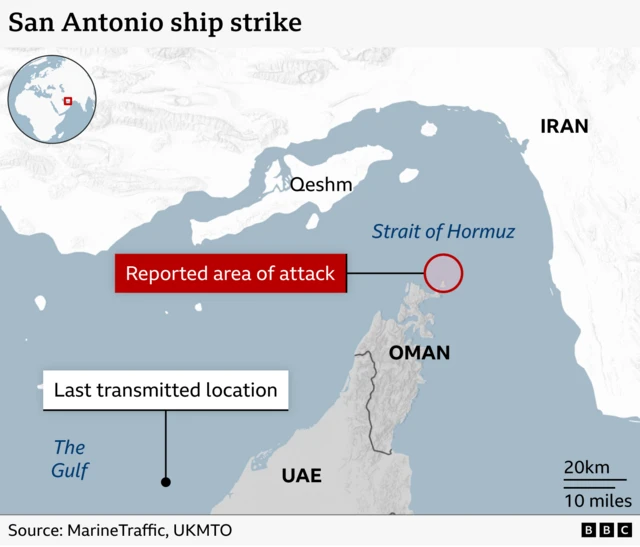
    BBC Verify has looked into the recent movements of the container ship struck in the Strait of Hormuz yesterday evening, after French shipping firm CMA CGM said one of its vessels was targeted.

    Tracking data indicates San Antonio left Khalifa Port in the United Arab Emirates on 2 May en route to Mundra Port in India.

    The ship’s transponders were switched off at 07:24 GMT yesterday at which point it was around 15 nautical miles (17 miles; 28km) off the coast of the UAE.

    UK Maritime Trade Operations (UKMTO) reported a vessel had been hit by "an unknown projectile" within the Strait of Hormuz at 18:30 GMT yesterday.

    A map showing the last transmitted location of the San Antonio in the Gulf to the west of the UAE, as well as a circle to the north of Oman in the Strait of Hormuz identifying the reported area of attack

    This morning, CMA CGM issued a statement confirming that San Antonio had been targeted, resulting in injuries to the crew and damage to the vessel. Injured crew members have been evacuated, according to the statement.

    The incident is reported to have occurred hours before US President Donald Trump declared a pause to "Operation Freedom", aimed at guiding commercial ships safely through the strait.

    We are working to establish the ship's current location.

  8. Pakistan welcomes halt of US plan to guide ships through Strait of Hormuzpublished at 11:49 BST

    Carrie Davies
    Pakistan correspondent

    The prime minister of Pakistan, which has acted as a mediator between the US and Iran for peace talks, has welcomed Donald Trump's pause of the US operation guiding ships through the Strait of Hormuz.

    Shehbaz Sharif says he is "grateful to President Donald Trump for his courageous leadership and timely announcement".

    While Trump's social media post detailing the pause mentioned Pakistan "and other countries", Sharif says the request was also made by Saudi Arabia.

    He says Pakistan is hopeful that what he calls "the current momentum" will lead to a lasting agreement.

    There are no outward indications at the moment that Pakistan is gearing up to host another round of talks.

    Trump said in his post that the pause was to see "whether or not the agreement can be finalised and signed" between the US and Iran.

    Iran has portrayed the pause as a victory. Reposting the US president’s comments, Iran’s ambassador to Pakistan said: "Once Beaten, Twice Shy."

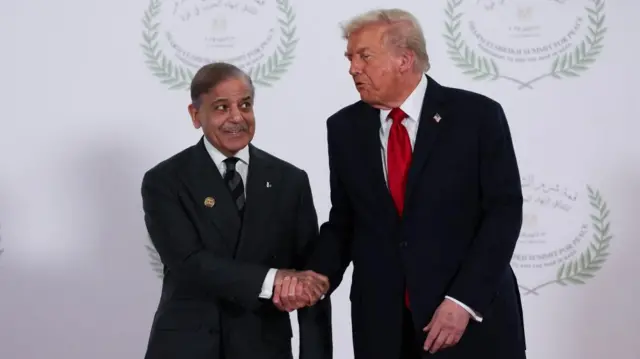
    Shehbaz Sharif shakes hand with Donald Trump while standing beside him. They are both wearing dark suits, with Sharif wearing a black and grey tie and Trump wearing a red tie.Image source, Reuters
    Image caption,

    Sharif and Trump pictured at a world leaders' summit in October 2025

  9. Sticking points won't be resolved in single negotiation - former MI6 chiefpublished at 11:31 BST

    John Sawers sits in the BBC Radio 4 studio. He is wearing headphones and sitting in front of a microphone, as well as a dark glazer and white shirt.

    Negotiations between the US and Iran will likely see traffic returning to the Strait of Hormuz in some way, but Iran's nuclear programme will "continue to be a challenge", says a former MI6 chief.

    Sir John Sawers, who headed the intelligence agency between 2009 and 2014, tells BBC Radio 4's Today programme that both the US and Iran want to find a way out of the current conflict, but sticking points between the two nations will not be able to be resolved "in a single negotiation".

    "The deal is going to have to be to reopen the Strait of Hormuz to traffic on some basis or other and then deal with the nuclear issues later," he says.

  10. Analysis

    A fresh twist for the markets to contend with - and a hint of cautious optimismpublished at 11:19 BST

    Dharshini David
    Deputy economics editor

    The Brent oil price has fallen by around 6% from $108 a barrel to $102 a barrel on the reports that the White House believes it is getting close to an agreement with Iran on a one-page memorandum of understanding.

    That would, it's claimed, declare an end to the war in the region and start a 30-day period of negotiations on a deal to re-open the strait, limit Iran's nuclear programme and lift US sanctions.

    While reports suggest this is the nearest to agreement that both sides have been since the conflict began, the response in the markets has been relatively cautious, underscoring that nothing has been settled as yet.

    The US is believed to be awaiting response from Iran on several key points within the next 48 hours.

    European stock markets have extended their gains following the reports, while US shares are expected to open sharply up.

    Amid the twists of recent weeks, Brent crude remains over 40% higher than before the war in the Middle East.

    Even if they were to drop off sharply, their elevated level over the last couple of months is expected to filter through to prices in many areas, from travel to food, for many months to come.

  11. What is the current state of peace talks between the US and Iran?published at 11:03 BST

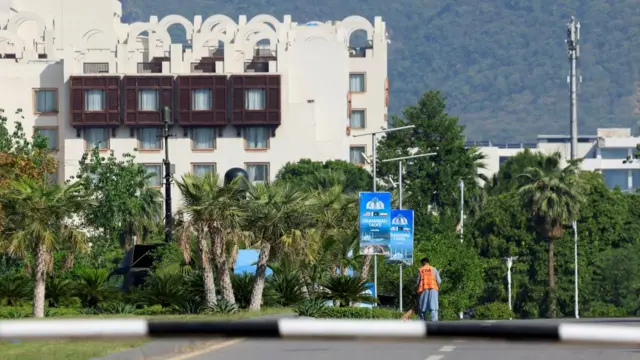
    A hotel building seen behind several palm trees at the end of a road. A worker can be seen dusting the street beside signs that say: "Islamabad talks"Image source, Reuters
    Image caption,

    Talks between the US and Iran were held in Islamabad on 11 April

    As we've just heard, Axios is reporting that the White House believes it could be closing in on a memorandum of understanding with Iran.

    Here's a reminder of how talks between the US and Iran have played out in recent weeks:

    • A two-week ceasefire was due to end on 22 April, and led to high-level negotiations being held in Pakistan - which later collapsed over key issues such as Iran's nuclear programme and passage through the Strait of Hormuz
    • US President Donald Trump extended the ceasefire anyway, and maintains that his representatives are having "very positive discussions with the country of Iran"
    • Tehran put forward a 14-point plan for peace, Iranian media reported, and on Sunday Iranian Foreign Minister Abbas Araghchi said "talks are making progress", while warning the US against "being dragged back into quagmire"
    • A representative of Pakistan, which has acted as a mediator, told the BBC on Tuesday that his country was continuing to exchange messages between the US and Iran - with Trump later saying "great progress" had been made toward a "final agreement"

    The report from Axios describes the White House proposal as a one-page 14-point memorandum of understanding; it's not yet clear how closely this memo aligns with Iran's earlier proposal.

  12. White House believes it's close to agreeing memorandum with Iran to end war - US reportpublished at 10:34 BST

    Axios is reporting that the White House believes it is close to a memorandum of understanding with Iran on ending the war.

    The news outlet cites two US officials and two other sources it describes as briefed on the issue, who are all unnamed in the report.

    It describes the memorandum as a one-page, 14-point memo which could set a framework for more detailed nuclear negotiations. Among the provisions it lists are a suspension on Iranian nuclear enrichment, the lifting of sanctions, and restoring free transit through the Strait of Hormuz.

    Ending nuclear enrichment and reopening the strait have been key sticking points in the negotiations so far.

    Axios cites sources as saying that many of the terms laid out in the memo would be contingent on a final agreement being reached.

    The US expects a response in the next 48 hours, and nothing has been agreed yet, it reports, citing sources.

    The BBC has approached the White House for comment - Iran has not yet commented.

  13. Situation 'largely unchanged' for stranded seafarers, says shipping representativepublished at 10:12 BST

    Another industry expert who's spoken to the BBC says the number of ships and seafarers still stuck at sea is a huge concern.

    Jakob Larsen, chief safety and security officer for the BIMCO (Baltic and International Maritime Council) shipping association, tells the Newshour programme there are about 1,000 stranded ships with some 20,000 seafarers on board.

    He says: "We didn't see a whole lot of ships move out during 'Project Freedom' so as far as we are concerned the situation is largely unchanged."

    Seafarers are very worried as they are trapped in the Gulf "with no prospects really for getting out safely", he says.

    They have provisions and can generate fresh water, but want the situation resolved sooner rather than later, he adds.

    • There are different estimates for how many ships are stranded; a Pentagon briefing on Tuesday said there were 22,500 mariners stuck on 1,550 vessels.
  14. 'Project Freedom' was not delivering results - expertpublished at 09:48 BST

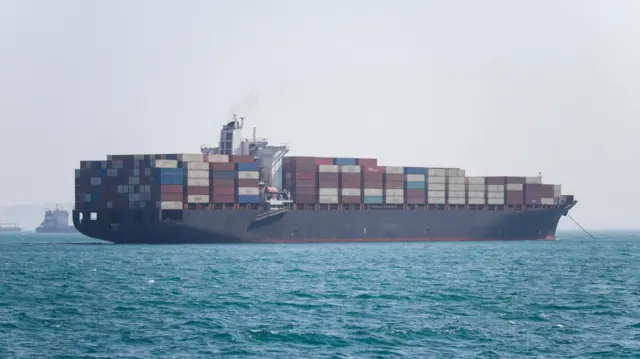
    A large cargo vessel loaded with containers is shown in the Strait of Hormuz.Image source, Reuters

    The US and Iran apparently getting closer to agreeing a deal is "one of the reasons" the US suspended its "Project Freedom" operation to guide ships through the Strait of Hormuz, says one expert.

    Ali Vaez, Iran project director for the International Crisis Group think tank, says Trump's choice was between continuing an operation that was "clearly not delivering the results" or suspending that operation and seeing if there was a "diplomatic way out".

    He tells BBC Radio 4's Today programme that the Iranian response to Project Freedom – including shooting at ships and attacks on the UAE – likely persuaded Trump that this operation was "not going to solve the problem" and could "drag him back into a war".

    On the seemingly rapid American U-turn, Vaez says in his view "there is no real policy process in this administration".

    "The president makes decisions based on impulse more than process, therefore there are inconsistencies that happen all the time," he says.

  15. Analysis

    Hormuz transit remains dangerous despite 'project pause'published at 09:27 BST

    Frank Gardner
    Security correspondent

    The US "Project Freedom" - announced with great fanfare and now halted after less than 48 hours - was unlikely to ever be the panacea that unblocked the Strait of Hormuz.

    It was framed by President Donald Trump as "a humanitarian gesture" to help release the estimated 20,000 seafarers trapped inside the Gulf as a result of the double blockade by the US and Iran.

    But Iran viewed it as a violation of the 8 April ceasefire agreement and it attacked the first escorted transit by the US Navy of two US merchant vessels. The US military says its helicopters destroyed six Iranian fast boats in response; Iran denied this.

    Getting two ships through the strait is – forgive the pun – just a drop in the ocean.

    In normal times, before this war began, around 140 vessels a day were passing through the strait.

    Not even the huge and powerful US Navy has the capacity to escort that number so this would have been primarily a coordination and overwatch operation.

    But there is no getting round the fact that the IRGC Navy retains enough drones, missiles, mines and fast boats to threaten any vessel passing its coastline.

    So without a deal with Tehran, the Strait of Hormuz will remain a dangerous place to transit.

  16. Attacks on 26 vessels since outbreak of war - UKMTOpublished at 09:02 BST

    There have been 26 attacks on vessels in the Middle East since the start of the Iran war, according to marine authority UKMTO (UK Maritime Trade Operations).

    It says since 28 February, it has received reports of 46 incidents "in and around" the Gulf, the Gulf of Oman and Strait of Hormuz.

    Of these, 26 were attacks, and 18 were reports of "suspicious activity", in addition to two reported hijackings.

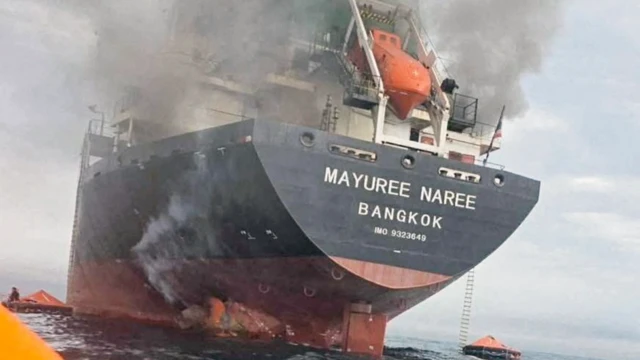
    Smoke rises above a cargo ship with 'Mayuree Naree Bangkok' written on it. Rafts are floating in the sea around it.Image source, Royal Thai Navy
    Image caption,

    The Thai-flagged bulk carrier Mayuree Naree became one of these 26 attacks when it was struck by two projectiles when attempting to navigate the strait on 11 March

  17. French shipping group says vessel was attacked in Strait of Hormuzpublished at 08:49 BST

    Paul Pradier
    Reporting from Paris

    French shipping group CMA CGM says this morning that one of its vessels, the San Antonio, was the target of an attack on Tuesday while transiting the Strait of Hormuz, resulting in injuries among crew members and damage to the vessel.

    The injured crew members from the attack have been evacuated and are being provided with medical care, the company says in a statement.

    "CMA CGM is closely monitoring the situation and remains fully mobilized alongside the crew."

    • While the company did not specify who attacked the vessel, Iran has said it will target any ships that attempt to transit the Strait of Hormuz without its permission.
  18. Israeli military continues to hit targets in southern Lebanonpublished at 08:39 BST

    While a lot of attention is on the Strait of Hormuz today, there's still active conflict in Lebanon.

    The Israeli military has hit 25 Hezbollah targets in southern Lebanon over the past 24 hours, the Israeli Defense Forces (IDF) says in an update.

    IDF spokesperson Avichay Adraee has also issued a new evacuation warning to residents of several towns across southern Lebanon, adding anyone near Hezbollah facilities or combat "exposes their life to danger".

    Lebanon's National News Agency has reported multiple airstrikes across the south of the country over the past 24 hours.

    • A ceasefire remains in place between Israel and Lebanon, but Israel says it retains its "right to take all necessary measures in self-defence, at any time, against planned, imminent, or ongoing attacks".
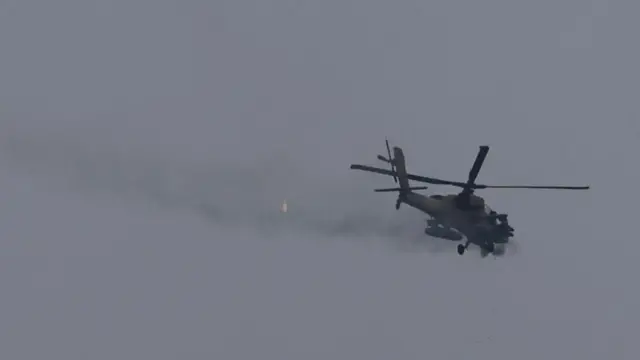
    An Israeli helicopter is shown in the air, firing its cannon - smoke trails behind.Image source, Reuters
    Image caption,

    An Israeli helicopter fires its cannon near the Israel-Lebanon border on Tuesday

  19. Tracking data shows little movement near the straitpublished at 08:16 BST

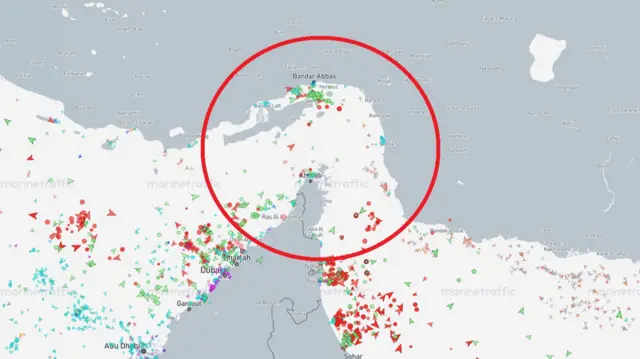
    A red circle is shown on a diagram of the Strait of Hormuz, positioned on the strait. Land is shown in dark grey and water white, with red, green, blue and purple colours being used to indicateImage source, MarineTraffic

    There is little movement around the Strait of Hormuz again today according to ship-tracking website MarineTraffic.

    The precise movements of ships in the area has been difficult to verify throughout the conflict, with some ships turning off their transponders, and with GPS interference thought to be producing unreliable information.

    Under normal circumstances, roughly one-fifth of the world's oil and liquefied natural gas (LNG) passes through the waterway.

    It also sees about one-third of the world's fertiliser trade, as well as vital imports to the Middle East, including food, medicines and technological supplies, pass through.

    But Iran has severely limited traffic through the vital shipping route since the war began in February, while the US has launched its own blockade on Iranian ports.

    The Pentagon said on Tuesday that around around 22,500 mariners on 1,550 vessels are stuck in the Gulf. There has been growing concern over dwindling supplies and the effects on sailors' physical and mental health.

    This Flourish post cannot be displayed in your browser. Please enable Javascript or try a different browser.

  20. A closer look at the paused US plan to guide ships through the straitpublished at 07:48 BST

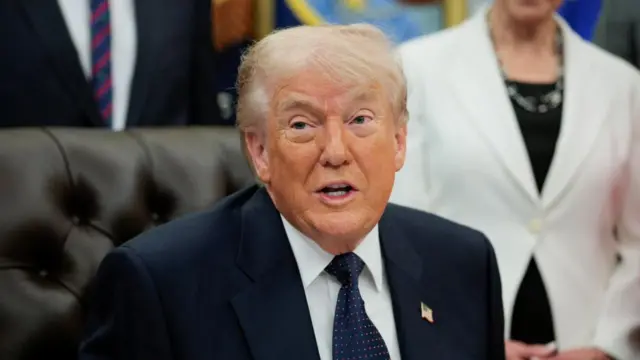
    Donald Trump speaks while sitting in the Oval Office. He is wearing a dark suit and navy tie with red and white dots.Image source, Reuters

    As we've been reporting, Trump said the US operation to guide commercial ships through the Strait of Hormuz would be paused on Tuesday evening.

    "Project Freedom" was announced by the US president on Sunday, with Trump saying it was a "humanitarian gesture" to help the seafarers stuck in the Gulf.

    US Central Command (Centcom) said it was "essential" to regional security and the global economy.

    Iran responded by saying it would attack US forces if they entered the strait, with Iranian media later reporting a US warship had been hit by two missiles.

    This claim was denied by Centcom, which said two US-flagged merchant vessels had successfully passed the strait with the US Navy.

    Trump also said US forces had struck seven Iranian "small boats" he said had tried to attack commercial ships - disputed by Iran - with the US president later telling Fox News that Iran would be "blown off the face of the Earth" if it attacks US vessels.

    On Tuesday, Iran's chief negotiator and parliamentary speaker Mohammad Ghalibaf accused the US of breaching the ceasefire.

    Later in the day, the US president announced the operation would be paused for a "short period", saying it followed "great progress" made towards an agreement with Iran, and after a request from Pakistan, which has been acting as a mediator between the US and Iran.

    The US military says around 22,500 mariners on 1,550 commercial vessels are stuck in the Gulf.