Summary

  1. Thank you for joining uspublished at 19:02 BST 30 July

    We're bringing our live coverage to a close now after putting farming in the spotlight today.

    From the farm to your fork, this year’s Farmwatch has been looking at how the food we rely on is produced during challenging economic times.

    We’ve been taking a look at burgerflation – why some of your food may be getting pricier but not costing farmers any less.

    As we feel the impact of hotter temperatures and less water, farmers have spoken about the impact on their crops.

    But among worry about the future is optimism and resilience as farmers look at creative ways to diversify – from pumpkin patches to buffalo milk chocolate.

    We’ve heard about the innovative ways people are changing the way they farm – and a drummer who packed in showbiz for farming.

    Now you can join the live Farm to Fork local radio show hosted by Harriet Cowan and Joe Seels, as well as a special simulcast edition of The Archers by clicking on the link at the top of the page or by tuning in to your local BBC radio station.
  2. 'We’ve been running on three or four hours of sleep'published at 18:55 BST 30 July

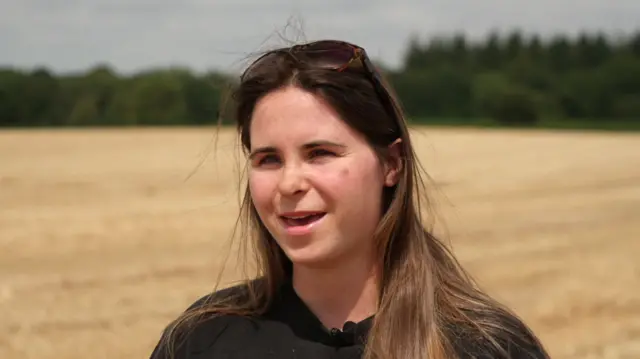
    Eleanor Gilbert stands in a wheat field. She has long brown hair and is wearing a block top.
    Image caption,

    Eleanor Gilbert says some crops "have totally droughted out"

    Eleanor Gilbert, also known on social media as Berkshire Farm Girl, runs projects in the South East countryside.

    She told Matt Chorley on BBC 5 Live: “It's been really difficult this year due to this severe drought... the crops have totally droughted out and there's no moisture in them”.

    She says this means they have been up harvesting at 03:00 to bring the moisture up.

    “There’s certain specifications that all the millers want. And, if we don't give them the right specifications, then they won't buy our crops for them.”

    She says the days are busy with wheat farming, moving straw and loading lorries.

    “We’ve been running on three or four hours of sleep.”

  3. Farming – the country’s untapped classroom?published at 18:50 BST 30 July

    Olivia Midgley
    Editorial director, Farmers Guardian

    Britain’s biggest digital farming celebration, external is upon us and this year, as well as uniting farmers, food producers and rural businesses across the UK for 24 hours of storytelling on social media, it also highlights farming’s role in supporting healthier, happier communities.

    At a time when children are spending less time outside than ever before - and with one in 10 children being referred for mental health treatment, according to the Children’s Commissioner - the #FARM24 campaign aims to highlight the important role farming and a simple visit to the countryside can play.

    More than 70% of the UK landscaped is farmed, yet a recent University of Derby study found the UK is the most nature-disconnected country in Europe.

    A farm visit can change that.

    It can plant a seed of inspiration, open a child's eyes to where their food comes from, or simply give them an afternoon of fresh air and going home with soil under their fingernails.

    The effects are often small but sometimes profound.

    As a nation, we have become strangers to the land. But the farmers who steward it hold the key to bringing us back.

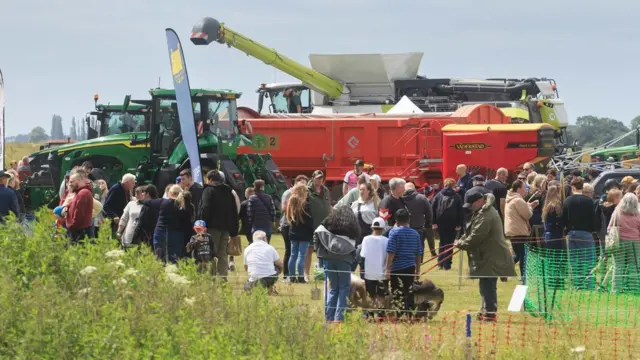
    A group of people stand in front of a large combine harvester in a field
  4. Former Kooks drummer plays music to cowspublished at 18:44 BST 30 July

    BBC Hereford and Worcester

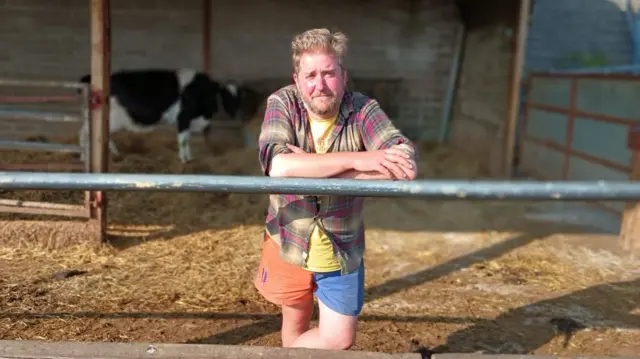
    Nicholas Millard - a man with blonde hair, beard and reddish face leans on a metal railing in a checked shirt, yellow T-shirt and shorts, one leg orange and the other blue. Behind him is hay and a cow stands in the background to his left.Image source, Anna Sales
    Image caption,

    Nicholas Millard says he "happier surrounded by cows"

    For some, the ultimate dream might be to make it big in showbiz. But former The Kooks drummer Nicholas Millard traded rock gigs for cows.

    “My earliest memory is I always wanted to be a farmer and apparently my first word was 'tractor',” he tells BBC Hereford and Worcester.

    These days, his alarm goes off at 03:05 and he starts his 17-hour shift as herd manager at Westcombe Dairy in Somerset.

    “When I had the opportunity to get out of music, I did,” he says. “I kind of fell into the music career by accident, really, and there was no plan at all to it - other than an exit strategy.”

    Does he miss touring with the band?

    “I’m happier surrounded by cows,” he says. He even plays them music – but mostly classical with bits of jazz.

    “It might be an indication as to why I don’t tour in rock bands anymore.”

  5. International milk prize 'such an honour'published at 18:37 BST 30 July

    "A moment like this just puts the cherry on top of everything."

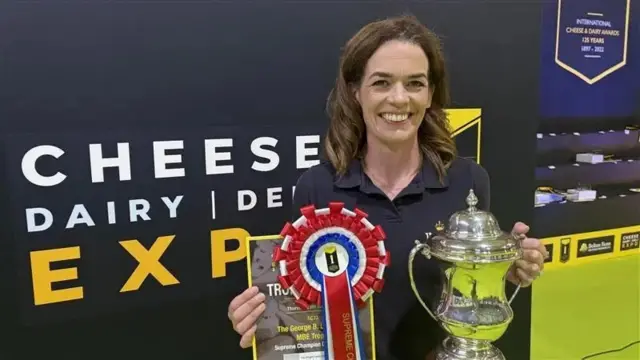
    Lowri Wright says this while reflecting on her family-owned farm’s coveted prize at this year’s International Cheese and Dairy Awards, which attracted more than 4,000 entries from across the globe.

    Lowri says the family’s pedigree Jersey cow milk being named Supreme Dairy Product is “such an honour”, especially since it is only four years since they started producing it.

    The work though comes through the expertise of more than 50 years of family farming in Penkridge, Staffordshire.

    "We take great pride in how we look after our cows, so it's great to know what we're producing is getting recognised on an international level, not only on a local level," Lowri says.

    "The cows are the stars of our business, and we're all about sustainability and keeping food miles low."

    Lowri Wright holds a trophy in one hand and a rosette and certificate in the other. She has long brown hair and is standing in front of signage saying Cheese Dairy Expo
  6. 'We've changed how we grow food in our community scheme'published at 18:32 BST 30 July

    Wendy Hurrell
    BBC London

    Media caption,

    Meet the north London community experimenting with innovative urban farming techniques

    There is a collective of experimental farmers working in the glasshouses at the Wolves Lane Centre in north London.

    Black Rootz was set up during the Covid-19 lockdowns with people in Haringey coming together to feed the community.

    It has evolved into a mission to “change the ways that we’ve been growing,” says head grower Pamela Shor.

    Large-leaved squashes or pumpkins that creep along the ground hold in water and provide shade for young corn to grow, and then beans wind up the strong corn stems for support.

    “Indigenous and ancestral practices lend to people care, plant care and land care. We work in symbiosis with nature,” she says.

    “It’s a perfect example in this heat and weather how plants can work together, allowing plants to thrive in their environments.”

    Pamela also says the work sees companion plants that feed one another and reduce pests also growing.

  7. First-ever simulcast of The Archerspublished at 18:19 BST 30 July

    From 19:00 BST, the Farmwatch evening show will go out across all BBC local radio stations and will feature the first-ever simulcast of The Archers on BBC Radio 4.

    You can listen by pressing the listen live button at the top of the screen.

    Jeremy Howe, editor of The Archers, said: “The Archers, the BBC’s long-running continuing drama about life and farming in rural England, is delighted to join up with BBC Local Radio’s epic Farmwatch Day.

    "For the first time ever, BBC Local Radio will join with BBC Radio 4 and simultaneously broadcast this evening’s specially-written episode across all 39 stations in a wonderful coming together of one BBC to celebrate life in rural Britain.”

    The Archers logo. It features the words 'The Archers' in white text against a background showing welly boots, a brick wall and potted plants
  8. The future of farming?published at 18:14 BST 30 July

    Alex Meakin
    BBC Berkshire

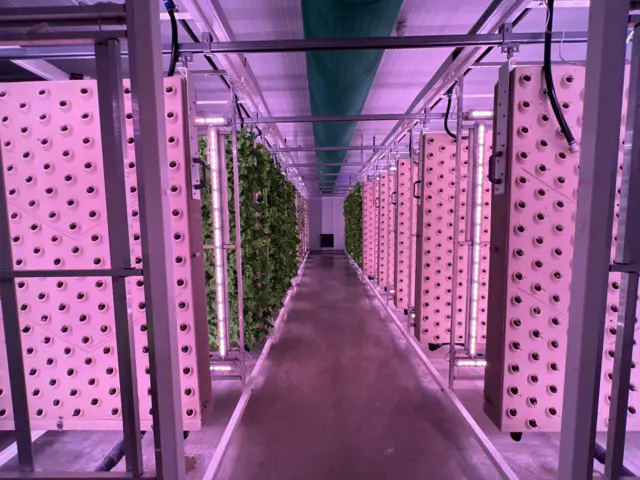
    A room with purple lighting and vertical metallic looking rectangles with holes in. Plants grow against the rectangles.

    We’ve been hearing today about the issues farmers face with water shortages and hot weather.

    But imagine a place where crops need a lot less water – and no sunlight or soil.

    Innovation Agritech Group in Berkshire thinks it might have found just that.

    It designs and builds controlled environment agriculture systems which, it says can build high-quality crops using 98% less water than traditional farming.

    These are essentially climate-controlled farms with crops growing on hanging, vertical beds, as the picture above shows.

    Research manager Laura Nelson says: “It’s incredibly exciting. It’s obviously very high-tech, it’s very different, but it’s an example of how we are adapting to climate change.

    “This is a fully-controlled environment. We control the humidity, the temperature, the CO2, the irrigation timings, nutrient levels, lighting, all of this stuff.

    "Everything that the plant needs is controlled very precisely in this room.”

    Find more about controlled farming environments here.

  9. Coming out when you're a farmerpublished at 18:07 BST 30 July

    Arzu Dutta
    BBC Yorkshire

    The founder of an LGBTQ+ support group says members of the farming community can face “barriers” in coming out.

    The charity Out Together was set up to combat social isolation and loneliness.

    It was set up in 2020 and funded through money left by Mike Potter, a North Yorkshire farmer who did not come out until he was 72 and died four years later.

    Close friend Graham Clarke says he believes Mike did not do so earlier because "this is North Yorkshire, a rural community, and he was a farmer".

    He says had the group existed during Potter's lifetime "he would've had a safe place to meet other people and to be himself and perhaps come out sooner".

    "Mike was single all his life, but he was a friend to many people. After he came out, he couldn't believe what a relief it had been to tell people and to finally be himself," he added.

    Find out more about Mike Potter's legacy here.

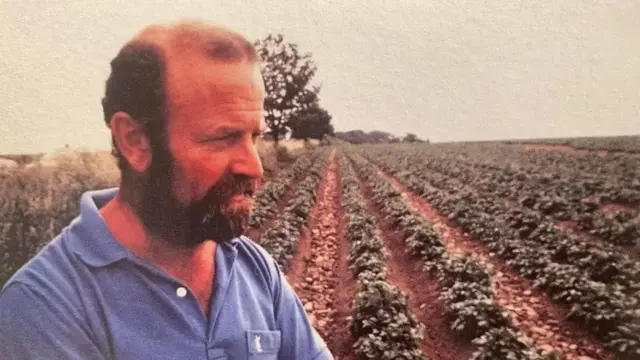
    Photo of Mike Potter standing on a farm wearing a blue T-shirt. Side profile with rows of crops in the background, it looks like an old and slightly faded photo.Image source, Handout
    Image caption,

    Mike Potter who did not come out until he was 72 and died four years later

  10. Britain’s Got Talent singing farmer says pumpkins kept farm goingpublished at 18:00 BST 30 July

    Tammy Gooding and Eleanor Lawson
    BBC West Midlands

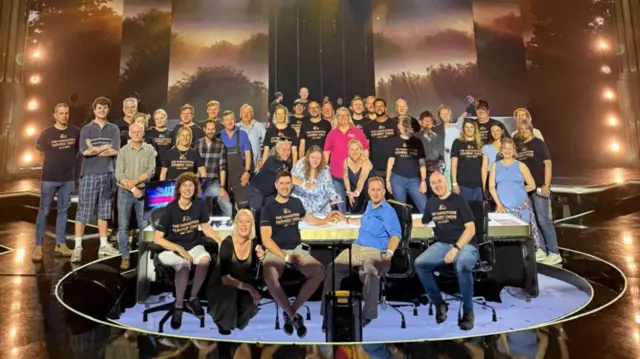
    A large group of people stand in tiers around the Britian's Got Talent judges table. The stage is empty and dark but there are bright spotlights on the sidesImage source, Will Rogers

    Andy Owens was part of the Hawkstone Farmers' Choir which won Britain's Got Talent in May (pictured).

    Over the years, he has seen the pressures of climate change on his family's mixed farm.

    He says that their land in Marden, Herefordshire, flooded "maybe twice a year" when he was growing up. Now, he says, they count flooding six or seven times each winter.

    "We're just struggling to farm it,” he says.

    Previously workers have had to pull lambs and ewes from floodwater. He says drought has also caused significant problems, with sheep having to be moved around the site.

    Andy has diversified his farm, growing pumpkins to help it to survive.

    "What we thought would be a little earner has become quite an important part of our business," he says.

    "The income the pumpkin patch generated allowed us to keep going as a commercial farm."

  11. YouTube farmer to co-present special evening showpublished at 17:57 BST 30 July

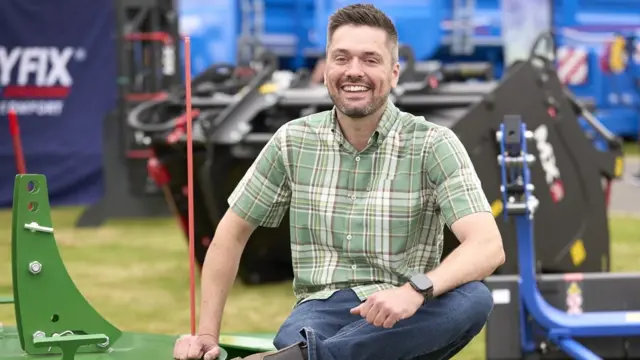
    A man sit smiling at the camera. He has short brown hair, a short beard and is wearing a green checked shirt and blue jeans. Behind him is farming equipment

    Joe Seels, a beef and arable farmer-turned-YouTuber from Yorkshire, is due to co-present this evening's Farmwatch show with Harriet Cowan, a Derbyshire-based farmer and former nurse best-known for her appearances on Clarkson's Farm.

    The show will feature a specially-written episode of the The Archers, in the first-ever simulcast for the BBC Radio 4 show.

    Joe said: "I’m really looking forward to joining Harriet for Farmwatch on BBC local radio.

    "She has become a brilliant voice for farming through Clarkson’s Farm, so it will be great to spend the evening chatting about agriculture, rural life and whatever else comes our way.

    "Alongside farming, I’ve spent nearly five years sharing life on our farm through YouTube and social media.

    "I’m more used to mixing cattle feed than mixing sound, so getting behind a radio desk will definitely be something different.

    "Back on the farm in South Yorkshire, we’ve finished combining unusually early this year.

    "The dry weather has meant putting firebreaks around the farm while we’re still busy feeding cattle, bringing in straw for winter bedding and putting up a new shed over one of our silage pits to protect feed.

    "There should be plenty for Harriet and me to talk about."

    You will be able to listen to the show right here from 19:00 BST.

  12. 'How can I be sure there is a future for me in farming?'published at 17:50 BST 30 July

    Ben Schofield
    BBC Look East political correspondent

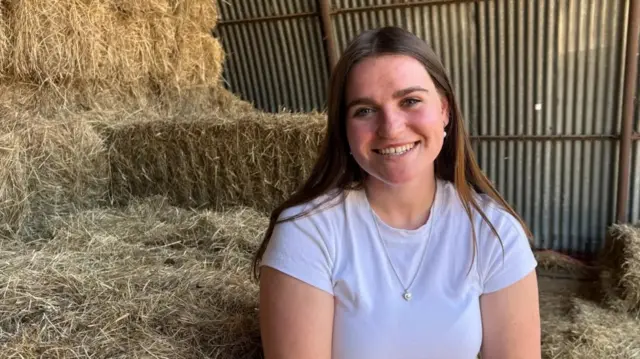
    Lydia Law looking directly to camera and smiling. She is wearing a white, round-necked T-shirt and has straight brown hair, worn down and reaching over her shoulders. She is seated in a hay barn, with bales of hay seen behind her on the left of frame and a corrugated metal wall in the further distance.Image source, Ben Schofield/BBC

    Lydia Law, 24, spends her days buying grain and selling seed and fertiliser, but says 70% of her job as a farm trader is actually being "a therapist".

    Working on what she describes as the "front line" between farmers and the market, she says the mood is "very demoralised" and the industry is in a "dark hole".

    She hopes to return to work with her father on their family farm near Royston, Hertfordshire, which grows cereals and sugar beet, and raises sheep and cattle.

    Now, she is questioning that prospect.

    "How can I be sure that actually there's going to be a future for me there, and the farm can support someone coming into the business, and trying to actually make a profit out of it?" she asks.

    A Department for Environment Food and Rural Affairs spokesperson says the government is "putting its full weight behind farmers" and "giving them the funding, tools and opportunities they need to succeed".

    Found out more about why young farmers fear for industry's future here.

  13. Cooling fans for cows and food tubs neededpublished at 17:33 BST 30 July

    Mary Litchfield
    UGC Hub

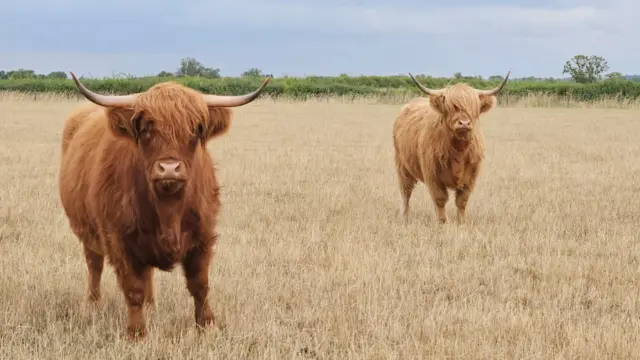
    Two brown highland cows stand in a field, one in the foreground to the left, the other in the background to the right. The grass is dry and looks like hay. In the distance is greenery and treesImage source, Tracey Noy

    Tracey Noy and her husband own a 90-acre (36-hectare) cattle and sheep farm in Claypole, Newark.

    They breed highland cattle for beef but are finding the hot, dry weather challenging.

    "It's effort and it's money,” Tracey tells BBC Your Voice. "If this is how it's going to be, we have to either change the cattle type or pack it in.

    "The breed of cattle, you couldn't wish for a worse one in this heat."

    When it is above 25C (77F), they have been keeping the cows in barns with water, hay and big fans to keep them cool, then letting them out to graze at night.

    She says the fields look like straw and big cracks are appearing in the dry ground where cows could get stuck and injured.

    "Some calves are still only four months old. They should be eating the lush grass," Tracey says.

    She also says some are looking “weedy”, so they have bought mineral tubs at £90 a bucket.

    Your Voice is written in white capital letters on a purple banner
  14. Teenager launches dairy businesspublished at 17:19 BST 30 July

    BBC Radio Cornwall

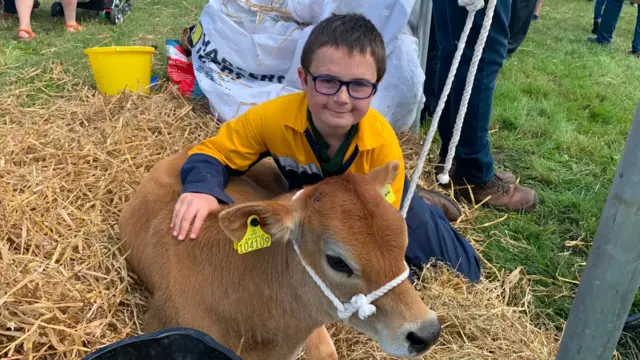
    A boy wearing a yellow shirt pets a small brown cow
    Image caption,

    Charlie has to milk his Jersey cow, Clare, after school

    A teenager from Cornwall has started his own dairy business, with just one cow in his herd.

    Thirteen-year-old Charlie fell in love with farming from the age of two and is now taking his passion to a new level by selling a range of milks and creams directly to customers from his own single cow dairy on his family farm.

    He milks his beloved Jersey cow, Clare, every day after school.

    You can read more about his work here.

  15. The Essex family wedded to flourpublished at 17:05 BST 30 July

    BBC Essex

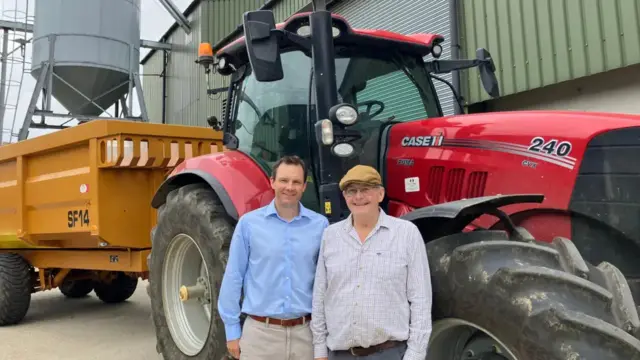
    Father and son duo James and Simon Marriage stand next to a red tractor
    Image caption,

    James and Simon Marriage say they are hopeful for the future of the family business

    The Marriage family have been producing flour in Chelmsford for more than 150 years.

    On Bailey's Farm, Simon Marriage explains a field of Crusoe wheat can be harvested in about four hours with the combine harvester.

    "I'm half-retiring, but farmers never retire," he says.

    His eldest son, James Marriage, runs the flour mill.

    "This is one of the best parts of the country to grow milling wheat," he says.

    Milling wheat is a premium bread making variety, and the family's main customers include industrial bakeries, retailers selling the flour in packets and independent bakers.

    The business has experienced "incredible spikes" in the last few years relating to the conflict in Ukraine, the Covid-19 pandemic and Brexit.

    You can read more about it here.

  16. 'There aren't enough farmers'published at 16:51 BST 30 July

    Carla Greene
    BBC Radio Humberside

    Staff at Chestnut Dairies near the East Yorkshire coast breed their own calves, but say the investment takes years to pay off.

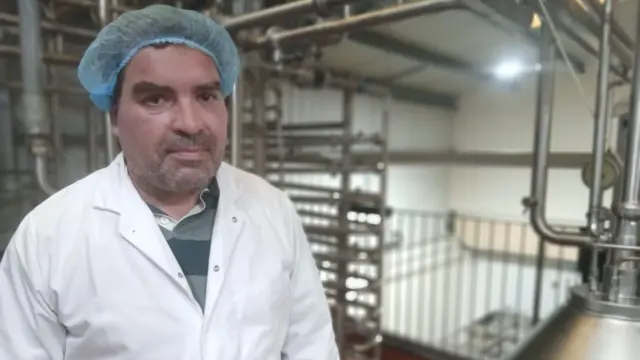
    "It's two-and-a-half years from being born to producing milk," production manager Mathieu Varley (pictured) explains.

    "Then you need to milk it for another two years minimum before it even starts to break even."

    Varley says they sell "just about" enough milk to get by, despite the rising cost of feed, fertilisers, fuel and equipment. But he says he is concerned about what comes next.

    "Something has to happen, because we just can't carry on like we are.

    "There aren't enough farmers for the future, there isn't enough land to grow the food we need.

    "The population of the world goes up every year and the amount of land we've got goes down. It's not rocket science."

    Mathieu Varley, a man dressed in a white coat and blue hairnet, stands among metal milk churns and pipes in a dairy. He has brown hair and grey stubble.
  17. 'I started in these fields as a boy'published at 16:40 BST 30 July

    Zac Sherratt
    BBC South East

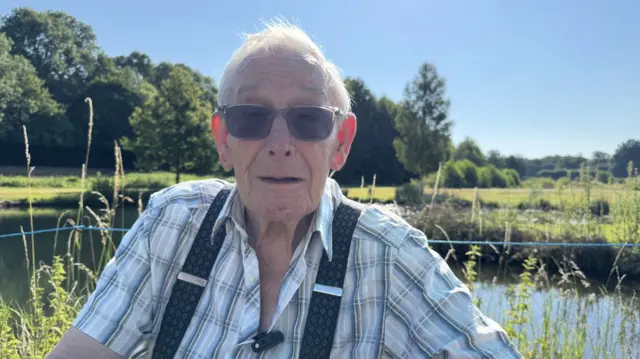
    Barrie Arminson stands in front of a river, wearing sunglasses, a checked short-sleeved shirt and braces.
    Image caption,

    Barrie Arminson took over his family's watercress business at 18

    When Barrie Arminson took on Kingfisher Farm in Abinger Hammer at 18 years old in 1956, he was the fourth in his family to run it.

    At the time, it was enjoying a booming trade, supplying watercress right across the country, and the entire site was covered with watercress beds.

    But it began to diversify in the 1990s, and just six beds remain today.

    The farm shop keeps the business going.

    Barrie has now retired, and his daughter runs the business, but he says he keeps a close eye on things.

    Barrie said: "You had to work in those days, no work indoors. So, if you weren't harvesting watercress, you were cleaning beds out to replant them and continue.

    "But then the supermarkets changed it all and so we started selling watercress at smaller quantities. Then we started the farm shop. "

  18. Using hemp to build homespublished at 16:26 BST 30 July

    Debbie Tubby and Alice Cunningham
    BBC Suffolk

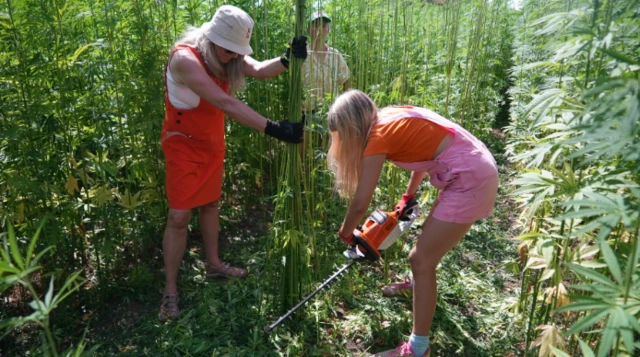
    Two women in a field where hemp crops grow. One woman wearing a cream bucket hat, orange overalls and a white top looks toward the ground as she holds a long stem of crops. Another woman with long blonde hair wearing pink dungarees and an orange top holds a strimmer as she cuts the crops the other woman holds.Image source, Shaun Whitmore/BBC

    Using hemp for fabrics can be traced back to the Anglo-Saxons. But today a hemp farm in Suffolk is hoping to use its surplus to help build houses.

    Workers at Wakelyns Farm in Fressingfield have teamed up with Chloe Donovan from Natural Building Systems who wants to use it for sustainable house building.

    Most of the hemp used is imported from France, but, with increasingly hot and dry summers, Chloe believes there is a future for it in the UK.

    "It buffers internal humidity and that means buildings are less likely to get problems with damp or mould and condensation," she explains.

    "But also it means that they're less likely to overheat in summer, which is obviously critical at this time of year.”

    Growers need a licence from the Home Office to ensure the crop contains low levels of tetrahydrocannabinol (THC), as high levels of THC, which can cause psychoactive effects, are illegal.

    Find out more about the hemp farmers here.

  19. 'A loud honk for his buffalo girls'published at 16:13 BST 30 July

    Britta Zeltmann
    BBC Cornwall

    A chance encounter prompted Henry and Coral Menhenitt to take on the world of buffalo farming.

    Now, the couple keep a herd in Delabole, North Cornwall, rearing them for their meat and feeding their local community.

    While they can be "a bit cheeky sometimes”, Coral says they are yet to have any trouble.

    She says their calls are "more of a honk crossed with a moo", which is "definitely an interesting noise".

    "The babies learn it very early on and they've all got individual calls. If you hear 'Bouffant Barry', he does a really long honk when he calls all his girls over."

    The farm owner also says her livestock's selling point is higher protein, less fat and being lower in cholesterol than ordinary beef.

    She and Henry hope to expand in more directions - including milk, cheese and possibly even chocolate.

    "We're feeding our local community and that's just lovely," Coral says.

    Media caption,

    Is offering a different product the way forward for farmers?

  20. Cactus on the menu for BBC Londonpublished at 15:59 BST 30 July

    Wendy Hurrell
    BBC London

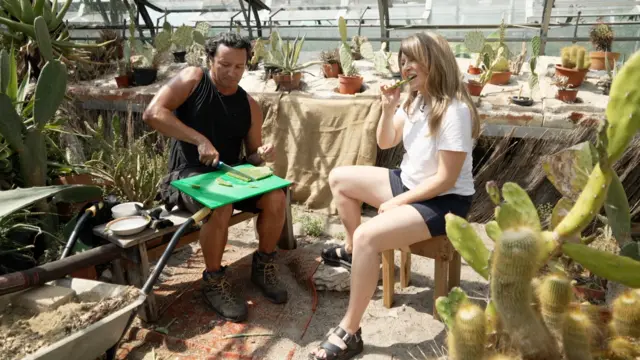
    For the BBC Farm Watch assignment, I ate a cactus.

    Elki Guillen wants me to try a Mexican delicacy and cuts a nopal pad from one of the plants flourishing in the searing heat of the glasshouse as sweat drips down my back.

    With a large knife, he scrapes the spines from the pad and explains that cactus is part of his heritage.

    “It’s in my DNA, it’s in my culture, it’s in my blood.”

    The cut he has made in the pad has sticky strings of complex sugars stretching between the two pieces.

    As well as a fibrous, water-imbued food source, nopal can be used in bio construction as a natural binder.

    But onto the taste test…

    Elki spears a strip of nopal and passes it to me.

    It is crunchier than an apple but the taste is more earthy - like a fresh green bean, with a hint of citrus and, since it is 90% water, there is a hydrating burst as I bite.

    Even Gordon the cameraman tries it and agreed Elki could be onto something here.

    Elki Guillen cuts up a nopal cactus for Wendy Hurrell
    Image caption,

    Nopal makes a refreshing snack, and can be used in bio-construction as a natural binder