RTS Dan Gilbert Memorial Lecture
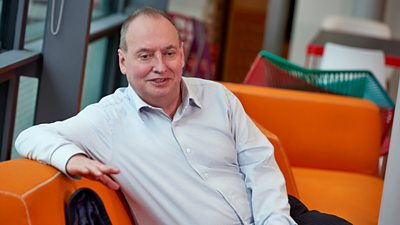
Speech by Ken MacQuarrie, Director, BBC Nations and Regions at the Belfast Media Festival on 6 November 2019.
Published: 6 November 2019
Check against delivery.
Introduction
It’s a pleasure to be here in Belfast, and a real privilege to be able to deliver this lecture as part of the Belfast Media Festival’s tenth anniversary celebrations.
And it’s an honour to be delivering the Dan Gilbert Lecture, who did so much to nurture and develop new talent in the BBC.
Ten years ago, following discussions at the Creative Skillset Board, the Director of BBC Northern Ireland, Peter Johnston, and Northern Ireland Screen’s Richard Williams backed the creation of this festival as a way to understand and interrogate the challenges facing the creative sector here.
The goal was simple. Create a forum for more dialogue within the industry, and find ways to offer more support, more training, more networking and to create more opportunities.
Around 100 people attended the first festival. It was before the likes of Game Of Thrones or Line Of Duty had made it to the screen. Before Derry Girls had even been conceived, let alone become the most watched TV series ever in Northern Ireland.
The concern back then was that no one would show up, so it’s wonderful to look around today and see what the festival has grown into.
So much has changed in the past decade - in the creative sector in Northern Ireland, and in the media landscape more widely.
Ten years ago, not a single member of Facebook, Amazon, Apple, Netflix and Google were among the top 30 most valuable companies in the world.
Today, all but one is ranked in the top ten. That group of five has increased in value by about three trillion dollars.
Amazon has transformed from bookseller to behemoth. Netflix from a postal DVD business to a global giant.
None of us know what the next ten years will bring. Recently Bill Gates came to the BBC to speak to staff about the future. He described himself as 'an impatient optimist'. It was a reminder that we need to act now to shape the future we want to see.
So as well as looking back in celebration today, I want to look forward to the decade ahead.
At a time of such rapid change, we need to make sure we are equal to the challenge.
We have to think carefully about how the creative sector here can continue its story of success. And we need to look afresh at what we can achieve for Northern Ireland more widely.
This might be an incredibly uncertain moment for all of us around the UK.
But one thing we can be sure of is that it is more important than ever that we take every possible opportunity to invest in this nation, tell its stories, and empower its people.
The BBC in Northern Ireland
I’m proud of the role that the BBC plays in and for Northern Ireland.
It’s a relationship that goes back 95 years. But the past few years have seen us focus even harder on what we can do to step up our contribution.
Two years ago, the BBC made its biggest investment in programmes and services in Northern Ireland in a generation. It’s allowed us to enhance what we offer in so many areas.
BBC News Northern Ireland now offers greater coverage of stories and events online, seven days a week, and more videos and features to cater for wider audiences.
BBC Sport Northern Ireland now offers more digital coverage of sports like boxing and motor racing, women’s football and hockey, and mixed martial arts.
The new investment has meant new pilot dramas, comedies and factual documentaries.
It’s enabled us to mark the 50th anniversary of troops arriving in Northern Ireland in the early years of The Troubles with the acclaimed Spotlight On The Troubles: A Secret History series and the forthcoming film, Lost Lives, based on the book of the same name.
We want audiences here and all around the UK to learn more about Northern Ireland’s past and how it has shaped its present. So we’re making a range of documentary series on The Troubles and Northern Ireland’s wider history available on iPlayer as a collection. And will be working on a range of content to mark the centenary of partition and the creation of Northern Ireland.
Our investment means that our partnership with Northern Ireland Screen can continue to go from strength to strength. In recent years it’s delivered hit dramas like Line Of Duty and The Fall. Now it’s produced new shows like Death And Nightingales, the brilliantly received Dublin Murders, and the outstanding film we have coming up on Seamus Heaney - a really poignant insight into his life and works in the words of his wife, Marie, and their family.
Meanwhile, Aim High, the trainee scheme run by BBC NI and Northern Ireland Screen continues to bring young people into the industry. Our latest trainees are currently out working with independents including DoubleBand, Stellify Media, and Waddell, as well as BBC Studios.
A big part of the new investment has been focused specifically on offering more for younger audiences - a major priority across the whole of the BBC. We have developed the youth debate series, Top Table, and the School Choir of the Year competition. BBC Three’s series of short films, The Break, came from Northern Ireland this year. Northern Irish CBeebies show, Pablo, is now into its second series and won best pre-school programme at the 2019 Broadcast Awards. The CBBC series Almost Never, starring Aston Merrygold, recently filmed its new series here in Belfast.
We’ve also commissioned a series of exciting content for younger audiences, looking at everything from music to health to rural life, young offenders to first time home-buyers.
And, I can announce today that James Nesbitt will star in Bloodlands, a major original crime drama for BBC One which is set in and will be filmed in and around Belfast and Strangford Lough. It has been created by exciting new writer Chris Brandon and produced by the newly formed HTM Television with the wonderful Jed Mercurio as one of the Exec Producers.
At the same time, we’ve been working hard to deepen and broaden the appeal of our radio services. BBC Radio Ulster continues to be one of the most successful stations in our entire local radio portfolio. It remains the most listened to radio station in Northern Ireland.
Latest figures show that over half a million people tune in each week for news, speech, sport and specialist music broadcasting - that’s more than a third of the over-15 population.
Just last month BBC Radio Ulster introduced its biggest schedule changes for years and added new names to its roster. It’s part of a commitment to refreshing the station’s output to draw in new audiences and showcase more upcoming talent.
Local radio also plays a much larger role in the delivery of local news in Northern Ireland compared to other parts of the UK. A quarter of the adult population tunes in for BBC Radio Ulster/Foyle’s family of news programmes each week. This appetite for news us also illustrated by the popularity of TV news here. During 2019, BBC Newsline reached on average over half of the adult population each week, performing 20% higher than the average for BBC nations/regions news programmes elsewhere in the UK. UTV’s local news programmes are consumed at levels 60% higher than ITV’s regional news programming elsewhere.
Of course, the biggest signal of the BBC’s commitment to Northern Ireland is perhaps the multi-million pound investment in Broadcasting House that we announced last year. Ormeau Avenue has been the home of the BBC in Northern Ireland since 1941. Now we want to modernise it and transform it into a technology centre of excellence.
We want to make sure the BBC is fully-equipped to meet the needs of all audiences here in the future. But we also want to make sure we can do even more to support Northern Ireland’s creative sector more widely.
With this new centre of excellence we’ll be able to build on existing partnerships with Queen’s University and the Ulster University, Northern Ireland Screen and Libraries NI. And we’ll be able to create new ones.
We want to do our bit not just as a major investment in the heart of Belfast city centre, but also as an investment in the technological and creative capacity of Northern Ireland as a whole.
Our goal today, as it was in 1941, is to be fully embedded in the core of this nation.
Raising our N&R ambition
Of course, this goal is not limited to Northern Ireland.
The last few years have seen the BBC raise our ambition substantially across all the UK’s nations and regions.
Scotland has seen the launch of a brand new channel. It has gone from a standing start to being the sixth most-watched channel behind only the big five.
In its first six months, BBC Scotland’s weekly reach was 17% - ahead of expectations. And it is bucking the trend when it comes to engaging younger audiences, attracting a good proportion of viewers aged 16-34 and also drawing in audiences that are more socially diverse.
The channel’s new, hour-long news offering, The Nine, has been getting great feedback from audiences. And the fact that BBC Scotland has already picked up 16 RTS Scotland awards, and won nine Bafta’s including special recognition for Still Game last weekend, is a sign that the BBC’s big investment is paying off creatively.
In Wales, meanwhile, the past few weeks have seen BBC staff start to move into our brand new, state-of-the-art broadcast centre in Cardiff’s Central Square.
We’re investing around £100 million into the new BBC Wales HQ - a resource that will be shared by the whole Welsh creative sector. It’s already on course to add over £1 billion to the economy of the region, and bring nearly 2,000 jobs to the city over the next decade.
At the same time, more new investment has allowed BBC Wales to strengthen its programming and online services. Requests to view BBC Wales’ content on iPlayer have tripled over the past year, helped by hit dramas like Hidden and Keeping Faith.
The number of weekly browsers to BBC Wales news online has gone up by nearly a fifth. And podcast downloads from Radio Wales and Radio Cymru have increased by 50%.
Finally, in England, the BBC is continuing our drive to shift more of our services away from London and increase our support for the regions.
There has been much praise for Channel 4’s launch of their new Leeds headquarters last month. And rightly so: it’s great for Leeds and great for audiences.
But it also puts into perspective what the BBC has done in the English regions. So far, 50 Channel 4 staff have moved into the Leeds HQ, rising to 200 by next year. By comparison, there are now around 3,500 BBC staff on site in Salford, working across 25 BBC departments from Sport to Children’s and 5 live to BBC Breakfast. And BBC North continues to grow.
The BBC’s move to Salford in 2011 was the catalyst for the whole MediaCityUK development, which now has around 8,000 people living and working there. It’s now home to big companies like ITV, Red Productions, Kellogg’s and The Hut Group not to mention more than 250 SMEs.
It’s important to look too at the kinds of impact that the BBC’s renewed commitment to reflecting the regions in our programming is having.
Last year a record 42 million tourists visited Birmingham, with many - according to the region’s Mayor, Andy Street - keen to explore the places and stories associated with the BBC One series Peaky Blinders.
They’re calling it 'the Peaky effect'. In fact, visitors to the city have gone up by more than a quarter since the show began in 2013, and the number of US tourists is up by half.
Meanwhile, 13 per cent of visitors to Cornwall cite Poldark as a key reason for coming to the region, helping to boost a local tourism industry by about £2 million each year.
And visitor numbers at Shibden Hall near Halifax have trebled since Gentleman Jack was broadcast on BBC One. The local tourist board has even established a Gentleman Jack tour to capitalise on all the new interest - especially from the US.
Recently the BBC Director General, Tony Hall, spoke about everything we are doing to get closer to the audiences we serve right across the UK.
He pointed to the fact that, a decade ago, only a third of the BBC was based outside London. Today that balance is 50:50. We’ve moved from less than 10% of our network TV programmes produced in Scotland, Wales and Northern Ireland to 20%.
But Tony also said he wanted us to think bigger, and imagine a world where we push even further. It’s something he’s asked me to look at, and I’ll be reporting back in the next few months.
The big question is why? Why is all this so much of a priority for today’s BBC?
Engage, educate, empower
It has always been the BBC’s responsibility to represent and reflect the whole of the UK and all its communities.
This was given a renewed focus in our latest Royal Charter. And rightly so: we must serve everyone - whoever and wherever they are.
But in my view the BBC must always be looking to see what more we can do to respond to what our audiences most need right now.
The BBC, ultimately, is an enlightenment organisation, with enlightenment values.
We exist to be a force for good, with a commitment to educating and empowering all. So how best can we educate and empower people today, in such a fast-changing world?
We know that the days of dusty old experts broadcasting from on high and expecting audiences to listen are long gone. Today you have to work hard to reach audiences where they are, to fight for their attention and earn the right to be heard.
As the theme of this festival makes clear: you cannot educate and empower audiences if you cannot engage them. And engaging audiences is a task that’s harder than ever in a world of so much competition for their time and attention.
Moving closer to our audiences is essential. As is making sure that we modernise to meet the demands of the digital age. That’s why we’re working so hard to invest in our technology and online services all around the nations and regions.
But this should not simply be seen as a response to a challenge. In reality it’s how the BBC is responding to what we believe is an increasingly urgent need.
What we’re seeing across the whole of the UK now is a real rise in division, fragmentation, and partisanship. We’re seeing social media widen the gaps in our society, and disinformation that’s deliberately designed to exploit them. More than ever before, what audiences need is news they can trust and information they know they can rely on. They need the commitment to core values of independence, impartiality, and accuracy that the BBC provides. They also need to be sure that their views and perspectives are heard in the public debate.
Too often today, in our social media filter bubbles, we listen to only one side of the argument: ours. It’s getting harder and harder to open ourselves up to alternative opinions and understand different points of view.
This is where audiences need the BBC to dig even deeper to make every voice heard and make sure everyone’s stories are told. And they need us to do it even more at a time when local voices and stories are so under threat from the big global players.
The BBC can bring people together and celebrate differences. It’s our role to reflect its full range of views, and to celebrate and interrogate our individual and collective human experience.
That means programmes that remind audiences of everything we have in common as well as what sets our diverse communities apart. And it’s clear: we can only achieve this if we truly understand our audiences and where they come from. If we are firmly rooted in their communities and localities, and if we have our fingers more firmly on the pulse of their lives and concerns than anyone else.
Harnessing the UK’s full creative firepower
There’s another big reason this rootedness in every part of the UK is so vital.
The BBC simply cannot compete in today’s global media landscape unless we are able to draw on the UK’s full creative firepower. We need to be the very best at unearthing, backing and championing talent and creativity wherever it is to be found.
We all know in the past the UK’s creative industries were far too London-centric. The net was never cast far enough from the South East of England. This has long needed to be corrected. But today the future of the BBC depends more than ever on getting it right, because it’s the key to maximising our creative potential in the global, digital age.
The BBC can also play a crucial role in rebalancing the whole industry because of our position as the cornerstone of the UK’s creative economy and the heart our media ecology.
I want to pick out one example from a scheme we launched in England a few weeks ago. During the course of one weekend at the end of September, BBC Local Radio carried out the biggest talent search in its history. Every single one of the 39 stations across England held open auditions. It was called the New Voices weekend, and it was a phenomenal success.
Our judging panels were made up of presenters, editors and famous names in broadcasting and music, and they saw over 3,000 hopefuls. The majority were under 35 - and much younger still in the bigger cities.
Now the station editors are meeting up with the shortlisted talent and they are reporting back that they’ve found an incredible number of potential new local contributors, guests, and even presenters.
Only the BBC can do this. Not just because our network of local radio stations is unique, but because only the BBC is in a position to make the kind of bold public service interventions that are needed - from initiatives to unearth diverse new voices to major infrastructure investments in parts of the UK that simply would not attract them otherwise.
These are the interventions that can deliver major boosts to our national and regional economies, to jobs and skills, to local ambition and opportunity. And they can act as catalysts for new investment, and as magnets to draw in more new talent in turn.
Driving forward this ambition
So what are we doing to drive forward this ambition? I want to pick out just three examples of initiatives we have been working on this autumn.
First, the BBC’s Local Democracy Reporter service. We launched it at the start of last year. It’s a partnership with regional newspapers and the local media sector more widely, and the goal is to support a new network of 150 local democracy reporters - managed by local media, but funded by the BBC.
Their job is to hold local politicians and public institutions to account across the UK. And so far they have produced more than 100,000 public interest stories. The new Royal Liverpool Hospital, built with unsafe cladding. Northamptonshire County Council underpaying childminders and nurseries by thousands of pounds. The £24 million health centre in Altrincham that will never be used, but is still costing the NHS over £2 million a year. All stories essential for holding local institutions to account. All stories that might not otherwise have been heard.
We’ve proved this approach works.
Now we’re extending it here in Northern Ireland. We’re currently recruiting new journalists to the pool of local democracy reporters in newspapers around Northern Ireland.
This is a big part of our plan to help reverse the damage that has been done to local democracy in recent years and bring about a sea change in local public interest journalism.
And on Monday we announced ambitious plans to do even more to support local journalism with more council reporters and coverage of ‘blue light’ public services such as NHS Trusts - and the service extended to report on magistrates’ and sheriffs’ courts. Under the new plans a standalone, not-for-profit body will run the scheme, allowing it to seek funding from outside the BBC.
The second initiative I want to pick out is the work we have been doing across the BBC with our unique archive.
For the past few years, our Belfast-based archive team has been exploring the archive, unlocking films and footage from the past, and making them available digitally for everyone to discover. The work we are doing on The Troubles is a great example of how we are bringing this to life for audiences.
It’s a project we’ll be launching at this year’s Digital Cities in Belfast, and it’s designed to take viewers and listeners on an educational journey through Northern Ireland’s turbulent past.
It’s not just for the benefit of audiences here. It’s designed to help people across the whole of the UK learn more about a crucial part of our shared history.
I’m delighted that all this work on bringing the BBC archive to life is being carried out within the BBC’s nations and regions division. I see it as a vitally important part of celebrating the social and cultural heritage of every part of the UK, and helping all of us to understand ourselves better.
The final initiative I want to highlight is a ground-breaking scheme that we launched just last week.
It sees BBC Northern Ireland and Northern Ireland Screen join forces with BBC Three for the first time. And it’s inviting independent production companies based in Northern Ireland to submit youth-focused format ideas with the promise of making a factual entertainment series for the channel.
The goal is to find more feel-good series like Glow Up, Eating With My Ex, and RuPaul’s Drag Race - shows that 16-24 year-olds love.
It’s a partnership that’s the first of its kind.
Our hope is that it will not only help us to discover fresh, young talent from the region, but also help us develop a much stronger talent pipeline from Northern Ireland to BBC Three.
Conclusion
Schemes like these, I hope, give you a sense of the depth and range of our ambition.
As the BBC’s nations and regions division, we are determined to be the front door to the BBC for everyone who wants to forge a career in the creative sector - a front door with a big sign on it saying: 'welcome'. And we want to be the biggest champions of programmes that are firmly rooted here in Northern Ireland; that can showcase the wealth of this nation’s talent to the rest of the UK and to the world.
But the proof of the pudding is in the eating.
We will be judged on what we deliver on air and on screen. So I want to finish with a short film that I think says it far better than me.
Thank you.
