Speech by Sir David Clementi, at the Annual Report and Accounts launch
Delivered Wednesday 19 July 2017.
Published: 19 July 2017
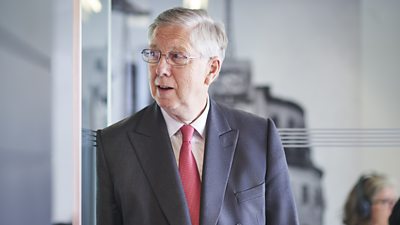
It is part of our responsibility... to make sure we can compete with the biggest players, here and abroad, in a global media market.
Check against delivery
Introduction
Welcome, everyone, to this launch of the BBC’s Annual Report for 2016/17. Thank you all for coming.
I am in the slightly unusual position of introducing an Annual Report that covers a year in which I was not yet BBC Chairman.
But while the preparatory work for the Report was done prior to the year end, it fell to the new board to complete its preparation and take ultimate responsibility.
So I feel pride in what is set out in our Annual Report.
It shows that, despite all the demands of a testing and time-consuming Charter review, the BBC did not allow itself to be distracted from delivering what matters most to audiences: ambitious, high-quality and distinctive programmes and services.
I believe it documents a great year on air and on screen, and represents a strong foundation for the work we have ahead under our new Charter.
A moment of transition
Of course, the new Charter marked a moment of significant transition for the BBC.
As of April 2017, a new unitary board has replaced the previous governance arrangements under which responsibility was split between the BBC Trust Board and the BBC Executive Board.
If any of you were confused about exactly who was responsible for what under the old system, I can tell you, you were in good company.
Those of you who followed the debate about revising the governance and regulatory regime will not be surprised to learn that I far prefer the new system.
It provides much greater clarity about where responsibility for the BBC resides: unambiguously in the single Board that now runs the BBC.
And it gives us a much clearer regulatory arrangement, with Ofcom armed with new powers under the Charter.
A new unitary board
Putting that Board together was of course my first role.
It has been in place since 3 April, and consists of 12 directors: eight non-executives drawn from a wide variety of backgrounds, and four executives, including the Director-General.
In due course we will be joined by two further non Execs, who will become the Members for Wales and Northern Ireland respectively.
I’m very pleased with how the new Board is working. It is allowing the BBC to speak with a single voice for the first time.
The Board has a number of responsibilities. But first and foremost it is charged with ensuring that the BBC complies with the new Charter - and in particular with the five Public Purposes that are set out within it.
These are the ways in which we achieve our fundamental mission to inform, educate, and entertain.
And they represent our contract with our audiences - we know that we cannot fulfil our duty to the licence fee payer unless we meet them.
Our Annual Plan
Many of you will know that, two weeks ago, we launched our new Annual Plan.
It sets out our ambition for each public purpose, along with our detailed creative plans for achieving them.
It offers a framework against which the Board will be able to assess the performance of the BBC and monitor progress against our goals; and against which we will report in our Annual Report every July. In future years, it will be published ahead of the financial year to which it relates.
But of course the new Charter allows for a period of transition in this first year, which is why it was published later – and why many of the plans and programmes set out in it are already underway.
Conclusion
I don’t want to say too much about this year’s Annual Report… Tony will say more in a moment.
But I do want to say one thing about the talent pay figures we are publishing today as part of our Charter obligation.
Our audiences expect - and require - that we put top talent on the BBC.
It is part of our responsibility to them to make sure we can compete with the biggest players, here and abroad, in a global media market.
And to make sure that - as the new Charter demands - we can continue to offer the world-class programmes and services that make us the cornerstone of the UK’s creative economy and a key to our cultural impact abroad.
That means giving our audiences the best quality and the best value for their licence fee - balancing efficiency with the need to get the best talent on air and on screen.
I am now going to hand over to Tony.
