 | | Somalia |
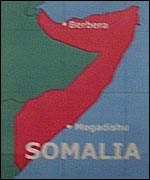
Where is Somalia?
On the cap of the Horn of Africa. To the south is Kenya, to the west, Ethiopia, to the Northwest, Djibouti and, to the north, the Gulf of Aden.
What is the land like?
Hot and dry all year round, with regular droughts, and only two permanent rivers in the whole country. There are two main rainy seasons a year, which fall during the droughts. The northern coast, the longest of any country in Africa, has been vital to the country's trade with the Middle East and the rest of East Africa.The whole country is about the same size as Texas.
What has occupied the Somali people?
People lived in the area from prehistoric times. But most Somalis claim descendant from the Arab settlers who arrived around 1,000 years ago.
Somalia was known as The Land of Punt by the Egyptians. The Chinese traded with Somalis to take exotic wildlife back to their 10th century courts. By the 12th century, the ancestors of Somalia's main clan families were established.
Islam was well-established the end of the 12th century.
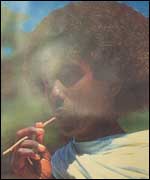 | | Traditional Nomad |
The lifestyle is mostly nomadic farming. Settled agriculture is also practised in the Northwest and between the two rivers in the south.
Who has occupied the country since?
Somalia was divided up by European colonialists after the opening of the Suez Canal in the late 1800s. By 1900 the British, Italians, French and Ethiopians all jointly ruled a very divided land.
Independence?
The Sayyid (known to the British as The Mad Mullah) led a Muslim uprising against colonialism around 1900. But the country's new-found independence only lasted until the 1940s when both the Italians and the British invaded the country.
The Somalis pressed for true independence over the next decades and, in 1960, Italian and British Somalia merged to form the Somali Republic.
The next ten years of peace and stability saw China, the Soviet Union, and the United States providing both aid, assistance and, in some cases, military aid.
The Revolutionary Regime
Clan animosity led to the assassination of the Somali president in 1969. The army took over, and closely aligned with the Soviet Union, set up the Supreme Revolutionary Council. The Council introduced literacy, improved the status of women and minorities and developed the country's infrastructure, health and education. Later it abolished the national assembly, suspended the constitution, and locked up former government members. There was growing opposition from Islamic scholars.
Political instability in the region, conflicts with Ethiopia and the fall of the Shah of Iran, led to less co-operation with the Soviet Union and increased military and development aid from the USA, Europe and Arab countries during the 1970s.
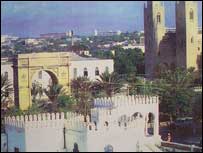
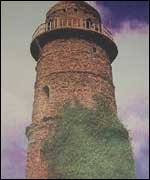 | | Old mosque still standing in Somalia |
The Civil War
After the ousting of Siyaad Barre and his revolutionary regime, clan competition for power and the desire to settle old scores took over the area.
The country was divided. In the north, independence was declared and the Somaliland Republic set up. In the South two warring factions divided the area, one led by interim president Ali Mahdi Mohammed, the other by the military wing leader, Mohammed Farah Aideed. In the Northeast, which had stayed out of the political events for the most part, local peace was maintained and the people began restoring local government.
At least 45% of the population was displaced internally or fled abroad. Around four hundred thousand Somalis died from violence, disease and famine. By 1992 around 1.5 million Somalis were in danger of famine.
In the south, bandits under the authority of local warlords ruled the country, even looting food aid. In the power vacuum created by the government's collapse, those who were best armed, ruled.
In 1993 the United Nations took over command of the emergency aid distribution from the United States.
2003
There is still no recognised legel government for the whole of Somalia. The country is still suffering from internal conflict.
Synopsis based on "Somali Community Development Report" by Jawaahir Daahir and Hashim Duale, Somali Community Development Workers in Leicester. Written in 2002. |  |