6 Minute English
Intermediate level
How culture affects sadness
Episode 230413 / 11 Apr 2023

Introduction
How does culture influence the way you feel and show sadness? Neil and Sam will be investigating how the way people express sadness is influenced by their culture, and, as usual, we’ll be learning some new, useful vocabulary as well.
This week's question
Which colour is associated with sadness? Is it:
a) yellow?
b) blue? or,
c) brown?
Listen to the programme to find out the answer.
Vocabulary
(to be) down in the dumps
feel miserable and depressed
(to be) fed up
feel unhappy, bored, or tired, especially of something you have been experiencing for a long time
melancholy
intense and thoughtful sadness
grief
strong feeling of sadness, especially caused by someone’s death
repressed
unable to show your true feelings and emotions
stiff upper lip
not showing your feelings when you are upset, even though it is difficult not to
TRANSCRIPT
Note: This is not a word-for-word transcript.
Sam
Hello. This is 6 Minute English from BBC Learning English. I’m Sam.
Neil
And I’m Neil. When Helen Russell was three years old, her new-born baby sister died suddenly. Looking back at that sad time, Helen remembers making a big decision – she wanted to be happy. She became a bestselling author and wrote a book called, The Atlas of Happiness. She got married, and even moved to the famously happy city of Copenhagen in Denmark.
Sam
But the sadness Helen felt didn’t disappear, and the longer she lived abroad, the more she wondered whether her feelings were somehow connected to being born in England, into a culture where, traditionally, expressing your emotions was discouraged.
Neil
In this programme, we’ll be investigating how the way people express sadness is influenced by their culture, and, as usual, we’ll be learning some new, useful vocabulary as well.
Sam
But first I have a question for you, Neil. In English there are many idioms which describe being sad, including down in the dumps, meaning that you feel miserable and depressed. Also, emotions are often associated with colours, for example you might go red with anger, or turn green with envy. But which colour is associated with sadness? Is it:
a) yellow?
b) blue? or,
c) brown?
Neil
I think the answer is blue.
Sam
OK, Neil. We’ll find out the later in the programme. Around the world, cultures express emotions very differently. In Spain, flamenco performers express their emotions with colourful displays of song and dance, whereas in Japan, crying is considered weak and shameful. To discover more about how British people express their feelings, Helen Russell interviewed, Thomas Dixon, a professor at the Centre for the History of Emotion, for BBC World Service programme, The Documentary:
Professor Thomas Dixon
The word sad, as you will know, Helen, literally means sated or full. So, it’s earliest use is in English, it means being literally fed up, being full of something sad or sated means heavy and full. And then of course we have this huge vocabulary of melancholy, sorrow, grief, depression and many, many other terms, and they all mean slightly different things.
Neil
Professor Dixon explains that the original meaning of the word sad was ‘full’ or fed up – a phrase which today means being unhappy, bored or tired of something which has been going on a long time. For example: everyone is fed up of Covid.
Sam
But fed up is just one of many words to describe feelings of sadness, each with a slightly different meaning. One of them is melancholy, a kind of intense and thoughtful sadness. Another is grief - a strong sadness often caused by the death of someone you love.
Neil
In Irish culture, melancholy is expressed artistically in poems or songs. And in other cultures, India for example, grief can be expressed by professional mourners who are paid to cry by the family of the person who has died. In England, however, big public displays of emotion are uncommon.
Sam
But according to Professor Dixon that wasn’t always the case. Here he explains to BBC World Service programme, The Documentary, how it was only quite recently, during the time of Queen Victoria and the British Empire, that the English got a reputation for being repressed - unable to show their true feelings and emotions.
Professor Thomas Dixon
By and large it's a Victorian, and then Edwardian, and 20th century characterization. As you can imagine, it fits with the era of empire, of white British men going around the world conquering it, and having a stiff upper lip and ruling over the people… in other parts of the world, and believing themselves, the white Europeans, to be superior… and one sign of that superiority, and Darwin writes: Englishmen rarely caught cry except under the pressure of the acutest grief.
Neil
Professor Dixon says the Victorians who ruled the empire had a stiff upper lip. These men believed they were better than everyone else, and that to cry was a sign of weakness. When we cry, our top lip starts to wobble and so this gave rise to the idiom a stiff upper lip, meaning to not show your feelings when you are upset, even though it is difficult not to.
Sam
Fortunately, most Brits are less repressed nowadays, but it’s still hard for some people, especially men, to express their feelings. Sometimes drinking alcohol gives people the courage to say what they are feeling, but this is not so healthy and can even increase feelings of depression.
Neil
It’s talking to someone about your feelings that can really help, and keep away the blues… and in saying that I think I’ve answered your question, Sam.
Sam
I asked Neil which colour is often associated with feeling sad.
Neil
And I said it was blue…
Sam
Which was… the correct answer, and it gives us another idiom about sadness – feeling blue. OK, let’s recap the vocabulary we’ve learned from this programme about the emotion of sadness, or in other words, feeling down in the dumps.
Neil
If you are fed up of something, you’re unhappy, bored, or tired of it, especially if it’s been happening a long time.
Sam
Melancholy is a type of intense and thoughtful sadness; and grief is a strong sadness usually caused by someone’s death
Neil
The adjective repressed means unable to show your true feelings and emotions.
Sam
And finally, the uniquely British idiom, to keep a stiff upper lip, means not to show your feelings when you’re upset, even though it is difficult not to. Hiding you feelings or bottling them up is definitely won’t make you happy, but making friends and learning something new might, so remember to join us again soon, here at 6 Minute English. Bye for now!
Neil
Bye!
ሐድሽ ፓድካስትታት ተመልከት 6 Minute English
Sexism: Female farmers fighting back
Episode 231228 / 28 Dec 2023
How can female farmers beat rural sexism?


What and where is Little Italy?
Episode 231130 / 30 Nov 2023
Mozzarella, ricotta, cannolis and focaccia... Where are we? Little Italy of course!

Social media and teenage health
Episode 231123 / 23 Nov 2023
What are the health risks of social media for teenagers?






Sounds that make you want to scream
Episode 230928 / 28 Sep 2023
Are there any sounds you find upsetting?




The stories behind our names
Episode 230831 / 31 Aug 2023
What do our names reveal about our culture and family history?


Are you unhappy at work?
Episode 230817 / 17 Aug 2023
Does work leave you feeling bored and exhausted?





Is it wrong to eat plants?
Episode 230629 / 29 Jun 2023
Should we treat plants with the same consideration we treat animals with?

The art of subtitling
Episode 230608 / 08 Jun 2023
Hear how subtitles can help bring TV and movies to life

Ecotourism: good or bad?
Episode 230601 / 01 Jun 2023
We discuss the growing popularity of ecotourism.
Can climate change cause more disease?
Episode 230525 / 25 May 2023
With warming temperatures, mosquitos are now spreading to new areas, including Europe.



Ice and the origins of life on Earth
Episode 230504 / 04 May 2023
We talk about an essential element for life to thrive.

Women in politics
Episode 230427 / 12 Apr 2023
We discuss some of the reasons why women make up only 26% of the world's politicians.

What's the point of museums?
Episode 230420 / 20 Apr 2023
We discuss the role of museums in the 21st century and the items taken from different countries.
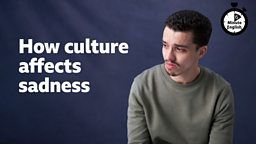
How culture affects sadness
Episode 230413 / 11 Apr 2023
What ways do you think culture can influence sadness?

Would you eat a Kalette?
Episode 230406 / 06 Apr 2023
Hear about a new kind of vegetable making an entrance in British kitchens


Food and mood
Episode 230316 / 16 Mar 2023
We look at the link between what you eat and how you feel.
How to talk to a climate denier
Episode 230309 / 09 Mar 2023
The dos and don'ts of trying to discuss science with someone who doesn't believe in it
Losing your mother tongue
Episode 230302 / 02 Mar 2023
Hear the story of a woman who replaced her native Czech for English.
The health benefits of apples
Episode 230223 / 23 Feb 2023
Could 'an apple a day keep the doctor away'?

Doomscrolling: Why do we do it?
Episode 230209 / 27 Jan 2023
What is doomscrolling and why are we attracted to bad news? Listen to find out!

Exercise for the lazy
Episode 230202 / 22 Jan 2023
What's the least amount of exercise you should do to stay healthy?

Can AI have a mind of its own?
Episode 230126 / 26 Jan 2023
Hear about the software engineer who became 'friends' with his computer
Climate change: Are there too many people?
Episode 230119 / 13 Jan 2023
Does the size of your carbon footprint depend on where in the world you were born? Listen to find out!

The hidden life of buffets
Episode 230112 / 12 Jan 2023
Neil and Sam discuss buffet meals and the history behind them.

Songwriting
Episode 230105 / 05 Jan 2023
Writing a memorable song isn't easy. So is there an art to good songwriting?