Unit 11: The bucket list
The present perfect with ‘ever’ and ‘never’
Select a unit
- 1Nice to meet you!
- 2What to wear
- 3Like this, like that
- 4The daily grind
- 5Christmas every day
- 6Great achievers
- 7The Titanic
- 8Travel
- 9The big wedding
- 10Sunny's job hunt
- 11The bucket list
- 12Moving and migration
- 13Welcome to BBC Broadcasting House
- 14New Year, New Project
- 15From Handel to Hendrix
- 16What's the weather like?
- 17The Digital Revolution
- 18A detective story
- 19A place to live
- 20The Cult of Celebrity
- 21Welcome to your new job
- 22Beyond the planets
- 23Great expectations!
- 24Eco-tourism
- 25Moving house
- 26It must be love
- 27Job hunting success... and failure
- 28Speeding into the future
- 29Lost arts
- 30Tales of survival
Session 4
Let's talk! This is your chance to practise using the present perfect tense to talk about your life – and to create your very own bucket list.
Activity 2
Over to You!
What have you done?
Present perfect is used to talk about life experiences. Now it's over to you to talk about yours, remembering to use what you've learnt.
To do
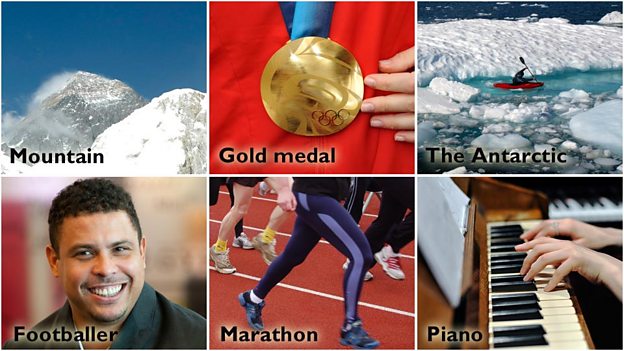
Do you remember the list of achievements we showed you in Session 1? Have a look and write down the things you have and haven't done.
ነቲ ጽሑፍ ብምንባብ ነቲ ስራሕ ዕመምዎ

Now it's time to talk about your own life experiences.
Talk to a friend about things…
- You have done
- You haven't - or have never - done
Then ask your friend about the things they have done and never done.

We have talked about bucket lists in this Unit - a list of things you want to achieve before a certain age or before you die. Have a look at this BBC News article about actor Neil Patrick Harris's bucket list.
Hopefully this article will now inspire you to create your own bucket list of things you want to achieve.
Next
Coming next is this week's News Report where you can hear the distressing story of children from Switzerland who have been used as slave labour.
ናይ ስዋስው ክፍሊ
Present Perfect
Meaning and use
Positive
The present perfect is made with subject + have/has + past participle.I’ve taught English in Italy and in Russia.
Johnny Depp has starred in lots of brilliant films.
Negative
The negative present perfect is made with subject + have/has not + past participle.I haven’t seen the first Bond film.
I haven’t seen the first Bond film.
Questions
Present perfect yes / no questions are made from have/has + subject + past participle?Present perfect question word questions are made from question word +have/has + subject + past participle?
Ever and never
We often use the present perfect with the words ever or never. Ever mean at any time in someone’s life. We usually use ever in questions.‘Has he ever worked in China?’ ‘No, he hasn’t.’
Never means not at any time in someone’s life.
I’ve never seen the first Bond film.
Sometimes we ask questions with never. Often we do this to express surprise:
Have you never eaten a banana?
Past participles
The past participle is the third form of the verb. For example, with the verb to see, the three forms are: see, saw, seen.We use the past participle in present perfect sentences with ever and never.
Have you ever eaten sushi?
I’ve never seen the first Bond film.