Unit 1: Nice to meet you!
Asking questions
Select a unit
- 1Nice to meet you!
- 2What to wear
- 3Like this, like that
- 4The daily grind
- 5Christmas every day
- 6Great achievers
- 7The Titanic
- 8Travel
- 9The big wedding
- 10Sunny's job hunt
- 11The bucket list
- 12Moving and migration
- 13Welcome to BBC Broadcasting House
- 14New Year, New Project
- 15From Handel to Hendrix
- 16What's the weather like?
- 17The Digital Revolution
- 18A detective story
- 19A place to live
- 20The Cult of Celebrity
- 21Welcome to your new job
- 22Beyond the planets
- 23Great expectations!
- 24Eco-tourism
- 25Moving house
- 26It must be love
- 27Job hunting success... and failure
- 28Speeding into the future
- 29Lost arts
- 30Tales of survival
Session 2
Asking Questions
You can't speak English without asking questions! There are a few different question types in English. In this session you'll see our presenters asking each other questions. We'll show you the grammar rules of question forms - and then you'll have a chance to practise.
ድምር ነጥቢ ናይዚ ክፍለ-ስራሓት 2
0 / 17
- 0 / 7Activity 1
- 0 / 7Activity 2
- 0 / 3Activity 3
- 0 / 0Activity 4
Activity 2
Getting to know each other - part 2
Asking Questions
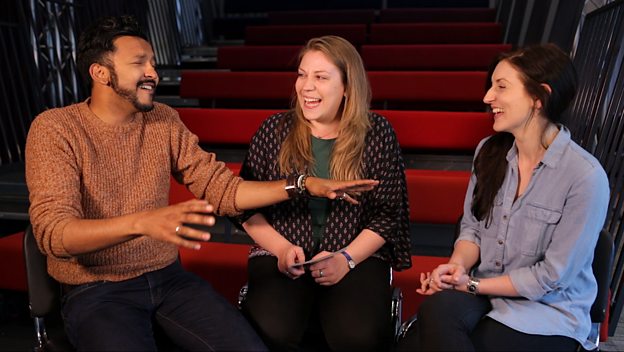
In Activity 1, our presenters asked each other lots of questions. You now have the chance to practise writing questions yourself.
ነቲ ንጥፈት ፈትንዎ
Question forms: Practice
7 Questions
Rearrange the words to make questions.
ሓገዝ
Activity
Rearrange the words to make questions.
ኣመት
Watch the video again to see the different question forms.Question 1 of 7
ሓገዝ
Activity
Rearrange the words to make questions.
ኣመት
Watch the video again to see the different question forms.Question 2 of 7
ሓገዝ
Activity
Rearrange the words to make questions.
ኣመት
Watch the video again to see the different question forms.Question 3 of 7
ሓገዝ
Activity
Rearrange the words to make questions.
ኣመት
Watch the video again to see the different question forms.Question 4 of 7
ሓገዝ
Activity
Rearrange the words to make questions.
ኣመት
Watch the video again to see the different question forms.Question 5 of 7
ሓገዝ
Activity
Rearrange the words to make questions.
ኣመት
Watch the video again to see the different question forms.Question 6 of 7
ሓገዝ
Activity
Rearrange the words to make questions.
ኣመት
Watch the video again to see the different question forms.Question 7 of 7
Excellent!Great job!ሕማቕ ዕድል!ዘመዝገብኩምዎ ነጥቢ ...:
Next
Why don’t you get your friends together and ask them some of the same questions? What do you think they will say?
Facts about the course
Now it’s time to find out about two other features of the course. The first feature is the ‘Grammar Reference’. In each unit we help you explore a grammar point that you need to learn.
However, you will need to do some extra work on your own. We have written an in-depth grammar guide for each unit. You can find it on the Grammar Reference page (you can also access it from the navigation bar at the top of each page).
To improve your language you should study our grammar pages and try to complete the activities that you find there.
The second feature is… Well, you’ll need to go to the next activity page to find out.
ናይ ስዋስው ክፍሊ
In English, there are two basic types of question.
1. Yes/no questions often begin with the verb to be, but can also begin with other auxiliary verbs, such as do.
We ask these when we want a yes or no answer.
2. Wh-questions start with a question word, such as who, what, where, when, why or how.
We ask this type of question when we want different kinds of information. These questions cannot be answered with a yes or no.
