6 Minute English
ระดับกลาง
Tech that refuses to die
Episode 241017 / 17 Oct 2024

_____________________________________________________________________________________________________
Download a free 6 Minute English worksheet!
Download a free transcript!
Learn more about technology
______________________________________________________________________________________________________
Try more episodes of 6 Minute English:
______________________________________________________________________________________________________
Introduction
Why is some old technology still used? Georgie and Phil discuss this and teach you some useful vocabulary.
This week's question
What was the name of the first computer developed for home use in the UK?
a) the Commodore 64?
b) the Sinclair ZX80? or,
c) the BBC Micro?
Listen to the programme to hear the answer.
Vocabulary
obsolete
no longer in use, having been replaced by something newer, better or more fashionable
if it ain’t broke, don’t fix it
(idiom) used to say that if something is working satisfactorily, there is no reason to try to change it
clockwork
machinery using metal springs and wheels which move when wound up with a key
QWERTY
the traditional typewriter arrangement of keys in which the top line begins with the letters q,w,e,r, t and y
verbatim
using exactly the same words as were originally used
stick with
continue using or doing something
TRANSCRIPT
Note: This is not a word-for-word transcript.
Phil
Hello. This is 6 Minute English from BBC Learning English. I’m Phil.
Georgie
And I’m Georgie.
Phil
The exciting thing about technology is that it’s always changing. Can you remember when computer floppy disks, hand-held Game Boys, and fax machines were in fashion? Do you still have a Walkman cassette player from the 1980s?
Georgie
Today technology progresses so quickly that old tech soon becomes obsolete, no longer in use having been replaced by something better or more fashionable.
Phil
So, you might be surprised to hear that until recently the government of Japan still used three and-a-half inch floppy disks to store official documents; that around the world, music cassettes and Walkmans are making a comeback; and that even the world-famous Swiss CERN physics laboratory uses old-fashioned magnetic tape reels to record its data.
Georgie
Yes, it seems that some old technology just refuses to die - maybe because people still love it, or maybe because of the old English proverb, if it ain’t broke, don’t fix it, meaning that things should only be changed if they don’t work. So, in this programme, we’ll be hearing about old tech which continues to be used today. And, as usual, we’ll be learning some useful new vocabulary as well.
Phil
But first I have a question for you, Georgie. Computers have seen some of the biggest advances in technology. But what was the name of the first computer developed for home use in the UK? Was it:
a) the Commodore 64?
b) the Sinclair ZX80? or,
c) the BBC Micro?
Georgie
Hmm, I’ll guess it was the Commodore 64.
Phil
OK, Georgie, we'll find out if that's the correct answer later in the programme. One reason for not updating tech is if the original design still works well. NASA engineer, Jonathan Sauder, designed HAR-V, a mechanical rover able to survive the inhospitable conditions on Venus where temperatures reach 460C. Here’s Jonathan talking to BBC World Service programme, Tech Life:
Jonathan Sauder
…Venus has a very long night. It's actually about 60 days long that you're in total darkness. So that's where we came up with the concept for HAR-V: a mechanical clockwork rover that could be powered by Venus’s winds in order to allow it to survive Venus’s long hot nights.
Georgie
Conditions on Venus mean that ordinary electronics simply won’t work. That’s why Jonathan built a clockwork rover, a machine with springs and wheels inside which works when it’s wound up with a key. Clockwork technology from the 1st century being used in 2024 by NASA!
Phil
Other tech which refuses to die is just too much trouble to change. For example, countries around the world use different electrical plugs which would be better to standardise – but imagine the work involved! Here, Chris Vallance, presenter of BBC World Service’s, Tech Life, discusses a similar example with Dr Tacye Phillipson, science curator at the National Museum of Scotland:
Chris Vallance
Another piece of tech that people say has sort of refused to die is the QWERTY keyboard, the layout of keyboards that we all have, and is perhaps not the most efficient layout in terms of the speed of typing.
Dr Tacye Phillipson
It's the layout we're all really, really used to though, and if you see court reporters, stenographers, they have special keyboards and can type so fast to takedown verbatim, but they also look very complicated, I don't actually want to learn to use one of those so I'll stick with QWERTY for the moment.
Georgie
Chris and Tacye discussed QWERTY, the traditional typewriter arrangement of keys on a computer keyboard in which the top line begins with the letters q, w, e, r, t and y. In terms of being able to type quickly, QWERTY isn’t the best - in fact, court reporters type much faster with alternative keyboards. Court reporters need to type fast to record cases verbatim, using exactly the same words that were originally spoken.
Phil
But because everyone is used to QWERTY keyboards, the tech lives on. That’s why Tacye says she’ll stick with QWERTY, she’ll continue using it and not change to something else. And speaking of QWERTY keyboards has reminded me of my question, Georgie.
Georgie
Yes, you asked me the name of the first home computer released in the UK, and I guessed it was the Commodore 64…
Phil
Which was… the wrong answer, I’m afraid. In fact, the UK’s first home computer was the Sinclair ZX80 which was released in 1980 and used a whopping 4 kilobyte memory, that’s about half an email! OK, it’s time to recap the vocabulary we've learned in this programme starting with obsolete, meaning no longer in use, having been replaced by something newer or better.
Georgie
The idiom, if it ain’t (or isn’t) broke, don’t fix it, is used to say that if something is working, there is no reason to try to change it.
Phil
Clockwork machinery uses metal springs and wheels which move when they are wound up with a key.
Georgie
QWERTY refers to the traditional typewriter arrangement of keys in which the top line begins with the letters q,w,e,r, t and y
Phil
If you say something verbatim, you use exactly the same words which that originally used.
Georgie
And finally, to stick with something means to continue using or doing it. Once again our six minutes are up, but remember to join us again next time for more trending topics and useful vocabulary, here at 6 Minute English. Goodbye for now!
Phil
Bye!
6 Minute English ล่าสุด
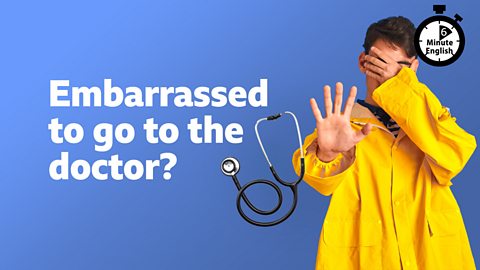
Embarrassed to go to the doctor?
Episode 241226 / 26 Dec 2024
Have you ever been embarrassed to go to the doctor?
Call centres: Are you talking to AI?
Episode 241219 / 19 Dec 2024
Have you ever phoned up a company and had your call held in a queue? Could AI make this less painful?

Making 'mum friends'
Episode 241212 / 12 Dec 2024
Is making new ‘mum friends’ the positive experience it’s often described as?
Can you trust ancestry DNA kits?
Episode 241205 / 05 Dec 2024
Are DNA ancestry tests a reliable way to trace your ancestry?

How babies learn to talk
Episode 241128 / 28 Nov 2024
What do babies need to learn to do to be able to talk?


The bond between sisters
Episode 241114 / 14 Nov 2024
Are the stereotypes about older and younger sisters true?


Why you need a good night's sleep
Episode 241031 / 31 Oct 2024
Why is it so important to get a good night's sleep?
Divorce: Why does it happen?
Episode 241024 / 24 Oct 2024
How is divorce talked about in different countries?

Did Taylor Swift fans cause an earthquake?
Episode 241010 / 10 Oct 2024
Did Taylor Swift move the Earth?


Learning a new food culture
Episode 240926 / 26 Sep 2024
Would you find it different to adapt to a new food culture?

Saving water in the driest place on Earth
Episode 240919 / 19 Sep 2024
How do farmers in the driest place on Earth manage to grow crops? With this solution!



Chocolate: Meet a real Willy Wonka
Episode 240829 / 29 Aug 2024
Would you like to be a chocolate maker, like Roald Dahl's Willy Wonka?

Why we love dumplings
Episode 240822 / 22 Aug 2024
Warning! This episode might make you very hungry...

Kids and climate change
Episode 240815 / 15 Aug 2024
What are young people's thoughts on climate change?


The science of falling in love
Episode 240801 / 01 Aug 2024
What's really happening in our brain when we fall in love?
AI to reduce animal testing
Episode 240718 / 18 Jul 2024
Could AI reduce the need for animal testing?

Why read books, not screens?
Episode 240718 / 25 Jul 2024
Why is it better to read from a book than a screen?

The school that puts the kids in charge
Episode 240711 / 11 Jul 2024
What happens when you put the kids in charge of the school?

What can we learn from toddlers?
Episode 240704 / 04 Jul 2024
Learn to speak to yourself in the way that toddlers do!

How learning to read changes lives
Episode 240627 / 27 Jun 2024
How can literacy change people's lives?

Building a better world with wood?
Episode 240620 / 20 Jun 2024
How can buildings made from wood help our mental health?


E-rickshaws driving away pollution
Episode 240606 / 06 Jun 2024
Could E-rickshaws give us cleaner air?




Bitter food, better health?
Episode 240509 / 09 May 2024
Could bitter foods be better for your health?






Disability in music and theatre
Episode 240321 / 21 Mar 2024
Learn about the people who are making it easier for disabled musicians and music fans to perform and see live music


Sewing to fight period poverty
Episode 240307 / 07 Mar 2024
Period poverty affects over 500 million people worldwide. How can a volunteer project help?

Plastic waste eaten by enzymes
Episode 240229 / 29 Feb 2024
Plastics can be difficult to recycle. Could a recently discovered enzyme help?
Feed your brain
Episode 240222 / 22 Feb 2024
Food is fuel for our brains. So, what should we be eating?

Food for new mums
Episode 240215 / 15 Feb 2024
Having a baby is exhausting! What do mothers need to eat after giving birth?

Fighting loneliness with soup
Episode 240208 / 08 Feb 2024
Hear how a project in the Netherlands is helping in the fight against loneliness


How the language of menus matters
Episode 240125 / 25 Jan 2024
Why is the language used on menus important?