
Proofreading in your exam
So, you're in the exam and you've finished your answer. That's it, isn't it? No! You need to make sure to proofread what you've written in case you've made any mistakes. Do you know what kinds of mistake to look for? Here are four top tips!
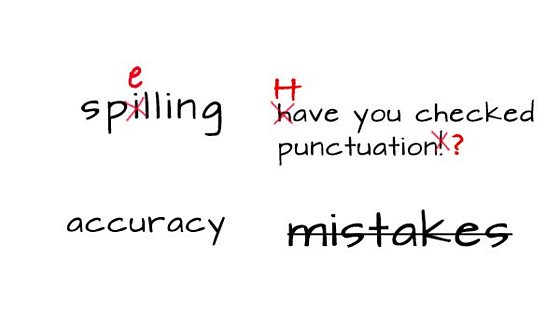
Spelling
Before the exam, you should memorise and practise spelling words that you always find challenging. You could do this through repetition exercises by writing the word over and over and over again – or you could also try remembering how to spell tricky words through mnemonics.
A mnemonic is a technique where you use the first letters of words in a phrase to remember a spelling. For example:
No English Child Eats Sandwiches, Some Are Really Yuck.
Did you get it? The first letters of the words in that phrase spell necessary.
When you've finished your exam essay – check your spelling. Focus on words you know you have trouble with.
Punctuation
You should also make sure to check punctuation. This includes capital letters, full stops and commas. If you haven't let a gap between your paragraphs, have you indented it? Indenting is where you leave a space to show where a new paragraph begins.
Accuracy
Check your language!
Have you made good use of prepositions? Does the preposition match the adjective you’ve used? Have you used the gerund or the infinitive correctly? Have you use the simple where you need the continuous?
You should try and use a range of complex sentences in your essay. This not only helps you to express your ideas more economically, but it also displays a better understanding of the language. Ensure you revise how to build complex sentences! This can include things like conditional sentences and subordinate clauses.
Mistakes
If you do make a mistake during the exam, just put a line through it. Anything with a line through it will not be marked by the examiner. This goes for your plan too! You won't be allowed to use correction fluid, so a simple line is fine.
By spending a few minutes checking your work, you'll be able to spot obvious and silly errors that may result in losing marks.
Next
How did you do? Now that you've understood the question, it's time to plan and write your essay. Go to the next activity to find out more.
