Leadership
level
How do I become a leader?
Episode 220222 / 22 Feb 2022

Images: Getty / BBC
Introduction
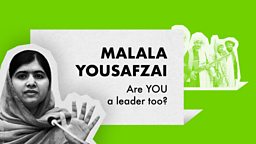
What qualities does a person need to have to unite people behind a cause and become a successful leader? Pakistani student Malala Yousafzai came back from a terrible attack to inspire the world.
In the seventh part of our series on leadership, we focus on how people need to identify their own inner attributes and transform them into a tool for change. And they don't have to be superhuman!
Our Leadership series homepage
Leadership and communication: Obama and Trump
Meet our partner, The Open University
TRANSCRIPT
Presenter
The youngest Nobel prize winner in history, a leading campaigner for girls' education.
And an entrepreneur who believes business can be a force for good in the world.
Charmian Love
I found that my purpose is to really create space for others and to share my energy.
Presenter
We learn what makes these two women leaders, and how you can be a leader too.
How did Malala Yousafzai rise up from a terrible attack to inspire the world?
She came from the Swat region of Pakistan. The Taliban, who opposed women's freedom, were becoming more and more powerful there.
Aged eleven, her father got her to write a blog for the BBC. She gave a schoolgirl's view of life under the Taliban. Soon, she was campaigning for girls' education more widely.
But in October 2012, aged fifteen, she was shot. A Taliban gunman attacked her on a school bus.
She survived the attack, but was flown to hospital in England. People all over the world started to hear what she had to say. She spoke passionately and intelligently about educating girls.
Malala
I want to go back to Pakistan, but first of all, I need to be fully empowered and to make myself empowered and to make myself powerful, I only need one thing: that is education.
Presenter
She's inspired women and girls around the world, using speeches and books. So, what makes Malala a leader?
Brigid Carroll
I think many of us want to make a difference and many of us have passionate beliefs. I think what distinguishes someone like Malala is... is her... is her commitment to taking responsibility for that cause – for girls' education, for... for something that's larger than herself. And increasingly in my own work, I think responsibility and taking responsibility and been willing to be accountable is the real hallmark of leadership.
Presenter
So, Malala Yousafzai took responsibility for the cause she was passionate about. But what else sets her apart?
Brigid Carroll
So, she seems in many ways a very polite, courteous, positive – a well balanced girl, but she fights. She advocates. She... she pushes for a future that we don't yet have, which is girls everywhere in the world having education. So, that element of fight, resistance, advocacy – I think that's the really important thing.
Presenter
Being willing to fight for what she believes in is at the core of Malala's leadership. So, can anyone do it?
Brigid Carroll
I think anyone can be a leader and that's something I'm very passionate about, and traditionally people have thought leadership's a superhuman, kind of superhero, type and it's rare to find it. And I don't believe that at all. And I think Malala shows that above... above everything, that all of us, if we care enough and are supported well enough and are... can find a forum, can be... can be a leader.
Presenter
You can be a leader if you care enough about the cause, but it is important to have a good support network around you. And what if you don't want to be a leader?
Brigid Carroll
It's absolutely OK not to want to lead... but I would ask those who don't want to be a leader to be a really active follower. So, not been a leader doesn't mean disappearing, being silent, being... being un... inactive. And active followers, in a sense, do so much to... to create more of a platform, or more reach, for those who are wanting to be leaders and are willing to be there.
Presenter
Remember – not everyone can be a leader. Being an active follower can make just as big an impact. Malala's story is inspiring, but there are many ways to leadership.
Charmian Love doesn't just have one job; she has several. She cofounded her own company and is working to make businesses part of the solution to the world's biggest problems, through her leadership role at B Lab UK.
Charmian is an entrepreneur in residence at Oxford University and teaches young business leaders. So, what has Charmian learnt about becoming a leader?
Charmian Love
The most important thing to do, if you're on the journey of leadership, is to really know thyself: really understand who you are, what special gifts you have and how to express them in what you do. So myself, I found that my purpose is to really create space for others and to share my energy. So, those are the critical ingredients for leadership when it comes to the work that I do.
Presenter
Chamian wanted to know what her purpose was in life. She took responsibility for this, working with a career coach to identify her talents.
Charmian Love
I think once you really know what your gifts are, it actually becomes quite easy in order to identify where there's particular opportunities, where what you have to offer can be valuable. So, I've certainly found that having just that real clarity of – when there is an opportunity to work with a large group of people, in order to help them feel confident and feel courageous and really feel committed to taking action – I know that's going to be a place where I'm going to have... I'm going to have a good experience, because I know it's needing that purpose that I have.
Presenter
Chamian actively looked for opportunities where her talents could be used and valued. So, what does leadership look like to her?
Charmian Love
So, leadership to me is about really understanding what you have to contribute to a bigger set of challenges, and I think we really need to expand out what the definition of leadership is, because sometimes the most powerful form of leadership can be also about getting behind really good ideas and actually being a follower.
Presenter
Charmian is saying leadership is understanding how you can contribute to fixing a problem, even – as Professor Carol said earlier – by being a follower. So, do you know your purpose?
Charmian Love
If you're lucky enough in this world to know what your purpose is, then you are winning. I certainly had to go through a journey, in order to really uncover what I was really genuinely put on this planet to do. I would say that there's probably always a need to continually self-reflect on... on whether or not the work you're doing, the activities you're undertaking, the leadership you're expressing – is it truly aligned with who you are and what you're put on this amazing planet to do?
Presenter
Wise words from Charmian. It is a good idea to continually self-reflect on your purpose to make sure it fits with your values and beliefs.
To become a leader, you need to know yourself: what it is you believe in and the qualities you can bring. Taking responsibility is also important and having a fighting spirit definitely helps.
Latest Leadership

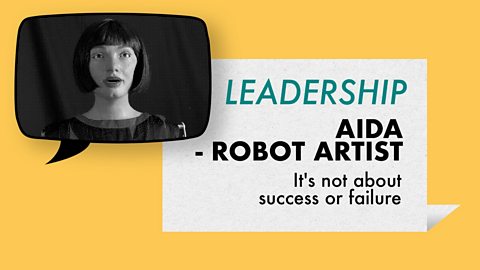
The leadership of the future?: Ai-Da, the humanoid robot
Episode 220317 / 17 Mar 2022
"Be humble and learn from your mistakes", says humanoid robot Ai-Da.

Leaders and machines
Episode 220315 / 15 Mar 2022
'Lack of care, understanding and empathy are qualities robots will never compensate for', says Owain Smolovic Jones.
Bringing people together for change: Andrew Pakes
Episode 220310 / 10 Mar 2022
'Good leaders listen and understand their colleagues', says Andrew Pakes.
How to be a good follower
Episode 220308 / 08 Mar 2022
'When followers criticise you, you have to be willing to accept it as useful criticism', says Keith Grint.
Representing the interests of a Maori tribe: Linda Te Aho
Episode 220303 / 03 Mar 2022
'To earn respect you have to show commitment and hard work', says Maori leader Linda Te Aho.

Quiet leaders
Episode 220301 / 01 Mar 2022
Leaders 'don't have to speak just for the sake of it', says Chellie Spiller.
Being a social enterpreneur: Charmian Love
Episode 220224 / 24 Feb 2022
'Don't lose the ability to be self-critical', says Charmian Love.
How do I become a leader?
Episode 220222 / 22 Feb 2022
'You don't have to be superhuman to be a leader', says Brigid Carroll.
Working with the community: Djamila Boothman
Episode 220217 / 17 Feb 2022
"You've got to be willing to listen", says Djamila Boothman.

Leadership and communication
Episode 220215 / 15 Feb 2022
Obama and Trump. 'Language plays a key role for charismatic leaders', says Doris Schedlitzki.
Keeping mental health in focus: Steven Hassan
Episode 220210 / 10 Feb 2022
"The most effective leaders are humble and invite criticism ", says Steven Hassan.
The dark side of leadership
Episode 220208 / 08 Feb 2022
'Most of us are vulnerable to cult leaders', warns expert Dennis Tourish.
Sharing climate change information with the world: Sophia Kianni
Episode 220203 / 03 Feb 2022
"Work with and listen to your team", says Sophia Kianni.
Who will save the planet?
Episode 220201 / 01 Feb 2022
Are persistence and a clear message the key to Greta Thunberg's high profile?
Helping to organise a movement for change: Boni Adeliyi
Episode 220127 / 27 Jan 2022
'Leadership is as much about serving as it is about taking control', says Black Lives Matter-UK organiser Boni Adeliyi

Leading for a cause
Episode 220125 / 25 Jan 2022
'Marcus Rashford knows that ending child poverty is a cause that is bigger than football', says Michael Ngoasong.
Helping others gain work skills: Rosie Ginday
Episode 220120 / 20 Jan 2022
"The biggest challenge is recruiting the people that really believe in your vision," says Rose Ginday.

Do visionaries make good leaders?
Episode 220118 / 18 Jan 2022
Visionaries like Steve Jobs might lose sight of the people who help make their vision happen.
Helping women get fair pay: Meggie Palmer
Episode 220113 / 13 Jan 2022
"Don't be scared of leadership - step into it!", says Meggie Palmer.
Are women better leaders than men?
Episode 220111 / 11 Jan 2022
What does it take to be a woman who leads?