Leadership
level
Do visionaries make good leaders?
Episode 220118 / 18 Jan 2022

Images: Getty / BBC
Introduction
He brought iPhones into our lives to help us communicate, but did Steve Jobs listen enough to the people he led?
In the second part of our series on leadership, we discuss visionary leaders. We ask if it's enough to inspire others with your ideas or if diversity of thought leads to even greater success.
TRANSCRIPT
Presenter
He gave the world iPhones and iPads... and gained a reputation as a bully along the way.
She makes delicious macaroons and changes the lives of young people in the process.
Rosie Ginday
It's really important to have people's voices heard, so even when they're challenging – and especially when they're challenging.
Presenter
If you have a vision, we look at how you can manage your self-belief alongside the need to take people with you.
Pioneer, innovator, genius: words often used to describe Apple founder Steve Jobs. He brought an artist's eye to technology.
What began as a business with his friend Steve Wozniak operating from his parents' garage in the 1970s... became one of the world's biggest corporations.
Along the way, came the Macintosh computer, the iPad and the iPhone.
Jobs' product launches turned into headline-making events. His charisma and passion for his products were on full display.
Steve Jobs
For those of you that have never used it, iTunes is the best music jukebox in the world and if you've lived in the US, it's been the best online music store in the world.
Presenter
But there were also stories of his harsh and controlling behaviour at work.
He would humiliate people in public, be offensive and rude, set near-impossible tasks for his team.
Some were able to stand up to him and gained his respect, but Apple lost many talented people because of his harsh leadership style.
So, did Apple's game-changing products have to come at the expense of so many hurt feelings?
Dr Scott Taylor
There's one key practice, which was problematic in Steve Jobs' leadership, and this is common to many, many charismatic and visionary leaders like Steve Jobs, and that is that he didn't listen. He had very strong views, he had very strong preferences and it was very difficult to... to have a conversation with him even, never mind a debate, about whether his ideas were... were good ideas or not.
Presenter
So, Steve Jobs didn't always listen. He often wanted things to go his way. What did this mean for his staff?
Dr Scott Taylor
In practice, working for the kind of visionary leader that Steve Jobs was often means doing exactly what you're told to do it. It's not... it's not a collaborative process and it's not a collective process. You have a single leader, who was very strong and very clear ideas, and who wants you as an employee to put those ideas into practice. If there's a problem, in putting those ideas into practice, it's your problem. It's not the problem of the leader or the idea or the vision.
Presenter
Leaders like Steve Jobs can make it difficult to be collaborative, or work together. So, is it best to avoid leaders with a strong vision?
Dr Scott Taylor
So, this kind of leadership can be very inspiring and it's very important to recognise that. Whenever we talk about charisma, we are talking about leaders that people want to follow and we're talking about leaders who are... often who are successful in terms of creating organisations or successful corporations like Apple. It's a kind of organisation, though, where you either fit or or you don't, and so it's a black or white situation. I think it's very important to be clear with yourself, if you are thinking about joining that kind of organisation or following that kind of leader, that it might not work out and you may need to... to move on.
Presenter
A leader with a clear vision can be inspiring, but it's important you believe in that vision too. So, how could Steve Jobs have done things differently?
Dr Scott Taylor
So, with a charismatic or a visionary leader, the... one of the key dangers is that it's very easy to get carried away, to... to lose yourself in the vision, and to lose sight of the other people that you work with and the collaborators that you rely on to make your vision happen. So, I think one of the key messages about visionary leadership is always to remember any kind of product, any kind of success, putting a vision... making a vision become reality involves a whole group of people and it is not just about the leader.
Presenter
So, visionary leaders should recognise the value of others; it's not just about them.
Meet Rosie Ginday, the founder of Miss Macaroon, a company based in the British city of Birmingham and named after the delicious little biscuits they make.
But it isn't only the macaroons that make this company special.
Its chefs are some of Birmingham's most troubled young people.
Rosie uses her baking business to help her community.
And she gives her young staff the skills and confidence to make a mark in the world.
So, how important is vision to Rosie?
Rosie Ginday
Vision is incredibly important. As a leader, it's so important for you to be able to set a longer-term vision – something that's bigger than, you know, small and medium-term goals, but a real purpose for your business. So, something that everybody within your organisation, whatever level they work at, can get behind and understand whether their job contributes to that longer-term vision.
Presenter
Rosie Ginday's vision gives her business a purpose. So, how has she gone about achieving her vision?
Rosie Ginday
So, to be able to achieve your vision, you need to have a clear direction of where you're going. You need to really understand your values and you need to put a plan in place to be able to achieve that vision. You also need the flexibility to... and understanding that everything's not go to go to plan and – likelihood is – it really won't go to plan. So, you have to be able to adjust to whatever's going on around you.
Presenter
Rosie has a clear plan about where she wants to take her business, but is flexible about how she gets there.
Rosie Ginday
To achieve your vision, you need a really strong team of people around you. At Miss Macaroon, we have a fantastic board of non-executive directors that helped me to set the strategy. We also have an amazing team of people that help us to build young people's skills and confidence, and help them to get back into work, but everybody really understands what the vision is.
Presenter
Rosie's clear vision has helped her build a strong team of people around her, who share the same passion as her.
Rosie Ginday
Even though everybody is super-committed to that vision, it's really important that people come from different backgrounds – whether that's different industries, you know, different ages, genders, sexualities, you know, religious backgrounds or ethnic backgrounds, or even, kind of, the... the commitment level to our social impact: we need different voices and thought processes around the table.
Presenter
Rosie actively seeks out a diverse range of people for her team, but doesn't that sometimes cause challenges?
Rosie Ginday
It's really important to have people's voices heard, so even when they're challenging – and especially when they're challenging – listening to what they're saying, because you could learn something from every conversation. So, being open to that challenge – asking for help is really important when you need it, and just making sure that that diversity of thought helps you to grow your business and achieve your vision.
Presenter
Rosie understands listening to what people have to say is important, especially if it is not always what she wants to hear.
So, visionaries can inspire others and make powerful leaders... but they need to remember to listen, and diversity is useful. There may be others who can help make their vision even better.
Latest Leadership

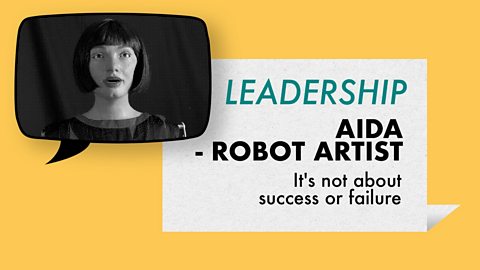
The leadership of the future?: Ai-Da, the humanoid robot
Episode 220317 / 17 Mar 2022
"Be humble and learn from your mistakes", says humanoid robot Ai-Da.
Leaders and machines
Episode 220315 / 15 Mar 2022
'Lack of care, understanding and empathy are qualities robots will never compensate for', says Owain Smolovic Jones.
Bringing people together for change: Andrew Pakes
Episode 220310 / 10 Mar 2022
'Good leaders listen and understand their colleagues', says Andrew Pakes.
How to be a good follower
Episode 220308 / 08 Mar 2022
'When followers criticise you, you have to be willing to accept it as useful criticism', says Keith Grint.
Representing the interests of a Maori tribe: Linda Te Aho
Episode 220303 / 03 Mar 2022
'To earn respect you have to show commitment and hard work', says Maori leader Linda Te Aho.

Quiet leaders
Episode 220301 / 01 Mar 2022
Leaders 'don't have to speak just for the sake of it', says Chellie Spiller.
Being a social enterpreneur: Charmian Love
Episode 220224 / 24 Feb 2022
'Don't lose the ability to be self-critical', says Charmian Love.

How do I become a leader?
Episode 220222 / 22 Feb 2022
'You don't have to be superhuman to be a leader', says Brigid Carroll.
Working with the community: Djamila Boothman
Episode 220217 / 17 Feb 2022
"You've got to be willing to listen", says Djamila Boothman.

Leadership and communication
Episode 220215 / 15 Feb 2022
Obama and Trump. 'Language plays a key role for charismatic leaders', says Doris Schedlitzki.
Keeping mental health in focus: Steven Hassan
Episode 220210 / 10 Feb 2022
"The most effective leaders are humble and invite criticism ", says Steven Hassan.
The dark side of leadership
Episode 220208 / 08 Feb 2022
'Most of us are vulnerable to cult leaders', warns expert Dennis Tourish.
Sharing climate change information with the world: Sophia Kianni
Episode 220203 / 03 Feb 2022
"Work with and listen to your team", says Sophia Kianni.
Who will save the planet?
Episode 220201 / 01 Feb 2022
Are persistence and a clear message the key to Greta Thunberg's high profile?
Helping to organise a movement for change: Boni Adeliyi
Episode 220127 / 27 Jan 2022
'Leadership is as much about serving as it is about taking control', says Black Lives Matter-UK organiser Boni Adeliyi
Leading for a cause
Episode 220125 / 25 Jan 2022
'Marcus Rashford knows that ending child poverty is a cause that is bigger than football', says Michael Ngoasong.
Helping others gain work skills: Rosie Ginday
Episode 220120 / 20 Jan 2022
"The biggest challenge is recruiting the people that really believe in your vision," says Rose Ginday.

Do visionaries make good leaders?
Episode 220118 / 18 Jan 2022
Visionaries like Steve Jobs might lose sight of the people who help make their vision happen.
Helping women get fair pay: Meggie Palmer
Episode 220113 / 13 Jan 2022
"Don't be scared of leadership - step into it!", says Meggie Palmer.
Are women better leaders than men?
Episode 220111 / 11 Jan 2022
What does it take to be a woman who leads?