单元 24: From rags to riches
Conditionals review
选择一个单元
- 1Pop-ups
- 2Hidden talents
- 3Can't buy me love
- 4Travellers' tales
- 5The colleague from hell
- 6Jurassic mystery: unpacking the past
- 7Career changes
- 8Art
- 9Project management
- 10The dog ate my homework!
- 11The diary of a double agent
- 12Fashion forward
- 13Flat pack skyscrapers
- 14Extreme sports
- 15Food fads
- 16Me, my selfie and I
- 17Endangered animals
- 18A nip and a tuck: cosmetic surgery
- 19I'm really sorry...
- 20Telling stories
- 21Fakes and phrasals
- 22Looking to the future
- 23Becoming familiar with things
- 24From rags to riches
- 25Against the odds
- 26Our future on Mars?
- 27Where is it illegal to get a fish drunk?
- 28Dodgy dating
- 29Annoying advice
- 30I'll have been studying English for thirty weeks
课程 2
If you knew what we know, then you probably wouldn't have to follow this session about conditionals. Even if you do know all about them, why not check out our review, just to make sure!
What is a conditional sentence?
Conditional sentences connect two things: a condition and a result. Something happens as a result of something else, or happens only if a certain condition is met.
The condition and the result can be real or imagined and can refer to past, present or future time. The condition part of the sentence is called the if clause, or sometimes the conditional clause. The result part of the sentence is known as the result clause, or sometimes the main clause.
The conditional clause and the main clause can be in any order. If the if clause is first, there is a comma between the clauses. There is no comma if the result clause is first.
There are different structures for conditionals, including four types known as zero, first, second and third conditionals.
Here are some examples:
If you heat water enough, it boils. Zero conditional
If I go to the shops, I'll get some milk. First conditional
If I won the lottery, I'd still carry on working. Second conditional
If I hadn't missed the bus, I wouldn't have met the love of my life. Third conditional
阅读文章并完成练习
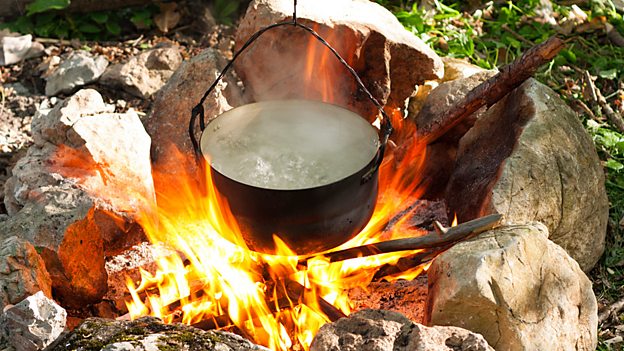
Zero Conditional
If you heat water enough, it boils.
Does water boil all by itself? No. The condition that makes it boil is the heating.
- condition = heating
- result = boiling
When will this happen? Any time the condition is met. This kind of conditional is used for general truths, facts and everyday occurrences. It's not really connected to any particular time.
The result and if clauses both have present verb forms. In the if clause, either if or when can be used - they have the same meaning.
If / When you leave milk out long enough, it goes bad.
If / When I leave after 8.30, I miss the bus.
If / When I've had a hard day at work, I like to come home to peace and quiet.
First conditional
If I go to the shops, I'll get some milk.
Will I definitely get some milk? No. The condition that leads to getting milk is going to the shops. I might not go to the shops.
- condition = going to the shops
- result = buying bread
Unlike the zero conditional, this is not a general truth or scientific fact. It's talking about a specific time and event, and not something that's always true. It's talking about a time in the future and something that might happen then.
The if clause has a present verb form. The result clause takes will + infinitive without to when we are certain that the result will happen if the condition is met. If we're not certain, we can use a modal verb like may or might.
If I see Mike, I'll tell him about the party.
If you get home before me, can you put the chicken in the oven?
If I pass my exams, I might get a pay rise.
You can use when instead of if in the if clause, but the meaning is different. Compare:
If I go to the shops, I'll get some milk.
Am I going the shops? Perhaps, it's a possibility.
When I go to the shops, I'll get some milk.
Am I going to the shops? Probably, it's a plan.
For more informaton about zero and first conditionals, see Unit 5
Second conditional
The second conditional is about imaginary results of impossible or unlikely conditions in the present or future.
If I won a million pounds, I'd still carry on working.
Will l win the lottery? It's possible but I think it's very unlikely.
If I had that much money, I'd give up my jobimmediately.
Do I have that much money? No, I don't.
The if clause contains the pastsimple. There is, however, one exception: if the verb to be is in the if clause, use were and not was in the first and second person singular. The main clause contains would (or other modals such as could or might) followed by the infinitive without to.
If I were you, I'd take a holiday!
If you loaned me some money, I could buy a new car.
If I had the time, I could finish the gardening. But I'm too busy with work.
Third conditional
We use this conditional to talk about an imaginary result of something in the past.
If I hadn't missed the bus, I wouldn't have met the love of my life.
Did I miss the bus? Yes I did, so the result is purely imagined.
The if clause has a past perfect structure and the result clause has would (or other modals such as could or might) + have + past participle.
If I had studied harder at college, I could have gone to a better university.
If we had never met, my life would have been a lot less complicated.
If hadn't taken the job, I might have regretted it.
You can see more about the second and third conditionals in Unit 9.
To do
In the activity, check to see if you can identify different conditional structures.
Zero, First, Second or Third?
6 Questions
Identify the conditional structure in each question.
帮助
练习题
Identify the conditional structure in each question.
提示
This is about something in the past that might have been different.Question 1 of 6
帮助
练习题
Identify the conditional structure in each question.
提示
Is this about the past, present or future? Is it about something possible or impossible?Question 2 of 6
帮助
练习题
Identify the conditional structure in each question.
提示
What's the structure of this sentence? It looks like it's about something that didn't happen in the past...Question 3 of 6
帮助
练习题
Identify the conditional structure in each question.
提示
Does this refer to a particular event or to a fact in general?Question 4 of 6
帮助
练习题
Identify the conditional structure in each question.
提示
This is a possible situation. Something will happen if this conditional is met...Question 5 of 6
帮助
练习题
Identify the conditional structure in each question.
提示
Look at the structure of this sentence.Question 6 of 6
Excellent!太棒了!Bad luck!加分:
Next
In the next activity we look at conditionals that don't fit the zero, first, second or third patterns. And of course, there's another quiz!
本课语法
Four types of conditional
Zero conditional
If you heat water enough, it boils.
This refers to any time you heat water enough.
First conditionalIf you heat that water enough, it'll boil.
This is about a likely result of a specific present or future action.
Second conditionalIf you heated that water enough, it would boil.
This is about a possible future result of an imagined present or future action.
Third conditionalIf you had heated that water enough, it would have boiled.
This is about an imagined past result of a past event that didn't actually happen.
