 | |
 Cádiz
Cádiz is one of the oldest cities in Europe. There are vestiges of human settlement going as far back as 1100 BC. Some of them form the collection of the city's archeological museum.
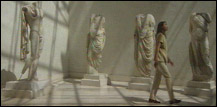
The director of the museum tells Inka about one of the most significant finds - a sarcophagus discovered in the grounds of the house where one of his predecessors lived.

In the 18th Century the Guadalquivir River silted up and ships from the Americas stopped in Cádiz because they couldn't reach Sevilla. Rich merchants settled here and funded the building of the new cathedral.
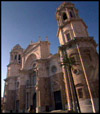
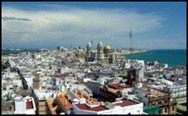
They also built a set of watchtowers spread across the city which allowed them to be alerted to the arrival of ships in the port. Some of the 126 remaining towers now offer visitors an excellent view over the city.
Looks like a serenade? In fact a chirigota is an amateur group which sings satirical songs on the occasion of the carnival in February, the most important festival in Cádiz.

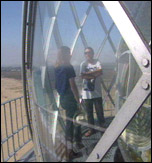
Travelling a bit further along the Costa de la Luz, the 'coast of light', Inka stops at the Cabo de Trafalgar, which overlooks the site of the famous sea battle. There she visits the lighthouse on what may be the most untouched coastline in Spain, according to its keeper, Juan Martínez, who has worked in lighthouses all over Spain.
Inka meets a famous local resident, the Duchess of Medina Sidonia. A controversial character, she is highly critical of the aristocracy.

She has collected a private archive of historic documents unequalled in the country. It contains mainly private letters from women which, the Duchess says, gives a new perspective on history.
Cádiz - Local Links
The BBC is not responsible for the content of external sites
Carnaval de Cádiz
The province of Cádiz on the Internet

Map | Escorial | Madrid | Toledo | Granada | Málaga | Sevilla | Cádiz | Jerez | Ronda
|
|



