Germany Inside Out - Cologne - Germany's oldest major city
Cologne - Germany's oldest major city
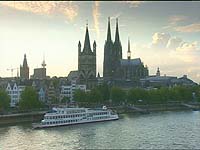 Cologne was founded by the Romans as a colony and was made a city in 50 AD. Agrippina, wife of the Emperor Claudius, was born here and a significant Roman legacy can be found in Cologne to this day.
The Dionysus mosaic in the Roman-Germanic Museum, the Roman water system and sections of the Roman city wall still remain, although it is a miracle that these historical treasures have survived. By the end of the Second World War, over 90% of the city centre had been destroyed and its population had fallen from 800,000 to around 40,000. After the war, Cologne began to enjoy international acclaim by hosting a series of art and film exhibitions. Many artists then settled in the city and by the end of the '80s, there was one gallery for every 5,500 citizens.
The people of Cologne are known for their fun-loving attitudes and in February, Germany's biggest carnival celebration, "Karneval", turns the city into a huge street party. But they certainly know how to have fun all year round, with over 3000 bars, pubs and restaurant for only 1 million inhabitants. Another major event in Cologne is the gay Christopher Street Day Parade, organised by Cologne's huge gay community, which very much shapes the image of the city.
Links:
Köln.de
Köln's official website, covering all aspects of life in the town: politics, commerce, tourism, entertainment and leisure. In English and German.
Kölner Karneval
Cologne is the German "Karneval" capital, which has been celebrated here since the town was founded. In English and German.
Cologne-tourism.com
Official Tourist Board for Cologne. In English and German.