Gateway to the world
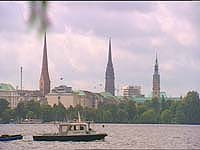 Hamburg is the second largest city in Germany. It is also one of the three cities, which is a "Land" - one of Germany's 16 states - in its own right.
The city gained its economic prosperity from its history as a city port on the River Elbe, which flows into the North Sea, giving Hamburg its nickname "Tor zur Welt" - gateway to the world. Its wealth is reflected in its proud architecture, beside the waters of the Elbe. With 1,500 millionaires living in Hamburg, it counts as Europe's richest city, and its commercial past is still very much alive today, as the importing of tea, coffee and exotic spices continues, along with the sale of oriental carpets.
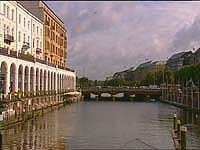 The 1.7m inhabitants of Hamburg enjoy a punctual underground train system, more bridges then Venice and plenty of parks and green areas. 23% of Hamburg is made up of protected countryside, 13% parkland and 6% nature reserves.
Above all, Hamburg is today considered an important media town. Five of the six largest German publishers and more than 300 television productions are based in the city. Fourteen of the 20 biggest newspapers are also published here. This tradition started with the "Wöchentliche Zeitung", the weekly newspaper first published in 1616. And on 25 September 1950, Germany's very first television programme was broadcast in Hamburg - from a former air-raid shelter.
Nearby towns and locations also worth a visit include Lübeck, where the famous Lübecker marzipan comes from, Lüneburg Heath and the lakes in Holstein and Mecklenburg. The seaside towns of St. Peter-Ording and Timmendorf are both within easy reach from Hamburg and are popular destinations for weekend trips.
Links:
Hamburg.de
Official Hamburg website, covering all aspects of life in the city: politics, commerce, tourism, entertainment and leisure. In English and German.
Hamburg tourist office
Tourist-orientated website with information on sightseeing, events and history. In English and German.