Haiti cholera claims after new evidence
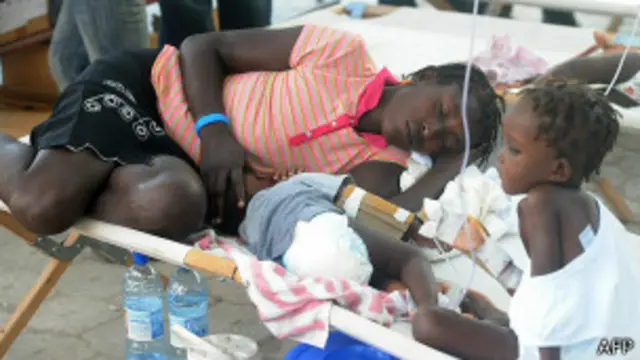
A group of top international scientists studying a widespread outbreak of cholera in the Caribbean state of Haiti has found that the disease probably came from United Nations peacekeepers.
This discovery could have a big effect on a multi-billion dollar compensation claim from people affected by the epidemic, which has so far claimed over 8,000 lives.
Reporter
Mark Doyle
Report
<link type="page"><caption> Listen to the report</caption><url href="http://http-ws.bbc.co.uk.edgesuite.net/mp3/learningenglish/2013/07/130726_witn_haiti_cholera_report_130726_witn_haiti_cholera_report_au_bb.mp3" platform="highweb"/></link>
The cholera epidemic in Haiti has put the United Nations in an unprecedented legal and moral crisis. Ever since the outbreak began, in late 2010, all the circumstantial evidence has pointed to the source of the disease being a military camp for UN peacekeepers from Nepal, where cholera is common. Sewage from the UN camp leaked into a nearby river and was dumped in an open pit. The cholera then spread down the river and into Haiti's towns and cities.
The United Nations, under massive pressure from the victims, convened a panel of top scientists in 2011. But they concluded in an official UN report that no group or individual was to blame. Now, the very same group of scientists has looked at new microbiological evidence. And it has concluded that the Nepalese camp was the most likely source of the outbreak.
The families of people who died in the epidemic are planning to sue the UN for compensation totalling many billions of dollars. The UN says it is has legal immunity from any prosecution. But the victims say they're bringing their case anyway, in a US court. This new evidence will almost certainly bolster their claim.
Vocabulary
<link type="page"><caption> Listen to the words</caption><url href="http://http-ws.bbc.co.uk.edgesuite.net/mp3/learningenglish/2013/07/130726_witn_haiti_cholera_vocab_130726_witn_haiti_cholera_words_au_bb.mp3" platform="highweb"/></link>
epidemic:wabah
unprecedented: tidak pernah terjadi sebelumnya
moral: moral, susila
circumstantial evidence: bukti terperinci
source: sumber
convened: mengadakan pertemuan
microbiological: mikrobiologi
to sue: menuntut
legal immunity: kekebalan hukum
bolster: memperkuat