Like many large public service institutions in Britain, the BBC at one time commissioned portraits of its most senior leader. In the BBC hierarchy that person is the Director-General. Sadly, the series of DGs is incomplete. Three director generals were overlooked amid the preoccupations of World War 2 and its aftermath. They are Frederick Ogilvie, Cecil Graves and Robert Foot.
Post the departure of former Director-General Mark Thompson, various options have been considered as to how best portray this important figure in the digital age.
Lord Reith of Stonehaven (1889 - 1971) by Sir Gerald Kelly
General Manger 1922 - 1926, Director-General 1927 - 1938
John Reith was appointed General Manager of the British Broadcasting Company in 1922. He soon identified the potential of broadcasting for the public good, fashioned the Corporation under its Royal Charter, and set standards and values that remain a benchmark for broadcasters everywhere.
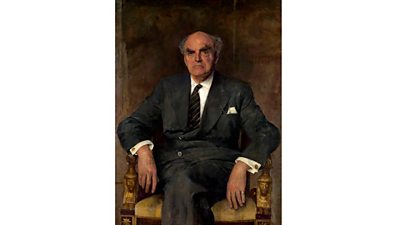
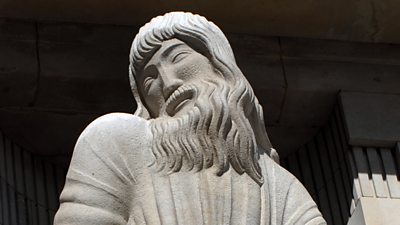
Sir William Haley (1901 - 1987) by Jacob Epstein
Director-General 1944 - 1952
Regarded as the best of the war-time Director Generals, Haley was editor-in-chief under Robert Foot. By the time Foot left and Haley took over, victory was in sight, and plans for peacetime radio services were in hand. Here Haley made his greatest contribution to the BBC, introducing The Third Programme (which later became Radio 3)
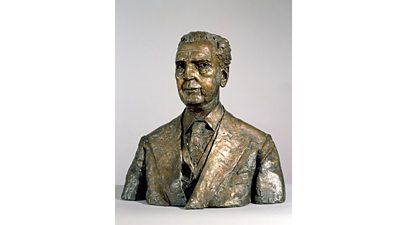
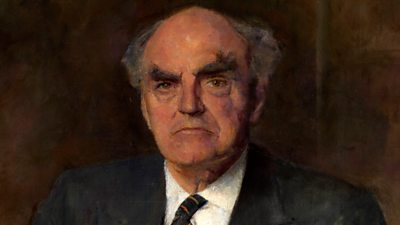
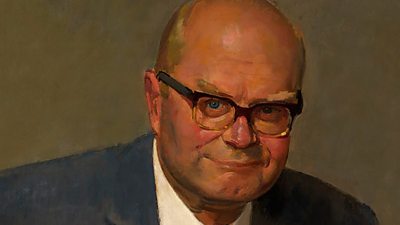
Sir Ian Jacob (1899 - 1993) by Ruskin Spear
Director-General 1952 - 1959
Sir Ian Jacob was the first director general to embrace television and put money behind it. He resisted government pressure during the Suez crisis, led the BBC’s response to the ITV challenge, and developed a long-term plan for regional television and a second television network. John Reith, who regarded television as a ‘social menace’, asked for his own portrait to be removed from the Council Chamber when the Jacob portrait was unveiled
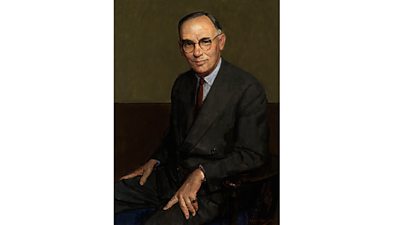
Sir Hugh Carleton-Greene (1910 - 1987) by Ruskin Spear
Director-General 1960 - 1969
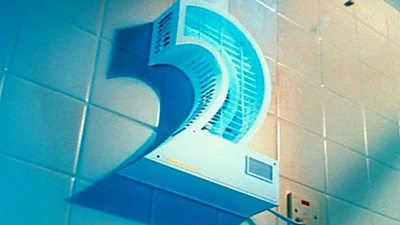
Hugh Greene joined as head of the BBC’s German service at the outbreak of war, and rose to become one of the most admired director generals. He led the BBC through the permissive Sixties, incurring the wrath of the establishment with That Was The Week That Was and of morality campaigner Mary Whitehouse with programmes such as Till Death Us Do Part. He presided over the launch of BBC Two, colour television, and BBC Local Radio.
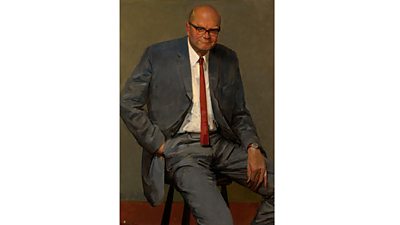
Sir Charles Curran (1921 - 1980) by Ruskin Spear
Director-General 1969 - 1977
Charles Curran was BBC Secretary and director of External Broadcasting before becoming Director-General. As a leader he was somewhat in the shadow of Huw Wheldon, the charismatic director of television, at a time when licence fee income was soaring as viewers switched to colour licences. He was nevertheless a very successful in running the Corporation and handing relations with the governors.
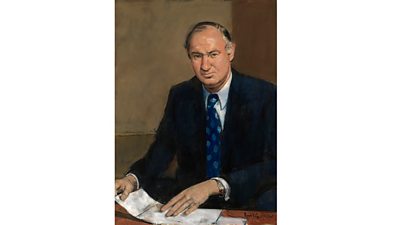
Sir Ian Trethowan (1922 - 1990) by John Ward
Director-General 1977 - 1982
Ian Trethowan, former ITN newsreader, presented political programmes for the BBC before moving into management. As managing director of Radio, he reconfigured the networks as Radios 1 to 4. As director general his greatest asset was the range of contacts and friends he had cultivated as a political correspondent.
Such allies were particularly useful in episodes such as the Falklands conflict, when the BBC’s attempts to provide balanced coverage were interpreted as disloyal. He retired in 1982, as the Thatcher government was beginning to squeeze the public sector and the unions.
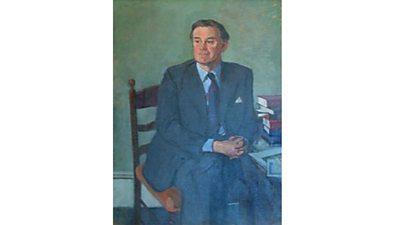
Alasdair Milne (1930 - 2013) by June Mendoza
Director-General 1982 - 1987
Alasdair Milne defended the BBC through one of the most difficult periods in its history. The Thatcher government was hostile towards the licence fee, and critical of BBC output – notably its coverage of the Troubles in Northern Ireland and international terrorism – while the divide between the governors and the executive grew wider than ever during the Real Lives row.
After a series of bruising battles in which Milne defended the editorial independence of the BBC the governors insisted on a change of director general, and he was asked to step down.
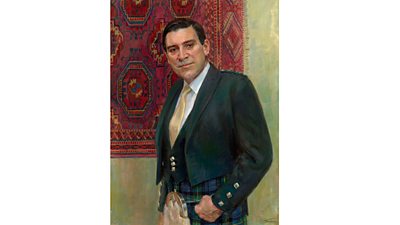
Sir Michael Checkland (1936 - ) by Richard Foster
Director-General 1987 - 1992
Michael Checkland paved the way for the modern BBC with the introduction of Producer Choice, the internal market system that encouraged budget holders to look outside for facilities and resources. As a result, layers of in-house support services were swept away, and hundreds of millions of pounds freed up to fund the BBC’s response to growing competition.
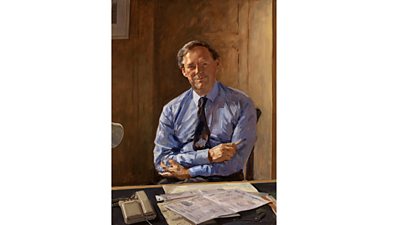
Lord Birt of Liverpool (1944 - ) by Tai-Shan Schierenberg
Director-General 1992 - 2000
John Birt developed a strategic vision for the BBC that looked far beyond the burgeoning independent television and radio markets. He carved out a role and mission for a public service provider in the age of the internet and the converging technologies of the telephone and broadcasting. Under his leadership the BBC made a compelling case of the new charter in 1996, and for a licence fee settlement that would fund the leap to digital.
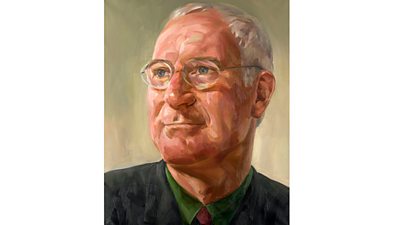
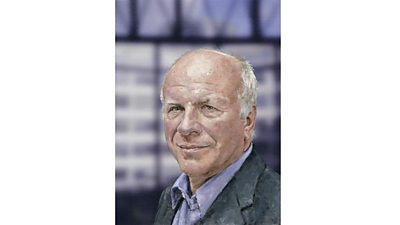
Greg Dyke (1947 - ) by John Keane
Director-General 2000-2004
Greg Dyke’s tenure as director general was cut short following the row with the government over a Today programme report questioning the government’s case for going to war in Iraq. In his time he launched the Freeview proposition, hastening the nation’s transition from analogue to digital, and he injected a fresh style of management that engaged staff as no director general had done before him.