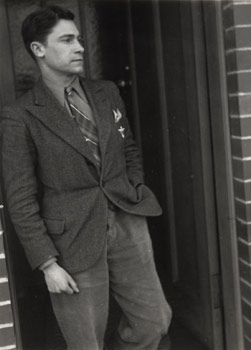
André Heintz
Read this introduction to André Heintz's story, then listen to him describe his experiences, using the links at the foot of this page.
André Heintz was a French Resistance member in Caen, a city that was one of the main targets of the D-Day landings. From 1940 to 1944, when the city was liberated, Heintz gathered information to give to the Allied forces about German positions.
He learned about the proposed landings in Normandy on 5 June, through a coded message broadcast by radio. On D-Day, he recalls, Caen underwent a terrible bombardment, and he was part of the emergency teams that helped the many people wounded by the exhaustive shelling.
On the following days, most of Caen was destroyed in the fighting between the Allies and the German troops stationed in the city. Thousands of people took shelter at the Abbey, where William the Conqueror is buried - one of the few major buildings that remained unharmed by the fighting. Heintz says that, in those days, people told each other that if the steeple or the church were hit, it would be the end of the English Crown.
In the night before the landing, several Resistance members in a prison were killed by German troops. Among them were several of Heintz's friends.
In order to see this content you need to have both Javascript enabled and Flash installed. Visit BBC Webwise for full instructions
Caen was very badly hit. It was said that more than 85 per cent of the houses were destroyed.
But there was a safe part, that was respected, where the old Abbey was, where in fact William the Conqueror is buried. And everybody, thousands of people, sheltered in the Abbey buildings and in the church, because they thought that England would not dare bomb a place where one of their kings was buried.
In order to see this content you need to have both Javascript enabled and Flash installed. Visit BBC Webwise for full instructions
Well, it was only long after that I heard about the massacre in the jail in Caen, and of course I felt awful, because they were all members of the Resistance. I knew quite a few and I knew my leader was in that jail the day before D-Day, so I was almost sure he had been shot.
Well, later on I heard that he had been very courageous, and that he certainly never gave our names, and he certainly knew that he was being shot for the right cause. From what I heard, those men had an amazing courage even in front of the firing squad.
In order to see this content you need to have both Javascript enabled and Flash installed. Visit BBC Webwise for full instructions
I remember that when the ruins of Caen were uncovered ... they came across a man who died of suffocation in the cellar where he was. And he left a note, saying, 'I feel that I am going to die. It is terrible to think that I shall never see that liberation I've been hoping for for such a long time'.
But he concluded, 'I know that, because of my death, other people will be liberated. Long live France, long live the Allies'.