Edward Colston
Merchant, slave trader and philanthropist
Colston was born into a prosperous Bristol merchant's family and, although he lived in London for many years, was always closely associated with the city of Bristol. By 1672, he had his own business in London trading in cloth, wine, sugar and slaves. A significant proportion of Colson's wealth came directly or indirectly from the slave trade.
In 1680, he became an official of the Royal African Company, which at that time held the monopoly in Britain on slave trading. During his career, London was the main centre of slave trading in Britain, but in the 1730s and 1740s, Bristol took London's place. Liverpool became dominant in the second half of the century.
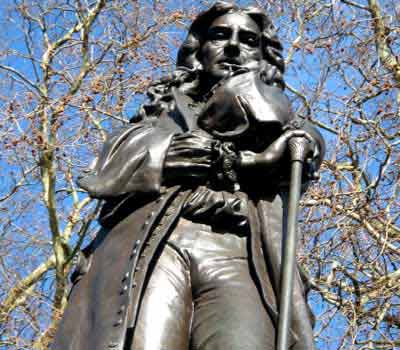
Colston donated considerable sums to good causes in Bristol. He founded two almshouses and a school and gave money to other schools, churches and hospitals. He also lent money to the Bristol corporation and was MP of the city for a short time. Colston died at his home in Mortlake, south west of London, but his body was taken back to Bristol for burial in All Saints Church. Bristol's largest concert hall is called Colston Hall and a bronze statue of Colston stands in Colston Avenue, one of a number of streets in Bristol named after him.