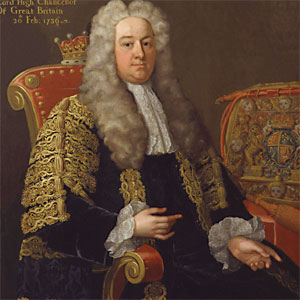
Philip Yorke, 1st Earl of Hardwicke
Pro-slavery lawyer, lord chancellor
Philip Yorke was born in Dover, the son of a lawyer. He himself became a successful lawyer and, with the patronage of the duke of Newcastle, MP for Lewes in 1719 and later Seaford (1722-1734). In 1720, he became solicitor-general and was knighted. Four years later he was appointed attorney-general. In 1737, Yorke became lord chancellor and stayed in the post for nearly two decades.
In 1729, Yorke and the solicitor-general, Charles Talbot, gave their opinion to a group of West Indian planters that individuals brought to England from places where they had been enslaved remained in the state of slavery. A master could also legally compel an enslaved person to return to the plantations. Although this was an informal opinion given after a dinner at Lincoln's Inn in London rather than an official ruling in a court case, and there were other legal precedents that contradicted it, Yorke and Talbot's opinion became the guiding rule for slave owners in England.
Yorke confirmed these decisions 20 years later in a judgement on another case. After this, the owners of runaway slaves advertised their loss with the promise of a reward for the person's return, and special gangs were hired to find and recapture slaves who had escaped.
It was not until 1772 that this opinion was effectively overturned. In the case of James Somerset, a slave who had escaped from his owner in London, but was recaptured and forced on to a ship bound for Jamaica, Lord Chief Justice Lord William Mansfield ruled that Somerset should be freed. Mansfield, a deeply conservative man, tried to limit the ruling to this one particular case, but it was regarded by abolitionists and the public at large as a milestone that outlawed slavery in England.
Mansfield was a friend and benefactor of Sir William Blackstone who was one of the most influential commentators on law in this period. In his 'Commentaries on the Laws of England' (published 1765-1769), Blackstone wrote that slaves become free men when they come to England. In later editions of the book, probably because of the influence of Mansfield, he qualified this statement by adding that 'the master's right to his service may probably still continue'.