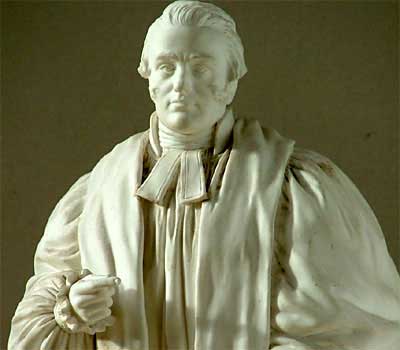
Henry Phillpotts, Bishop of Exeter
Absentee plantation owner and Anglican cleric
Henry Phillpotts was born in Somerset, one of the 24 children of a pottery and brick factory manager. Phillpotts studied at Oxford University and was ordained in 1802. He was theologically and politically a conservative who opposed Catholic emancipation. In 1830, Phillpotts was appointed bishop of Exeter and in the House of Lords continued to be an opponent of political, economic and social reform.
Phillpotts and three business associates invested in slave plantations in Jamaica, and when slavery was abolished they were paid compensation for the loss of 665 slaves. A bishop personally owning slaves must have been a powerful legitimating tool for Caribbean interests in Britain. The Church of England itself was also directly involved in slavery.
In 1710, the Barbados planter Christopher Codrington died, leaving his three sugar estates to the Church's recently established Society for the Propagation of the Christian Religion in Foreign Parts (SPG). The Codrington plantation was run for the Church by professional planters, but its profits went to the Society. Enslaved people who worked at Codrington were branded on their chests with the word 'society'.